At a glance
- A full arch fixed implant rehabilitation, commonly referred to clinically as a fixed full-arch prosthesis or colloquially as an all-on-4 or all-on-6 restoration, replaces an entire dental arch using four to six strategically…
- The primary biological threat to full arch dental implants is the accumulation of pathogenic microbial biofilm along the mucosal margin and prosthetic intaglio surface (the underside facing the gums).
- Several systemic, behavioral, and environmental factors significantly elevate the risk of developing peri-implant diseases.
- Peri-implant diseases are frequently asymptomatic in their early stages, making routine visual and tactile inspection essential for early intervention.
- Accurate evaluation of full-arch implant health requires systematic professional assessment combining visual examination, gentle periodontal probing, and standardized radiography.
Understanding the Anatomy of Full Arch Dental Implants
A full arch fixed implant rehabilitation, commonly referred to clinically as a fixed full-arch prosthesis or colloquially as an all-on-4 or all-on-6 restoration, replaces an entire dental arch using four to six strategically angled endosseous titanium or zirconia fixtures. Unlike natural teeth, which are suspended within the alveolar bone by a vascular, shock-absorbing periodontal ligament, dental implants achieve direct structural and functional connection with bone through osseointegration. Above the bone level, transmucosal abutments connect the submerged fixtures to a monolithic zirconia or metal-acrylic framework. This structural arrangement creates a microgap where the prosthesis meets the soft tissue, demanding rigorous plaque control to prevent bacterial colonisation.
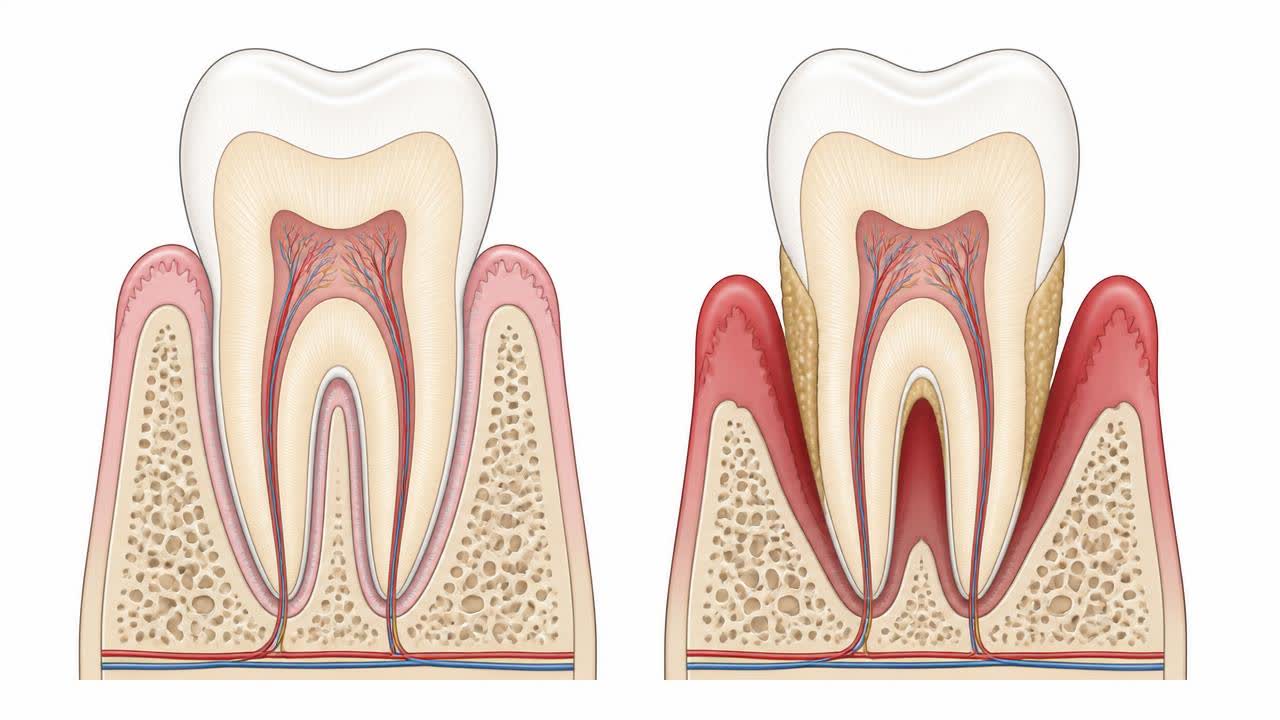
The soft tissue seal surrounding dental implants differs substantially from the natural gingival attachment. Natural teeth possess perpendicular collagen Sharpey's fibres that insert directly into the root cementum, forming a robust mechanical barrier against pathogens. In contrast, the peri-implant mucosa relies on parallel, circular collagen fibres that adhere to the titanium collar purely through a weaker hemidesmosomal junction. This relative biological vulnerability means that the peri-implant sulcus is more permeable to bacterial invasion. Understanding how to clean all on 4 implants requires acknowledging this distinct interface, ensuring cleaning instruments thoroughly clear the prosthetic bridge without tearing the delicate mucosal seal.
Clinical Diagnosis and Diagnostic Imaging
Accurate evaluation of full-arch implant health requires systematic professional assessment combining visual examination, gentle periodontal probing, and standardized radiography. Dentists and dental hygienists use light-force plastic or flexible titanium probes to measure peri-implant probing depths and record bleeding on probing (BOP) and suppuration. Unlike natural teeth where probing depths over 3 mm often suggest pathology, baseline peri-implant probing depths can range from 3 mm to 5 mm depending on the surgical mucosal thickness; therefore, clinical diagnosis relies heavily on longitudinal increases in probing depth compared to baseline records.
Diagnostic imaging remains indispensable for assessing bone levels. Intraoral periapical radiographs taken with a parallel technique allow direct visualization of the bone-to-implant contact and the crestal bone height relative to the implant collar. In complex full-arch scenarios or when extensive anatomical structures must be evaluated, Cone Beam Computed Tomography (CBCT) provides cross-sectional three-dimensional analysis, identifying circumferential or buccal bone defects that two-dimensional films cannot display. Clinicians also assess the stability of the prosthetic retention screws, verifying that abutments remain seated without micro-gaps.
Recognising the Symptoms of Peri-Implant Complications
Peri-implant diseases are frequently asymptomatic in their early stages, making routine visual and tactile inspection essential for early intervention. The earliest clinical indicator of peri-implant mucositis is bleeding on gentle brushing or interdental cleaning. Healthy peri-implant mucosa should appear pale pink, firm, and stippled, without swelling or tenderness. Erythema (redness), oedema (swelling), a glazed mucosal appearance, or discomfort during mastication indicate active inflammation that requires immediate correction of home hygiene protocols and professional review.
As disease progresses to peri-implantitis, clinical manifestations become more pronounced and concerning. Patients may observe persistent spontaneous bleeding, suppuration (pus discharging from beneath the prosthetic margin), progressive mucosal recession exposing dark titanium abutment threads, or a persistent foul taste and halitosis caused by anaerobic degradation products. While pain is uncommon until severe bone destruction or secondary infection occurs, any sensation of prosthetic movement, clicking, or altered occlusion suggests either mechanical failure (such as a loose prosthetic retaining screw) or catastrophic loss of osseointegration.
Classification of Peri-Implant Conditions
In international clinical practice, peri-implant conditions are classified according to the 2017 World Workshop on the Classification of Periodontal and Peri-Implant Diseases and Conditions, co-sponsored by the European Federation of Periodontology (EFP) and the American Academy of Periodontology (AAP). This diagnostic framework divides implant tissue states into four distinct categories: Peri-Implant Health, Peri-Implant Mucositis, Peri-Implantitis, and Peri-Implant Soft and Hard Tissue Deficiencies.
Peri-Implant Health is characterized by the absence of visual signs of inflammation, absence of bleeding on gentle probing, and stable bone levels over time. Peri-Implant Mucositis is defined by bleeding on gentle probing and visual erythema or oedema, with no progressive marginal bone loss following initial physiological remodeling. Peri-Implantitis requires the simultaneous presence of mucosal inflammation (bleeding or suppuration), increased probing depths compared to previous examinations, and progressive crestal bone loss beyond initial healing. Soft and hard tissue deficiencies involve post-surgical or anatomical loss of buccal plate dimensions, thin keratinised mucosa, or ridge contour deficits.
Step-by-Step Home Care: How to Clean All on 4 Implants
Mastering how to clean all on 4 implants requires a systematic daily regimen combining mechanical brushing, specialised interdental flossing, and targeted hydrostatic irrigation. Begin by brushing the prosthetic teeth twice daily for at least two minutes using an ultra-soft manual or sonic electric toothbrush with non-abrasive fluoride toothpaste. Angle the bristles at a 45-degree angle toward the gum line to sweep away plaque from the prosthetic-mucosal interface. Avoid highly abrasive whitening toothpastes containing silica, charcoal, or baking soda, as these can scratch polished acrylic, resin, or titanium components, creating micro-roughness that accelerates biofilm adhesion.
The critical second step is cleaning the intaglio surface beneath the fixed bridge where food particles and plaque accumulate. Thread a stiff-ended implant bridge floss (such as specialised spongy floss) or use a plastic floss threader to pass thick, spongy floss beneath the prosthesis between each pair of supporting implants. Wrap the floss gently around the cylinder of each abutment using a shoe-shine motion to clear circumferential plaque without cutting into the delicate peri-implant mucosa. Interdental brushes with plastic-coated wire cores can also be inserted from the cheek side toward the palate; never use bare metal wire brushes, which scratch titanium surfaces.
Finally, incorporate an oral irrigator (water flosser) equipped with an implant-specific soft rubber tip. Fill the reservoir with lukewarm water or an alcohol-free antimicrobial mouthwash diluted as advised by your clinician. Direct the water stream at a 90-degree angle to the gum line, tracing along the prosthetic border on low-to-medium pressure to flush away dislodged debris from deep tissue pockets without disrupting the hemidesmosomal seal. Complete the routine with an alcohol-free chlorhexidine or essential-oil rinse if prescribed during active maintenance phases.
Professional Debridement and Supportive Implant Therapy
Home hygiene must be augmented with structured professional maintenance, termed Supportive Peri-Implant Therapy (SPIT), typically scheduled every three to six months. Standard stainless steel scalers used for natural teeth are strictly contraindicated around implants because they gouge titanium and zirconia surfaces. Instead, dental hygienists use specialised instrumentation, including high-grade medical polymer scalers, solid titanium curettes, or specialized ultrasonic scaler tips coated with polyetheretherketone (PEEK) or carbon composites that debride without damaging the abutment micro-topography.
Submucosal air polishing using low-abrasive powders, such as glycine or erythritol delivered via specialized flexible nozzles, represents the current evidence-based standard for subgingival biofilm decontamination. This technology effectively eradicates microbial biofilms from complex prosthetic surfaces, abutment grooves, and micro-textures without inducing surface roughness or soft tissue trauma. Periodically, the clinician may elect to remove the screw-retained prosthesis completely to inspect the multi-unit abutments directly, replace degraded prosthetic retaining screws, polish the intaglio framework in a laboratory, and verify tissue integration before re-torquing screws to manufacturer-specified values.
Management of Biological and Mechanical Complications
Biological complications are managed according to the severity of tissue destruction. When peri-implant mucositis is detected, treatment focuses on thorough non-surgical debridement, reinforcement of daily oral hygiene technique, and targeted application of localized antiseptics such as chlorhexidine gluconate gels. If the condition has progressed to peri-implantitis with bone resorption, non-surgical therapy alone is rarely curative due to the difficulty of completely decontaminating threaded implant surfaces. In such scenarios, surgical intervention—including open-flap debridement, implantoplasty (smoothing contaminated threads), or resective and regenerative surgical procedures utilizing bone grafts and barrier membranes—may be required to arrest bone loss.
Mechanical complications involve physical components of the restorative complex. The most frequent mechanical event is the loosening or fracturing of prosthetic retention screws, caused by dynamic masticatory forces or occlusal overloading. Other common mechanical complications include chipping or catastrophic fracture of acrylic resin or porcelain denture teeth, wear of the prosthetic matrix, and rarely, fatigue fracture of the titanium substructure or the implant body itself. Managing mechanical failures requires rapid clinical diagnosis, occlusal equilibration, replacement of fatigued hardware, and occasional fabrication of custom protective nightguards (occlusal splints) to counteract nocturnal bruxism.
Evidence and further reading
The scientific consensus regarding full-arch implant maintenance is established across major international periodontal and maxillofacial bodies. The European Federation of Periodontology (EFP) and the American Academy of Periodontology (AAP) emphasize that peri-implant mucositis is a reversible condition, whereas peri-implantitis leads to progressive, irreversible bone loss that requires complex surgical and antimicrobial management. Systematic reviews published by the Cochrane Oral Health Group and consensus statements from the International Team for Implantology (ITI) confirm that continuous, lifelong Supportive Peri-Implant Therapy is mandatory for long-term prosthetic and biological survival.
Authoritative clinical guidance from the Journal of Clinical Periodontology, the International Journal of Oral and Maxillofacial Surgery, and the British Dental Association highlights that mechanical plaque removal combined with professional glycine-powder air polishing offers superior outcomes for biofilm control. Clinicians agree that patient compliance with daily interdental cleaning, combined with strict risk-factor cessation—including tobacco and betel nut avoidance, and metabolic control of diabetes—serves as the foundational cornerstone for preserving osseointegrated full-arch reconstructions over the patient's lifetime.
Systemic and Lifestyle Risk Factors in Implant Maintenance
Several systemic, behavioral, and environmental factors significantly elevate the risk of developing peri-implant diseases. A documented history of treated chronic periodontitis is one of the strongest predictors, as patients harbour lingering periodontal pathogens that readily colonise new implant sites. Poorly controlled diabetes mellitus, marked by elevated glycosylated haemoglobin (HbA1c) levels, severely impairs microvascular circulation and neutrophil function, blunting tissue healing and accelerating bone loss around fixtures. Similarly, genetic predispositions, severe osteoporosis treated with antiresorptive medications, and autoimmune disorders can alter bone remodeling dynamics and compromise the mucosal barrier.
Lifestyle habits also play a pivotal role in long-term implant survival. Cigarette smoking and the use of smokeless tobacco products, such as gutka, paan, or areca nut preparations widely consumed in South Asian communities, introduce potent cytotoxic and vasoconstrictive chemicals into the oral cavity. These compounds suppress local vascularity, mask early inflammatory bleeding, and promote virulent anaerobic biofilms. Additionally, frequent consumption of highly staining, sticky, or fibrous diets without immediate irrigation allows food debris to ferment beneath the prosthetic bridge, accelerating localized mucosal inflammation and challenging mechanical debridement efforts.
Pathogenesis: Why Plaque Accumulation Threatens Implant Longevity
The primary biological threat to full arch dental implants is the accumulation of pathogenic microbial biofilm along the mucosal margin and prosthetic intaglio surface (the underside facing the gums). When oral bacteria proliferate undisturbed, they trigger an inflammatory host immune response termed peri-implant mucositis. At this stage, the inflammation is confined entirely to the surrounding soft tissues without bone loss. However, if biofilm accumulation persists, the condition frequently advances to peri-implantitis, an irreversible pathological condition characterised by progressive destruction of the supporting alveolar bone surrounding the osseointegrated fixture.
Because dental implants lack the rich blood supply provided by the periodontal ligament, the local innate immune response is less efficient at halting microbial progression. Once inflammatory mediators such as interleukins and matrix metalloproteinases are released, osteoclast activity is upregulated, resulting in non-linear, circumferential bone loss around the implant threads. Furthermore, full arch prostheses have extensive subgingival surface areas that act as niches for anaerobic microorganisms. Effective home maintenance is therefore not merely a cosmetic measure; it is the definitive determinant of whether an implant reconstruction survives long term or fails prematurely due to infective bone resorption.
Urgent Red Flags: When to Contact Your Implant Surgeon
While minor gingival tenderness can occasionally occur following rigorous flossing, certain clinical signs indicate acute complications requiring immediate dental evaluation. If you observe any detectable mobility or rocking sensation of the entire arch bridge, do not attempt to bite on solid foods; contact your clinic immediately, as loose retention screws can bend, snap, or place fatal cantilever stress on remaining integrated implants. Similarly, continuous spontaneous bleeding or persistent purulent drainage (pus) from beneath the bridge points toward acute infective peri-implantitis or an abscess.
Other critical red flags include severe, throbbing pain that is unresponsive to standard analgesics, sudden altered sensation or numbness (paraesthesia) in the lower lip, chin, or tongue, and localized facial or submandibular swelling. A sudden change in your bite—where the prosthesis no longer interlocks evenly with opposing teeth—or the audible cracking or dislodgement of prosthetic teeth warrants same-day assessment. Prompt clinical intervention prevents localized soft-tissue infections from expanding into life-threatening deep fascial spaces or causing irreversible loss of supporting alveolar bone.
Questions patients ask us
- Can I use regular dental floss under my full arch implant bridge?
- Standard string dental floss is generally ineffective and can be difficult to thread beneath a fixed full-arch prosthesis. Moreover, standard thin floss can fray or shred around titanium abutments, leaving residual synthetic fibres that act as a nidus for infection. Instead, use specialised implant bridge floss with a stiff built-in threader and a thick spongy middle section, or use dedicated interdental brushes with plastic-coated wire cores.
- How often should I use an oral irrigator or water flosser?
- You should use a water flosser once daily as an adjunct to mechanical brushing and flossing. Set the device to low or medium pressure and direct the stream at a 90-degree angle along the mucosal border. While water flossers effectively flush out loose food debris and volatile sulphur compounds, they cannot replace the mechanical friction of floss or brushes needed to disrupt sticky bacterial biofilm.
- Is bleeding normal when cleaning around dental implants?
- Bleeding is never normal around healthy dental implants. While minor pinpoint bleeding can occasionally occur during initial postoperative healing, bleeding during daily brushing or flossing is the cardinal sign of peri-implant mucositis. If you observe bleeding, do not stop cleaning the area; improve gentle plaque removal and schedule an evaluation with your dentist to prevent progression to peri-implantitis.
- Do full arch implant prostheses need to be removed at home?
- No, fixed full arch prostheses (such as all-on-4 restorations) are screw-retained and designed to be removed only by a qualified dental professional using calibrated instruments. Attempting to detach the bridge yourself will cause irreversible mechanical damage to prosthetic screws, abutments, and underlying implants. All daily hygiene must be performed around and underneath the fixed bridge while it remains firmly in place.
- What type of toothpaste is best for cleaning all-on-4 implants?
- Select a non-abrasive fluoride gel or standard smooth toothpaste with a low Relative Dentin Abrasivity (RDA) value, ideally below 70. Avoid whitening, smoker’s, or charcoal toothpastes containing coarse abrasives. These can scratch polished zirconia, acrylic resin, and exposed titanium components, creating microscopic surface irregularities that facilitate accelerated bacterial colonization and plaque retention.
- How frequently should I visit the dentist for professional implant cleaning?
- Most patients with full arch implant rehabilitations require professional maintenance every three to six months. Patients with elevated risk profiles—such as a history of severe periodontitis, diabetes, or a history of smoking—benefit from three-month recall intervals. These visits allow clinicians to monitor bone levels, remove submucosal biofilm with specialised air polishers, and check screw torque.
- Can habits like chewing betel nut or paan damage my full arch implants?
- Yes, chewing areca nut, betel quid, paan, or gutka poses severe biological and mechanical risks. The chemical toxins and chronic vasoconstrictive alkaloids suppress mucosal blood supply and elevate infection risk, while the fibrous, abrasive nature of the quid causes severe occlusal wear, chipping of prosthetic teeth, and excessive lateral stress on the underlying implants and retention screws.
- What causes a bad smell or taste under an implant-supported bridge?
- A foul odour or taste typically originates from anaerobic bacteria metabolising trapped food particles and stagnant fluid beneath the bridge intaglio surface. This indicates inadequate cleaning underneath the prosthesis or active peri-implant infection with exudate. If thorough cleaning with bridge floss and an oral irrigator does not resolve the issue within 48 hours, seek clinical assessment.
Sources and further reading
Guidance from professional and public health bodies. Clinical decisions here are made on your own examination and radiographs.
- 1.EFP clinical practice guidelines for periodontitis — European Federation of Periodontology
- 2.Classification of periodontal and peri-implant diseases — American Academy of Periodontology
- 3.Prevention and treatment of periodontal diseases in practice — Scottish Dental Clinical Effectiveness Programme
- 4.Oral health — fact sheet and global status report — World Health Organization
- 5.Policy statements and oral health definitions — FDI World Dental Federation
- 6.Dental health — conditions, treatments and patient guidance — NHS (UK)
- 7.Systematic reviews of oral and dental interventions — Cochrane Oral Health
- 8.Regulatory framework and dental education standards in India — Dental Council of India
When to see us
Get examined without waiting if any of the following applies to you:
- Gums that bleed without provocation, or bleeding that has become heavier
- Teeth that feel loose, are drifting, or gaps that are opening up
- Persistent bad breath or taste, gum abscesses, or pus on pressing the gum
Get a written plan and cost before you commit
If this is what you are dealing with, the next step is a consultation with radiographs — gums & prevention cases are seen by the specialist who handles that field. You get a written plan and staged cost before anything begins.
reception@dramitsharmahospital.comThis article is general education and does not replace an in-person examination, radiographs or a diagnosis by a qualified dentist.
Clinical terms in this article
Related in Gums & Prevention
Bleeding Gums and Gum Disease: A Complete Guide
What bleeding gums usually mean, how gingivitis progresses into periodontal disease, and the treatment path from scaling to gum surgery.
Gum Disease: Detection and Treatment
From reversible gingivitis to periodontitis, the warning signs, staged treatment and the link to overall health.
Preventive Dentistry and Home Care
The routine that prevents most dental disease: brushing technique, interdental cleaning, diet and recall visits.
Chronic Bad Breath Caused by Gum Infection
Chronic bad breath, or halitosis, is frequently driven by underlying gum disease. Subgingival bacteria produce volatile sulphur compounds within periodontal pockets. Effective resolution requires professional periodontal debridement, targeted biofilm disruption, and meticulous daily interdental hygiene rather than cosmetic masking.
Loose Permanent Teeth from Advanced Periodontal Disease
Loose teeth from advanced gum disease occur when severe chronic inflammation destroys the supporting alveolar bone and periodontal ligament. With timely periodontal therapy, splinting, and meticulous plaque control, many loose teeth can be stabilised and preserved without extraction.
Furcation Involvement and Bone Loss Between Roots
Furcation involvement describes bone loss between the roots of multi-rooted molars caused by advanced periodontal disease. This clinical guide explains its causes, diagnostic staging, surgical and non-surgical therapies, daily maintenance, and red flag symptoms requiring urgent care.