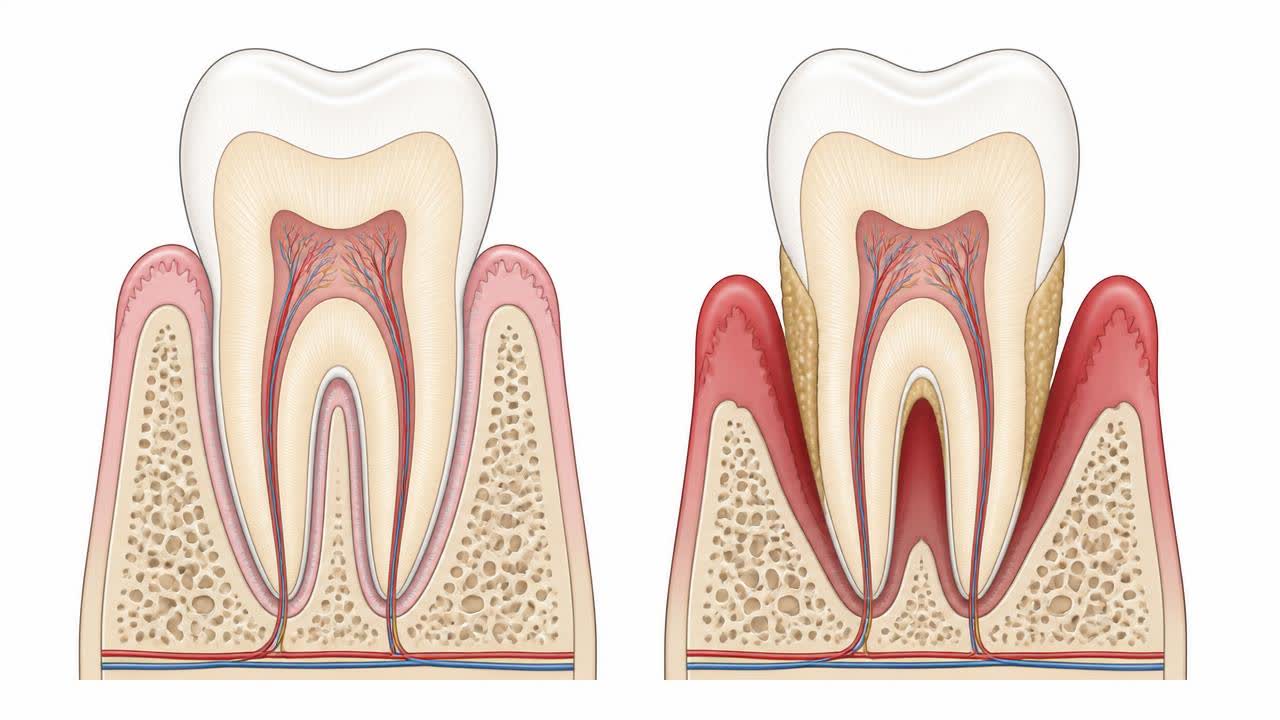
At a glance
- Periodontal disease is more than just an issue of the gums; it is an infection that eventually affects the underlying bone.
- We use a combination of periodic periodontal charts and regular, high-resolution X-rays to track the levels of bone around your teeth.
- The first priority in managing bone loss is to eliminate the bacterial infection through thorough scaling and root planning.
- Bone loss is typically irreversible once it has occurred, which is why early intervention is so critical.
- Once the active infection is treated and bone loss has been halted, long-term stability depends on consistent, proactive maintenance.
How Periodontitis Causes Bone Loss
Periodontal disease is more than just an issue of the gums; it is an infection that eventually affects the underlying bone. As gum pockets deepen, bacteria penetrate deeper, and the body's inflammatory response leads to the destruction of the alveolar bone that anchors your teeth. This process is often silent and painless, meaning bone can be lost significantly before it becomes noticeable to the patient.
At Dr. Amit Sharma Super Speciality Dental Hospital, we use advanced diagnostics, including digital X-rays and professional periodontal probing, to detect even subtle signs of bone loss. By catching this damage early, we can stop the progression and prevent the long-term consequence of tooth loss. Our clinical focus is on detecting and addressing the infection that drives this destruction.
Detecting and Monitoring Bone Loss
We use a combination of periodic periodontal charts and regular, high-resolution X-rays to track the levels of bone around your teeth. A periodontal chart records the depth of pockets, which, when combined with X-ray images, provides a clear picture of the bone health beneath the surface. These tools allow us to identify areas of concern long before they lead to symptoms like tooth movement or discomfort.
If we identify signs of bone loss, we discuss the findings with you in detail, ensuring you understand the implications and the importance of prompt treatment. We believe that an informed patient is a better partner in care. By working together, we can halt the infection, stabilize your gum health, and prevent any further loss of bone around your natural teeth.
Management and Treatment Strategies
The first priority in managing bone loss is to eliminate the bacterial infection through thorough scaling and root planning. By removing the hardened tartar and smoothing the tooth roots, we create a clean, healthy environment that allows the gums to heal. In many cases, this stops the active progression of bone loss and keeps your teeth secure, provided that you maintain an excellent home care routine.
For more complex situations where bone loss is significant or localised, we may discuss additional options, such as regenerative procedures like Guided Tissue Regeneration. These treatments can sometimes help to restore some of the lost bone support, providing a stronger foundation for your teeth. Each treatment plan is tailored to your unique needs, with the primary goal of preserving your natural, healthy smile.
The Importance of Early Intervention
Bone loss is typically irreversible once it has occurred, which is why early intervention is so critical. By treating gum disease at the first sign of trouble, we can effectively halt the bone destruction before it compromises the health of your teeth. Proactive care is far more successful, comfortable, and cost-effective than trying to manage the severe, long-term consequences of advanced periodontal bone loss.
If you have noticed your gums receding, feel that your teeth are moving, or have any other concerns about your dental health, do not wait. Early diagnosis and treatment are the keys to saving your teeth and ensuring you have a healthy smile for a lifetime. Contact our clinic today to schedule a comprehensive assessment with our team of dental professionals.
Maintaining Stability for Life
Once the active infection is treated and bone loss has been halted, long-term stability depends on consistent, proactive maintenance. This includes daily thorough brushing and interdental cleaning, combined with regular, frequent check-ups and cleanings at our clinic. These visits allow us to keep a close eye on your bone and gum levels, ensuring that any potential issues are addressed immediately before they can cause damage.
At Dr. Amit Sharma Super Speciality Dental Hospital, we are here to support your lifelong oral health journey. We provide the expertise, the technology, and the guidance you need to keep your natural teeth healthy and stable for your entire life. If you are ready to invest in your smile and your long-term health, our team is standing by to help. Reach out to us today.
Questions patients ask us
- Can bone lost to gum disease grow back?
- Generally, bone lost to periodontitis does not grow back on its own. However, in certain cases, surgical regenerative procedures such as Guided Tissue Regeneration can help regrow some of the lost bone. The primary goal of treatment is to halt further bone loss and keep your teeth stable.
- What are the early signs of bone loss?
- Bone loss often happens silently. Early signs can include receding gums, longer-looking teeth, and increased tooth sensitivity. In later stages, you may notice teeth shifting or becoming mobile. Regular professional check-ups are the only way to detect early bone loss before it becomes obvious.
- Can I stop bone loss?
- Yes, you can stop bone loss by addressing the underlying gum infection. Through professional deep cleaning and consistent, diligent home care, we can successfully halt the disease's progression, protect your teeth, and maintain the bone support you currently have.
- Do I need to see a specialist for bone loss?
- Periodontal bone loss is a complex issue that requires expert management. While our general dental team is highly skilled, we may coordinate your care with a periodontist if your condition requires advanced surgical or regenerative treatment. We ensure you receive the best care for your specific needs.
Sources and further reading
Guidance from professional and public health bodies. Clinical decisions here are made on your own examination and radiographs.
- 1.EFP clinical practice guidelines for periodontitis — European Federation of Periodontology
- 2.Classification of periodontal and peri-implant diseases — American Academy of Periodontology
- 3.Prevention and treatment of periodontal diseases in practice — Scottish Dental Clinical Effectiveness Programme
- 4.Oral health — fact sheet and global status report — World Health Organization
- 5.Policy statements and oral health definitions — FDI World Dental Federation
- 6.Dental health — conditions, treatments and patient guidance — NHS (UK)
- 7.Systematic reviews of oral and dental interventions — Cochrane Oral Health
- 8.Regulatory framework and dental education standards in India — Dental Council of India
When to see us
Get examined without waiting if any of the following applies to you:
- Gums that bleed without provocation, or bleeding that has become heavier
- Teeth that feel loose, are drifting, or gaps that are opening up
- Persistent bad breath or taste, gum abscesses, or pus on pressing the gum
Get a written plan and cost before you commit
If this is what you are dealing with, the next step is a consultation with radiographs — gums & prevention cases are seen by the specialist who handles that field. You get a written plan and staged cost before anything begins.
reception@dramitsharmahospital.comThis article is general education and does not replace an in-person examination, radiographs or a diagnosis by a qualified dentist.
Clinical terms in this article
Related in Gums & Prevention
Bleeding Gums and Gum Disease: A Complete Guide
What bleeding gums usually mean, how gingivitis progresses into periodontal disease, and the treatment path from scaling to gum surgery.
Gum Disease: Detection and Treatment
From reversible gingivitis to periodontitis, the warning signs, staged treatment and the link to overall health.
Preventive Dentistry and Home Care
The routine that prevents most dental disease: brushing technique, interdental cleaning, diet and recall visits.
Chronic Bad Breath Caused by Gum Infection
Chronic bad breath, or halitosis, is frequently driven by underlying gum disease. Subgingival bacteria produce volatile sulphur compounds within periodontal pockets. Effective resolution requires professional periodontal debridement, targeted biofilm disruption, and meticulous daily interdental hygiene rather than cosmetic masking.
Loose Permanent Teeth from Advanced Periodontal Disease
Loose teeth from advanced gum disease occur when severe chronic inflammation destroys the supporting alveolar bone and periodontal ligament. With timely periodontal therapy, splinting, and meticulous plaque control, many loose teeth can be stabilised and preserved without extraction.
Furcation Involvement and Bone Loss Between Roots
Furcation involvement describes bone loss between the roots of multi-rooted molars caused by advanced periodontal disease. This clinical guide explains its causes, diagnostic staging, surgical and non-surgical therapies, daily maintenance, and red flag symptoms requiring urgent care.