At a glance
- Gingivitis is inflammation limited to the gum tissue itself, presenting as redness, puffiness and bleeding when brushing or flossing.
- A periodontal examination measures the depth of the small groove, or pocket, between the tooth and gum at several points around each tooth using a calibrated probe.
- The first stage is scaling and root planing, a thorough professional cleaning that removes hardened deposits and bacterial biofilm from below the gumline, often performed under local anaesthesia for comfort in deeper pockets.
- Periodontitis is associated with poorer blood sugar control in people with diabetes, an elevated risk profile for cardiovascular disease, and adverse pregnancy outcomes including preterm birth in some studies.
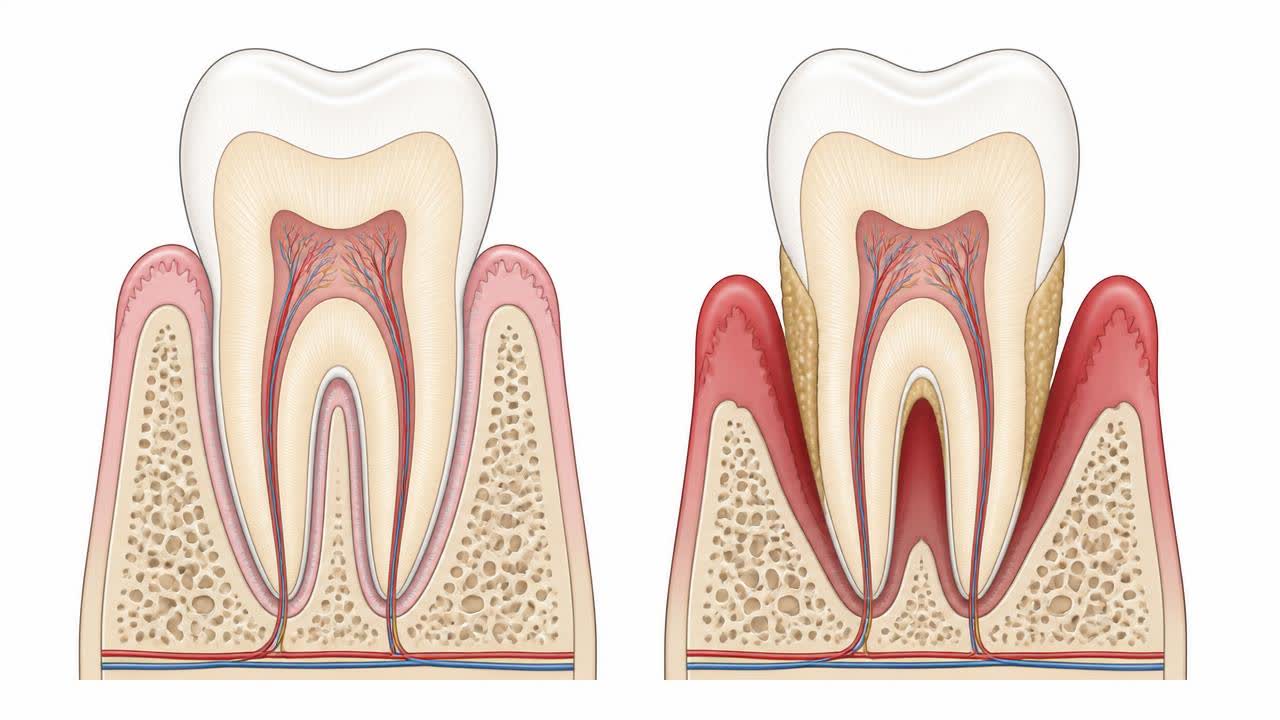
Gingivitis versus periodontitis
Gingivitis is inflammation limited to the gum tissue itself, presenting as redness, puffiness and bleeding when brushing or flossing. It is caused by plaque accumulating along the gumline and is fully reversible with professional cleaning and improved daily hygiene, usually within one to two weeks.
Periodontitis is the more advanced stage, in which the supporting bone and ligament around the tooth begin to be destroyed by ongoing inflammation. It produces gum recession, persistent bad breath, spacing between teeth, increasing tooth mobility and, if untreated, eventual tooth loss. Bone lost to periodontitis does not regenerate on its own once destroyed.
The transition from gingivitis to periodontitis is not inevitable, but it becomes more likely the longer inflammation is left unaddressed, which is why early detection during routine check-ups is so valuable.
How gum disease is diagnosed
A periodontal examination measures the depth of the small groove, or pocket, between the tooth and gum at several points around each tooth using a calibrated probe. Pockets deeper than three millimetres, particularly if they bleed on probing, indicate active disease.
X-rays reveal the level of bone support around the roots, allowing the dental team to distinguish between early, moderate and advanced periodontitis, which in turn guides how intensive the treatment plan needs to be.
Treatment stages
The first stage is scaling and root planing, a thorough professional cleaning that removes hardened deposits and bacterial biofilm from below the gumline, often performed under local anaesthesia for comfort in deeper pockets. Re-evaluation follows at six to eight weeks to assess healing.
Persistent deep pockets that do not respond fully to non-surgical cleaning may need flap surgery to access and clean root surfaces directly, guided tissue regeneration, or bone grafting in areas of significant bone loss. These procedures aim to reduce pocket depth and make long-term maintenance achievable.
Once active treatment is complete, maintenance cleanings every three to six months, tailored to the severity of the original disease, continue indefinitely, since periodontitis is a manageable but not fully curable condition that requires ongoing control.
The systemic link
Periodontitis is associated with poorer blood sugar control in people with diabetes, an elevated risk profile for cardiovascular disease, and adverse pregnancy outcomes including preterm birth in some studies. The relationship appears to run in both directions, with each condition capable of worsening the other.
Treating gum inflammation is therefore best understood as part of general health management rather than a purely dental concern, and is one of the reasons physicians increasingly ask about gum health during broader medical assessments.
Questions patients ask us
- Does scaling loosen teeth?
- No. Scaling removes the hardened deposits that were masking already-existing bone loss underneath. Teeth typically feel tighter, not looser, as gum inflammation resolves after treatment.
- Can gum disease be completely cured?
- Gingivitis can be fully reversed. Periodontitis can be controlled very effectively with treatment and maintenance, but any bone already lost does not regrow, so prevention of further loss becomes the ongoing goal.
- Why do my gums bleed even though I brush regularly?
- Bleeding usually indicates inflammation from plaque that has not been fully removed, often in areas that are harder to reach such as between the teeth, and warrants a professional assessment rather than simply brushing harder.
Sources and further reading
Guidance from professional and public health bodies. Clinical decisions here are made on your own examination and radiographs.
- 1.EFP clinical practice guidelines for periodontitis — European Federation of Periodontology
- 2.Classification of periodontal and peri-implant diseases — American Academy of Periodontology
- 3.Prevention and treatment of periodontal diseases in practice — Scottish Dental Clinical Effectiveness Programme
- 4.Oral health — fact sheet and global status report — World Health Organization
- 5.Policy statements and oral health definitions — FDI World Dental Federation
- 6.Dental health — conditions, treatments and patient guidance — NHS (UK)
- 7.Systematic reviews of oral and dental interventions — Cochrane Oral Health
- 8.Regulatory framework and dental education standards in India — Dental Council of India
When to see us
Get examined without waiting if any of the following applies to you:
- Gums that bleed without provocation, or bleeding that has become heavier
- Teeth that feel loose, are drifting, or gaps that are opening up
- Persistent bad breath or taste, gum abscesses, or pus on pressing the gum
Get a written plan and cost before you commit
If this is what you are dealing with, the next step is a consultation with radiographs — gums & prevention cases are seen by the specialist who handles that field. You get a written plan and staged cost before anything begins.
reception@dramitsharmahospital.comThis article is general education and does not replace an in-person examination, radiographs or a diagnosis by a qualified dentist.
Clinical terms in this article
Related in Gums & Prevention
Bleeding Gums and Gum Disease: A Complete Guide
What bleeding gums usually mean, how gingivitis progresses into periodontal disease, and the treatment path from scaling to gum surgery.
Preventive Dentistry and Home Care
The routine that prevents most dental disease: brushing technique, interdental cleaning, diet and recall visits.
Chronic Bad Breath Caused by Gum Infection
Chronic bad breath, or halitosis, is frequently driven by underlying gum disease. Subgingival bacteria produce volatile sulphur compounds within periodontal pockets. Effective resolution requires professional periodontal debridement, targeted biofilm disruption, and meticulous daily interdental hygiene rather than cosmetic masking.
Loose Permanent Teeth from Advanced Periodontal Disease
Loose teeth from advanced gum disease occur when severe chronic inflammation destroys the supporting alveolar bone and periodontal ligament. With timely periodontal therapy, splinting, and meticulous plaque control, many loose teeth can be stabilised and preserved without extraction.
Furcation Involvement and Bone Loss Between Roots
Furcation involvement describes bone loss between the roots of multi-rooted molars caused by advanced periodontal disease. This clinical guide explains its causes, diagnostic staging, surgical and non-surgical therapies, daily maintenance, and red flag symptoms requiring urgent care.
Scaling and Root Planing Deep Cleaning Procedure
Scaling and root planing is a non-surgical deep cleaning procedure designed to treat chronic periodontitis. It removes subgingival plaque biofilm, hard calculus, and bacterial endotoxins from tooth root surfaces to arrest active gum disease and prevent bone loss.