At a glance
- Healthy gums are firm, pale pink and do not bleed during normal brushing or flossing.
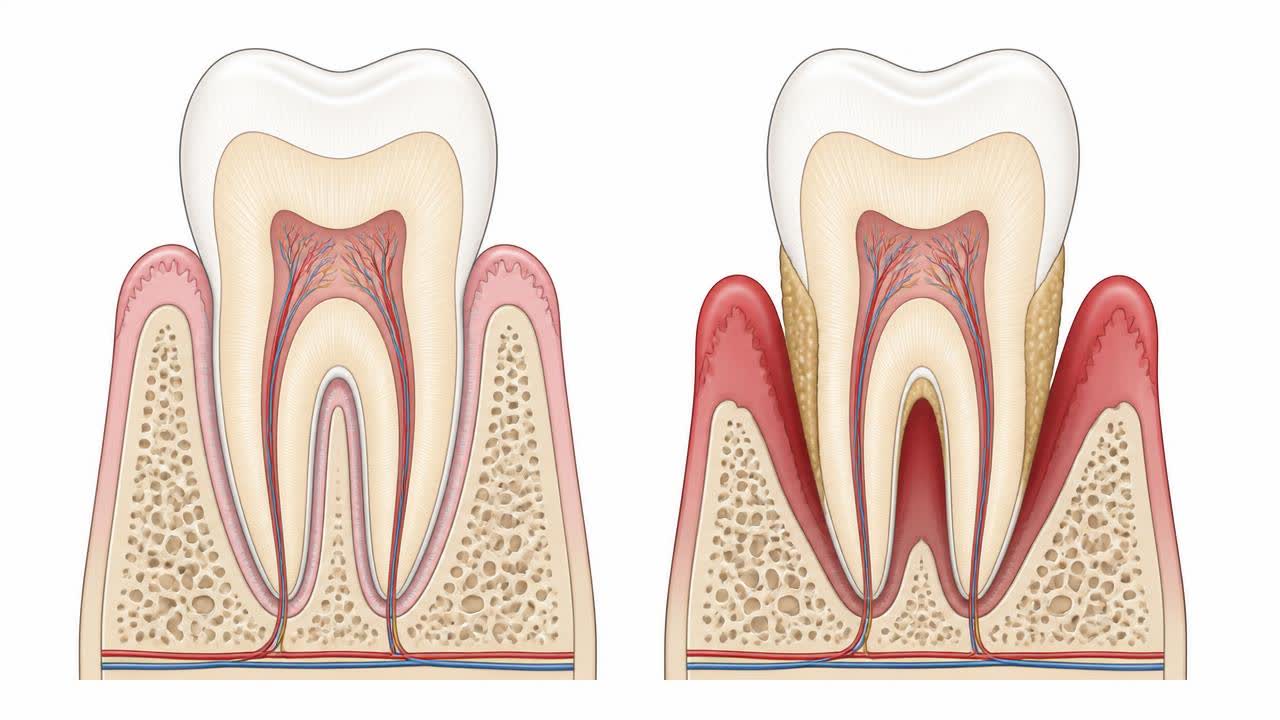
- Gingivitis is inflammation confined to the gum tissue itself, without any loss of the bone or ligament that holds the tooth in place.
- Periodontitis, often referred to by patients as pyorrhea, occurs when inflammation spreads below the gum line and begins to destroy the bone and ligament supporting the tooth.
- The starting point for almost every case is thorough scaling and cleaning, sometimes called deep cleaning when it extends below the gum line to reach root surfaces coated in calculus.
- Brush twice daily with a soft-bristled brush held at a gentle angle against the gum line, and clean between teeth once a day with floss or interdental brushes, since a toothbrush alone cannot reach the contact points where gum…
Why gums bleed
Healthy gums are firm, pale pink and do not bleed during normal brushing or flossing. Bleeding almost always means the gum tissue is inflamed, and the most common cause by far is plaque, a sticky film of bacteria that builds up along the gum line and hardens into calculus (tartar) if it is not removed regularly. The bacteria in this film irritate the gum, causing the small blood vessels near the surface to become fragile and bleed easily when disturbed.
Other contributors include pregnancy and hormonal changes, which make gums more reactive to the same amount of plaque, certain medications that thin the blood or cause gum overgrowth, and poorly controlled diabetes, which slows healing and worsens gum inflammation considerably. In a minority of cases, bleeding gums are linked to a blood disorder or vitamin deficiency, which is why persistent bleeding that does not respond to improved cleaning deserves a proper check-up rather than being dismissed.
Gingivitis: the reversible stage
Gingivitis is inflammation confined to the gum tissue itself, without any loss of the bone or ligament that holds the tooth in place. Gums may look red or swollen and bleed on brushing, but the attachment of the tooth to the jaw remains intact. This stage is fully reversible with improved home care and a professional scaling and cleaning session to remove built-up plaque and calculus.
Left untreated, gingivitis does not stay harmless indefinitely. In a proportion of people, particularly those with additional risk factors such as smoking or diabetes, it progresses to a deeper, less reversible form of gum disease.
Periodontitis: when bone is affected
Periodontitis, often referred to by patients as pyorrhea, occurs when inflammation spreads below the gum line and begins to destroy the bone and ligament supporting the tooth. Pockets form between the tooth and gum, which trap more plaque and make the cycle worse. Signs include gums that appear to be pulling away from the teeth, teeth that look longer than before, persistent bad breath, loose teeth, and gaps opening up between teeth that used to sit close together.
Unlike gingivitis, the bone lost to periodontitis is not fully regained on its own, which is why catching gum disease at the gingivitis stage matters so much. Even so, periodontitis is a manageable, controllable condition when treated properly and followed by consistent maintenance, and further bone loss can usually be halted even in advanced cases.
How gum disease is treated
The starting point for almost every case is thorough scaling and cleaning, sometimes called deep cleaning when it extends below the gum line to reach root surfaces coated in calculus. This removes the bacterial deposits driving the inflammation and, in gingivitis, is often all that is needed alongside better home care.
For deeper pockets, root planing smooths the root surface to discourage bacteria from reattaching, sometimes combined with local antimicrobial placement inside the pocket. Where pockets remain deep despite non-surgical treatment, gum surgery may be recommended to access and clean the root surface directly, reduce pocket depth, or graft tissue over an area of recession.
Ongoing maintenance visits, typically every three to six months depending on severity, are what keep gum disease from returning once it has been brought under control. This is not a one-time fix but a long-term partnership between regular professional care and daily hygiene at home.
What you can do at home
Brush twice daily with a soft-bristled brush held at a gentle angle against the gum line, and clean between teeth once a day with floss or interdental brushes, since a toothbrush alone cannot reach the contact points where gum disease often starts. An antiseptic mouth rinse can be a helpful addition during a flare-up but does not replace mechanical cleaning.
If you smoke, stopping meaningfully improves gum healing and response to treatment, as nicotine restricts blood flow to the gums and masks bleeding that would otherwise act as an early warning sign. Keeping diabetes well controlled also has a measurable, direct effect on how well gum treatment works.
Questions patients ask us
- Is it normal for gums to bleed a little when brushing?
- No. Healthy gums should not bleed during normal brushing or flossing. Bleeding is a sign of inflammation and is worth having checked even if it seems minor.
- Can gum disease be cured completely?
- Gingivitis is fully reversible with treatment and good hygiene. Periodontitis cannot regenerate lost bone completely, but it can be controlled effectively so the disease stops progressing, especially when caught early and followed with regular maintenance.
- Does scaling and cleaning damage the teeth or gums?
- No. Scaling removes plaque and calculus from the tooth surface and below the gum line without harming healthy tooth structure. Gums may feel slightly tender for a day or two afterwards, particularly if there was significant inflammation beforehand.
- Why do my gums bleed more during pregnancy?
- Hormonal changes in pregnancy make gum tissue more reactive to the same amount of plaque, a pattern often called pregnancy gingivitis. Careful cleaning and professional review during pregnancy help keep it under control.
Sources and further reading
Guidance from professional and public health bodies. Clinical decisions here are made on your own examination and radiographs.
- 1.EFP clinical practice guidelines for periodontitis — European Federation of Periodontology
- 2.Classification of periodontal and peri-implant diseases — American Academy of Periodontology
- 3.Prevention and treatment of periodontal diseases in practice — Scottish Dental Clinical Effectiveness Programme
- 4.Oral health — fact sheet and global status report — World Health Organization
- 5.Policy statements and oral health definitions — FDI World Dental Federation
- 6.Dental health — conditions, treatments and patient guidance — NHS (UK)
- 7.Systematic reviews of oral and dental interventions — Cochrane Oral Health
- 8.Regulatory framework and dental education standards in India — Dental Council of India
When to see us
Get examined without waiting if any of the following applies to you:
- Gums that bleed without provocation, or bleeding that has become heavier
- Teeth that feel loose, are drifting, or gaps that are opening up
- Persistent bad breath or taste, gum abscesses, or pus on pressing the gum
Get a written plan and cost before you commit
If this is what you are dealing with, the next step is a consultation with radiographs — gums & prevention cases are seen by the specialist who handles that field. You get a written plan and staged cost before anything begins.
reception@dramitsharmahospital.comThis article is general education and does not replace an in-person examination, radiographs or a diagnosis by a qualified dentist.
Clinical terms in this article
Related in Gums & Prevention
Gum Disease: Detection and Treatment
From reversible gingivitis to periodontitis, the warning signs, staged treatment and the link to overall health.
Preventive Dentistry and Home Care
The routine that prevents most dental disease: brushing technique, interdental cleaning, diet and recall visits.
Chronic Bad Breath Caused by Gum Infection
Chronic bad breath, or halitosis, is frequently driven by underlying gum disease. Subgingival bacteria produce volatile sulphur compounds within periodontal pockets. Effective resolution requires professional periodontal debridement, targeted biofilm disruption, and meticulous daily interdental hygiene rather than cosmetic masking.
Loose Permanent Teeth from Advanced Periodontal Disease
Loose teeth from advanced gum disease occur when severe chronic inflammation destroys the supporting alveolar bone and periodontal ligament. With timely periodontal therapy, splinting, and meticulous plaque control, many loose teeth can be stabilised and preserved without extraction.
Furcation Involvement and Bone Loss Between Roots
Furcation involvement describes bone loss between the roots of multi-rooted molars caused by advanced periodontal disease. This clinical guide explains its causes, diagnostic staging, surgical and non-surgical therapies, daily maintenance, and red flag symptoms requiring urgent care.
Scaling and Root Planing Deep Cleaning Procedure
Scaling and root planing is a non-surgical deep cleaning procedure designed to treat chronic periodontitis. It removes subgingival plaque biofilm, hard calculus, and bacterial endotoxins from tooth root surfaces to arrest active gum disease and prevent bone loss.