At a glance
- Plaque is a soft, living biofilm of bacteria that reforms on a clean tooth within hours.
- Acidic home remedies appear to work because they dissolve a thin surface layer of the deposit and lighten stain.
- Scaling uses an ultrasonic scaler whose tip vibrates at high frequency under a water spray, shattering the bond between calculus and enamel without cutting tooth structure, followed by hand instruments to check every surface and…
- Brush twice daily for two minutes with a soft brush angled at forty-five degrees into the gum margin — the margin is where plaque matters, and it is the surface most people miss while polishing the flat faces.
Plaque versus calculus
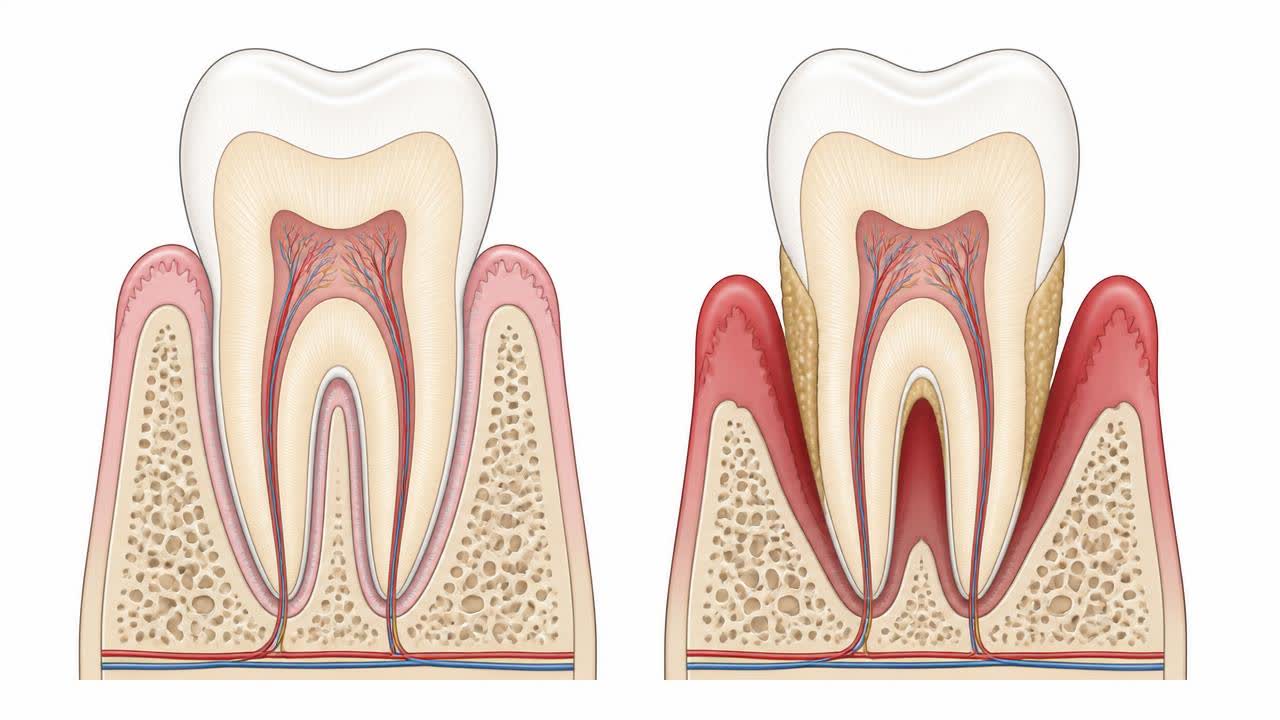
Plaque is a soft, living biofilm of bacteria that reforms on a clean tooth within hours. It is invisible until it thickens, it can be wiped off with a brush or an interdental brush, and controlling it daily is the single most effective thing anyone does for their own mouth. Everything else in preventive dentistry is a support act to that.
Calculus — tartar — is plaque that has mineralised from the calcium and phosphate in saliva. Once mineralised it is bonded to the tooth surface like scale in a kettle, and no amount of brushing, oil pulling, baking soda, lemon, vinegar or charcoal will remove it. A continuous ledge of calculus bridging across several teeth, usually behind the lower front teeth where the salivary ducts open, is what people search for as a 'calculus bridge'. It is removed instrumentally or not at all.
Why home remedies fail and can harm
Acidic home remedies appear to work because they dissolve a thin surface layer of the deposit and lighten stain. What they also dissolve is enamel, which does not regenerate. Repeated lemon juice, vinegar or high-concentration baking soda scrubbing produces teeth that are smoother-looking, thinner, more sensitive and more prone to decay — and the calculus at the gum margin, which was the actual problem, is still there.
Metal picks and scalers sold online are the other common self-treatment. Used blind, they gouge the root surface, cut the gum and drive debris into the pocket. The instrumentation looks simple because the operator's skill is in knowing the root anatomy by feel, not in the tool.
What professional removal involves
Scaling uses an ultrasonic scaler whose tip vibrates at high frequency under a water spray, shattering the bond between calculus and enamel without cutting tooth structure, followed by hand instruments to check every surface and a polish to leave the surface smooth so plaque takes longer to re-adhere. Supragingival calculus above the gum comes off comfortably and usually needs no anaesthesia.
Calculus below the gum line is a different procedure. Root planing cleans the root surface within the periodontal pocket, is done by quadrant under local anaesthesia, and is followed by re-measurement of pocket depths four to six weeks later to see what responded. Anyone with deep pockets is treated on a maintenance interval of three to six months thereafter, because the deposit reforms fastest exactly where the disease already is.
Keeping teeth clean between appointments
Brush twice daily for two minutes with a soft brush angled at forty-five degrees into the gum margin — the margin is where plaque matters, and it is the surface most people miss while polishing the flat faces. An electric brush with a pressure sensor helps those who scrub too hard. Clean between the teeth every day with interdental brushes sized to your own gaps; for anyone with existing gum disease these outperform floss considerably.
Rinse-only regimes do not control plaque, and mouthwash cannot reach the base of a pocket. Reduce the frequency, not just the quantity, of sugar exposure, and stop tobacco in every form — smoking accelerates calculus formation and simultaneously suppresses the bleeding that would have warned you the gums were inflamed.
Questions patients ask us
- Can hardened tartar be removed at home?
- No. Once plaque mineralises into calculus it is chemically bonded to the tooth and only instrumental removal by a dentist or hygienist will lift it. Home methods either do nothing or damage enamel while leaving the deposit at the gum margin untouched.
- What is a calculus bridge?
- It is a continuous ledge of hardened tartar that has grown across several adjoining teeth, most often on the inner surface of the lower front teeth. It indicates months to years of accumulation and is almost always accompanied by gum inflammation, so treatment includes assessing the gums, not just removing the deposit.
- Does scaling loosen or damage teeth?
- No. Ultrasonic scaling removes deposit, not tooth structure. Teeth can feel slightly loose or sensitive for a short period afterwards because the calculus that was splinting them and blocking the gum margin has gone and inflamed tissue is shrinking back — that settles as the gums heal.
- How often should teeth be professionally cleaned?
- Six-monthly for most adults with healthy gums. Anyone with treated periodontitis, diabetes, heavy calculus formation, orthodontic appliances or implants is generally reviewed every three to four months, because the interval is set by how fast deposit reforms in your mouth, not by a standard rule.
Sources and further reading
Guidance from professional and public health bodies. Clinical decisions here are made on your own examination and radiographs.
- 1.EFP clinical practice guidelines for periodontitis — European Federation of Periodontology
- 2.Classification of periodontal and peri-implant diseases — American Academy of Periodontology
- 3.Prevention and treatment of periodontal diseases in practice — Scottish Dental Clinical Effectiveness Programme
- 4.Oral health — fact sheet and global status report — World Health Organization
- 5.Policy statements and oral health definitions — FDI World Dental Federation
- 6.Dental health — conditions, treatments and patient guidance — NHS (UK)
- 7.Systematic reviews of oral and dental interventions — Cochrane Oral Health
- 8.Regulatory framework and dental education standards in India — Dental Council of India
When to see us
Get examined without waiting if any of the following applies to you:
- Gums that bleed without provocation, or bleeding that has become heavier
- Teeth that feel loose, are drifting, or gaps that are opening up
- Persistent bad breath or taste, gum abscesses, or pus on pressing the gum
Get a written plan and cost before you commit
If this is what you are dealing with, the next step is a consultation with radiographs — gums & prevention cases are seen by the specialist who handles that field. You get a written plan and staged cost before anything begins.
reception@dramitsharmahospital.comThis article is general education and does not replace an in-person examination, radiographs or a diagnosis by a qualified dentist.
Clinical terms in this article
Related in Gums & Prevention
Bleeding Gums and Gum Disease: A Complete Guide
What bleeding gums usually mean, how gingivitis progresses into periodontal disease, and the treatment path from scaling to gum surgery.
Gum Disease: Detection and Treatment
From reversible gingivitis to periodontitis, the warning signs, staged treatment and the link to overall health.
Preventive Dentistry and Home Care
The routine that prevents most dental disease: brushing technique, interdental cleaning, diet and recall visits.
Chronic Bad Breath Caused by Gum Infection
Chronic bad breath, or halitosis, is frequently driven by underlying gum disease. Subgingival bacteria produce volatile sulphur compounds within periodontal pockets. Effective resolution requires professional periodontal debridement, targeted biofilm disruption, and meticulous daily interdental hygiene rather than cosmetic masking.
Loose Permanent Teeth from Advanced Periodontal Disease
Loose teeth from advanced gum disease occur when severe chronic inflammation destroys the supporting alveolar bone and periodontal ligament. With timely periodontal therapy, splinting, and meticulous plaque control, many loose teeth can be stabilised and preserved without extraction.
Furcation Involvement and Bone Loss Between Roots
Furcation involvement describes bone loss between the roots of multi-rooted molars caused by advanced periodontal disease. This clinical guide explains its causes, diagnostic staging, surgical and non-surgical therapies, daily maintenance, and red flag symptoms requiring urgent care.