At a glance
- An implant abutment is the essential component that bridges the gap between the dental implant itself and the final prosthetic crown.
- Stock abutments are pre-manufactured by the implant company and are available in various standard sizes and shapes.
- Custom abutments are individually designed and fabricated for your unique anatomy.
- Abutments are typically made from titanium or zirconia.
- The precision of the abutment connection is paramount to the health of your implant.
What is an Implant Abutment?
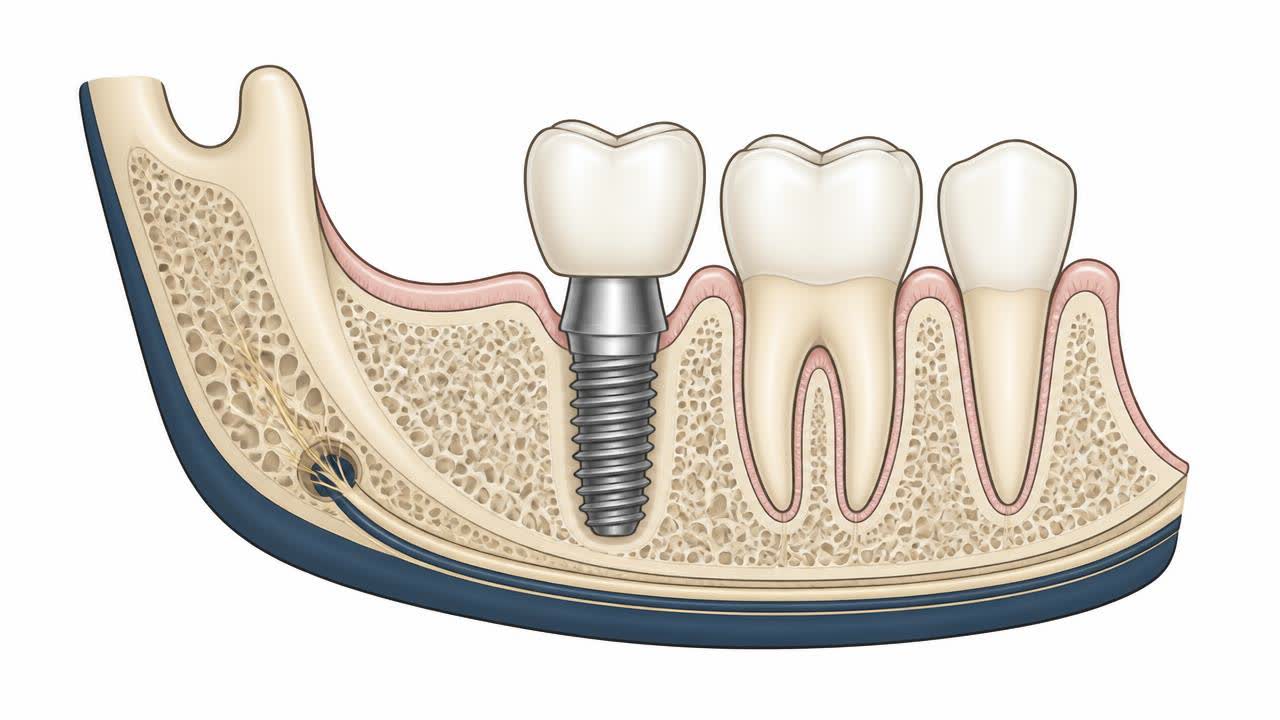
An implant abutment is the essential component that bridges the gap between the dental implant itself and the final prosthetic crown. Think of the implant as the artificial root embedded in your bone and the abutment as the post that sticks out above the gumline. This post provides the foundation for your new tooth, ensuring that the crown is firmly attached and positioned correctly for both biting function and aesthetics.
Choosing the right abutment is a critical part of the restorative phase of your dental implant treatment. It needs to be crafted with precision to fit perfectly with the implant and the crown, creating a solid, stable, and cleanable connection. Depending on your specific case, different types of abutments are available, each offering unique benefits for the overall health and longevity of your dental implant restoration.
Stock Abutments
Stock abutments are pre-manufactured by the implant company and are available in various standard sizes and shapes. They are a reliable and cost-effective option for many clinical cases where the gum anatomy is standard and the implant is in a favourable position. Because they are ready to use, they can sometimes simplify the restorative process, making it quicker to proceed to the final crown delivery.
However, stock abutments may not provide the same level of customisation as bespoke options. If your gum tissue has a unique shape or if the implant requires a specific angle to align with your natural teeth, a stock abutment might need more adjustments. Our team carefully evaluates whether a stock option will provide the optimal fit and long-term stability for your specific dental requirements.
Custom Abutments
Custom abutments are individually designed and fabricated for your unique anatomy. Using digital technology, we scan the position of your implant and the surrounding gum tissue, allowing a technician to create an abutment that perfectly mimics the shape of a natural tooth emerging from the gums. This results in an incredibly precise fit that supports healthy gum tissue and makes it easier for you to clean around the implant.
The main benefit of a custom abutment is the ability to manage the gum contour accurately. By creating a custom shape, we can ensure that the transition from the implant to the crown is smooth and comfortable. This not only improves the overall look of the restoration but also helps in maintaining the health of the surrounding tissues, reducing the risk of inflammation and long-term gum issues.
Material Considerations
Abutments are typically made from titanium or zirconia. Titanium is the classic choice, valued for its exceptional strength and reliability, especially in areas where bite forces are intense. It is highly biocompatible and has been used safely for decades, providing a solid, predictable base for almost any type of crown restoration. It remains a popular, high-performance option for most implant scenarios.
Zirconia abutments are often chosen for their aesthetic advantages, particularly in the front of the mouth. Because they are white, they do not create a dark shadow through the gum tissue, providing a more lifelike appearance. They are also gentle on the surrounding gums and can be used to achieve a very natural-looking restoration. Your dentist will discuss which material best suits your clinical needs and aesthetic expectations.
Precision for Success
The precision of the abutment connection is paramount to the health of your implant. A well-fitted abutment prevents micro-movements of the crown and keeps bacterial plaque from accumulating in the connection area. By choosing the right abutment type and material, we ensure that your restoration is robust, stable, and easy to maintain over the coming years, protecting your dental investment.
We take great care in selecting and fitting your abutment, using advanced digital tools to ensure accuracy. Whether you require a stock or a custom solution, our goal is to provide a restoration that feels and functions just like your natural teeth. By investing in the right abutment, you are choosing a treatment path that prioritises your comfort, aesthetics, and long-term oral health outcomes.
Questions patients ask us
- Does the abutment type affect the final crown?
- Yes, the abutment directly supports the crown and influences its position, angle, and emergence from the gum tissue. A properly selected and customised abutment is crucial for achieving both a beautiful aesthetic result and a functional, easy-to-clean restoration that lasts for many years.
- Why would I need a custom abutment?
- A custom abutment is used when your gum anatomy or implant position requires a highly tailored solution to achieve the best results. It allows for better management of the gum contour, ensuring a natural look and easier maintenance, which is especially important in the visible smile zone.
- Are zirconia abutments as strong as titanium?
- Zirconia abutments are strong and durable, but titanium is generally considered to have higher fracture toughness, making it ideal for high-stress areas. However, for most patients, zirconia is more than strong enough to handle normal daily chewing forces, while providing significant aesthetic benefits.
- Who decides which abutment is best for me?
- Your dentist will decide based on a detailed clinical assessment, including the position of the implant, the thickness of your gums, and your biting forces. They will consider all these factors to recommend the best abutment that balances clinical performance with your specific aesthetic goals.
Sources and further reading
Guidance from professional and public health bodies. Clinical decisions here are made on your own examination and radiographs.
- 1.ITI Treatment Guide series and consensus statements — International Team for Implantology (ITI)
- 2.Consensus reports on implant dentistry — European Association for Osseointegration
- 3.Prosthodontic and edentulous-care patient guidance — American College of Prosthodontists
- 4.Oral health — fact sheet and global status report — World Health Organization
- 5.Policy statements and oral health definitions — FDI World Dental Federation
- 6.Dental health — conditions, treatments and patient guidance — NHS (UK)
- 7.Systematic reviews of oral and dental interventions — Cochrane Oral Health
- 8.Regulatory framework and dental education standards in India — Dental Council of India
When to see us
Get examined without waiting if any of the following applies to you:
- Pain, looseness or pus around an implant or a fixed bridge
- A crown, bridge or denture that has fractured or come away
- Gum swelling that keeps returning around the same restoration
Get a written plan and cost before you commit
If this is what you are dealing with, the next step is a consultation with radiographs — implants & missing teeth cases are seen by the specialist who handles that field. You get a written plan and staged cost before anything begins.
reception@dramitsharmahospital.comThis article is general education and does not replace an in-person examination, radiographs or a diagnosis by a qualified dentist.
Clinical terms in this article
Related in Implants & Missing Teeth
Missing Teeth: Comparing Dentures, Bridges and Implant Options
What happens if a missing tooth is left unreplaced, and how dentures, bridges and implants compare on comfort, longevity and bone health.
Dental Implants: A Complete Guide
How titanium implants replace missing teeth, who qualifies, the step-by-step timeline and how long they last.
Full Mouth Rehabilitation
Rebuilding a worn, collapsed or heavily damaged dentition with a sequenced, whole-mouth treatment plan.
Peri-Implant Mucositis Symptoms and Early Intervention
Peri-implant mucositis is a plaque-induced, reversible inflammatory lesion affecting the soft tissues surrounding a dental implant without bone loss. Prompt professional debridement, risk-factor modification, and meticulous biofilm control prevent progression to irreversible peri-implantitis.
Peri-Implantitis Symptoms Bone Loss and Implant Salvage
Peri-implantitis is an inflammatory condition causing progressive marginal bone loss around dental implants. Early detection, thorough decontamination, and advanced surgical salvage techniques can arrest bone destruction, resolve inflammation, and preserve implant stability.
Root Canal Retreatment vs Tooth Extraction and Implant
This clinical guide evaluates root canal retreatment versus tooth extraction and dental implant placement. Learn about biological tooth preservation, anatomical considerations, procedural steps, longevity, recovery expectations, and diagnostic criteria to make an informed oral healthcare decision.