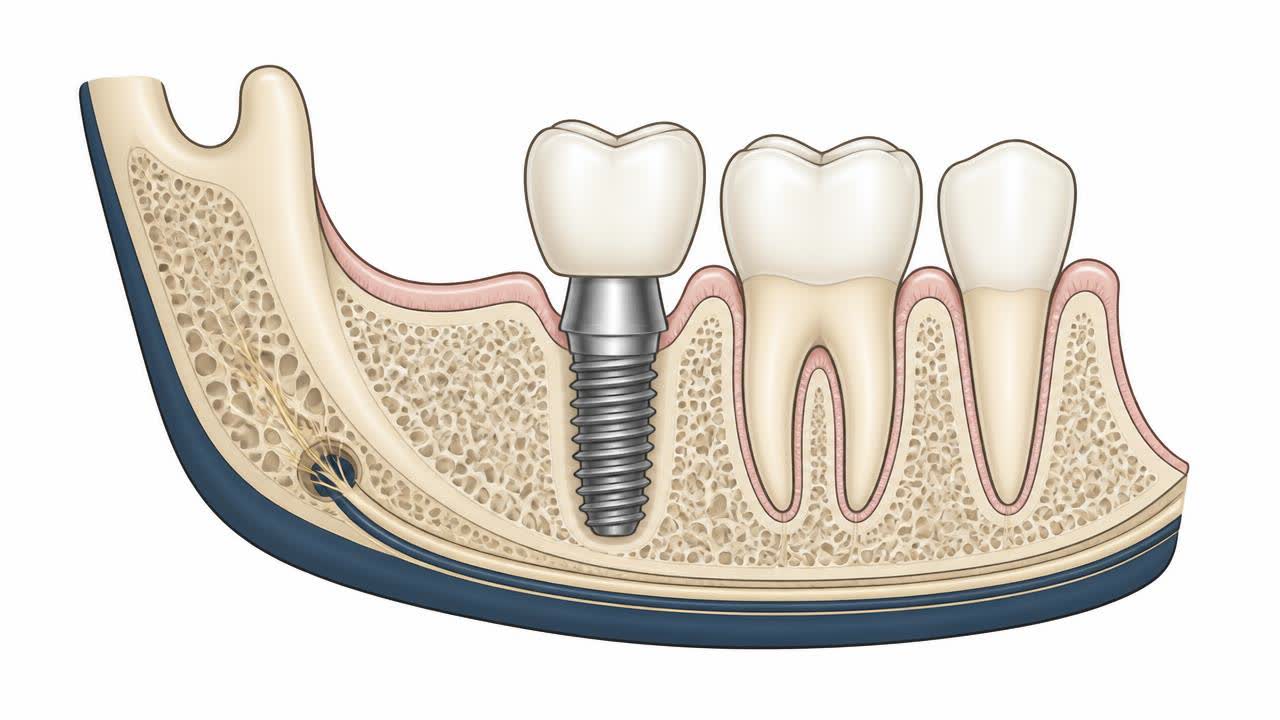
At a glance
- Mini dental implants, or MDIs, are a smaller version of traditional dental implants, designed to provide a more minimally invasive solution for certain types of restorations.
- The main benefit of mini implants is their small diameter, which allows them to be placed in areas where there might be insufficient bone for a standard-sized implant.
- Mini dental implants are most commonly recommended for stabilizing a loose, removable lower denture.
- The placement of mini implants is generally a straightforward, minimally invasive procedure.
- We are committed to finding the best, most comfortable solutions for your dental needs.
Understanding Mini Dental Implants
Mini dental implants, or MDIs, are a smaller version of traditional dental implants, designed to provide a more minimally invasive solution for certain types of restorations. They consist of a narrower titanium post that is gently placed into the bone, often requiring less surgical time and a simpler procedure compared to standard implants. Their smaller size makes them an excellent option in situations where bone volume may be limited.
MDIs are primarily used to stabilise loose dentures, offering a more comfortable and secure fit that significantly improves the quality of life for many patients. Because they require less surgical intervention, they are often a preferred choice for older patients or those who may not be ideal candidates for the more extensive procedure required for standard, larger-diameter dental implants. They are a wonderful, versatile, and effective solution for many patients.
Benefits of a Smaller Size
The main benefit of mini implants is their small diameter, which allows them to be placed in areas where there might be insufficient bone for a standard-sized implant. This often means that a patient can avoid the need for extensive bone grafting procedures, which saves time, reduces the cost, and simplifies the overall treatment process. They offer a highly effective way to restore function with less overall surgical stress.
Because the placement process is less invasive, the healing time is typically much faster, and many patients experience very minimal post-operative discomfort. The immediate improvement in the stability and comfort of a denture can be life-changing, allowing you to enjoy your favourite foods and speak with more confidence. They are a truly wonderful tool that can make life better for many of our patients.
When are Mini Implants Recommended?
Mini dental implants are most commonly recommended for stabilizing a loose, removable lower denture. The lower denture is notorious for being difficult to keep stable because of the movement of the tongue and the lack of suction. By placing four or more mini implants, we can securely snap the denture into place, preventing the annoying sliding and tipping that often occurs.
They can also be used for other specific needs, such as supporting single teeth in narrow spaces where a larger implant just won't fit. During your consultation, we will assess the amount of available bone and your specific functional goals to determine if mini implants are the right, most predictable solution for you. We are always focused on providing the best possible result for your specific situation.
Procedure and Recovery
The placement of mini implants is generally a straightforward, minimally invasive procedure. It can often be completed in a single session, and in many cases, your existing denture can be modified to snap onto the new implants immediately. This immediate result is one of the most exciting aspects of MDI treatment for many of our patients, as it restores comfort and confidence right away.
Recovery is typically very quick, with many patients returning to their normal activities within a day or two. You will receive clear, easy-to-follow post-operative instructions to help you have a smooth and comfortable healing process. We will monitor your progress closely in the following weeks to ensure that your implants are integrating perfectly and that your denture is fitting comfortably and securely.
Your Path to a More Comfortable Smile
We are committed to finding the best, most comfortable solutions for your dental needs. If you struggle with loose dentures or missing teeth, mini dental implants may be the perfect, less invasive option you have been looking for. We invite you to schedule a consultation with us to discuss your situation and see if MDIs could be the right path for your more stable, comfortable smile.
We take the time to answer all your questions, providing the information you need to make an informed decision. Our goal is to improve your daily quality of life, allowing you to eat, speak, and smile with confidence and comfort. We are here to support you in every step of your dental journey, ensuring you have the care and expertise you deserve.
Questions patients ask us
- What is the difference between mini and standard implants?
- Mini implants are much smaller in diameter than standard implants, allowing them to be placed in areas with less available bone without the need for extensive grafting. They are primarily designed for stabilising dentures rather than supporting large, fixed bridges or multiple crowns.
- Are mini dental implants right for me?
- They are a fantastic, less invasive option, particularly for patients struggling with loose dentures or those who cannot undergo a standard implant procedure due to bone limitations. We will assess your jaw bone health during your consultation to see if they are the most suitable, stable solution for you.
- How long is the healing period for mini implants?
- Healing is typically much faster for mini implants than for standard ones, and in many cases, they can be used to stabilise your denture immediately. Most patients find the recovery process to be quite quick and comfortable, allowing them to enjoy the benefits of their improved smile without long waits.
- Do I need new dentures to use mini implants?
- In many cases, your existing dentures can be easily modified to snap onto the mini implants. This can save you both time and money, making it a very convenient way to improve your quality of life. We will evaluate your current denture to see if it is a good fit for this modification.
Sources and further reading
Guidance from professional and public health bodies. Clinical decisions here are made on your own examination and radiographs.
- 1.ITI Treatment Guide series and consensus statements — International Team for Implantology (ITI)
- 2.Consensus reports on implant dentistry — European Association for Osseointegration
- 3.Prosthodontic and edentulous-care patient guidance — American College of Prosthodontists
- 4.Oral health — fact sheet and global status report — World Health Organization
- 5.Policy statements and oral health definitions — FDI World Dental Federation
- 6.Dental health — conditions, treatments and patient guidance — NHS (UK)
- 7.Systematic reviews of oral and dental interventions — Cochrane Oral Health
- 8.Regulatory framework and dental education standards in India — Dental Council of India
When to see us
Get examined without waiting if any of the following applies to you:
- Pain, looseness or pus around an implant or a fixed bridge
- A crown, bridge or denture that has fractured or come away
- Gum swelling that keeps returning around the same restoration
Get a written plan and cost before you commit
If this is what you are dealing with, the next step is a consultation with radiographs — implants & missing teeth cases are seen by the specialist who handles that field. You get a written plan and staged cost before anything begins.
reception@dramitsharmahospital.comThis article is general education and does not replace an in-person examination, radiographs or a diagnosis by a qualified dentist.
Clinical terms in this article
Related in Implants & Missing Teeth
Missing Teeth: Comparing Dentures, Bridges and Implant Options
What happens if a missing tooth is left unreplaced, and how dentures, bridges and implants compare on comfort, longevity and bone health.
Dental Implants: A Complete Guide
How titanium implants replace missing teeth, who qualifies, the step-by-step timeline and how long they last.
Full Mouth Rehabilitation
Rebuilding a worn, collapsed or heavily damaged dentition with a sequenced, whole-mouth treatment plan.
Peri-Implant Mucositis Symptoms and Early Intervention
Peri-implant mucositis is a plaque-induced, reversible inflammatory lesion affecting the soft tissues surrounding a dental implant without bone loss. Prompt professional debridement, risk-factor modification, and meticulous biofilm control prevent progression to irreversible peri-implantitis.
Peri-Implantitis Symptoms Bone Loss and Implant Salvage
Peri-implantitis is an inflammatory condition causing progressive marginal bone loss around dental implants. Early detection, thorough decontamination, and advanced surgical salvage techniques can arrest bone destruction, resolve inflammation, and preserve implant stability.
Root Canal Retreatment vs Tooth Extraction and Implant
This clinical guide evaluates root canal retreatment versus tooth extraction and dental implant placement. Learn about biological tooth preservation, anatomical considerations, procedural steps, longevity, recovery expectations, and diagnostic criteria to make an informed oral healthcare decision.