At a glance
- Entering your thirties often brings a renewed focus on self-improvement, and many adults choose this decade to finally address lifelong concerns about their smile.
- In your forties, you might notice changes in your tooth positioning or a shifting bite that was not present before.
- Patients in their fifties and beyond are increasingly choosing to invest in their smiles, recognising that a healthy, functional bite is essential for general well-being.
- As we age, our bone biology changes, which is why adult orthodontics requires a nuanced, professional approach.
- Regardless of your age, the path to a healthier, more beautiful smile begins with a professional consultation.
Orthodontics in Your Thirties
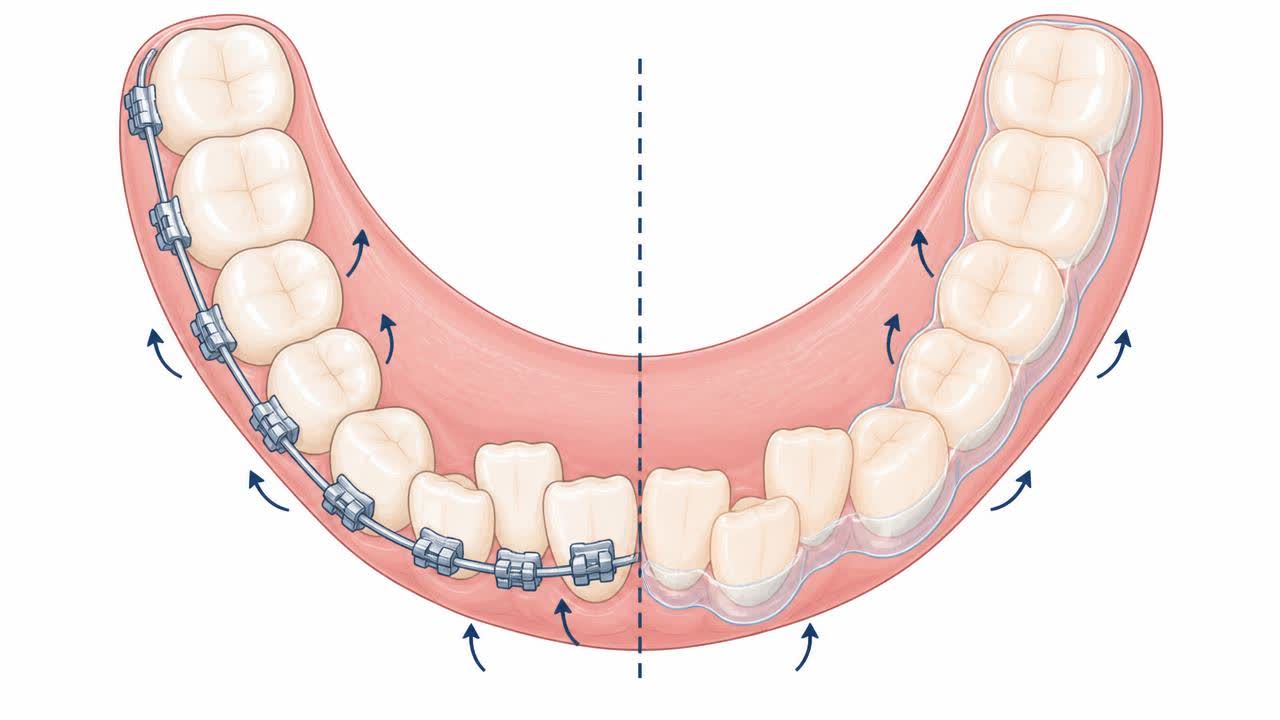
Entering your thirties often brings a renewed focus on self-improvement, and many adults choose this decade to finally address lifelong concerns about their smile. At this stage, your dental health is generally robust, making it an excellent time for orthodontic intervention. Clear aligners and ceramic braces are particularly popular choices for this group, as they offer the aesthetic discretion needed for professional and social environments while providing powerful corrective results.
Our clinicians at Dr. Amit Sharma Super Speciality Dental Hospital understand the unique priorities of patients in their thirties. We focus on efficient treatment plans that integrate seamlessly into your life, ensuring you can continue your daily routines with confidence. By correcting crowding or bite issues now, you are also investing in your long-term periodontal health, making future dental maintenance much easier and more predictable as you age.
Addressing Smile Concerns in Your Forties
In your forties, you might notice changes in your tooth positioning or a shifting bite that was not present before. This is common due to natural ageing, previous dental work, or changes in gum health. Orthodontic treatment at this stage is highly effective at realigning your teeth, improving your bite function, and restoring your confidence. We often coordinate treatment with other dental specialists to ensure a comprehensive, multi-disciplinary approach.
Our team treats many patients in their forties who are prioritising their overall wellness, including oral health. We take care to ensure that your treatment plan accounts for your existing dental work, such as crowns or bridges, and supports your gum health throughout the process. The results are not just aesthetic; a properly aligned bite reduces tooth wear and makes cleaning easier, protecting your teeth for many years to come.
Orthodontics After Fifty
Patients in their fifties and beyond are increasingly choosing to invest in their smiles, recognising that a healthy, functional bite is essential for general well-being. At this age, the focus is often on preserving natural teeth, correcting bite irregularities that cause premature wear, and improving the ease of cleaning. We offer tailored treatment plans that are exceptionally gentle, ensuring comfort and safety for our more mature patients.
Even if you have experienced some bone loss or have dental restorations, orthodontics can still be performed safely and successfully under expert supervision. We conduct thorough diagnostics to ensure your gums and bone structure are healthy enough for movement. Achieving a straight, healthy smile in your fifties is a fantastic way to support your long-term health and enjoy a renewed sense of confidence every single day.
Biological Considerations for Adult Patients
As we age, our bone biology changes, which is why adult orthodontics requires a nuanced, professional approach. While the principles of movement remain the same, our focus at Dr. Amit Sharma Super Speciality Dental Hospital is on managing the health of your periodontium—the gums and bone surrounding your teeth. We perform meticulous assessments to ensure that your orthodontic movement is safe, stable, and highly controlled throughout the treatment.
We often work in conjunction with our periodontal team to ensure your gums are in optimal health before and during your orthodontic journey. This integrated care is what sets our clinic apart, providing you with a safe and effective path to a better smile. We prioritise your overall oral health as much as the final aesthetic result, ensuring that your treatment is a success for the long term.
Embarking on Your Journey
Regardless of your age, the path to a healthier, more beautiful smile begins with a professional consultation. We believe that your age should never be a barrier to seeking the dental care you want and deserve. During your visit to our Jaipur hospital, we will discuss your unique health history, aesthetic goals, and the best orthodontic options for your lifestyle, ensuring you feel fully informed and confident.
Our doors are open to everyone, and we are dedicated to providing the high-quality, personalised orthodontic care you need. Whether you are 30, 40, or 50, let us help you reach your goals. Contact Dr. Amit Sharma Super Speciality Dental Hospital at 9314403502 to schedule your assessment. We look forward to helping you achieve a healthier, more confident, and functional smile through our expert-led orthodontic services.
Questions patients ask us
- Is it harder to move teeth as an adult?
- The biological process of moving teeth is similar at any age. However, adult bone is denser, which might influence the rate of movement or the complexity of the plan. With modern diagnostic tools and techniques, we can achieve excellent, stable results for adults of all ages safely.
- What if I have dental crowns or bridges?
- Having crowns or bridges does not automatically preclude you from orthodontic treatment. We will perform a comprehensive assessment to ensure the appliances can be placed effectively and safely without compromising your existing restorations. Sometimes, we may need to adjust the treatment plan to work around these structures.
- How does adult orthodontics improve long-term health?
- A straighter smile is easier to clean, which significantly reduces the risk of gum disease and decay. Correcting bite issues also prevents uneven tooth wear and reduces stress on the jaw joints, supporting long-term oral health and potentially saving you from needing complex restorative work in the future.
- What is the most discreet option for adults?
- Clear aligners and lingual braces are the most discreet options. They are popular among our adult patients because they provide the corrective power of traditional braces while remaining nearly invisible, allowing you to maintain your professional and social lifestyle with confidence throughout your treatment.
Sources and further reading
Guidance from professional and public health bodies. Clinical decisions here are made on your own examination and radiographs.
- 1.Orthodontic treatment and retention — patient resources — American Association of Orthodontists
- 2.Patient information leaflets on appliances and retention — British Orthodontic Society
- 3.Oral health — fact sheet and global status report — World Health Organization
- 4.Policy statements and oral health definitions — FDI World Dental Federation
- 5.Dental health — conditions, treatments and patient guidance — NHS (UK)
- 6.Systematic reviews of oral and dental interventions — Cochrane Oral Health
- 7.Regulatory framework and dental education standards in India — Dental Council of India
When to see us
Get examined without waiting if any of the following applies to you:
- A broken bracket, poking wire or appliance causing ulceration
- A tooth that becomes painful, loose or discoloured during treatment
- Jaw joint pain, locking or a bite that has changed suddenly
Get a written plan and cost before you commit
If this is what you are dealing with, the next step is a consultation with radiographs — orthodontics cases are seen by the specialist who handles that field. You get a written plan and staged cost before anything begins.
reception@dramitsharmahospital.comThis article is general education and does not replace an in-person examination, radiographs or a diagnosis by a qualified dentist.
Clinical terms in this article
Related in Orthodontics
Aligners and Braces: Choosing the Right Option
Metal, ceramic and clear aligner treatment compared, duration, visibility, cost and suitability.
Tooth Extraction for Braces or Severe Crowding Issues
Orthodontic extractions involve the planned removal of select teeth to resolve severe crowding, correct bimaxillary protrusion, and balance dentoalveolar proportions. This clinical guide details diagnostic indications, extraction patterns, procedural steps, recovery, risks, and evidence-based non-extraction alternatives.
Maxillary Osteotomy for Open Bite Alignment and Correction
Maxillary osteotomy for open bite corrects severe vertical skeletal discrepancies through surgical repositioning of the upper jaw. Combined with orthodontics, this procedure restores chewing function, improves speech articulation, and ensures long-term occlusal and facial stability.
Surgically Assisted Rapid Palatal Expansion for Adult Palate Widening
Surgically assisted rapid palatal expansion (SARPE) is a combined orthodontic and surgical treatment designed to correct severe transverse maxillary deficiency in skeletally mature adults, widening the narrow upper jaw to restore functional occlusion, stability, and airway volume.
Surgical Exposure and Bracket Bonding for Impacted Canine Teeth
This clinical guide details impacted canine exposure surgery and bracket bonding. It explains anatomical causes, CBCT diagnostic pathways, open versus closed surgical techniques, orthodontic traction mechanisms, recovery protocols, and evidence-based strategies to manage complications.
Overbite vs Overjet: Key Differences and Correction Methods
This clinical guide clarifies the distinction between overbite (vertical overlap) and overjet (horizontal protrusion). It examines their aetiology, diagnostic pathways, classification, and evidence-based orthodontic and surgical correction methods across paediatric and adult populations.