At a glance
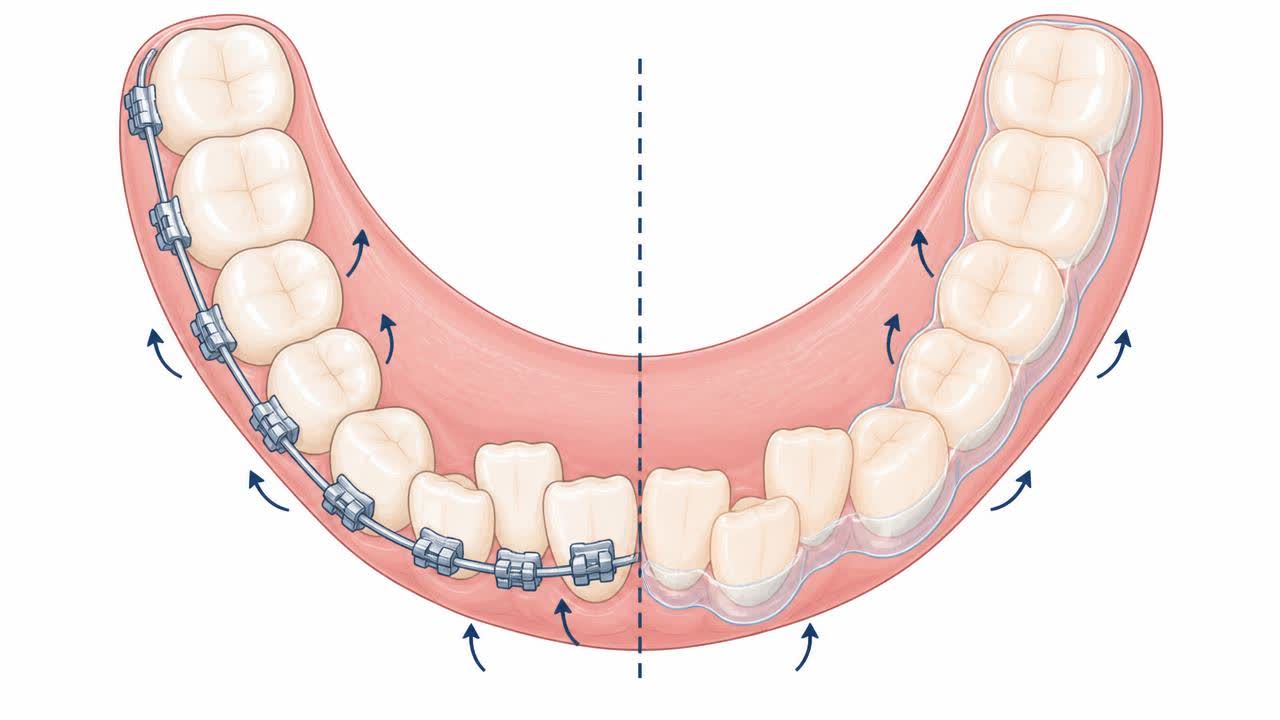
- Lingual orthodontics refers to the practice of attaching brackets and archwires to the internal, palatal (upper arch) and lingual (lower arch) surfaces of the teeth rather than the facial or labial (outer) enamel.
- Lingual orthodontic systems are capable of treating almost the entire spectrum of malocclusions, ranging from mild crowding to complex skeletal discrepancies requiring orthognathic surgery.
- The diagnostic phase for lingual orthodontic therapy is considerably more technically demanding than conventional labial treatment.
- Because the lingual anatomy varies widely between individual teeth, standard, non-customised brackets bonded directly to the lingual enamel frequently produce unpredictable tooth movements and significant patient discomfort.
- The clinical application of lingual braces is performed almost exclusively via indirect bonding to ensure absolute precision.
What Are Lingual Braces and the Relevant Oral Anatomy?
Lingual orthodontics refers to the practice of attaching brackets and archwires to the internal, palatal (upper arch) and lingual (lower arch) surfaces of the teeth rather than the facial or labial (outer) enamel. The lingual aspect of the human dentition presents unique anatomical complexities. Unlike the relatively uniform labial surfaces, lingual tooth morphology exhibits pronounced morphological variability, including distinct cingula on anterior teeth, marginal ridges, variable inclinations, and deeper concavities. Because the appliance is fixed entirely within the oral cavity proper, it interacts continuously with the dorsal and lateral borders of the tongue during articulation, swallowing, and rest.
From a biomechanical standpoint, the placement of brackets closer to the tooth's centre of resistance changes the forces exerted during tooth movement. The inter-bracket distance on the lingual aspect is significantly reduced compared to labial placement because the inner dental arch perimeter is smaller. This reduced span increases the relative stiffness of connecting orthodontic archwires, requiring specialized, low-dimension alloy wires, such as nickel-titanium and beta-titanium, to deliver light, continuous physiological forces. When patients explore lingual braces behind teeth cost pros cons, understanding this intimate spatial relationship between the brackets, the tongue, and the lingual periodontium is fundamental to assessing suitability.
Diagnostic Workup, Radiographic Assessment, and Treatment Planning
The diagnostic phase for lingual orthodontic therapy is considerably more technically demanding than conventional labial treatment. It begins with high-resolution digital intraoral scanning to generate accurate three-dimensional digital dental models. Clinicians perform comprehensive Bolton discrepancy analyses, which evaluate tooth-size ratios between the maxillary and mandibular arches to ensure ideal post-treatment interdigitation. Facial photography and dynamic smile evaluations are conducted to determine aesthetic parameters, including incisor display, smile arc concordance, and soft-tissue lip support.
Radiographic evaluation remains the cornerstone of comprehensive treatment planning. Standard diagnostic protocols comprise a digital orthopantomogram (panoramic radiograph) to assess general root morphology, periodontal bone height, and the status of unerupted dentition, alongside a lateral cephalometric radiograph to calculate skeletal base relationships and incisor angulation relative to cranial references. Where complex impactions, skeletal asymmetry, or anatomical limitations in alveolar bone width exist, cone-beam computed tomography (CBCT) provides volumetric assessment of the cortical plates, ensuring that root movement remains strictly within the biological envelope of the alveolar bone.
Clinical Indications, Malocclusion Types, and Case Selection
Lingual orthodontic systems are capable of treating almost the entire spectrum of malocclusions, ranging from mild crowding to complex skeletal discrepancies requiring orthognathic surgery. They are particularly effective in cases presenting with deep overbites (excessive vertical overlap of the front teeth). The anterior lingual brackets can incorporate small bite planes that intentionally disocclude the posterior dentition, allowing rapid bite opening and facilitating spontaneous intrusion of the anterior teeth or controlled extrusion of the posterior premolars and molars. They are also widely selected by adult professionals and performing artists who demand absolute aesthetic invisibility throughout active treatment.
However, precise case selection is vital. Severe periodontal disease with significant horizontal bone loss may contraindicate lingual treatment due to the increased biomechanical load concentrated near the cervical margin and the elevated difficulty of plaque removal. Patients with extremely short clinical crowns, marked anterior open bites, or severe temporomandibular joint dysfunction require meticulous evaluation. Furthermore, patient compliance regarding rigorous interdental hygiene and the tolerance for an initial adaptive period involving speech alteration are crucial non-radiological selection criteria.
Customised CAD/CAM Fabrication versus Conventional Systems
Because the lingual anatomy varies widely between individual teeth, standard, non-customised brackets bonded directly to the lingual enamel frequently produce unpredictable tooth movements and significant patient discomfort. Modern lingual orthodontics relies predominantly on customised computer-aided design and computer-aided manufacturing (CAD/CAM) systems. Following digital scanning, specialized software simulates target tooth positions using a virtual diagnostic setup. Individualised, extremely low-profile gold-alloy or medical-grade cobalt-chromium brackets are then precision-milled or cast to fit the exact contours of each lingual surface.
Parallel to bracket customisation, robotic wire-bending technology is utilised to fabricate pre-shaped, patient-specific archwires that accurately match the precise prescription of the digital setup. This integration drastically reduces the need for manual, in-chair wire adjustments by the orthodontist. The brackets are embedded within bespoke silicone or 3D-printed indirect bonding trays, ensuring that the laboratory-determined positions are transferred to the patient's mouth with sub-millimetre fidelity during the bonding appointment.
The Clinical Bonding Procedure: Step-by-Step Protocol
The clinical application of lingual braces is performed almost exclusively via indirect bonding to ensure absolute precision. The appointment proceeds systematically:
1. Surface Preparation: The teeth are meticulously cleaned with a non-fluoridated pumice paste, rinsed, isolated with tongue guards and suction systems to prevent salivary contamination, and air-dried. 2. Conditioning and Etching: The lingual enamel surfaces are conditioned with 37% phosphoric acid gel for approximately 15 to 30 seconds to produce microscopic surface porosity, then thoroughly rinsed and dried until a characteristic chalky white appearance is verified. 3. Primer and Adhesive Application: A specialised orthodontic resin primer is applied to the etched enamel, while light-cure composite adhesive is loaded onto the custom bases of the brackets within the indirect transfer tray. 4. Tray Seating and Polymerisation: The transfer tray is firmly seated over the dental arch, ensuring intimate contact against the lingual enamel. An ultraviolet/LED curing light is applied to each bracket individually to achieve complete photo-polymerisation of the composite resin. 5. Tray Removal and Debridement: The outer silicone or 3D-printed transfer tray is carefully sectioned and peeled away. Excess flash (overflow resin) is meticulously cleared using fine carbide burs to prevent plaque retention sites. 6. Initial Archwire Engagement: A highly flexible, thermo-active nickel-titanium initial archwire is carefully ligated into the bracket slots using elastomeric or fine stainless steel ligatures, initiating the alignment phase.
Biomechanical Advantages, Limitations, and Comparative Efficacy
When evaluating lingual braces behind teeth cost pros cons, biomechanical considerations are paramount. A principal advantage is complete aesthetic concealment; unlike labial ceramic braces or clear aligners, lingual brackets are utterly imperceptible during ordinary conversational distance. Furthermore, the risk of permanent white-spot lesions (enamel demineralisation) affecting the visible labial surfaces is eliminated; should demineralisation occur due to sub-optimal hygiene, it remains confined to the lingual aspect, where continuous salivary flow from the submandibular and sublingual glands provides superior natural remineralisation capacity.
Conversely, lingual appliances present distinct limitations. The primary limitation relates to financial investment: lingual treatment typically incurs higher costs than standard labial appliances or clear aligners due to the proprietary CAD/CAM customisation, precious alloy casting, robotic wire fabrication, and lengthy chairside appointment times required for adjustments. Biomechanically, controlling third-order movements (torque, or root inclination) can be technically challenging and demands rigorous archwire sequencing. Additionally, access for clinical adjustments is physically constrained, requiring specialized instrumentation and advanced orthodontic training.
Adaptation Period: Speech Alterations, Mastication, and Oral Comfort
The immediate post-bonding phase involves a predictable physiological adaptation period lasting between one and four weeks. Because the tongue's resting posture and dynamic functional movements are intimately linked to the lingual surfaces of the anterior teeth, patients invariably experience mild to moderate speech articulation difficulties. The pronunciation of lingual-alveolar and sibilant consonants (particularly 's', 'z', 't', 'd', and 'th' sounds) is typically distorted, producing a temporary lisp. Reading aloud and speech therapy exercises accelerate neuromuscular adaptation.
Tongue irritation and localized mucosal soreness are universal early symptoms. The mechanical friction between the tongue and the metallic bracket profiles can cause superficial ulcerations. Applying orthodontic relief wax or silicone barriers over irritating brackets, alongside warm saline mouth rinses, alleviates acute mechanical trauma. Mastication is similarly altered initially; patients are advised to consume a soft, non-retentive diet during the first seven to ten days to minimise bite pressure on sensitive periodontal ligaments.
Complications, Debonding Management, and Orthodontic Risks
Accidental bracket debonding represents the most frequent minor clinical complication in lingual orthodontics. Because of significant masticatory forces directed onto the lingual aspects during chewing, a bracket may separate from the enamel. Re-bonding a custom lingual bracket requires precise repositioning, often utilizing a single-tooth transfer jig to restore exact three-dimensional orientation. Unattended loose brackets can cause localized archwire distortion, leading to unintended and adverse tooth movement.
Biological complications mimic those of conventional orthodontics, including superficial gingival hyperplasia, plaque-induced gingivitis, and microscopic external apical root resorption. Root resorption is monitored via periodic radiographic reviews; its risk is minimized when clinicians employ light, biologically continuous forces. If gingival overgrowth occurs around lingual bracket margins, professional periodontal scaling, antimicrobial chlorhexidine rinses (utilised short-term to prevent staining), and meticulous plaque control are instituted to resolve inflammation.
Evidence and further reading
Mainstream orthodontic consensus and peer-reviewed literature broadly affirm the clinical efficacy of lingual appliances across complex malocclusions. Major institutions and professional bodies, including the British Orthodontic Society (BOS), the American Association of Orthodontists (AAO), and the European Orthodontic Society (EOS), recognize fully customised CAD/CAM lingual appliances as an evidence-based modality comparable in therapeutic outcome to conventional labial fixed appliances.
Systematic reviews published in leading journals, including the American Journal of Orthodontics and Dentofacial Orthopedics (AJODO), the Journal of Orthodontics, and the European Journal of Orthodontics, highlight that while treatment duration and clinical outcomes are broadly equivalent between lingual and labial systems, lingual appliances consistently demonstrate higher initial scores for speech difficulty, tongue discomfort, and masticatory adjustment during the initial 30 days. Clinicians and patients are encouraged to refer to clinical guidelines from established bodies such as the National Institute for Health and Care Excellence (NICE) and Cochrane Database of Systematic Reviews when evaluating comparative orthodontic interventions.
Oral Hygiene Protocols, Dietary Modifications, and Plaque Control
Maintaining meticulous oral hygiene is both critical and challenging with lingual appliances. Because the brackets are outside the patient's direct line of sight, plaque, food debris, and bacterial biofilm accumulate rapidly without being immediately visible in a mirror. Patients must employ specialised hygiene aids, including small-headed orthodontic toothbrushes, interdental brushes of varying calibres to clean beneath the archwire, and high-pressure oral irrigators (water flossers) to dislodge trapped particles from the gingival margins.
Dietary discipline is essential to avoid appliance damage. Hard, crunchy, or excessively sticky foods—such as whole nuts, hard crusts, sticky toffees, and ice—must be strictly avoided as they exert shear forces capable of debonding lingual brackets. In regions where habitual consumption of paan, betel nut (areca nut), or chewing tobacco occurs, absolute cessation is mandatory; the fibrous components wedge firmly into the appliance, while chemical toxins exacerbate localized gingival inflammation and severely compromise periodontal health.
Urgent Red Flags and When to Seek Clinical Care
While routine tightness and localized mucosal irritation are expected during orthodontic tooth movement, certain acute clinical presentations necessitate prompt professional intervention. Patients must contact their orthodontic clinic promptly if they observe any of the following red flag conditions:
1. Airway or Ingestion Hazards: A completely dislodged bracket or ligature that is loose in the pharyngeal area, creating an aspiration or ingestion risk. 2. Severe Traumatic Impingement: An archwire that has sheared or stepped out of its terminal molar tube, piercing the tongue, floor of the mouth, or tonsillar pillar, which cannot be stabilized with orthodontic relief wax. 3. Extensive Mucosal Ulceration: Deep, non-healing oral ulcerations displaying purulent exudate (pus), significant spreading erythema, or systemic fever, indicative of secondary bacterial infection. 4. Acute Periodontal or Neuromuscular Symptoms: Severe, throbbing, unrelenting pain unresponsive to standard over-the-counter analgesics, marked abnormal tooth mobility exceeding physiological norms, or sudden inability to close the jaw accompanied by severe temporomandibular joint pain.
Questions patients ask us
- What factors influence lingual braces cost compared to regular braces?
- Lingual braces behind teeth cost more primarily due to the complex customisation required. Every bracket is individually designed and manufactured using CAD/CAM technology to match your specific dental anatomy. Furthermore, the archwires are robotically bent, precious alloys are often used in casting, and orthodontists require specialised clinical training and extended chairside appointment times to adjust appliances on the inner surfaces.
- How long does the speech adaptation take with lingual braces?
- Most patients experience a temporary lisp or alteration in speech articulation, particularly with 's', 'z', and 'th' sounds, lasting between one and three weeks. Modern low-profile customised brackets significantly minimize interference with the tongue compared to older systems. Neuromuscular adaptation can be accelerated by practicing reading aloud and performing daily speech exercises.
- Are lingual braces completely invisible from the outside?
- Yes. Because lingual brackets and archwires are bonded strictly to the internal, palatal and lingual surfaces of your teeth, they are completely concealed from view during normal talking, laughing, and eating. They offer greater aesthetic discretion than clear aligners, which still require visible composite attachments on the facial enamel.
- Can lingual braces fix severe overbites or complex crowding?
- Yes. Fully customised lingual systems can correct severe deep bites, extensive crowding, rotations, and complex skeletal discrepancies. In fact, lingual appliances naturally incorporate bite-opening mechanics that make them exceptionally efficient at correcting deep overbites compared to conventional labial braces.
- Do lingual braces hurt more than conventional outside braces?
- The level of dental pressure and periodontal soreness during tooth movement is virtually identical to conventional braces. However, soft-tissue discomfort differs: while labial braces irritate the inside of the lips and cheeks, lingual braces primarily affect the lateral borders and dorsal surface of the tongue. Relief wax and topical gels help during the first fortnight.
- How do I clean my teeth effectively with lingual braces?
- Because lingual braces are hidden from direct line of sight, you must use targeted oral hygiene tools. Essential aids include an orthodontic toothbrush, interdental brushes inserted between the brackets and wires, unflavoured dental floss with a threader or superfloss, and a pulsating water flosser to remove trapped debris.
- Are there any dietary restrictions with lingual braces?
- Yes. Hard, sticky, or crunchy foods (such as hard nuts, raw carrots, toffees, and crusty bread) must be avoided or modified to prevent shearing the brackets off the teeth. In addition, habits such as chewing ice, biting pens, or consuming fibrous substances like betel nut (areca nut) or tobacco must be strictly eliminated.
- Can all orthodontists provide lingual braces?
- No. Lingual orthodontics requires advanced post-specialist clinical training, specialised instruments, and proficiency with digital laboratory indirect bonding protocols. Patients should seek a registered specialist orthodontist who has demonstrated experience and certification in custom CAD/CAM lingual orthodontic appliances.
Sources and further reading
Guidance from professional and public health bodies. Clinical decisions here are made on your own examination and radiographs.
- 1.Orthodontic treatment and retention — patient resources — American Association of Orthodontists
- 2.Patient information leaflets on appliances and retention — British Orthodontic Society
- 3.Oral health — fact sheet and global status report — World Health Organization
- 4.Policy statements and oral health definitions — FDI World Dental Federation
- 5.Dental health — conditions, treatments and patient guidance — NHS (UK)
- 6.Systematic reviews of oral and dental interventions — Cochrane Oral Health
- 7.Regulatory framework and dental education standards in India — Dental Council of India
When to see us
Get examined without waiting if any of the following applies to you:
- A broken bracket, poking wire or appliance causing ulceration
- A tooth that becomes painful, loose or discoloured during treatment
- Jaw joint pain, locking or a bite that has changed suddenly
Get a written plan and cost before you commit
If this is what you are dealing with, the next step is a consultation with radiographs — orthodontics cases are seen by the specialist who handles that field. You get a written plan and staged cost before anything begins.
reception@dramitsharmahospital.comThis article is general education and does not replace an in-person examination, radiographs or a diagnosis by a qualified dentist.
Clinical terms in this article
Related in Orthodontics
Aligners and Braces: Choosing the Right Option
Metal, ceramic and clear aligner treatment compared, duration, visibility, cost and suitability.
Tooth Extraction for Braces or Severe Crowding Issues
Orthodontic extractions involve the planned removal of select teeth to resolve severe crowding, correct bimaxillary protrusion, and balance dentoalveolar proportions. This clinical guide details diagnostic indications, extraction patterns, procedural steps, recovery, risks, and evidence-based non-extraction alternatives.
Maxillary Osteotomy for Open Bite Alignment and Correction
Maxillary osteotomy for open bite corrects severe vertical skeletal discrepancies through surgical repositioning of the upper jaw. Combined with orthodontics, this procedure restores chewing function, improves speech articulation, and ensures long-term occlusal and facial stability.
Surgically Assisted Rapid Palatal Expansion for Adult Palate Widening
Surgically assisted rapid palatal expansion (SARPE) is a combined orthodontic and surgical treatment designed to correct severe transverse maxillary deficiency in skeletally mature adults, widening the narrow upper jaw to restore functional occlusion, stability, and airway volume.
Surgical Exposure and Bracket Bonding for Impacted Canine Teeth
This clinical guide details impacted canine exposure surgery and bracket bonding. It explains anatomical causes, CBCT diagnostic pathways, open versus closed surgical techniques, orthodontic traction mechanisms, recovery protocols, and evidence-based strategies to manage complications.
Overbite vs Overjet: Key Differences and Correction Methods
This clinical guide clarifies the distinction between overbite (vertical overlap) and overjet (horizontal protrusion). It examines their aetiology, diagnostic pathways, classification, and evidence-based orthodontic and surgical correction methods across paediatric and adult populations.