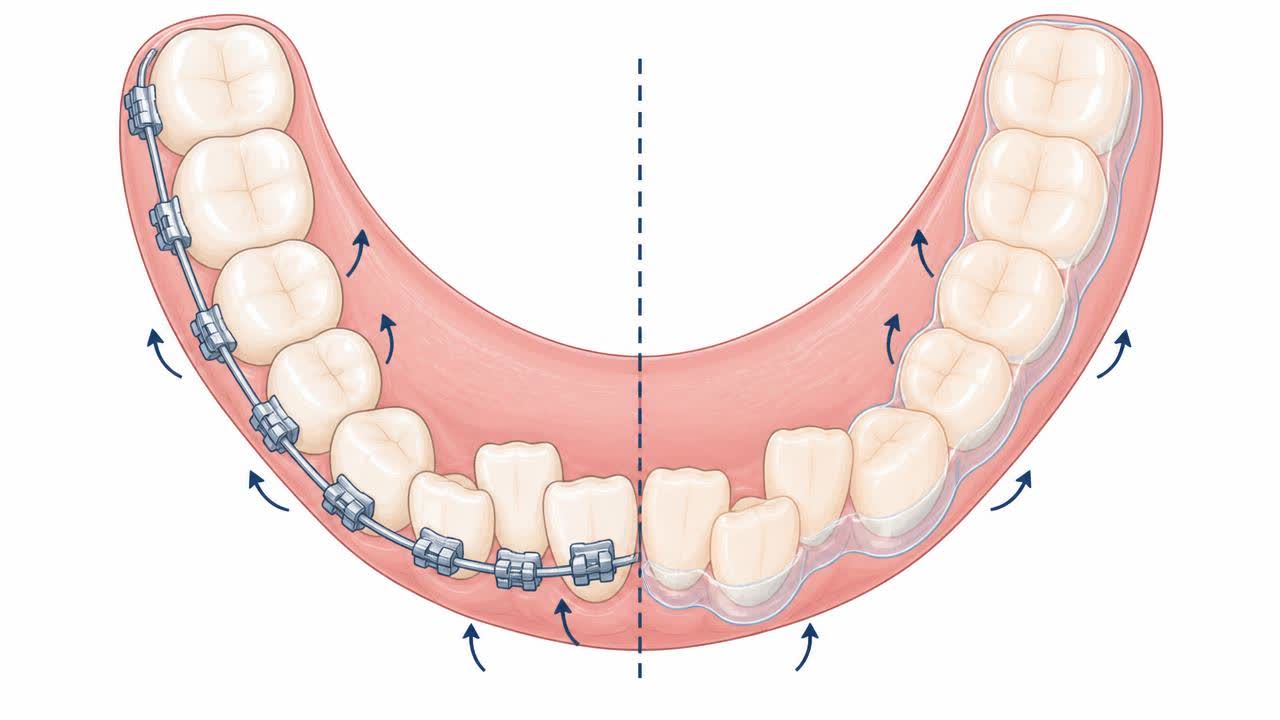
At a glance
- Fixed orthodontic appliances remain the gold standard for complex malocclusion correction, facilitating precise three-dimensional control over tooth movement.
- The physical properties of ceramic brackets depend primarily on their microscopic crystalline structure.
- A common clinical inquiry regards ceramic clear braces staining and whether the physical brackets lose their aesthetic appeal over time.
- Successful implementation of ceramic appliances requires comprehensive pre-treatment diagnostic planning.
- When comparing fixed appliance materials, clinicians weigh aesthetics against biomechanical efficiency.
Introduction to Ceramic Braces and Appliance Anatomy
Fixed orthodontic appliances remain the gold standard for complex malocclusion correction, facilitating precise three-dimensional control over tooth movement. Conventional systems rely on stainless steel components, but aesthetic demands have led to the widespread adoption of ceramic bracket systems. These appliances are engineered from aluminium oxide (alumina), designed to blend seamlessly with the natural shade of dental enamel. Understanding the anatomical interface between the bracket, the bonding resin, and the tooth surface is essential for comprehending how these appliances function mechanically while maintaining an inconspicuous appearance throughout treatment.
A ceramic fixed appliance consists of several distinct components. The bracket body contains an architectural base treated with mechanical undercuts or silane coupling agents to bond securely to the etched enamel. It features a precision-milled slot through which the orthodontic archwire passes to deliver mechanical forces. In conventional systems, the archwire is retained in the slot using clear or tooth-coloured elastomeric modules (ligatures) or fine aesthetic ligature wires. Alternatively, self-ligating ceramic brackets incorporate a specialised ceramic or rhodium-coated clip mechanism, eliminating the need for external elastomeric ties altogether.
Pre-Treatment Diagnostic Assessment and Case Selection
Successful implementation of ceramic appliances requires comprehensive pre-treatment diagnostic planning. Orthodontists undertake rigorous extraoral and intraoral clinical examinations, complemented by standard digital panoramic (orthopantomogram) and lateral cephalometric radiographs. These diagnostic records allow precise assessment of skeletal relationships, root morphology, alveolar bone levels, and baseline periodontal health. When complex skeletal discrepancies, impactions, or severe root proximity are identified, low-dose cone-beam computed tomography (CBCT) may be indicated to visualise three-dimensional anatomical relationships accurately.
Case selection for ceramic appliances requires evaluating the patient's vertical overlap (overbite), functional occlusal pathways, and hygiene compliance. Patients presenting with severe deep bites, active bruxism, or heavy parafunctional clenching may not be immediate candidates for lower ceramic brackets due to the risk of opposing enamel wear and bracket shearing. Additionally, clinicians assess enamel quality, looking for pre-existing enamel hypomineralisation, fluorosis, or non-carious cervical lesions that could complicate the chemical bonding and subsequent debonding phases of treatment.
Material Science: Durability, Brittleness, and Enamel Interaction
The physical properties of ceramic brackets depend primarily on their microscopic crystalline structure. Ceramic brackets are manufactured as either polycrystalline or monocrystalline alumina. Polycrystalline brackets are produced by sintering microscopic aluminium oxide particles together, resulting in a translucent appearance that diffuses light. Monocrystalline brackets, often termed sapphire brackets, are milled from a single continuous crystal of alumina, offering superior optical clarity. While both varieties exhibit exceptional compressive strength and resist intraoral corrosion, they lack the ductile ductility of stainless steel, making them inherently brittle and susceptible to fracture under shear stresses.
A critical clinical consideration is the interaction between ceramic material and the opposing dentition. Dental enamel has a lower hardness value than aluminium oxide ceramic. Consequently, if an upper ceramic bracket occludes directly against a lower natural incisor during mastication, rapid and severe enamel attrition (wear) can occur on the opposing natural tooth. Orthodontists frequently avoid placing ceramic brackets on lower premolars and incisors in patients with deep overbites to prevent irreversible loss of virgin enamel structure, opting instead for metal brackets in these high-contact zones.
Mechanisms of Ceramic Clear Braces Staining and Discolouration
A common clinical inquiry regards ceramic clear braces staining and whether the physical brackets lose their aesthetic appeal over time. The ceramic material itself, whether polycrystalline or monocrystalline alumina, is entirely non-porous and impervious to extrinsic chromogens (staining agents). Therefore, modern ceramic bracket bodies do not undergo chemical discolouration or intrinsic matrix staining from dietary substances or saliva. When patients perceive that their ceramic braces have become yellowed or discoloured, the staining is almost universally occurring within the surrounding clear elastomeric ligatures or the resin bonding composite.
Elastomeric modules are fabricated from polyurethane polymers that possess microscopic porosity. Over an average four-to-six-week adjustment interval, these polymers readily absorb dietary chromogens, resulting in visible yellowing or darkening. In regions with diets rich in deeply pigmented spices, such as turmeric (haldi), saffron, and dark curries, or habits involving black tea, coffee, red wine, and tobacco, rapid discolouration of the elastomeric ties is pronounced. Furthermore, the habitual use of betel quid, paan, or gutka causes severe extrinsic staining of both the elastomeric components and the composite resin flash around the bracket perimeter, compromising aesthetic performance.
Comparison: Ceramic, Stainless Steel, and Self-Ligating Appliances
When comparing fixed appliance materials, clinicians weigh aesthetics against biomechanical efficiency. Stainless steel brackets remain the reference standard for mechanical robustness, minimal bracket slot friction, and predictable debonding. Ceramic brackets introduce higher frictional resistance between the bracket slot and the archwire, which can marginally slow down sliding mechanics during extraction space closure. However, high-grade ceramic brackets with polished or metal-lined slots effectively mitigate this friction, providing treatment durations broadly comparable to traditional metal appliances for the majority of malocclusion types.
Self-ligating ceramic appliances offer a distinct advantage regarding aesthetics and hygiene. Because these systems utilise a mechanical clip rather than porous polyurethane modules to secure the archwire, they completely eliminate elastomeric ligature staining. This ensures the appliance maintains its clear aesthetic profile between adjustment visits. Although self-ligating ceramic brackets are bulkier than their conventional counterparts and feature small mechanical components that can occasionally jam if plaque calcifies around them, they significantly reduce the visual discolouration frequently reported with elastomeric ties.
Clinical Procedure: Step-by-Step Bonding Protocol
The placement of ceramic braces follows a meticulous, highly technique-sensitive bonding sequence. The dental professional begins by polishing the enamel with a non-fluoridated pumice paste to eliminate the salivary pellicle and superficial debris, followed by thorough water rinsing and complete moisture isolation using cheek retractors and tongue guards. The buccal enamel surfaces are then conditioned using a 37% orthophosphoric acid gel for 15 to 30 seconds to create microscopic microporosities, producing a frosty, retentive enamel surface upon rinsing and drying.
Next, a liquid orthodontic primer is applied to the etched enamel, while a specialised light-cured composite resin is placed onto the silanated base of the ceramic bracket. The clinician meticulously positions the bracket onto the precise anatomical coordinate of the tooth crown, gently seating it to express excess resin flash. This flash must be meticulously cleared using a fine micro-brush or scaler prior to polymerisation; any remaining resin margin can attract pigments and manifest as unsightly peripheral staining. A high-intensity LED light-curing unit is then applied from multiple angulations to fully cure the composite through the semi-translucent ceramic body.
Debonding Protocol and Enamel Preservation
Appliance removal (debonding) at the conclusion of treatment requires distinct mechanical considerations for ceramic brackets compared to metal ones. Metal brackets deform plastically under plier pressure, peeling away smoothly from the enamel. Because ceramic brackets are rigid and cannot flex, attempting to peel them can transmit excessive tensile forces directly to the enamel prisms, risking enamel tear-outs, microcracks, or catastrophic bracket fracture that leaves bonded shards behind.
To achieve safe debonding, clinicians utilise specialised debonding pliers designed to introduce a controlled compressive shear force at the bracket-adhesive interface, or proprietary instruments that collapse the bracket base inward. Once the ceramic body is detached, the residual composite resin remaining on the enamel must be removed carefully using slow-speed, fluted tungsten carbide burs under constant air cooling. This process is followed by sequential polishing with fine abrasive discs and prophylactic paste to restore the enamel surface to its original lustre without inducing iatrogenic scratch patterns.
Potential Complications and Their Management
Complications associated with ceramic braces primarily involve material fracture, mucosal irritation, and localised demineralisation. Due to their brittle nature, ceramic brackets may fracture if subjected to direct masticatory trauma from hard, dense food items or external impact. A fractured bracket loses its slot integrity, halting active tooth movement and necessitating complete removal and replacement of the unit. Soft tissue irritation, particularly to the labial mucosa and inner lips, can occur initially; this is safely managed with medical-grade orthodontic relief wax until mucosal adaptation occurs.
The most clinically significant biological complication is the formation of white spot lesions around bracket bases. These lesions represent sub-surface enamel demineralisation caused by prolonged plaque stagnation. Because ceramic brackets are physically slightly larger than metal brackets to compensate for material fragility, they create larger plaque-retention zones. If oral hygiene falters, organic acids produced by cariogenic bacteria will rapidly demineralise the surrounding enamel. Clinicians manage early lesions with topical remineralising therapies containing high-concentration sodium fluoride or casein phosphopeptide-amorphous calcium phosphate (CPP-ACP).
Evidence and further reading
The clinical efficacy and material characteristics of aesthetic orthodontic appliances are well documented across international peer-reviewed literature. Authoritative bodies, including the British Orthodontic Society, the American Association of Orthodontists, and the European Orthodontic Society, provide clinical consensus guidelines on bracket selection, frictional mechanics, and enamel safety protocols. High-level evidence synthesised in the American Journal of Orthodontics and Dentofacial Orthopedics, the Journal of Orthodontics, and the European Journal of Orthodontics consistently demonstrates that while ceramic brackets exhibit comparable three-dimensional movement capability to metal brackets, their higher slot friction and brittleness require strict technical adherence during ligation and debonding.
Cochrane Systematic Reviews investigating fixed orthodontic appliances emphasise that optimal oral hygiene maintenance and the use of fluoridated adjunctive agents are paramount in preventing enamel demineralisation regardless of bracket composition. Furthermore, published laboratory and clinical studies indexed within the FDI World Dental Federation database confirm that modern monocrystalline and polycrystalline alumina matrices do not undergo structural degradation or intrinsic discolouration intraorally, firmly establishing that visible aesthetic degradation stems exclusively from auxiliary elastomeric ligatures, adhesive flash, and poor biofilm control.
Oral Hygiene Protocol and Dietary Modification
Maintaining absolute appliance hygiene is vital to prevent ceramic clear braces staining of the adhesive interfaces and to safeguard gingival health. Patients must implement a structured oral hygiene regimen consisting of twice-daily brushing using a soft-bristled orthodontic toothbrush or an oscillating-rotating electric brush with fluoridated toothpaste (1350–1500 ppm fluoride). Interdental brushes of appropriate calibre must be passed beneath the archwire and between the bracket wings daily to clear trapped food particles and disrupt the bacterial biofilm before it can calcify into calculus.
Dietary discipline plays a decisive role in appliance integrity and aesthetic preservation. Patients should avoid hard, crunchy, or sticky foods, such as boiled sweets, hard nuts, ice, and tough crusts, which exert destructive shear forces on the ceramic base. To minimise discolouration of elastomeric modules, intake of intensely chromogenic substances—such as turmeric-laden gravies, beetroot, concentrated berries, red wine, and black coffee—should be moderated, or followed immediately by a thorough water rinse. The use of tobacco products, paan, and gutka must be strictly eliminated, as these cause severe, indelible discolouration of elastomeric components and profound oral health harm.
Questions patients ask us
- Do ceramic brackets themselves turn yellow over time?
- No, the ceramic brackets themselves do not turn yellow. Modern polycrystalline and monocrystalline alumina materials are non-porous and completely resistant to intrinsic staining. Any noticeable yellowing is almost universally caused by staining of the clear elastomeric ties (ligatures) holding the wire in place, or by the composite resin bonding material surrounding the bracket edges.
- How can I prevent my clear ligature bands from staining between appointments?
- To minimise ligature staining, rinse your mouth thoroughly with water immediately after consuming chromogenic foods and drinks such as turmeric, dark curries, coffee, and tea. Maintain meticulous brushing and interdental cleaning. Avoid tobacco, paan, and gutka entirely. If staining is a major concern, discuss switching to self-ligating ceramic brackets, which eliminate elastomeric ties entirely.
- Are ceramic braces more fragile than traditional metal braces?
- Yes, ceramic is a brittle material with high hardness but lower fracture toughness than ductile stainless steel. While ceramic brackets comfortably withstand standard chewing forces, they are more prone to chipping or fracturing if you bite down on hard foods, ice, or foreign objects, or if they receive direct impact during contact sports.
- Can ceramic braces damage my opposing natural teeth?
- Because ceramic is considerably harder than natural dental enamel, direct contact between an upper ceramic bracket and a lower natural tooth can cause rapid, severe enamel wear (attrition). Orthodontists carefully assess your bite before placement and will avoid putting ceramic brackets on teeth that make direct contact during chewing.
- Is removing ceramic braces more painful or risky than metal braces?
- Debonding ceramic braces requires specialised techniques because the material does not bend away like metal. Clinicians use specific instruments that apply gentle compressive forces to fracture the adhesive bond safely. When performed correctly by a trained professional using appropriate burs for resin cleanup, the process is comfortable and preserves your natural enamel.
- How often will stained clear ligatures be replaced?
- Elastomeric ligatures are fully replaced at every routine orthodontic adjustment visit, which typically occurs every four to six weeks. If your ties become severely stained early in an adjustment cycle, contact your orthodontic clinic; many practices can quickly change the elastomeric modules in a short hygienist or assistant appointment.
- Do ceramic braces make orthodontic treatment take longer?
- In most clinical cases, overall treatment duration is comparable between ceramic and metal appliances. Although ceramic bracket slots can generate slightly higher frictional resistance during specific sliding movements, modern bracket designs and polished slots minimise this effect, allowing complex tooth alignment to progress within standard clinical timelines.
- What should I do if a ceramic bracket chips or breaks?
- If a ceramic bracket chips, breaks, or debonds from the tooth, contact your orthodontic clinic promptly for advice. Avoid attempting to remove broken pieces yourself. If a sharp edge causes mucosal irritation, cover it with orthodontic relief wax until your emergency appointment. Seek urgent care if a loose fragment poses an inhalation or swallowing risk.
Sources and further reading
Guidance from professional and public health bodies. Clinical decisions here are made on your own examination and radiographs.
- 1.Orthodontic treatment and retention — patient resources — American Association of Orthodontists
- 2.Patient information leaflets on appliances and retention — British Orthodontic Society
- 3.Oral health — fact sheet and global status report — World Health Organization
- 4.Policy statements and oral health definitions — FDI World Dental Federation
- 5.Dental health — conditions, treatments and patient guidance — NHS (UK)
- 6.Systematic reviews of oral and dental interventions — Cochrane Oral Health
- 7.Regulatory framework and dental education standards in India — Dental Council of India
When to see us
Get examined without waiting if any of the following applies to you:
- A broken bracket, poking wire or appliance causing ulceration
- A tooth that becomes painful, loose or discoloured during treatment
- Jaw joint pain, locking or a bite that has changed suddenly
Get a written plan and cost before you commit
If this is what you are dealing with, the next step is a consultation with radiographs — orthodontics cases are seen by the specialist who handles that field. You get a written plan and staged cost before anything begins.
reception@dramitsharmahospital.comThis article is general education and does not replace an in-person examination, radiographs or a diagnosis by a qualified dentist.
Clinical terms in this article
Related in Orthodontics
Aligners and Braces: Choosing the Right Option
Metal, ceramic and clear aligner treatment compared, duration, visibility, cost and suitability.
Tooth Extraction for Braces or Severe Crowding Issues
Orthodontic extractions involve the planned removal of select teeth to resolve severe crowding, correct bimaxillary protrusion, and balance dentoalveolar proportions. This clinical guide details diagnostic indications, extraction patterns, procedural steps, recovery, risks, and evidence-based non-extraction alternatives.
Maxillary Osteotomy for Open Bite Alignment and Correction
Maxillary osteotomy for open bite corrects severe vertical skeletal discrepancies through surgical repositioning of the upper jaw. Combined with orthodontics, this procedure restores chewing function, improves speech articulation, and ensures long-term occlusal and facial stability.
Surgically Assisted Rapid Palatal Expansion for Adult Palate Widening
Surgically assisted rapid palatal expansion (SARPE) is a combined orthodontic and surgical treatment designed to correct severe transverse maxillary deficiency in skeletally mature adults, widening the narrow upper jaw to restore functional occlusion, stability, and airway volume.
Surgical Exposure and Bracket Bonding for Impacted Canine Teeth
This clinical guide details impacted canine exposure surgery and bracket bonding. It explains anatomical causes, CBCT diagnostic pathways, open versus closed surgical techniques, orthodontic traction mechanisms, recovery protocols, and evidence-based strategies to manage complications.
Overbite vs Overjet: Key Differences and Correction Methods
This clinical guide clarifies the distinction between overbite (vertical overlap) and overjet (horizontal protrusion). It examines their aetiology, diagnostic pathways, classification, and evidence-based orthodontic and surgical correction methods across paediatric and adult populations.