At a glance
- A growing number of adults are seeking orthodontic treatment, whether to address alignment issues that were never corrected in childhood, to fix relapse following earlier treatment where retainers were not consistently worn, or…
- Unlike children and teenagers, adults have fully developed jaw bones, meaning treatment relies entirely on moving teeth through the existing bone rather than being able to guide jaw growth itself.
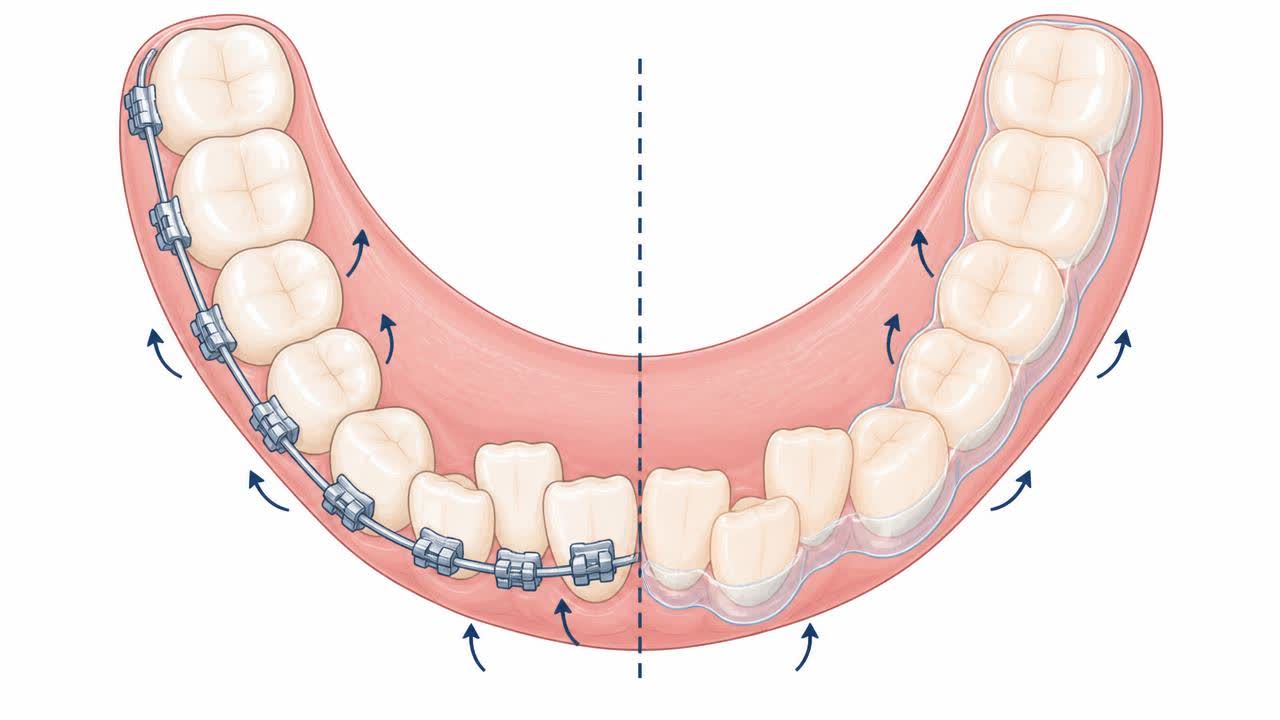
- Many adults gravitate towards clear aligners, ceramic braces, or lingual braces specifically because these options are less visible than traditional metal brackets, which can be an important consideration for professionals in…
- Because adult teeth are supported by bone and gum tissue that may have already experienced some natural changes over the years, treating any existing gum disease before beginning orthodontic treatment is essential.
Why Adults Choose Orthodontic Treatment
A growing number of adults are seeking orthodontic treatment, whether to address alignment issues that were never corrected in childhood, to fix relapse following earlier treatment where retainers were not consistently worn, or simply to improve the appearance and function of their smile at a stage in life when they have more control over their time and finances.
Many adult patients are also motivated by functional concerns, such as difficulty cleaning crowded teeth effectively, uneven wear on specific teeth due to a misaligned bite, or mild jaw discomfort linked to how the teeth meet. Addressing these issues can improve both oral health and day-to-day comfort, not just appearance.
Key Differences from Treating Children
Unlike children and teenagers, adults have fully developed jaw bones, meaning treatment relies entirely on moving teeth through the existing bone rather than being able to guide jaw growth itself. This means certain corrections that would be straightforward in a growing child, such as significant jaw discrepancies, may require a combined surgical and orthodontic approach in adults.
Adults are also more likely to have existing dental work, such as fillings, crowns, or missing teeth, which need to be factored into the treatment plan. A thorough evaluation of gum health is particularly important before starting orthodontic treatment in adults, since gum disease can affect the stability of the bone supporting the teeth during movement.
Discreet Options for Working Professionals
Many adults gravitate towards clear aligners, ceramic braces, or lingual braces specifically because these options are less visible than traditional metal brackets, which can be an important consideration for professionals in client-facing or public roles. The flexibility of aligners, which require less frequent in-person adjustment, can also suit adults with demanding work schedules or frequent travel.
During your consultation, we take time to understand your lifestyle, professional considerations, and aesthetic preferences alongside the clinical requirements of your case, helping to identify the treatment option that best balances discretion, convenience, and effectiveness for your specific situation.
Addressing Gum Health Before Treatment
Because adult teeth are supported by bone and gum tissue that may have already experienced some natural changes over the years, treating any existing gum disease before beginning orthodontic treatment is essential. Moving teeth through inflamed or compromised gum tissue can accelerate bone loss and compromise the long-term stability of the results.
We often recommend a thorough periodontal assessment and, if needed, a course of gum treatment or professional cleaning before starting orthodontic movement. Maintaining excellent oral hygiene throughout treatment is equally important for adults, given the slightly higher baseline risk of gum problems compared to younger patients.
Questions patients ask us
- Is there an age limit for orthodontic treatment?
- No, there is no upper age limit for orthodontic treatment, provided the teeth, gums, and supporting bone are healthy enough to withstand tooth movement. We have successfully treated patients across a wide range of ages, with treatment plans tailored to each individual's dental health.
- Will orthodontic treatment take longer for adults than teenagers?
- Treatment time is generally influenced more by the complexity of the case than by age alone, though some tooth movements can occur slightly more slowly in adults due to denser bone. Your orthodontist will provide a realistic timeline based on your specific diagnostic assessment.
- Can I get braces if I already have crowns or fillings?
- Yes, existing dental work such as crowns and fillings does not prevent orthodontic treatment, though it will be factored into the treatment plan. Brackets can be bonded to crowns using specific techniques, and your orthodontist will account for any restored teeth when planning tooth movement.
- Do I need to treat gum disease before starting braces as an adult?
- Yes, it is important to address any active gum disease before beginning orthodontic treatment, as moving teeth through inflamed or compromised gum tissue can worsen bone loss. A periodontal assessment is a standard part of the pre-treatment evaluation for adult patients.
Sources and further reading
Guidance from professional and public health bodies. Clinical decisions here are made on your own examination and radiographs.
- 1.Orthodontic treatment and retention — patient resources — American Association of Orthodontists
- 2.Patient information leaflets on appliances and retention — British Orthodontic Society
- 3.Oral health — fact sheet and global status report — World Health Organization
- 4.Policy statements and oral health definitions — FDI World Dental Federation
- 5.Dental health — conditions, treatments and patient guidance — NHS (UK)
- 6.Systematic reviews of oral and dental interventions — Cochrane Oral Health
- 7.Regulatory framework and dental education standards in India — Dental Council of India
When to see us
Get examined without waiting if any of the following applies to you:
- A broken bracket, poking wire or appliance causing ulceration
- A tooth that becomes painful, loose or discoloured during treatment
- Jaw joint pain, locking or a bite that has changed suddenly
Get a written plan and cost before you commit
If this is what you are dealing with, the next step is a consultation with radiographs — orthodontics cases are seen by the specialist who handles that field. You get a written plan and staged cost before anything begins.
reception@dramitsharmahospital.comThis article is general education and does not replace an in-person examination, radiographs or a diagnosis by a qualified dentist.
Clinical terms in this article
Related in Orthodontics
Aligners and Braces: Choosing the Right Option
Metal, ceramic and clear aligner treatment compared, duration, visibility, cost and suitability.
Tooth Extraction for Braces or Severe Crowding Issues
Orthodontic extractions involve the planned removal of select teeth to resolve severe crowding, correct bimaxillary protrusion, and balance dentoalveolar proportions. This clinical guide details diagnostic indications, extraction patterns, procedural steps, recovery, risks, and evidence-based non-extraction alternatives.
Maxillary Osteotomy for Open Bite Alignment and Correction
Maxillary osteotomy for open bite corrects severe vertical skeletal discrepancies through surgical repositioning of the upper jaw. Combined with orthodontics, this procedure restores chewing function, improves speech articulation, and ensures long-term occlusal and facial stability.
Surgically Assisted Rapid Palatal Expansion for Adult Palate Widening
Surgically assisted rapid palatal expansion (SARPE) is a combined orthodontic and surgical treatment designed to correct severe transverse maxillary deficiency in skeletally mature adults, widening the narrow upper jaw to restore functional occlusion, stability, and airway volume.
Surgical Exposure and Bracket Bonding for Impacted Canine Teeth
This clinical guide details impacted canine exposure surgery and bracket bonding. It explains anatomical causes, CBCT diagnostic pathways, open versus closed surgical techniques, orthodontic traction mechanisms, recovery protocols, and evidence-based strategies to manage complications.
Overbite vs Overjet: Key Differences and Correction Methods
This clinical guide clarifies the distinction between overbite (vertical overlap) and overjet (horizontal protrusion). It examines their aetiology, diagnostic pathways, classification, and evidence-based orthodontic and surgical correction methods across paediatric and adult populations.