At a glance
- Undergoing orthodontic treatment, such as wearing braces while pregnant, involves applying controlled, continuous mechanical forces to teeth to stimulate bone remodelling within the alveolar process.
- Pregnancy gingivitis is a well-documented clinical phenomenon, affecting a substantial proportion of expectant mothers.
- A primary concern for patients considering braces while pregnant is the safety of diagnostic radiography.
- Selecting between fixed labial braces and removable clear aligners during pregnancy requires balancing biomechanical efficacy against oral hygiene accessibility.
- Routine orthodontic appointments involve chair-side adjustments, archwire changes, bracket repositioning, or aligner tracking reviews.
Diagnostic Imaging Safety and Trimester Considerations
A primary concern for patients considering braces while pregnant is the safety of diagnostic radiography. Comprehensive orthodontic planning routinely necessitates panoramic radiographs (orthopantomograms) and lateral cephalometric projections, and occasionally cone-beam computed tomography (CBCT). Dental regulatory bodies, including the American Dental Association and the UK Ionising Radiation (Medical Exposure) Regulations, confirm that modern collimated dental digital radiographs generate minimal scatter radiation directed toward the pelvic region. When protective lead aprons and thyroid collars are utilised under the ALARA (As Low As Reasonably Achievable) principle, the diagnostic radiation risk to the developing foetus is negligible.
Nevertheless, non-urgent elective radiographs are routinely deferred until after delivery or scheduled strictly within the second trimester if deemed essential for active treatment decisions. Many contemporary orthodontic practices employ high-resolution three-dimensional intraoral optical scanners, entirely circumventing the need for ionising radiation or traditional alginate impression trays during routine progress monitoring. The second trimester represents the optimal physiological window for initiating or modifying orthodontic appliances, as the organogenesis phase of the first trimester has concluded, and maternal cardiovascular comfort is optimal.
Orthodontic Biomechanics and Gestational Physiology
Undergoing orthodontic treatment, such as wearing braces while pregnant, involves applying controlled, continuous mechanical forces to teeth to stimulate bone remodelling within the alveolar process. In a non-pregnant patient, this process relies on a balanced cycle of osteoclastic resorption on the pressure side of the periodontal ligament and osteoblastic deposition on the tension side. When pregnancy occurs, systemic hormonal elevations—principally of progesterone and oestrogen—significantly alter microvascular permeability and the cellular responsiveness of the periodontal tissues. These endocrine shifts modify how the supporting periodontium reacts to orthodontic loads, demanding careful clinical oversight.
A key hormone elevated during gestation is relaxin, which acts to increase the flexibility of pelvic ligaments in preparation for childbirth. Emerging dental research indicates that relaxin may also exert biochemical effects on collagen turnover within the periodontal ligament. This can lead to increased physiological tooth mobility and altered tissue resistance during tooth movement. While active tooth movement remains biologically feasible, the surrounding soft tissues exhibit an exaggerated inflammatory response to local dental plaque. Consequently, orthodontists must carefully calibrate force vectors and closely monitor tissue health throughout gestation.
Hormonal Shifts, Gingival Hyperaemia, and Periodontal Health
Pregnancy gingivitis is a well-documented clinical phenomenon, affecting a substantial proportion of expectant mothers. The surge in gestational hormones promotes vascular dilation and hyperaemia within the gingival microcirculation, lowering the host resistance threshold to bacterial biofilm. When fixed orthodontic appliances or clear aligner attachments are present, they introduce supplementary retentive sites for plaque accumulation. If meticulous hygiene is not maintained, this exacerbates marginal gingival swelling, erythema, and spontaneous bleeding, creating challenging conditions for both patient comfort and active orthodontic tooth alignment.
In certain cases, localised, exaggerated inflammatory hyperplasia can develop, clinically termed a pyogenic granuloma or pregnancy epulis. These benign vascular lesions typically manifest in the interdental papillae as rapidly enlarging, highly vascular, and friable nodules that bleed profusely upon minimal contact. Orthodontic brackets or poorly seating aligner margins can serve as mechanical irritants that worsen these lesions. Managing this heightened tissue sensitivity requires proactive hygiene measures, gentle brushing techniques, and frequent professional periodontal debridement to prevent permanent damage to the periodontal attachment apparatus.
Fixed Braces versus Clear Aligners During Pregnancy
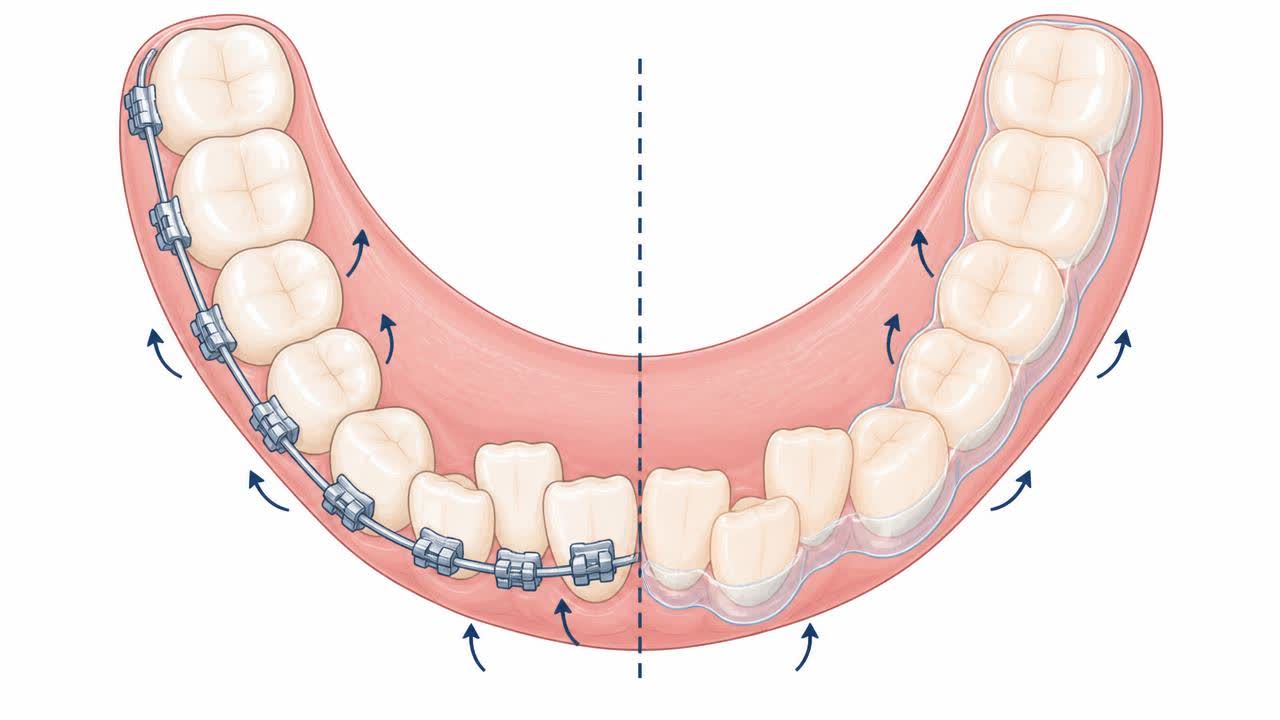
Selecting between fixed labial braces and removable clear aligners during pregnancy requires balancing biomechanical efficacy against oral hygiene accessibility. Fixed appliances consist of metallic or ceramic brackets bonded directly to the enamel, interconnected by archwires. While fixed appliances do not rely on patient compliance for wear time, their intricate contours significantly impede interdental cleaning. For pregnant individuals prone to hyperplastic gingivitis, the accumulation of biofilm around brackets can rapidly accelerate localized periodontal deterioration and cause enamel demineralisation.
Conversely, clear aligners offer a distinct hygienic advantage because the thermoplastic trays can be removed during meals, toothbrushing, and interdental flossing. This allows the patient to maintain plaque control without the obstruction of fixed hardware. However, clear aligners present unique challenges for pregnant patients experiencing morning sickness or gastric reflux. Reinserting aligners immediately following an episode of emesis traps residual stomach acids against the enamel, greatly elevating the risk of severe dental erosion. Each modality therefore requires tailored clinical and behavioural adaptations.
Clinical Appointments, Maternal Positioning, and Operatory Safety
Routine orthodontic appointments involve chair-side adjustments, archwire changes, bracket repositioning, or aligner tracking reviews. During the late second and third trimesters, prolonged supine positioning in the dental chair can precipitate supine hypotensive syndrome. This condition occurs when the gravid uterus exerts direct gravitational compression onto the inferior vena cava and descending aorta, leading to reduced venous return, sudden maternal hypotension, dizziness, and compromised uteroplacental perfusion.
To mitigate this risk, dental teams employ ergonomic positioning adaptations for pregnant patients. The dental chair is adjusted to a semi-reclined angle, or a small wedge, rolled towel, or pillow is placed under the patient's right hip to establish a left lateral tilt of fifteen to thirty degrees. This simple positional adjustment alleviates mechanical pressure on major abdominal vessels. Furthermore, treatment sessions are intentionally kept succinct, and appointment schedules incorporate opportunities for the patient to rest and hydrate, thereby ensuring maternal and foetal physiological stability.
Managing Morning Sickness, Hyperemesis, and Enamel Erosion
Nausea and vomiting of pregnancy, including its severe manifestation, hyperemesis gravidarum, pose substantial threats to dental hard tissues. Gastric contents possess an exceptionally low pH, typically between 1.0 and 2.0, which rapidly dissolves the hydroxyapatite crystal structure of dental enamel through chemical erosion. If an expectant mother with fixed braces or aligners vomits, mechanical brushing of the acid-softened enamel immediately afterward can cause accelerated, irreversible loss of tooth structure and widespread white-spot decalcification around orthodontic brackets.
Clinical guidance dictates that patients must never brush their teeth immediately following an episode of regurgitation. Instead, the mouth should be vigorously rinsed with plain water, a dilute solution of sodium bicarbonate (baking soda) in water, or a neutral sodium fluoride mouth rinse to neutralise oral acidity. Toothbrushing with a soft-bristled brush and high-fluoride toothpaste should be delayed for at least thirty to sixty minutes, allowing saliva to facilitate partial enamel remineralisation. For aligner wearers, the appliances must be thoroughly washed with cool water before reinsertion.
Orthodontic Discomfort, Tissue Trauma, and Safe Pharmacotherapy
Orthodontic force application routinely induces transient inflammatory soreness within the periodontal ligament, particularly in the twenty-four to seventy-two hours following an adjustment. In non-pregnant populations, non-steroidal anti-inflammatory drugs (NSAIDs) such as ibuprofen are widely prescribed to inhibit prostaglandin synthesis. However, in pregnant patients, NSAIDs are strictly contraindicated, especially in the third trimester, due to risks of premature closure of the foetal ductus arteriosus, oligohydramnios, and neonatal pulmonary hypertension.
Paracetamol remains the preferred first-line analgesic for managing acute orthodontic discomfort during pregnancy, provided it is taken at the lowest effective therapeutic dosage for the shortest necessary duration. Non-pharmacological interventions provide substantial relief without systemic risk. Applying medical-grade orthodontic relief wax over irritating bracket hooks, using topical benzocaine gels cautiously under dental advice, and adopting a diet of soft, non-abrasive, nutritionally dense foods significantly alleviate localized oral mucosal trauma and mechanical discomfort.
Nutritional, Dietary, and Regional Considerations
Pregnancy involves distinct metabolic and nutritional demands, necessitating increased dietary intake of calcium, phosphate, and vitamin D to support foetal skeletal ossification while maintaining maternal mineral reserves. Orthodontic patients must satisfy these nutritional requirements while strictly avoiding hard, sticky, or high-sugar foods that could dislodge bonded brackets, distort aligner materials, or foster cariogenic bacterial blooms. Frequent snacking, a common coping mechanism for pregnancy-related nausea, substantially increases the frequency of acid challenges to the teeth.
In specific cultural contexts, such as across India and South Asian diaspora communities, distinct dietary and oral habits require careful clinical navigation. The habitual use of paan (betel leaf preparations), areca nut, and smokeless tobacco products (such as gutka or khaini) is strictly contraindicated during pregnancy due to systemic foetal toxicity and severe local carcinogenic and fibrotic effects. Furthermore, the consumption of heavily spiced, highly acidic, or fibrous culinary items must be moderated, as these can mechanically irritate hyperaemic gingiva or become chronically lodged beneath orthodontic archwires.
Evidence and further reading
Major international health authorities and dental organisations—including the National Health Service (NHS), the British Orthodontic Society (BOS), the American Dental Association (ADA), the European Federation of Periodontology (EFP), and the American Association of Orthodontists (AAO)—maintain a clear consensus regarding orthodontic treatment during pregnancy. The literature firmly supports the conclusion that continuing or managing orthodontic therapy is safe for both mother and child, provided that stringent oral hygiene standards are upheld and treatment mechanics account for gestational physiology.
Clinical guidelines published in the Journal of Clinical Periodontology and the American Journal of Orthodontics and Dentofacial Orthopedics emphasise that pregnancy does not permanently damage the periodontium if plaque-induced inflammation is controlled. While elective full-mouth radiographic surveys and complex elective orthognathic surgical procedures should be postponed until post-partum recovery, standard maintenance of fixed appliances and clear aligners is biologically sound. Patients are advised to consult their clinical team to establish a tailored, safe, and effective treatment timeline.
Preventive Maintenance and Multi-Disciplinary Care Protocols
Given the heightened susceptibility to inflammatory periodontal conditions during gestation, preventive oral hygiene must be intensified. Patients wearing braces while pregnant should undergo professional periodontal assessments and scaling every three months, or more frequently if profound gingival hypertrophy is observed. Ultrasonic and manual debridement by a dental hygienist or periodontist effectively removes subgingival calculus and bacterial colonies that maternal hormonal shifts would otherwise exploit, safeguarding the underlying alveolar bone support.
At home, patients must implement a structured oral hygiene regimen that incorporates specialised interdental brushes, single-tufted brushes for cleaning around bracket bases, and dental floss threaders or water flossers. The twice-daily use of a fluoridated toothpaste, supplemented by daily antimicrobial or remineralising mouthwashes containing sodium fluoride or cetylpyridinium chloride (CPC), provides chemical protection against bacterial colonisation. Establishing open communication between the patient's obstetrician, general dentist, and orthodontist ensures comprehensive maternal-foetal safety across all stages of care.
When to Seek Urgent Dental or Obstetric Care
While mild gingival tenderness and modest bleeding are common gestational presentations, certain clinical manifestations require immediate professional evaluation. Patients must contact their orthodontic clinic or dental emergency service if they develop severe, intractable oral pain, rapidly escalating facial or submandibular swelling, or evidence of systemic infection such as pyrexia. An acute dental abscess or severe odontogenic infection carries potential risks to both maternal and foetal health and requires prompt intervention, which may include targeted antimicrobial therapy deemed safe in pregnancy.
Immediate attention is likewise warranted if an interdental pregnancy epulis grows rapidly to a size that interferes with normal mastication, traumatises opposing dentition, or causes continuous, unprovoked haemorrhage. Orthodontic emergencies such as a protruding, sharp archwire lacerating the buccal mucosa or an aspirational risk from a detached appliance component must be addressed promptly. Any acute systemic symptoms, such as severe lightheadedness or presyncope experienced while seated in the dental operatory, necessitate immediate cessation of dental procedures and obstetric triage.
Questions patients ask us
- Can I begin orthodontic treatment if I am already pregnant?
- Starting brand-new orthodontic treatment during pregnancy is possible, but many clinicians advise waiting until after delivery. Initial comprehensive diagnostics require full radiographic surveys and clinical photography. Furthermore, the early months of pregnancy often involve nausea and heightened gum sensitivity. If treatment is initiated, the second trimester is the safest and most comfortable period to start.
- Are dental X-rays safe if I need braces while pregnant?
- Modern digital dental X-rays produce extremely low levels of radiation. With appropriate collimation, lead aprons, and thyroid shields, radiation exposure to the pelvic area is virtually non-existent. However, strictly elective radiographs are routinely postponed until after childbirth unless urgently needed to diagnose trauma, pathology, or severe clinical complications.
- Are clear aligners better than fixed braces during pregnancy?
- Clear aligners allow for superior oral hygiene compared to fixed braces, as they can be removed for thorough brushing and flossing. This significantly reduces the risk of pregnancy gingivitis. However, aligners must be removed during morning sickness to prevent stomach acids from being trapped against the enamel, which can cause tooth erosion.
- What should I do if my gums swell or bleed around my braces?
- Gingival swelling and bleeding are classic signs of pregnancy gingivitis, caused by hormonal changes exaggerating your body's response to plaque. Do not stop brushing. Instead, use a soft-bristled toothbrush, interdental brushes, and an alcohol-free antimicrobial mouthwash. Schedule a professional dental cleaning to remove tartar and reduce tissue inflammation.
- Can morning sickness damage my teeth during orthodontic treatment?
- Yes. Stomach acid from vomiting or severe reflux temporarily softens tooth enamel. Never brush your teeth immediately after vomiting, as this scrubs away softened enamel. Rinse your mouth thoroughly with water or a baking soda solution, and wait thirty to sixty minutes before brushing or reinserting your clear aligners.
- Which pain relief medication is safe for orthodontic soreness while pregnant?
- Paracetamol is the standard, safest pain relief option recommended during pregnancy when used according to package instructions. Non-steroidal anti-inflammatory drugs (NSAIDs) such as ibuprofen, naproxen, or aspirin must be avoided, particularly during the third trimester, as they can interfere with foetal cardiovascular and kidney development.
- Will pregnancy hormones make my teeth move faster or become loose?
- Elevated gestational hormones like progesterone and relaxin increase the flexibility of connective tissues, including the periodontal ligament supporting your teeth. This can cause a mild increase in physiological tooth mobility. However, it does not mean teeth safely move faster; orthodontic forces must remain gentle to protect alveolar bone.
- Is it better to pause my orthodontic adjustments until after delivery?
- If you experience severe hyperemesis, significant gum hypertrophy, or extreme discomfort, your orthodontist can temporarily place your treatment on maintenance. This involves using passive archwires or wearing your current aligners solely at night to maintain tooth positions without applying active moving forces until your health stabilises.
Sources and further reading
Guidance from professional and public health bodies. Clinical decisions here are made on your own examination and radiographs.
- 1.Orthodontic treatment and retention — patient resources — American Association of Orthodontists
- 2.Patient information leaflets on appliances and retention — British Orthodontic Society
- 3.Oral health — fact sheet and global status report — World Health Organization
- 4.Policy statements and oral health definitions — FDI World Dental Federation
- 5.Dental health — conditions, treatments and patient guidance — NHS (UK)
- 6.Systematic reviews of oral and dental interventions — Cochrane Oral Health
- 7.Regulatory framework and dental education standards in India — Dental Council of India
When to see us
Get examined without waiting if any of the following applies to you:
- A broken bracket, poking wire or appliance causing ulceration
- A tooth that becomes painful, loose or discoloured during treatment
- Jaw joint pain, locking or a bite that has changed suddenly
Get a written plan and cost before you commit
If this is what you are dealing with, the next step is a consultation with radiographs — orthodontics cases are seen by the specialist who handles that field. You get a written plan and staged cost before anything begins.
reception@dramitsharmahospital.comThis article is general education and does not replace an in-person examination, radiographs or a diagnosis by a qualified dentist.
Clinical terms in this article
Related in Orthodontics
Aligners and Braces: Choosing the Right Option
Metal, ceramic and clear aligner treatment compared, duration, visibility, cost and suitability.
Tooth Extraction for Braces or Severe Crowding Issues
Orthodontic extractions involve the planned removal of select teeth to resolve severe crowding, correct bimaxillary protrusion, and balance dentoalveolar proportions. This clinical guide details diagnostic indications, extraction patterns, procedural steps, recovery, risks, and evidence-based non-extraction alternatives.
Maxillary Osteotomy for Open Bite Alignment and Correction
Maxillary osteotomy for open bite corrects severe vertical skeletal discrepancies through surgical repositioning of the upper jaw. Combined with orthodontics, this procedure restores chewing function, improves speech articulation, and ensures long-term occlusal and facial stability.
Surgically Assisted Rapid Palatal Expansion for Adult Palate Widening
Surgically assisted rapid palatal expansion (SARPE) is a combined orthodontic and surgical treatment designed to correct severe transverse maxillary deficiency in skeletally mature adults, widening the narrow upper jaw to restore functional occlusion, stability, and airway volume.
Surgical Exposure and Bracket Bonding for Impacted Canine Teeth
This clinical guide details impacted canine exposure surgery and bracket bonding. It explains anatomical causes, CBCT diagnostic pathways, open versus closed surgical techniques, orthodontic traction mechanisms, recovery protocols, and evidence-based strategies to manage complications.
Overbite vs Overjet: Key Differences and Correction Methods
This clinical guide clarifies the distinction between overbite (vertical overlap) and overjet (horizontal protrusion). It examines their aetiology, diagnostic pathways, classification, and evidence-based orthodontic and surgical correction methods across paediatric and adult populations.