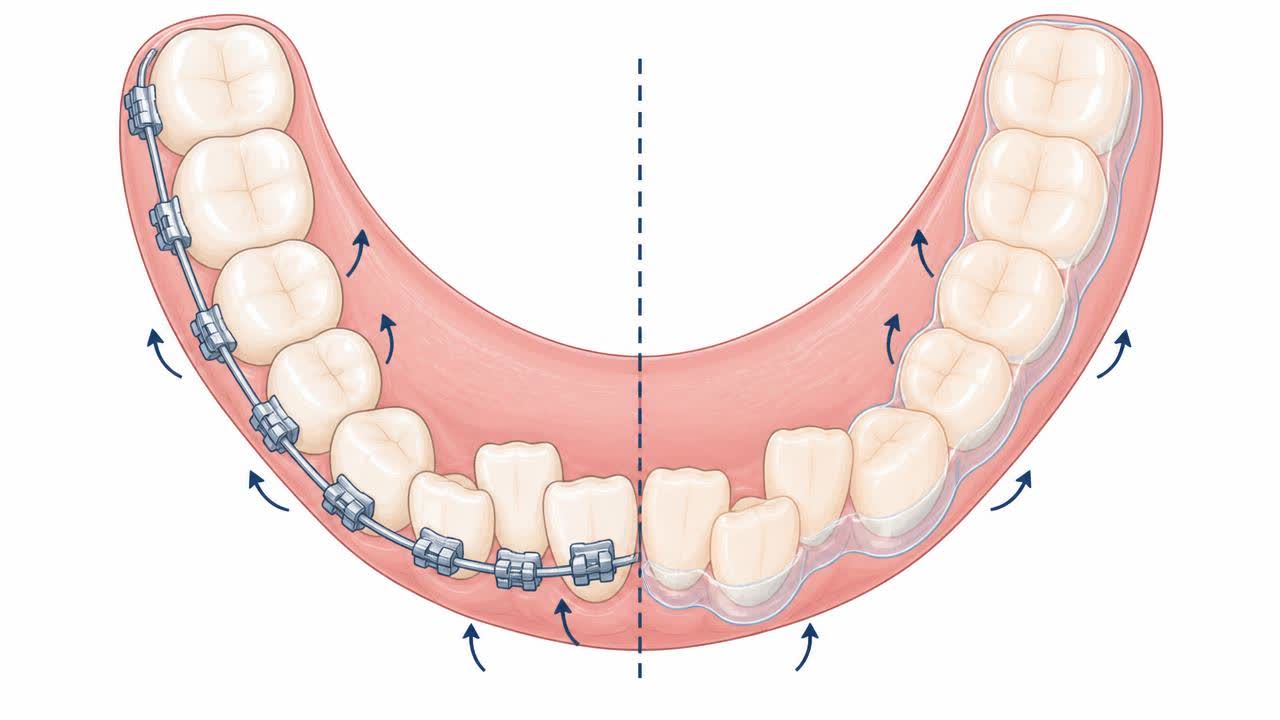
At a glance
- Mild soreness or a feeling of pressure is a normal and expected part of orthodontic treatment, typically occurring for two to three days after braces are first fitted or adjusted, or after switching to a new aligner tray.
- If a bracket becomes loose but remains attached to the wire, it is often possible to continue as normal until your next scheduled appointment, though you should contact our clinic to let us know and confirm this is appropriate…
- If an aligner tray cracks or is lost, avoid leaving your teeth without any tray for an extended period, as this can allow some relapse to occur even over a short time.
- Certain situations warrant prompt attention rather than waiting for your next scheduled visit, including significant swelling, severe pain that does not respond to over-the-counter medication, a bracket or wire causing an injury…
Common Discomfort During Treatment
Mild soreness or a feeling of pressure is a normal and expected part of orthodontic treatment, typically occurring for two to three days after braces are first fitted or adjusted, or after switching to a new aligner tray. This discomfort arises as the teeth respond to the gentle forces being applied and generally settles on its own without any specific intervention beyond simple pain relief if needed.
Over-the-counter pain relief medication, along with sticking to softer foods for a day or two after adjustments, can help manage this temporary discomfort effectively. Rinsing with warm salt water can also soothe any mild irritation to the cheeks or gums during this adjustment period.
Dealing with Loose Brackets or Poking Wires
If a bracket becomes loose but remains attached to the wire, it is often possible to continue as normal until your next scheduled appointment, though you should contact our clinic to let us know and confirm this is appropriate for your situation. A completely detached bracket, however, should be brought to our attention promptly, as it may need to be re-bonded to keep treatment progressing as planned.
A wire end that has shifted and is poking into the cheek or gum can usually be temporarily managed at home by covering the sharp end with a small piece of orthodontic wax, which creates a smooth barrier between the wire and the soft tissue. If wax does not resolve the irritation or the wire has bent significantly, contact our clinic for an appointment to have it adjusted.
Aligner-Specific Issues
If an aligner tray cracks or is lost, avoid leaving your teeth without any tray for an extended period, as this can allow some relapse to occur even over a short time. Contact our clinic promptly so we can advise whether to move temporarily to the next tray in your sequence or arrange a replacement.
If an aligner feels unusually tight or causes persistent pain rather than the mild pressure expected in the first day or two of a new tray, this could indicate an issue with the fit or an underlying dental problem that needs assessment. Do not force a poorly fitting aligner into place, and contact our team for guidance.
When to Contact the Clinic Immediately
Certain situations warrant prompt attention rather than waiting for your next scheduled visit, including significant swelling, severe pain that does not respond to over-the-counter medication, a bracket or wire causing an injury to the soft tissue that does not improve with wax, or any sign of infection such as pus or fever. These situations, while uncommon, should always be assessed by our clinical team without delay.
For routine issues such as mild soreness, a single loose ligature, or minor wire irritation manageable with wax, it is generally safe to monitor the situation until your next appointment, though you are always welcome to call our helpline for advice if you are unsure. Our team at 9314403502 can help you determine whether a situation needs urgent attention or can wait.
Questions patients ask us
- Is it normal for braces to hurt every time they are adjusted?
- Yes, mild soreness for a couple of days after each adjustment is a normal part of the tooth movement process, as your teeth respond to the newly applied forces. This should be manageable with over-the-counter pain relief and generally settles on its own without further intervention.
- What should I do if a wire is poking my cheek?
- Cover the sharp end of the wire with a small piece of orthodontic wax to create a barrier between the wire and your cheek or gum tissue. If this does not resolve the irritation, or if the wire appears significantly bent or displaced, contact our clinic for an adjustment appointment.
- Can I go without my aligner for a few days if I lose it?
- It is best to avoid extended periods without any aligner in place, as your teeth can begin to shift back even over a short time. Contact our clinic as soon as possible so we can advise on the best interim solution, which may involve wearing your previous tray temporarily or arranging a replacement.
- When should I seek urgent care rather than waiting for my next appointment?
- Seek prompt attention for significant swelling, severe unrelieved pain, signs of infection such as pus or fever, or an injury from a bracket or wire that does not improve with orthodontic wax. For minor issues like mild soreness or a small loose ligature, waiting until your next scheduled visit is usually appropriate.
Sources and further reading
Guidance from professional and public health bodies. Clinical decisions here are made on your own examination and radiographs.
- 1.Orthodontic treatment and retention — patient resources — American Association of Orthodontists
- 2.Patient information leaflets on appliances and retention — British Orthodontic Society
- 3.Oral health — fact sheet and global status report — World Health Organization
- 4.Policy statements and oral health definitions — FDI World Dental Federation
- 5.Dental health — conditions, treatments and patient guidance — NHS (UK)
- 6.Systematic reviews of oral and dental interventions — Cochrane Oral Health
- 7.Regulatory framework and dental education standards in India — Dental Council of India
When to see us
Get examined without waiting if any of the following applies to you:
- A broken bracket, poking wire or appliance causing ulceration
- A tooth that becomes painful, loose or discoloured during treatment
- Jaw joint pain, locking or a bite that has changed suddenly
Get a written plan and cost before you commit
If this is what you are dealing with, the next step is a consultation with radiographs — orthodontics cases are seen by the specialist who handles that field. You get a written plan and staged cost before anything begins.
reception@dramitsharmahospital.comThis article is general education and does not replace an in-person examination, radiographs or a diagnosis by a qualified dentist.
Clinical terms in this article
Related in Orthodontics
Aligners and Braces: Choosing the Right Option
Metal, ceramic and clear aligner treatment compared, duration, visibility, cost and suitability.
Tooth Extraction for Braces or Severe Crowding Issues
Orthodontic extractions involve the planned removal of select teeth to resolve severe crowding, correct bimaxillary protrusion, and balance dentoalveolar proportions. This clinical guide details diagnostic indications, extraction patterns, procedural steps, recovery, risks, and evidence-based non-extraction alternatives.
Maxillary Osteotomy for Open Bite Alignment and Correction
Maxillary osteotomy for open bite corrects severe vertical skeletal discrepancies through surgical repositioning of the upper jaw. Combined with orthodontics, this procedure restores chewing function, improves speech articulation, and ensures long-term occlusal and facial stability.
Surgically Assisted Rapid Palatal Expansion for Adult Palate Widening
Surgically assisted rapid palatal expansion (SARPE) is a combined orthodontic and surgical treatment designed to correct severe transverse maxillary deficiency in skeletally mature adults, widening the narrow upper jaw to restore functional occlusion, stability, and airway volume.
Surgical Exposure and Bracket Bonding for Impacted Canine Teeth
This clinical guide details impacted canine exposure surgery and bracket bonding. It explains anatomical causes, CBCT diagnostic pathways, open versus closed surgical techniques, orthodontic traction mechanisms, recovery protocols, and evidence-based strategies to manage complications.
Overbite vs Overjet: Key Differences and Correction Methods
This clinical guide clarifies the distinction between overbite (vertical overlap) and overjet (horizontal protrusion). It examines their aetiology, diagnostic pathways, classification, and evidence-based orthodontic and surgical correction methods across paediatric and adult populations.