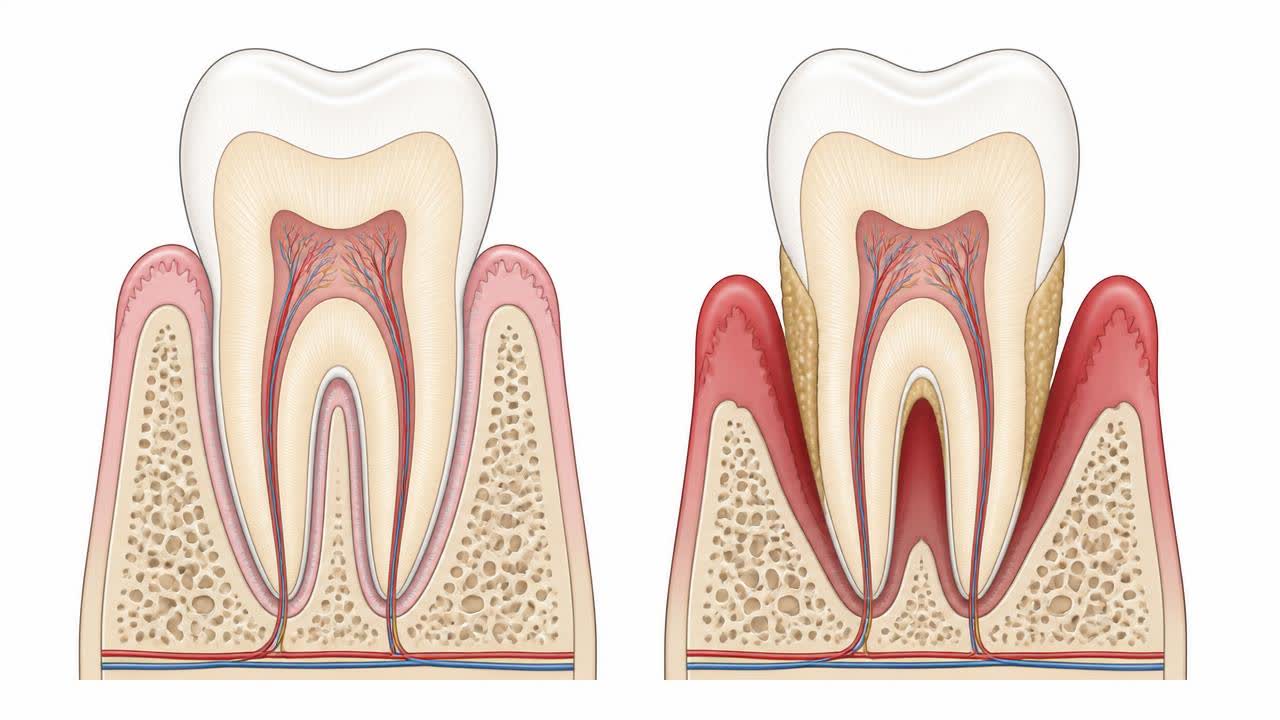
At a glance
- The first stage of periodontal disease is gingivitis, characterised by red, swollen, or bleeding gums.
- As inflammation persists, the disease advances into early periodontitis.
- Moderate periodontitis involves deeper pockets and noticeable loss of the bone that anchors your teeth.
- In the final stage, advanced periodontitis, the fibres and bone supporting your teeth are largely destroyed.
- The most effective way to combat all stages of periodontal disease is through diligent prevention.
Gingivitis: The Reversible Beginning
The first stage of periodontal disease is gingivitis, characterised by red, swollen, or bleeding gums. This condition occurs when plaque bacteria accumulate along the gum line, triggering an inflammatory immune response from your body. Because the underlying bone remains unaffected at this point, gingivitis is entirely reversible with professional cleaning and improved daily hygiene habits at home.
Patients often overlook these early signs, assuming that mild bleeding during brushing is normal. However, persistent bleeding indicates that your gums are under bacterial attack. By addressing these symptoms immediately, you prevent the progression into deeper periodontal issues. Consistent brushing, flossing, and professional dental check-ups provide the best defence against the early, manageable stages of gum inflammation and disease.
Early Periodontitis: Subtle Changes
As inflammation persists, the disease advances into early periodontitis. The gums begin to pull away from the teeth, forming small spaces known as periodontal pockets. Within these pockets, bacteria thrive, and the immune system responds by producing enzymes that may start to damage the soft tissues and supporting bone structure. This phase requires professional intervention to stabilise the health of your mouth.
During this stage, you might notice your gums looking slightly receded or feeling more sensitive to temperature. While you might not feel significant pain, the silent nature of this progression makes it dangerous. Regular probing by our dental team allows us to measure these pockets accurately, helping us develop a targeted treatment plan to stop further bone loss and restore gum health effectively.
Advanced Periodontitis: Serious Consequences
In the final stage, advanced periodontitis, the fibres and bone supporting your teeth are largely destroyed. This can lead to teeth becoming loose, shifting position, or even falling out. Patients often experience chronic bad breath, a persistent metallic taste, and significant gum recession. At this stage, complex regenerative surgeries or specialist periodontal care may be required to save the teeth and prevent complete tooth loss.
Advanced cases require a comprehensive assessment of systemic health factors, as chronic gum infection can influence your overall well-being. We work closely with our patients to provide intensive therapy, aiming to stabilise the remaining bone and soft tissue. While treatment is more complex at this stage, early action remains crucial for any chance of retaining your natural teeth and maintaining functional oral health.
The Importance of Prevention
The most effective way to combat all stages of periodontal disease is through diligent prevention. Regular check-ups at our Jaipur clinic enable us to identify signs of trouble long before they become severe. By maintaining a routine of professional cleanings and meticulous home care, you control bacterial levels and prevent the cycle of infection, inflammation, and eventual tissue damage from taking root in your mouth.
Remember that your oral health is intrinsically linked to your general health. By prioritising the care of your gums, you are investing in your long-term wellness. If you notice any signs of gum disease or require a professional periodontal assessment, do not hesitate to contact our team. We are dedicated to providing expert, compassionate care to ensure your gums remain healthy and your smile remains strong.
Moderate Periodontitis: Increased Risk
Moderate periodontitis involves deeper pockets and noticeable loss of the bone that anchors your teeth. The infection has progressed, making your teeth appear longer as gums recede further. At Dr. Amit Sharma Super Speciality Dental Hospital, we identify this stage through advanced diagnostic tools. Without treatment, the structural foundation of your smile continues to weaken, putting surrounding teeth at significant risk of loosening.
Effective management at this level often necessitates deep cleaning procedures to remove hardened tartar from root surfaces. This allows the gums to reattach more securely to the teeth. Our clinical approach focuses on removing the source of infection while educating patients on maintaining long-term stability. By taking proactive steps, we can halt the destructive cycle and help you preserve your teeth for years to come.
Questions patients ask us
- Is bleeding during brushing a sign of gum disease?
- Yes, bleeding gums are one of the most common signs of gingivitis, the early stage of gum disease. It indicates inflammation caused by bacteria. Please schedule an examination at our clinic to prevent the condition from progressing into more serious periodontal disease.
- Can I reverse gum disease on my own?
- While you can manage gingivitis with excellent brushing and flossing, established gum disease often requires professional scaling and root planning. Home care alone may not remove the deep tartar pockets that harbour harmful bacteria, so professional dental care is essential for recovery.
- How often should I see a dentist for gum health?
- For most patients, we recommend professional dental cleanings and examinations every six months. If you have been diagnosed with periodontal disease, you may need more frequent maintenance visits to monitor your gum health and keep bacterial levels controlled throughout the year.
- Does gum disease cause systemic health issues?
- Evidence links chronic gum disease to systemic health problems, including heart disease and diabetes. The constant inflammation can affect your entire body, making professional periodontal care important not just for your teeth, but for your overall health and well-being.
Sources and further reading
Guidance from professional and public health bodies. Clinical decisions here are made on your own examination and radiographs.
- 1.EFP clinical practice guidelines for periodontitis — European Federation of Periodontology
- 2.Classification of periodontal and peri-implant diseases — American Academy of Periodontology
- 3.Prevention and treatment of periodontal diseases in practice — Scottish Dental Clinical Effectiveness Programme
- 4.Oral health — fact sheet and global status report — World Health Organization
- 5.Policy statements and oral health definitions — FDI World Dental Federation
- 6.Dental health — conditions, treatments and patient guidance — NHS (UK)
- 7.Systematic reviews of oral and dental interventions — Cochrane Oral Health
- 8.Regulatory framework and dental education standards in India — Dental Council of India
When to see us
Get examined without waiting if any of the following applies to you:
- Gums that bleed without provocation, or bleeding that has become heavier
- Teeth that feel loose, are drifting, or gaps that are opening up
- Persistent bad breath or taste, gum abscesses, or pus on pressing the gum
Get a written plan and cost before you commit
If this is what you are dealing with, the next step is a consultation with radiographs — gums & prevention cases are seen by the specialist who handles that field. You get a written plan and staged cost before anything begins.
reception@dramitsharmahospital.comThis article is general education and does not replace an in-person examination, radiographs or a diagnosis by a qualified dentist.
Clinical terms in this article
Related in Gums & Prevention
Bleeding Gums and Gum Disease: A Complete Guide
What bleeding gums usually mean, how gingivitis progresses into periodontal disease, and the treatment path from scaling to gum surgery.
Gum Disease: Detection and Treatment
From reversible gingivitis to periodontitis, the warning signs, staged treatment and the link to overall health.
Preventive Dentistry and Home Care
The routine that prevents most dental disease: brushing technique, interdental cleaning, diet and recall visits.
Chronic Bad Breath Caused by Gum Infection
Chronic bad breath, or halitosis, is frequently driven by underlying gum disease. Subgingival bacteria produce volatile sulphur compounds within periodontal pockets. Effective resolution requires professional periodontal debridement, targeted biofilm disruption, and meticulous daily interdental hygiene rather than cosmetic masking.
Loose Permanent Teeth from Advanced Periodontal Disease
Loose teeth from advanced gum disease occur when severe chronic inflammation destroys the supporting alveolar bone and periodontal ligament. With timely periodontal therapy, splinting, and meticulous plaque control, many loose teeth can be stabilised and preserved without extraction.
Furcation Involvement and Bone Loss Between Roots
Furcation involvement describes bone loss between the roots of multi-rooted molars caused by advanced periodontal disease. This clinical guide explains its causes, diagnostic staging, surgical and non-surgical therapies, daily maintenance, and red flag symptoms requiring urgent care.