At a glance
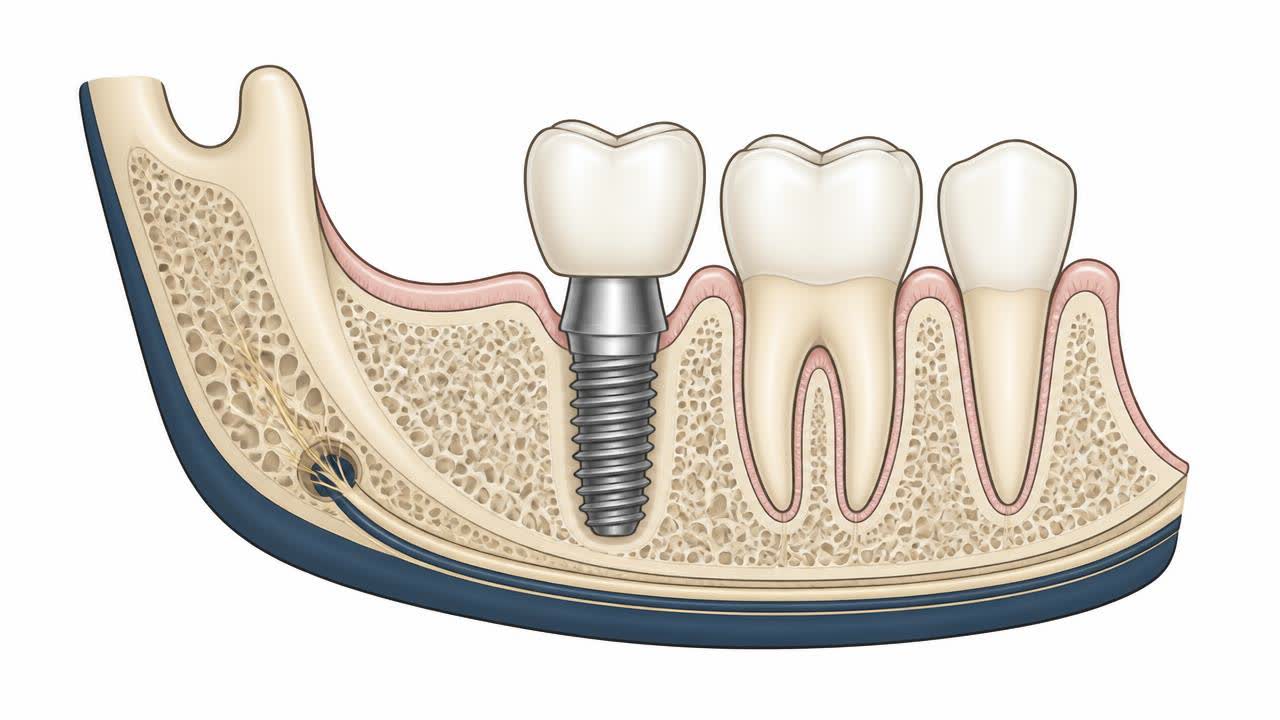
- A single tooth implant is a small titanium or zirconia post surgically placed into the jawbone to act as an artificial tooth root.
- Treatment begins with a clinical examination and a CBCT scan to measure the bone width, height, and proximity to nerves or sinuses.
- Osseointegration is the biological process where bone cells grow directly onto the implant surface, creating a bond stronger than most people expect from a man-made device.
- Most healthy adults with adequate jawbone volume are suitable candidates for a single tooth implant.
- An implant does not decay like a natural tooth, but the gum and bone around it can still develop inflammation if plaque builds up, a condition known as peri-implantitis.
What Is a Single Tooth Implant
A single tooth implant is a small titanium or zirconia post surgically placed into the jawbone to act as an artificial tooth root. Once it fuses with the bone, a custom crown is attached on top, giving you a replacement tooth that looks, feels, and functions like a natural one. Unlike a bridge, it does not require cutting down the healthy teeth on either side of the gap.
This makes the single implant the most conservative option when only one tooth is missing, whether from an accident, decay, or a failed root canal. In our Jaipur clinic, we see many patients who lost a tooth years ago and finally want a permanent solution rather than continuing with a gap that affects chewing and confidence.
The Treatment Process Step by Step
Treatment begins with a clinical examination and a CBCT scan to measure the bone width, height, and proximity to nerves or sinuses. This 3D image lets our implantologists plan the exact position and angle of the implant before surgery even begins, reducing surprises on the day of the procedure.
The implant is placed under local anaesthesia in a straightforward outpatient appointment that usually takes thirty to forty five minutes. Most patients describe the experience as far less uncomfortable than they expected, with mild soreness for a few days managed by standard painkillers.
After placement, the implant is left to integrate with the bone for a period that typically ranges from eight to sixteen weeks, depending on bone quality and the location in the mouth. Once integration is confirmed, an abutment and a custom-shade-matched crown are fitted to complete the restoration.
Who Is a Good Candidate
Most healthy adults with adequate jawbone volume are suitable candidates for a single tooth implant. Adequate bone can often be confirmed on a CBCT scan, and where bone is insufficient, a minor grafting procedure can build up the site before or during implant placement.
Patients with controlled diabetes, past smokers, and those on certain medications can often still receive implants successfully, provided their general health is assessed and optimised beforehand. We always take a detailed medical history so treatment is tailored to your individual risk profile rather than a one-size-fits-all approach.
Caring for Your New Implant
An implant does not decay like a natural tooth, but the gum and bone around it can still develop inflammation if plaque builds up, a condition known as peri-implantitis. Daily brushing, interdental cleaning, and routine professional check-ups are essential to keep the surrounding tissue healthy for the long term.
With good oral hygiene and regular dental visits, a single tooth implant can comfortably last for decades, making it one of the most durable and cost-effective ways to replace a missing tooth over a lifetime, even though the upfront investment is higher than a bridge or denture.
Healing and Osseointegration
Osseointegration is the biological process where bone cells grow directly onto the implant surface, creating a bond stronger than most people expect from a man-made device. This is why implants can withstand normal biting forces for many years when properly maintained.
During the healing phase we recommend a soft diet initially, gentle brushing around the surgical site, and avoiding smoking, which is known to slow bone healing and increase the risk of implant failure. Regular follow-up visits allow us to monitor gum health and confirm the implant is stable before the final crown is fitted.
Questions patients ask us
- Is a single tooth implant painful?
- The procedure is performed under local anaesthesia so you should not feel pain during placement. Mild swelling or soreness for two to four days afterwards is normal and is generally well controlled with standard pain relief prescribed by your dentist.
- How long does the entire process take?
- From surgical placement to the final crown, the process usually takes between three and five months, depending on how quickly your bone integrates with the implant. Same-day options exist in select cases but are not suitable for everyone.
- Will the implant look like a natural tooth?
- Yes. The crown is custom made to match the shade, shape, and translucency of your surrounding teeth, so once healed it should be very difficult to distinguish from your natural teeth, both in appearance and function.
- What happens if I do not replace a missing tooth?
- Leaving a gap can lead to shifting of neighbouring teeth, bite changes, bone loss at the site, and increased strain on remaining teeth. Replacing the tooth promptly with an implant helps preserve your bite and facial structure over time.
Sources and further reading
Guidance from professional and public health bodies. Clinical decisions here are made on your own examination and radiographs.
- 1.ITI Treatment Guide series and consensus statements — International Team for Implantology (ITI)
- 2.Consensus reports on implant dentistry — European Association for Osseointegration
- 3.Prosthodontic and edentulous-care patient guidance — American College of Prosthodontists
- 4.Oral health — fact sheet and global status report — World Health Organization
- 5.Policy statements and oral health definitions — FDI World Dental Federation
- 6.Dental health — conditions, treatments and patient guidance — NHS (UK)
- 7.Systematic reviews of oral and dental interventions — Cochrane Oral Health
- 8.Regulatory framework and dental education standards in India — Dental Council of India
When to see us
Get examined without waiting if any of the following applies to you:
- Pain, looseness or pus around an implant or a fixed bridge
- A crown, bridge or denture that has fractured or come away
- Gum swelling that keeps returning around the same restoration
Get a written plan and cost before you commit
If this is what you are dealing with, the next step is a consultation with radiographs — implants & missing teeth cases are seen by the specialist who handles that field. You get a written plan and staged cost before anything begins.
reception@dramitsharmahospital.comThis article is general education and does not replace an in-person examination, radiographs or a diagnosis by a qualified dentist.
Clinical terms in this article
Related in Implants & Missing Teeth
Missing Teeth: Comparing Dentures, Bridges and Implant Options
What happens if a missing tooth is left unreplaced, and how dentures, bridges and implants compare on comfort, longevity and bone health.
Dental Implants: A Complete Guide
How titanium implants replace missing teeth, who qualifies, the step-by-step timeline and how long they last.
Full Mouth Rehabilitation
Rebuilding a worn, collapsed or heavily damaged dentition with a sequenced, whole-mouth treatment plan.
Peri-Implant Mucositis Symptoms and Early Intervention
Peri-implant mucositis is a plaque-induced, reversible inflammatory lesion affecting the soft tissues surrounding a dental implant without bone loss. Prompt professional debridement, risk-factor modification, and meticulous biofilm control prevent progression to irreversible peri-implantitis.
Peri-Implantitis Symptoms Bone Loss and Implant Salvage
Peri-implantitis is an inflammatory condition causing progressive marginal bone loss around dental implants. Early detection, thorough decontamination, and advanced surgical salvage techniques can arrest bone destruction, resolve inflammation, and preserve implant stability.
Root Canal Retreatment vs Tooth Extraction and Implant
This clinical guide evaluates root canal retreatment versus tooth extraction and dental implant placement. Learn about biological tooth preservation, anatomical considerations, procedural steps, longevity, recovery expectations, and diagnostic criteria to make an informed oral healthcare decision.