At a glance
- Immediate loading dental implants, widely referred to in clinical practice as teeth in a day implants or immediate functional loading, represent an established protocol where a provisional prosthetic crown, bridge, or full-arch…
- The anatomical environment dictates whether an immediate loading protocol is clinically viable.
- Determining eligibility for same-day teeth requires rigorous clinical evaluation.
- Systemic health heavily influences the physiological cascades necessary for osseointegration.
- Modern protocols for teeth in a day implants rely on comprehensive three-dimensional digital imaging and prosthetic-driven planning.
Understanding Immediate Loading and Same-Day Dental Implants
Immediate loading dental implants, widely referred to in clinical practice as teeth in a day implants or immediate functional loading, represent an established protocol where a provisional prosthetic crown, bridge, or full-arch prosthesis is attached to titanium or zirconia fixtures within twenty-four to forty-eight hours of surgical insertion. Historically, conventional protocols demanded an unloaded healing period of three to six months to allow undisturbed osseointegration—the direct structural and functional connection between living bone and the surface of a load-bearing artificial implant. Immediate loading circumvents this extended edentulous phase by strictly controlling mechanical forces during the early bone-remodelling cycle.
The biological viability of same-day teeth relies on achieving high primary stability at the time of placement. Primary stability is the mechanical friction and mechanical interlocking between the osteotomy walls and the implant threads, entirely independent of biological bone healing. If micro-motion at the bone-implant interface exceeds a critical physiological threshold—generally accepted in implant biology as between fifty and one hundred and fifty micrometres—fibrous encapsulation occurs instead of osteogenesis. This leads to early fixture mobility and clinical failure. Therefore, immediate provisionalisation requires rigid splinting in multi-unit cases or complete disocclusion in single-tooth replacements to eliminate adverse lateral forces.
Anatomical Foundations and Bone Architecture
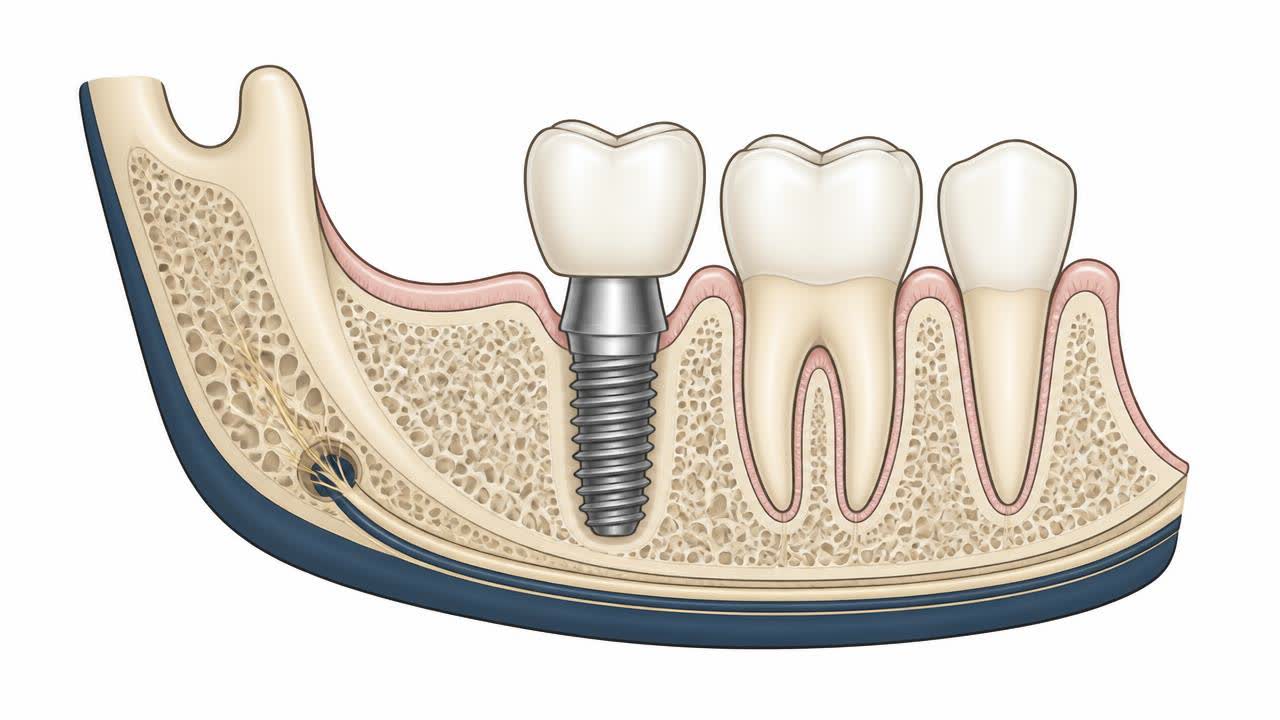
The anatomical environment dictates whether an immediate loading protocol is clinically viable. The alveolar process, the specialized bone structure that supports teeth, comprises dense outer cortical plates and an inner core of trabecular or cancellous bone. The quality and volume of this residual ridge are classified according to the Lekholm and Zarb index, ranging from Type I, characterised by homogenous, dense compact bone, to Type IV, which features a thin shell of cortex surrounding low-density trabecular bone. Type II and Type III bone, commonly found in the anterior and posterior mandible, provide the optimal microarchitecture for achieving the high insertion torque required for teeth in a day implants.
Anatomical limitations vary significantly between the maxilla and the mandible. The maxillary bone is inherently more porous and pneumatised, often closely bordered by the maxillary sinus floor and the incisive canal, which can compromise immediate mechanical anchorage. In the mandible, the presence of the inferior alveolar nerve canal and the mental foramen imposes strict vertical boundary limits. Furthermore, when teeth are extracted immediately prior to implant placement, residual post-extraction sockets exhibit distinct bundle-bone resorption patterns. Clinicians must navigate these structural voids, often engaging apical native bone beyond the extraction socket or utilising angled fixtures to achieve rigid cortical engagement.
Patient Eligibility and Clinical Indications
Determining eligibility for same-day teeth requires rigorous clinical evaluation. Candidates generally fall into two broad clinical categories: individuals with single or partial-tooth loss in aesthetically demanding regions who possess intact neighbouring dentition and robust bone walls, and individuals facing terminal dentition due to generalised severe periodontitis or extensive secondary caries who require full-arch clearance and immediate reconstruction. In full-arch rehabilitations, cross-arch stabilisation is achieved by rigidly splinting four to six implants together with a reinforced provisional prosthesis, which effectively dissipates masticatory loads across the entire construct.
Conversely, absolute and relative local contraindications must be excluded prior to surgical scheduling. Severe active local infection, acute periapical pathology, uncontrolled generalised periodontitis in retained teeth, and significant vertical or horizontal ridge atrophy that precludes primary stability make immediate loading inadvisable. In cases exhibiting extensive socket wall dehiscence or active purulence, a staged approach utilising delayed implant placement alongside guided bone regeneration remains the safest evidence-based standard of care to prevent catastrophic early fixture loss.
Pre-Surgical Diagnostics and Digital Treatment Planning
Modern protocols for teeth in a day implants rely on comprehensive three-dimensional digital imaging and prosthetic-driven planning. High-resolution Cone-Beam Computed Tomography (CBCT) is mandatory to assess residual alveolar ridge dimensions, cross-sectional morphology, trabecular bone density, and spatial relationships to vital neurovascular structures. Unlike conventional panoramic radiography, CBCT imaging eliminates magnification distortion and allows precise volumetric analysis of the proposed surgical sites, ensuring that implant dimensions and trajectories are mapped with sub-millimetre precision.
Digital intraoral optical scanning captures high-fidelity digital impressions of the dental arches, mucosal topography, and interocclusal relationship. These optical datasets are merged with the volumetric CBCT DICOM files within specialised implant planning software. This facilitates virtual prosthetic design prior to any surgical intervention, aligning the anticipated functional bite forces directly along the long axis of the planned implants. Static computer-assisted surgical guides or dynamic real-time navigation systems are subsequently fabricated via precision additive manufacturing, ensuring that intraoperative fixture placement closely mirrors the virtual simulation.
Surgical and Prosthetic Protocol: Step-by-Step Procedure
The surgical phase begins with the administration of local anaesthesia, occasionally supplemented with conscious intravenous sedation for anxious patients or complex full-arch reconstructions. If failing teeth are present, they are extracted atraumatically using periotomes or piezosurgical instruments to preserve the thin labial cortical plate. The osteotomy sites are prepared sequentially using calibrated drills under continuous sterile chilled saline irrigation to prevent thermal osteonecrosis, which occurs if bone temperatures exceed forty-seven degrees Celsius for more than one minute during site preparation.
Implants engineered with aggressive, self-tapping thread designs are inserted into the prepared sites. Insertion torque values are measured precisely using calibrated mechanical or digital torque gauges. An insertion torque reaching at least thirty-five to forty-five Newton-centimetres (Ncm), or an equivalent high Implant Stability Quotient (ISQ) measured via resonance frequency analysis, is the non-negotiable objective criterion for immediate provisionalisation. If adequate stability is verified, multi-unit abutments are secured to the fixtures, and a pre-fabricated or rapidly milled laboratory-reinforced polymethyl methacrylate (PMMA) provisional bridge is rigidly luted and screwed into place, intentionally eliminating all eccentric occlusal contacts.
Potential Complications and Clinical Management
Complications associated with immediate loading protocols can be categorised into biological, mechanical, and surgical events. Early biological failure occurs when an implant fails to osseointegrate, typically presenting as persistent mobility, dull percussion pain, or localized peri-implant radiolucency. In such cases, immediate explantation is necessary, accompanied by debridement of the osteotomy site, potential bone grafting, and a scheduled re-entry after several months of biological healing. Over-torquing during insertion can induce localized pressure necrosis of the cortical bone, precipitating early marginal bone loss.
Mechanical complications frequently involve the loosening or fracture of provisional prosthetic screws, cracking of the interim acrylic bridge, or occlusal wear from unexpected parafunctional loads. If a prosthetic component fractures, it must be repaired or replaced immediately to maintain rigid splinting and prevent uneven cantilever forces from overloading individual implants. Long-term biological complications include peri-implant mucositis—reversible soft-tissue inflammation—and peri-implantitis, a progressive disease involving soft-tissue inflammation combined with loss of supporting alveolar bone, requiring intensive mechanical debridement, surface decontamination, and potentially corrective surgical therapy.
Evidence and further reading
International consensus statements from authoritative dental organisations, including the International Team for Implantology (ITI), the European Association for Osseointegration (EAO), and the European Federation of Periodontology (EFP), validate immediate loading as a predictable therapeutic modality when strict clinical criteria are met. Systematically reviewed literature compiled by the Cochrane Oral Health Group indicates that while immediate loading carries a comparable overall survival rate to conventional delayed protocols in selected full-arch cases, the risk of early failure is marginally higher if clinicians attempt immediate loading in compromised bone quality without reaching mandatory insertion torque thresholds.
Guidance from the National Institute for Health and Care Excellence (NICE) and publications across leading peer-reviewed journals, including the Journal of Clinical Periodontology, the International Journal of Oral and Maxillofacial Surgery, and the Journal of the American Dental Association, emphasise that patient selection, comprehensive three-dimensional diagnostic imaging, rigid prosthetic splinting, and meticulous control over occlusal dynamics remain the primary determinants of long-term biological stability and structural longevity in same-day implant protocols.
Systemic Risk Factors and Lifestyle Contraindications
Systemic health heavily influences the physiological cascades necessary for osseointegration. Uncontrolled diabetes mellitus, evidenced by elevated glycaemic markers such as a glycated haemoglobin (HbA1c) level consistently above 7.5 to 8.0 percent, severely impairs microvascular perfusion, compromises neutrophil function, and impedes osteoblast proliferation, substantially increasing the risk of early implant failure. Similarly, patients undergoing active high-dose antiresorptive therapy, such as intravenous bisphosphonates or denosumab for malignant bone disease, face elevated risks of medication-related osteonecrosis of the jaw (MRONJ), requiring thorough multi-disciplinary risk assessments.
Lifestyle habits significantly impact clinical outcomes. Heavy tobacco smoking reduces peripheral vascularisation and introduces cytotoxic compounds into the surgical site, more than doubling the incidence of biological complications. In regions with distinct cultural habits, such as South Asia, the habitual use of chewable tobacco, paan, and gutka exposes the peri-implant mucosa to continuous chemical irritation, chronic inflammation, and carcinogenic areca nut alkaloids. These habits severely accelerate peri-implant tissue breakdown and compromise wound closure. Severe nocturnal bruxism, chronic involuntary clenching, and untreated sleep-disordered breathing also generate destructive lateral bending moments that exceed the biomechanical tolerance of newly placed, unintegrated fixtures.
Immediate Post-Operative Course and Healing Phases
The initial post-operative phase involves a normal physiological inflammatory response characterised by moderate local oedema, mild-to-moderate discomfort, and minor capillary oozing over the first forty-eight to seventy-two hours. Analgesia is managed using simple non-steroidal anti-inflammatory drugs (NSAIDs) or paracetamol, avoiding high-dose non-selective cyclooxygenase inhibitors if concerns exist regarding early bone metabolism modulation. Antimicrobial mouth rinses, such as 0.12 to 0.2 percent chlorhexidine digluconate, are prescribed for chemical plaque control while mechanical brushing near the surgical margins is temporarily suspended.
The patient must strictly adhere to a non-chewing, soft-food diet—defined as food that can be easily cut with a fork without applying downward force—for a minimum duration of eight to twelve weeks. This dietary compliance protects the fixtures while primary mechanical stability gradually gives way to secondary biological stability. During this critical transition window, woven bone is progressively replaced by mature lamellar bone through bone remodelling. Once osseointegration is confirmed clinically and radiographically at three to six months, the provisional prosthesis is unscrewed and replaced with a definitive, computer-milled zirconia, titanium-reinforced acrylic, or porcelain-fused-to-metal restoration.
Long-Term Maintenance and Red Flag Symptoms
Sustained success of dental implants demands lifelong oral hygiene maintenance and routine professional monitoring. Because the peri-implant junctional epithelium creates a biological seal that is mechanically weaker and less vascularised than the natural periodontal ligament attachment, plaque accumulation rapidly induces tissue destruction. Patients must employ specialized hygiene aids, including low-abrasive implant pastes, super-floss, interdental brushes coated with plastic to avoid scratching titanium surfaces, and oral irrigators to maintain meticulous hygiene around the abutments.
Patients must be educated on critical red flags that necessitate immediate clinical intervention. These include active purulence or spontaneous bleeding from the peri-implant sulcus, sudden mobile sensations in the bridge or single tooth, persistent neurosensory disturbances such as tingling or numbness in the lower lip or chin (indicating inferior alveolar nerve compromise), and severe, worsening pain that does not respond to prescribed analgesics. Routine professional prophylaxis every three to six months, coupled with annual standardised periapical radiographs, ensures early detection and interception of subclinical bone loss.
Questions patients ask us
- What is the difference between traditional dental implants and teeth in a day implants?
- Traditional protocols require an unloaded healing period of three to six months beneath the gumline before teeth are attached. Teeth in a day implants utilise high primary mechanical stability and advanced digital planning to attach a functional or aesthetic provisional prosthesis within twenty-four to forty-eight hours of surgical fixture insertion.
- Can any patient choose same-day dental implants?
- No. Eligibility depends on sufficient residual bone volume, absence of acute active infections, adequate insertion torque (typically thirty-five Newton-centimetres or greater), and controlled systemic health. Patients with severe uncontrolled diabetes, active heavy smoking, unmanaged bruxism, or poor bone density generally require conventional staged protocols.
- Is the provisional tooth fitted on the same day permanent?
- No. The immediate prosthesis is a high-density provisional restoration designed to protect the healing bone and maintain aesthetics without transferring excessive chewing forces. A final, definitive restoration constructed from durable materials like zirconia or porcelain is fabricated three to six months later, after complete biological osseointegration occurs.
- What dietary restrictions must I follow after same-day implant surgery?
- Patients must adhere to a strict soft-food diet for eight to twelve weeks post-surgery. This includes foods that require minimal biting force, such as eggs, well-cooked pasta, fish, and purees. Hard, sticky, crunchy, or chewy foods can cause microscopic movement of the implants, disrupting osseointegration and causing implant failure.
- How painful is the procedure for teeth in a day implants?
- The procedure is performed under profound local anaesthesia, often supplemented with conscious sedation, ensuring no intraoperative pain. Post-operative discomfort is generally mild to moderate, well-managed with standard non-steroidal anti-inflammatory drugs and paracetamol over three to five days, and is comparable to a standard tooth extraction.
- How does using paan, gutka, or tobacco affect immediate implant success?
- Tobacco and chewable products like paan and gutka severely restrict blood supply, impair localized immune responses, and introduce cytotoxic chemicals directly to healing surgical sites. This dramatically increases the incidence of surgical wound dehiscence, early infection, failed osseointegration, and rapid development of peri-implantitis.
- What happens if an immediately loaded implant fails to integrate?
- If an implant fails to integrate with the bone, it will exhibit mobility or persistent localized discomfort. The clinician must remove the loose fixture under local anaesthesia, thoroughly clean the surgical site, place a bone graft if needed, and allow the area to heal before attempting re-implantation.
- What warning signs require urgent contact with my implant surgeon?
- You should contact your surgical clinic immediately if you experience persistent numbness or altered sensation in your lower lip or chin, active or worsening bleeding, severe throbbing pain unresolved by prescribed medication, purulent discharge around the implant site, or any perceived movement in the provisional bridge.
Sources and further reading
Guidance from professional and public health bodies. Clinical decisions here are made on your own examination and radiographs.
- 1.ITI Treatment Guide series and consensus statements — International Team for Implantology (ITI)
- 2.Consensus reports on implant dentistry — European Association for Osseointegration
- 3.Prosthodontic and edentulous-care patient guidance — American College of Prosthodontists
- 4.Oral health — fact sheet and global status report — World Health Organization
- 5.Policy statements and oral health definitions — FDI World Dental Federation
- 6.Dental health — conditions, treatments and patient guidance — NHS (UK)
- 7.Systematic reviews of oral and dental interventions — Cochrane Oral Health
- 8.Regulatory framework and dental education standards in India — Dental Council of India
When to see us
Get examined without waiting if any of the following applies to you:
- Pain, looseness or pus around an implant or a fixed bridge
- A crown, bridge or denture that has fractured or come away
- Gum swelling that keeps returning around the same restoration
Get a written plan and cost before you commit
If this is what you are dealing with, the next step is a consultation with radiographs — implants & missing teeth cases are seen by the specialist who handles that field. You get a written plan and staged cost before anything begins.
reception@dramitsharmahospital.comThis article is general education and does not replace an in-person examination, radiographs or a diagnosis by a qualified dentist.
Clinical terms in this article
Related in Implants & Missing Teeth
Missing Teeth: Comparing Dentures, Bridges and Implant Options
What happens if a missing tooth is left unreplaced, and how dentures, bridges and implants compare on comfort, longevity and bone health.
Dental Implants: A Complete Guide
How titanium implants replace missing teeth, who qualifies, the step-by-step timeline and how long they last.
Full Mouth Rehabilitation
Rebuilding a worn, collapsed or heavily damaged dentition with a sequenced, whole-mouth treatment plan.
Peri-Implant Mucositis Symptoms and Early Intervention
Peri-implant mucositis is a plaque-induced, reversible inflammatory lesion affecting the soft tissues surrounding a dental implant without bone loss. Prompt professional debridement, risk-factor modification, and meticulous biofilm control prevent progression to irreversible peri-implantitis.
Peri-Implantitis Symptoms Bone Loss and Implant Salvage
Peri-implantitis is an inflammatory condition causing progressive marginal bone loss around dental implants. Early detection, thorough decontamination, and advanced surgical salvage techniques can arrest bone destruction, resolve inflammation, and preserve implant stability.
Root Canal Retreatment vs Tooth Extraction and Implant
This clinical guide evaluates root canal retreatment versus tooth extraction and dental implant placement. Learn about biological tooth preservation, anatomical considerations, procedural steps, longevity, recovery expectations, and diagnostic criteria to make an informed oral healthcare decision.