At a glance
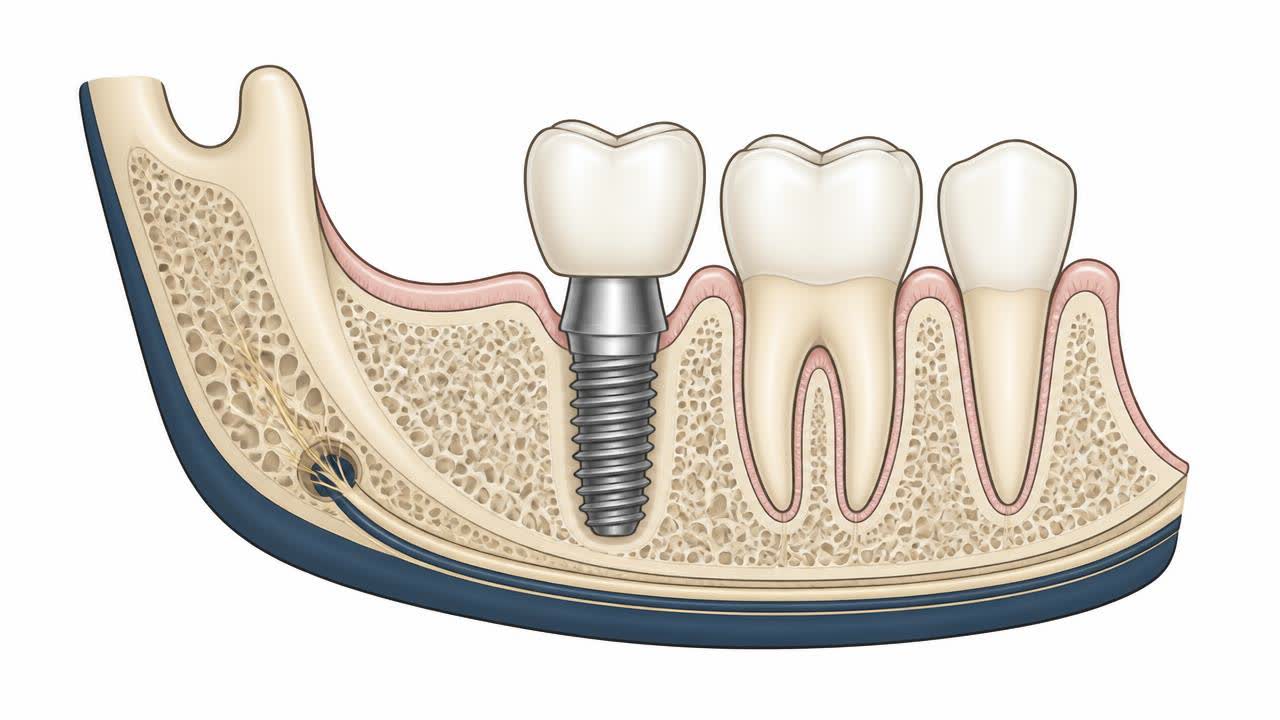
- Immediate loading refers to attaching a temporary crown, bridge, or denture to a dental implant on the very same day it is surgically placed, rather than waiting the usual months for full bone integration before any tooth is…
- Not every patient or every implant site is appropriate for immediate loading.
- The clear benefit of immediate loading is psychological and functional: patients avoid the experience of being without a visible tooth, which can be particularly important for front teeth or full arch cases affecting confidence…
- When patients are carefully selected and the implant achieves good initial stability, published long-term outcomes for immediate loading are comparable to traditional delayed loading protocols, making it a reliable option rather…
What Is Immediate Loading
Immediate loading refers to attaching a temporary crown, bridge, or denture to a dental implant on the very same day it is surgically placed, rather than waiting the usual months for full bone integration before any tooth is fitted. This is sometimes marketed as same-day teeth or teeth in a day.
It differs from the traditional two-stage approach, where the implant is left completely undisturbed under the gum, or with only a healing cap, for several months before any restoration is added. Immediate loading gives patients a functional, aesthetic tooth from day one of treatment.
Who Is Suitable for Immediate Loading
Not every patient or every implant site is appropriate for immediate loading. Success depends heavily on achieving strong initial mechanical stability of the implant at the time of placement, good bone quality and quantity, and the absence of active infection at the site.
Patients receiving full arch treatments like All-on-4 are frequently good candidates, since multiple implants placed together can be splinted with a rigid temporary bridge, distributing forces and improving overall stability during the healing phase compared to a single isolated implant.
Benefits and Limitations
The clear benefit of immediate loading is psychological and functional: patients avoid the experience of being without a visible tooth, which can be particularly important for front teeth or full arch cases affecting confidence and daily function.
The main limitation is that the temporary restoration must be carefully designed to avoid excessive biting forces on the healing implant, and patients are typically advised to follow a softer diet and avoid biting directly on the temporary tooth with hard foods during the initial healing period.
Long-Term Success Compared to Delayed Loading
When patients are carefully selected and the implant achieves good initial stability, published long-term outcomes for immediate loading are comparable to traditional delayed loading protocols, making it a reliable option rather than merely a convenience.
Your implantologist will assess the torque achieved during implant placement, bone density, and overall site conditions to determine in real time whether immediate loading is appropriate, and will discuss an alternative delayed approach if conditions are not ideal on the day.
Questions patients ask us
- Will the same-day tooth look natural?
- Yes, the temporary restoration is designed to closely match your natural teeth in shape and shade, providing an aesthetically pleasing result from the day of surgery, though it will later be replaced with a final, more durable restoration once healing is complete.
- Is immediate loading riskier than waiting?
- When patients are properly selected based on bone quality and implant stability, immediate loading carries a comparable success rate to delayed loading. It is not suitable for every case, which is why careful assessment on the day of surgery is essential.
- Can I eat normally with a same-day implant tooth?
- You will need to follow a soft diet and avoid biting directly on the new tooth with hard or sticky foods for the initial weeks of healing, to protect the implant while it integrates fully with the surrounding bone.
- How do I know if I am a candidate for same-day implants?
- Your dentist will assess your bone density, the health of the extraction or implant site, and any relevant medical history using clinical examination and CBCT imaging to determine if immediate loading is a safe option for you.
Sources and further reading
Guidance from professional and public health bodies. Clinical decisions here are made on your own examination and radiographs.
- 1.ITI Treatment Guide series and consensus statements — International Team for Implantology (ITI)
- 2.Consensus reports on implant dentistry — European Association for Osseointegration
- 3.Prosthodontic and edentulous-care patient guidance — American College of Prosthodontists
- 4.Oral health — fact sheet and global status report — World Health Organization
- 5.Policy statements and oral health definitions — FDI World Dental Federation
- 6.Dental health — conditions, treatments and patient guidance — NHS (UK)
- 7.Systematic reviews of oral and dental interventions — Cochrane Oral Health
- 8.Regulatory framework and dental education standards in India — Dental Council of India
When to see us
Get examined without waiting if any of the following applies to you:
- Pain, looseness or pus around an implant or a fixed bridge
- A crown, bridge or denture that has fractured or come away
- Gum swelling that keeps returning around the same restoration
Get a written plan and cost before you commit
If this is what you are dealing with, the next step is a consultation with radiographs — implants & missing teeth cases are seen by the specialist who handles that field. You get a written plan and staged cost before anything begins.
reception@dramitsharmahospital.comThis article is general education and does not replace an in-person examination, radiographs or a diagnosis by a qualified dentist.
Clinical terms in this article
Related in Implants & Missing Teeth
Missing Teeth: Comparing Dentures, Bridges and Implant Options
What happens if a missing tooth is left unreplaced, and how dentures, bridges and implants compare on comfort, longevity and bone health.
Dental Implants: A Complete Guide
How titanium implants replace missing teeth, who qualifies, the step-by-step timeline and how long they last.
Full Mouth Rehabilitation
Rebuilding a worn, collapsed or heavily damaged dentition with a sequenced, whole-mouth treatment plan.
Peri-Implant Mucositis Symptoms and Early Intervention
Peri-implant mucositis is a plaque-induced, reversible inflammatory lesion affecting the soft tissues surrounding a dental implant without bone loss. Prompt professional debridement, risk-factor modification, and meticulous biofilm control prevent progression to irreversible peri-implantitis.
Peri-Implantitis Symptoms Bone Loss and Implant Salvage
Peri-implantitis is an inflammatory condition causing progressive marginal bone loss around dental implants. Early detection, thorough decontamination, and advanced surgical salvage techniques can arrest bone destruction, resolve inflammation, and preserve implant stability.
Root Canal Retreatment vs Tooth Extraction and Implant
This clinical guide evaluates root canal retreatment versus tooth extraction and dental implant placement. Learn about biological tooth preservation, anatomical considerations, procedural steps, longevity, recovery expectations, and diagnostic criteria to make an informed oral healthcare decision.