At a glance
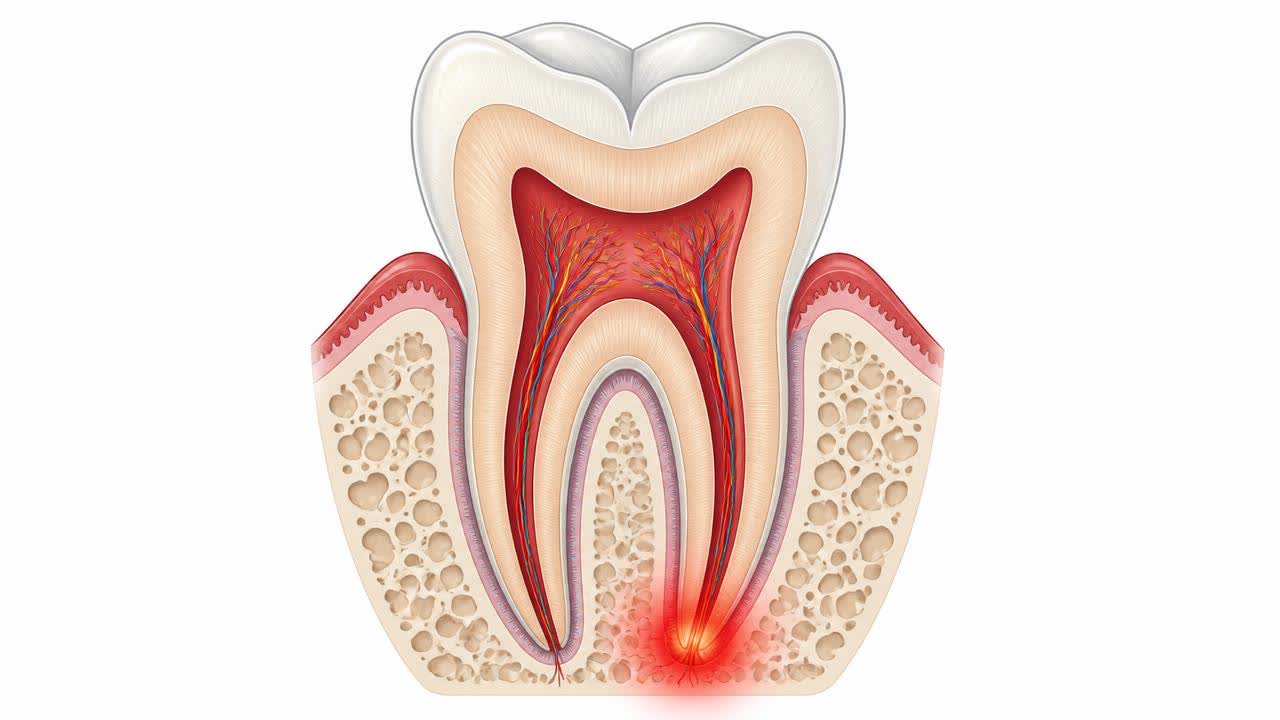
- A dental abscess is a localised collection of pus caused by an acute bacterial infection within the tooth, the surrounding alveolar bone, or the adjacent gingival tissues.
- The primary aetiology of an acute dental abscess is bacterial invasion, predominantly by polymicrobial consortia of anaerobic and facultative bacteria.
- An acute tooth abscess during pregnancy presents with pronounced, often debilitating symptoms.
- Accurate diagnosis involves a methodical clinical examination combined with targeted diagnostic investigations.
- Dental abscesses are categorised based on their anatomical origin, tissue involvement, and progression pathway.
Understanding a Tooth Abscess During Pregnancy
A dental abscess is a localised collection of pus caused by an acute bacterial infection within the tooth, the surrounding alveolar bone, or the adjacent gingival tissues. Inside every tooth lies the dental pulp, a delicate neurovascular bundle of nerves, blood vessels, and connective tissue. When bacteria breach the protective outer enamel and underlying dentine—most commonly through deep dental caries, cracked tooth syndrome, or severe periodontal breakdown—they colonise the pulp chamber. The resulting pulpitis (inflammation of the dental pulp) eventually leads to pulpal necrosis (tissue death). Bacteria then exit the root apex into the periapical tissues, triggering an acute inflammatory response and purulent exudate (pus accumulation).
Experiencing a tooth abscess during pregnancy is a distinct clinical challenge because untreated odontogenic infections pose tangible systemic risks to both the mother and developing foetus. The physiological adaptations of pregnancy, including elevated vascularity and altered immune responses, can accelerate tissue swelling and compromise the body's ability to localise bacteria. Many pregnant individuals hesitate to seek emergency dental care due to fears regarding the safety of clinical interventions, radiographs, and medications. However, clinical consensus confirms that the physiological stress of severe pain and the microbiological risk of spreading infection present far greater hazards to maternal-foetal well-being than controlled, safe dental procedures.
Recovery, Post-Procedure Care, and Warning Signs
Post-procedure recovery following abscess drainage or extraction generally spans three to seven days. It is entirely normal to experience mild to moderate post-operative soreness, minor localised bruising, and slight gum tenderness as the inflammatory response subsides. Patients should manage comfort using prescribed doses of paracetamol, apply external cold packs to the cheek (15 minutes on, 15 minutes off) during the first 24 hours to minimise oedema, and maintain a soft, nutrient-dense diet rich in proteins and vitamins. Warm salt-water mouth rinses (half a teaspoon of salt in a glass of warm water) should be initiated 24 hours after any surgical procedure, performed gently four to five times daily to accelerate mucosal healing.
Patients must be vigilant in differentiating normal post-operative healing from abnormal pathology. Abnormal signs include worsening throbbing pain that fails to respond to paracetamol after 48 hours, secondary bleeding that saturates gauze pads, persistent bad taste or renewed purulent drainage, and local dry socket symptoms (alveolar osteitis) characterised by exposed bone and intense radiating pain. It is imperative to complete any prescribed course of pregnancy-safe antibiotics entirely, even if symptoms vanish rapidly, to prevent the survival and proliferation of resistant bacterial strains.
Symptoms and Clinical Presentation
An acute tooth abscess during pregnancy presents with pronounced, often debilitating symptoms. The hallmark feature is severe, persistent, throbbing pain that can radiate along the branches of the trigeminal nerve to the ear, jaw, temple, or neck. Patients frequently report acute sensitivity to thermal stimuli (hot and cold liquids), excruciating pain upon chewing or light biting pressure (mechanical allodynia), and a distinct sensation that the affected tooth is elevated or elongated within its socket. As the purulent process expands within the non-yielding cortical bone, the pressure intensifies until the pus tracks through soft tissue or the periosteum.
Clinical examination often reveals localised erythema (redness) and fluctuant swelling of the adjacent gum tissue, which may form a parulis (commonly known as a gum boil or sinus tract) that intermittently discharges foul-tasting, purulent fluid, temporarily relieving pressure pain. Extra-oral features include facial asymmetry, diffuse swelling of the cheek or submandibular space, regional lymphadenopathy (enlarged, tender lymph nodes in the neck), and systemic signs such as low-grade pyrexia (fever), malaise, and trismus (difficulty opening the mouth). The abrupt cessation of pain does not indicate resolution; rather, it often signals complete pulpal nerve necrosis, with the infection continuing to destroy surrounding alveolar bone.
Clinical Diagnosis and Radiographic Safety in Pregnancy
Accurate diagnosis involves a methodical clinical examination combined with targeted diagnostic investigations. The dental surgeon begins with visual inspection and gentle digital palpation of the soft tissues to locate fluctuance, followed by percussion testing of the suspected tooth and neighbouring dentition. Pulpal sensibility tests, utilising cold thermal testing (such as endo-ice refrigerant spray) or electric pulp testers, help establish whether the pulp remains vital or has undergone complete necrosis. Periodontal probing around the tooth perimeter distinguishes between an endodontic periapical lesion, a deep periodontal pocket, or a combined endo-periodontal lesion requiring multidisciplinary management.
Diagnostic radiography is an essential and entirely safe component of managing a tooth abscess during pregnancy when appropriate radiation protection principles are implemented. Intra-oral periapical radiographs are vital to visualise the root anatomy, depth of decay, periapical bone loss, and proximity to anatomical structures. Modern digital dental radiography emits negligible scatter radiation; a collimated dental X-ray targeted at the jaw delivers an exceptionally minute dose to the abdominal region. The use of modern digital sensors, rectangular collimation, and protective lead aprons with thyroid collars ensures that radiation exposure to the pelvic area is virtually non-existent, ensuring maternal and foetal safety while preventing misdiagnosis.
Classification of Dental Abscesses
Dental abscesses are categorised based on their anatomical origin, tissue involvement, and progression pathway. A periapical abscess originates from the dental pulp necrosis at the root apex (apical foramen) following deep caries or trauma; this is the most common form requiring endodontic therapy or extraction. A periodontal abscess arises within a pre-existing periodontal pocket due to the blockage of drainage pathways or foreign object impaction, leading to rapid tissue destruction along the lateral root surface without necessarily compromising pulpal vitality. Gingival abscesses, by contrast, are confined strictly to the marginal gingiva or interdental papilla without involving the deeper periodontal ligament or bone.
Another prevalent category in young expectant mothers is a pericoronal abscess (pericoronitis), which occurs around the crown of a partially erupted tooth, most commonly a lower third molar (wisdom tooth). The overlying flap of soft tissue (operculum) traps food debris and plaque, creating an ideal anaerobic niche for aggressive bacterial proliferation. Abscesses can also be staged as acute (characterised by rapid onset, intense pain, and marked swelling) or chronic (characterised by a low-grade, persistent infection draining continuously through a fistulous tract with minimal pain). Differentiating between these subtypes is critical for determining the precise, definitive surgical or endodontic intervention required.
Trimester-Safe Treatment Options and Medical Management
The standard of care for a tooth abscess during pregnancy is definitive mechanical intervention rather than isolated pharmacological therapy. While the second trimester (weeks 14 to 27) is classically considered the most comfortable window for elective care, emergency management of an active abscess must be undertaken immediately regardless of gestational stage. Delaying treatment risks systemic haematogenous dissemination of bacteria. Primary interventions include root canal therapy (endodontic debridement) to clean and disinfect the necrotic root canal system, or dental extraction (exodontia) if the structural integrity of the tooth is non-restorable. Localised soft-tissue collections require immediate incision and drainage under local anaesthesia to relieve hydrostatic pressure and reduce bacterial load.
Medication management during pregnancy follows rigorous safety guidelines established by international pharmacological consensus. Local anaesthesia with 2% lidocaine containing 1:100,000 adrenaline (epinephrine) is safe and effective; it ensures profound analgesia, which lowers maternal stress hormones that could otherwise adversely affect the pregnancy. Systemic antibiotics are not a substitute for surgical drainage but are indicated when there is spreading cellulitis, systemic pyrexia, or regional lymphadenopathy. First-line antibiotics include penicillin-derived agents such as amoxicillin (or erythromycin/clindamycin in cases of genuine penicillin allergy), whereas tetracyclines and fluoroquinolones are strictly contraindicated. Paracetamol (acetaminophen) remains the first-line analgesic, while non-steroidal anti-inflammatory drugs (NSAIDs) like ibuprofen are avoided, particularly in the third trimester due to risks of premature closure of the ductus arteriosus.
Step-by-Step Clinical Procedure: What to Expect
When arriving for emergency treatment of a tooth abscess during pregnancy, the dental team will first review your medical and obstetric history, monitoring blood pressure and pulse. Positioning in the dental chair is carefully managed, particularly during the late second and third trimesters. The dental team will place a small pillow or wedge under your right hip to tilt your pelvis slightly to the left. This left-lateral tilt prevents inferior vena cava compression (aortocaval compression syndrome), which can otherwise cause sudden maternal hypotension, dizziness, and decreased placental perfusion. The clinician then administers safe local anaesthetic slowly to achieve absolute pain relief before initiating the procedure.
For a root canal intervention, the clinician isolates the tooth using a rubber dam—a latex or non-latex barrier that prevents oral bacteria or irrigants from entering the mouth or airway. An access cavity is gently created through the crown into the pulp chamber to evacuate purulent material, followed by mechanical instrumentation and chemical irrigation of the root canals using safe antibacterial solutions. If an incision and drainage procedure is warranted, a micro-incision is made directly over the fluctuant swelling to release pus, often accompanied by saline irrigation. For non-restorable teeth, gentle, minimally traumatic extraction is performed under profound local anaesthesia, followed by haemostatic placement and suturing to facilitate uncomplicated wound healing.
Potential Maternal and Foetal Complications
Leaving a tooth abscess untreated during pregnancy carries severe systemic implications. The primary maternal danger is the rapid fascial space spread of the infection into deep anatomical compartments of the head and neck. In severe cases, this progresses to Ludwig's angina—a bilateral, rapidly spreading cellulitis of the submandibular, sublingual, and submental spaces that elevates the tongue and causes acute upper airway obstruction, necessitating emergency surgical decompression and critical care admission. Other severe maternal complications include osteomyelitis (infection of the jawbone), cavernous sinus thrombosis (a life-threatening blood clot in the brain venous sinuses), and systemic sepsis.
From an obstetric perspective, chronic and acute maternal oral infections represent continuous reservoirs of circulating Gram-negative anaerobic bacteria, endotoxins (lipopolysaccharides), and pro-inflammatory cytokines such as interleukin-1 (IL-1), interleukin-6 (IL-6), and tumour necrosis factor-alpha (TNF-alpha). These biochemical mediators enter the maternal circulation, potentially reaching the foetoplacental unit where they can stimulate the synthesis of prostaglandins in amniotic and uterine tissues. Research published in international periodontal and obstetric journals highlights that sustained maternal bacteraemia and systemic inflammation are independently associated with elevated risks of adverse pregnancy outcomes, including pre-eclampsia, preterm birth, and low birth weight infants.
Evidence and further reading
The management protocols outlined in this guide reflect broad consensus across international clinical authorities, including the American Dental Association (ADA), the American College of Obstetricians and Gynecologists (ACOG), the National Institute for Health and Care Excellence (NICE), and the European Federation of Periodontology (EFP). Clinical guidelines published by these organisations uniformly confirm that emergency dental treatment, including essential diagnostic radiographs with appropriate shielding, the administration of category-safe local anaesthetics, and the mechanical drainage or removal of infected dental tissues, is completely safe and critically indicated during all trimesters of pregnancy.
Systematic reviews compiled by the Cochrane Database of Systematic Reviews, alongside clinical studies in the Journal of Endodontics, the Journal of Clinical Periodontology, and the International Journal of Oral and Maxillofacial Surgery, emphasize that the microbiological burden of untreated maternal dental infections poses demonstrable systemic risks. The literature highlights that the benefits of timely, definitive odontogenic intervention far outweigh any hypothetical risks associated with routine dental interventions, ensuring the preservation of both maternal health and safe foetal development.
Causes and Pregnancy-Specific Risk Factors
The primary aetiology of an acute dental abscess is bacterial invasion, predominantly by polymicrobial consortia of anaerobic and facultative bacteria. During gestation, systemic hormonal surges—particularly elevated levels of progesterone and oestrogen—alter the subgingival microenvironment. Progesterone increases gingival vascular permeability, rendering the tissues hyper-reactive to dental plaque biofilm and often exacerbating pre-existing chronic periodontitis. Additionally, conditions such as hyperemesis gravidarum (severe pregnancy-related vomiting) or recurrent gastro-oesophageal reflux introduce gastric acid into the oral cavity, eroding enamel and exposing deeper dentinal tubules to rapid bacterial penetration.
Lifestyle modifications and behavioural shifts during pregnancy also introduce significant risk factors. Increased frequency of carbohydrate consumption and sugar cravings provide a continuous substrate for cariogenic bacteria such as Streptococcus mutans. In various regions, including South Asia, the habitual use of chewable tobacco, paan (betel quid), or areca nut exacerbates mucosal breakdown and masks underlying periodontal decay. Furthermore, widespread cultural misconceptions that dental visits induce miscarriage or premature labour cause many expectant mothers to delay routine prophylaxis, allowing silent, pre-existing subclinical decay or partially erupted third molars (wisdom teeth) to rapidly progress into acute, painful abscesses.
Prevention and Long-Term Oral Health Maintenance
Preventing the recurrence of a tooth abscess requires proactive, meticulous oral hygiene protocols adapted for pregnancy. Expectant mothers should brush their teeth twice daily with fluoridated toothpaste containing at least 1,350 to 1,450 ppm fluoride, using a soft-bristled manual or electric toothbrush to minimise gingival trauma while thoroughly clearing biofilm. Daily interdental cleaning using dental floss or interdental brushes is essential, as hormonal gingivitis predominantly initiates in the uncleaned interproximal spaces. In patients experiencing severe morning sickness, brushing immediately after vomiting must be avoided; the mechanical action can abrade acid-softened enamel. Instead, patients should rinse immediately with plain water or a dilute sodium bicarbonate (baking soda) solution to neutralise intra-oral acid, delaying brushing for at least 30 minutes.
Comprehensive long-term maintenance also encompasses routine professional dental evaluations. Professional scaling and root surface debridement are safe and recommended across all trimesters to manage pregnancy gingivitis before it progresses to deep periodontal destruction. In addition, dietary adjustments should focus on minimising refined, fermentable carbohydrates and acidic carbonated drinks, while increasing intake of calcium, phosphorus, and vitamins D and C to support both maternal dental health and foetal hard tissue development. Culturally specific harmful habits, including the consumption of areca nut, paan, and smokeless tobacco products, must be completely eliminated to preserve oral mucosal integrity and periodontal stability.
Questions patients ask us
- Is it safe to have dental treatment for an abscess while pregnant?
- Yes. Clinical bodies like the American College of Obstetricians and Gynecologists and the American Dental Association state that treating active dental infections is completely safe at any stage of pregnancy. Leaving an abscess untreated poses a much greater danger to maternal and foetal health due to the risk of spreading infection and systemic inflammation.
- Can dental X-rays harm my unborn baby?
- No. Modern digital dental X-rays deliver an extremely low dose of radiation aimed specifically at the jaw. When combined with modern collimation and abdominal lead shielding with a thyroid collar, the scatter radiation reaching the uterus is practically unmeasurable and poses no clinical risk to the developing foetus.
- Which local anaesthetics are safe to use during pregnancy?
- Lidocaine with 1:100,000 adrenaline is widely considered the standard, safe local anaesthetic for pregnant patients. It provides reliable pain control, preventing maternal stress hormones from spiking, and metabolises safely without causing harm to the foetus when administered in appropriate clinical quantities.
- What antibiotics are safe if my dental abscess requires them?
- Penicillin-based antibiotics, such as amoxicillin, are generally the first-line choice during pregnancy due to their proven safety record. If a patient is allergic to penicillin, alternatives like clindamycin or erythromycin are commonly prescribed. Tetracyclines and fluoroquinolones are strictly avoided due to potential risks to foetal development.
- Should I extract the tooth or get a root canal during pregnancy?
- Both root canal treatment and dental extraction are safe procedures during pregnancy. The choice depends entirely on whether the tooth is restorable. If the natural tooth structure can be preserved, root canal therapy is preferred; if the tooth is severely fractured or decayed beyond repair, an extraction is indicated.
- Can home remedies cure a tooth abscess while I am pregnant?
- No home remedy can cure a tooth abscess. While warm salt-water rinses can soothe irritated soft tissue and temporarily ease discomfort, they cannot eliminate bacteria enclosed within the jawbone or root canals. Definitive mechanical treatment by a qualified dental professional is strictly necessary to resolve the infection.
- Why is paracetamol preferred over ibuprofen for tooth pain in pregnancy?
- Paracetamol is the safest first-line pain reliever throughout all trimesters of pregnancy when taken at recommended therapeutic doses. Ibuprofen and other non-steroidal anti-inflammatory drugs (NSAIDs) are avoided, particularly during the third trimester, because they can cause premature closure of the foetal ductus arteriosus and reduce amniotic fluid.
- What are the red flag symptoms that require immediate emergency room care?
- You must seek immediate emergency medical care if you experience rapid facial or neck swelling, difficulty swallowing (dysphagia), difficulty breathing (dyspnoea), an inability to open your mouth fully (severe trismus), high fever, confusion, or changes in vision. These symptoms indicate life-threatening spreading cellulitis.
Sources and further reading
Guidance from professional and public health bodies. Clinical decisions here are made on your own examination and radiographs.
- 1.Endodontic diagnosis terminology and treatment guidance — American Association of Endodontists
- 2.Guidelines for the management of traumatic dental injuries — International Association of Dental Traumatology
- 3.Antimicrobial prescribing for dental infection — NICE (UK)
- 4.Oral health — fact sheet and global status report — World Health Organization
- 5.Policy statements and oral health definitions — FDI World Dental Federation
- 6.Dental health — conditions, treatments and patient guidance — NHS (UK)
- 7.Systematic reviews of oral and dental interventions — Cochrane Oral Health
- 8.Regulatory framework and dental education standards in India — Dental Council of India
When to see us
Get examined without waiting if any of the following applies to you:
- Facial or neck swelling, difficulty swallowing, opening the mouth or breathing — this is an emergency
- Pain with fever, or swelling that is spreading rather than settling
- A tooth knocked out or pushed out of position after an injury — time matters
- Pain that wakes you at night or does not respond to ordinary painkillers
Get a written plan and cost before you commit
If this is what you are dealing with, the next step is a consultation with radiographs — pain & emergencies cases are seen by the specialist who handles that field. You get a written plan and staged cost before anything begins.
reception@dramitsharmahospital.comThis article is general education and does not replace an in-person examination, radiographs or a diagnosis by a qualified dentist.
Clinical terms in this article
Related in Pain & Emergencies
Tooth Pain and Sensitivity: Causes, Relief and When to See a Dentist
Why teeth hurt or react to hot and cold, the difference between everyday sensitivity and a warning sign, and what treatment usually follows.
Root Canal Treatment Explained
Why a tooth needs root canal therapy, what happens during single-sitting endodontics, and why crowns follow.
Tooth Pain and Dental Emergencies
How to identify a genuine dental emergency, what to do in the first hour, and when to call the hospital immediately.
Reversible vs Irreversible Pulpitis Symptoms and Treatment Options
Understanding reversible vs irreversible pulpitis is essential when managing dental pain. This guide explains their anatomical causes, diagnostic criteria, clinical symptoms, and evidence-based treatments ranging from conservative restorations to root canal therapy and emergency care.
Differences Between a Tooth Abscess and Gum Abscess
A dental abscess is a localised collection of pus caused by bacterial infection. Distinguishing between a tooth abscess (periapical) and a gum abscess (periodontal) is vital, as their anatomical origins, clinical presentations, diagnostic pathways, and definitive treatments differ fundamentally.
Why Tooth Pain Gets Worse When Lying Down
Experiencing toothache worse lying down typically indicates elevated pulpal or periapical pressure driven by increased cranial blood flow when supine. This guide explains pulpal anatomy, underlying causes, diagnostic pathways, evidence-based treatments, and critical red flags requiring emergency care.