At a glance
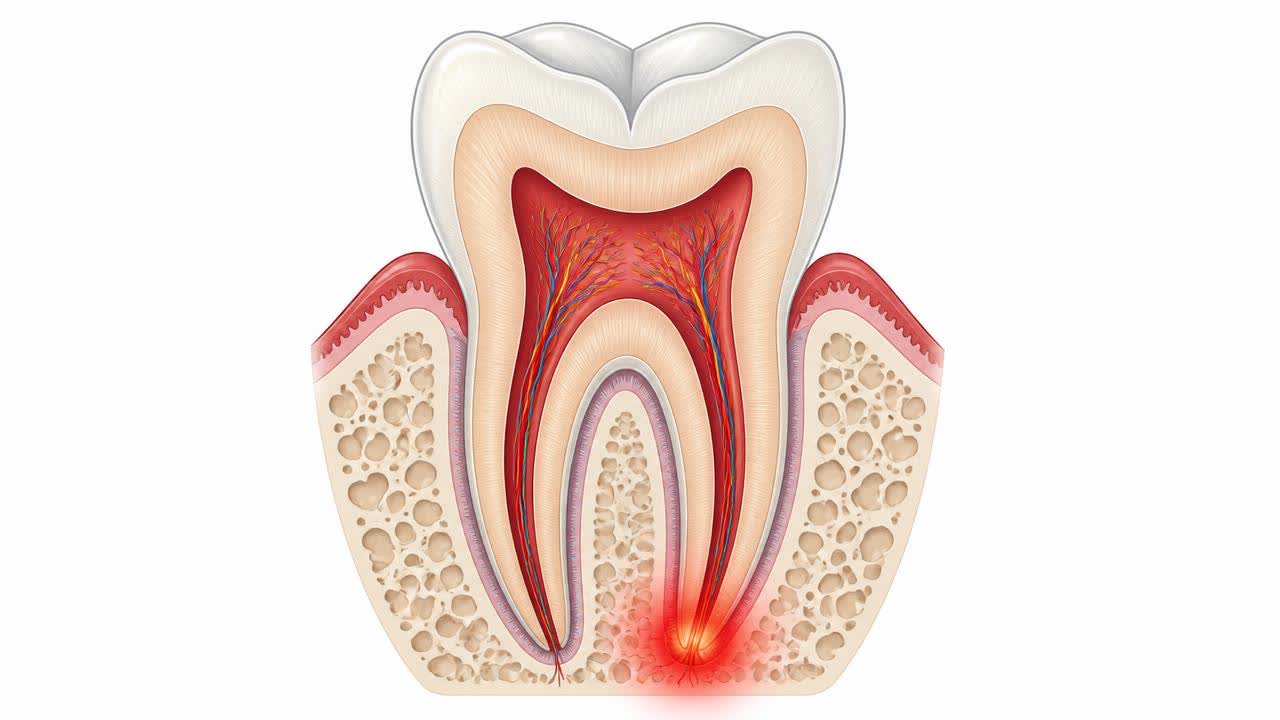
- Deep decay, a crack or trauma can allow bacteria to reach the pulp, the nerve and blood supply living inside the tooth.
- The tooth is numbed thoroughly and isolated with a rubber dam, a thin sheet that keeps the tooth dry and free of saliva during treatment.
- A root-treated tooth loses internal structure and moisture during the procedure, making it noticeably more brittle than a tooth with a healthy nerve.
- Mild tenderness while chewing for a few days after treatment is common as the surrounding ligament settles.
Why a root canal becomes necessary
Deep decay, a crack or trauma can allow bacteria to reach the pulp, the nerve and blood supply living inside the tooth. Once the pulp is inflamed or infected it cannot heal on its own, and the infection gradually spreads towards the root tip and into the surrounding bone, sometimes forming an abscess.
Warning signs include lingering pain after hot or cold food that does not settle quickly, throbbing pain at night that disturbs sleep, pain on biting or chewing, gum swelling near a specific tooth, or a tooth that has darkened in colour compared with its neighbours. Sometimes, however, there is no pain at all and the problem is only discovered on a routine X-ray.
Leaving an infected tooth untreated does not resolve the problem; the infection either becomes chronic, flaring intermittently, or progresses to an acute abscess with swelling and severe pain, at which point emergency treatment becomes unavoidable.
What happens during the procedure
The tooth is numbed thoroughly and isolated with a rubber dam, a thin sheet that keeps the tooth dry and free of saliva during treatment. The infected pulp is then removed, the canals inside the root are shaped with flexible rotary nickel-titanium files, disinfected with antimicrobial solutions, and finally sealed with an inert filling material called gutta-percha.
Magnification with a dental operating microscope allows fine, curved or calcified canals to be located reliably, and this is the single biggest factor separating a predictable long-term result from a failed treatment. Many uncomplicated cases are completed comfortably in a single sitting lasting sixty to ninety minutes.
Where infection is extensive or the canal anatomy is unusually complex, treatment may be split across two visits, with a soothing medicated dressing placed inside the tooth between appointments to allow the infection to settle further before the canals are permanently sealed.
Why a crown is advised afterwards
A root-treated tooth loses internal structure and moisture during the procedure, making it noticeably more brittle than a tooth with a healthy nerve. A full-coverage crown distributes chewing forces evenly across the tooth and dramatically reduces the risk of fracture, which is the most common reason a root-treated tooth is eventually lost.
Back teeth, which bear the heaviest biting loads, almost always benefit from a crown after root canal treatment. Front teeth with only a small access opening and strong remaining structure may sometimes be managed with a reinforced filling instead, but this is decided case by case.
Recovery and what to expect
Mild tenderness while chewing for a few days after treatment is common as the surrounding ligament settles. This usually responds well to routine painkillers, and most patients return to normal eating within two to three days.
It is best to avoid chewing hard foods on the treated tooth until the permanent crown or filling is in place, since a temporary restoration is not designed for full biting load.
Questions patients ask us
- Is it better to extract the tooth instead?
- A natural tooth preserved with root canal therapy is almost always the preferable option. Extraction leads to bone loss over time and creates the need for an implant or bridge later, which is usually more involved and costly than saving the original tooth.
- How long does a root-treated tooth last?
- Properly treated and subsequently crowned teeth commonly last for decades, often for the rest of a person's life, provided oral hygiene and regular dental review are maintained.
- Will I feel pain during the procedure?
- No. The tooth and surrounding gum are numbed thoroughly with local anaesthesia before any instrumentation begins, so the procedure itself is not painful, though some pressure may be felt.
- Can a root-treated tooth get infected again?
- It is uncommon but possible if bacteria re-enter through a leaking filling or a new crack. This is one reason a well-fitted crown and regular check-ups matter after treatment.
Sources and further reading
Guidance from professional and public health bodies. Clinical decisions here are made on your own examination and radiographs.
- 1.Endodontic diagnosis terminology and treatment guidance — American Association of Endodontists
- 2.Guidelines for the management of traumatic dental injuries — International Association of Dental Traumatology
- 3.Antimicrobial prescribing for dental infection — NICE (UK)
- 4.Oral health — fact sheet and global status report — World Health Organization
- 5.Policy statements and oral health definitions — FDI World Dental Federation
- 6.Dental health — conditions, treatments and patient guidance — NHS (UK)
- 7.Systematic reviews of oral and dental interventions — Cochrane Oral Health
- 8.Regulatory framework and dental education standards in India — Dental Council of India
When to see us
Get examined without waiting if any of the following applies to you:
- Facial or neck swelling, difficulty swallowing, opening the mouth or breathing — this is an emergency
- Pain with fever, or swelling that is spreading rather than settling
- A tooth knocked out or pushed out of position after an injury — time matters
- Pain that wakes you at night or does not respond to ordinary painkillers
Get a written plan and cost before you commit
If this is what you are dealing with, the next step is a consultation with radiographs — pain & emergencies cases are seen by the specialist who handles that field. You get a written plan and staged cost before anything begins.
reception@dramitsharmahospital.comThis article is general education and does not replace an in-person examination, radiographs or a diagnosis by a qualified dentist.
Clinical terms in this article
Related in Pain & Emergencies
Tooth Pain and Sensitivity: Causes, Relief and When to See a Dentist
Why teeth hurt or react to hot and cold, the difference between everyday sensitivity and a warning sign, and what treatment usually follows.
Tooth Pain and Dental Emergencies
How to identify a genuine dental emergency, what to do in the first hour, and when to call the hospital immediately.
Reversible vs Irreversible Pulpitis Symptoms and Treatment Options
Understanding reversible vs irreversible pulpitis is essential when managing dental pain. This guide explains their anatomical causes, diagnostic criteria, clinical symptoms, and evidence-based treatments ranging from conservative restorations to root canal therapy and emergency care.
Differences Between a Tooth Abscess and Gum Abscess
A dental abscess is a localised collection of pus caused by bacterial infection. Distinguishing between a tooth abscess (periapical) and a gum abscess (periodontal) is vital, as their anatomical origins, clinical presentations, diagnostic pathways, and definitive treatments differ fundamentally.
Why Tooth Pain Gets Worse When Lying Down
Experiencing toothache worse lying down typically indicates elevated pulpal or periapical pressure driven by increased cranial blood flow when supine. This guide explains pulpal anatomy, underlying causes, diagnostic pathways, evidence-based treatments, and critical red flags requiring emergency care.
Cracked Tooth Syndrome Symptoms Diagnosis and Repair Options
Cracked tooth syndrome presents with sharp, fleeting pain on chewing and temperature sensitivity caused by incomplete enamel and dentine fractures. Learn about anatomical factors, diagnostic challenges, repair options, recovery protocols, and when urgent dental intervention is necessary.