At a glance
- Tooth sensitivity is a brief, sharp reaction to hot, cold, sweet or acidic food that fades within a few seconds of the trigger being removed.
- Gum recession exposes the root surface, which has no protective enamel layer, so hot and cold reach the nerve much more easily than through a healthy crown of enamel.
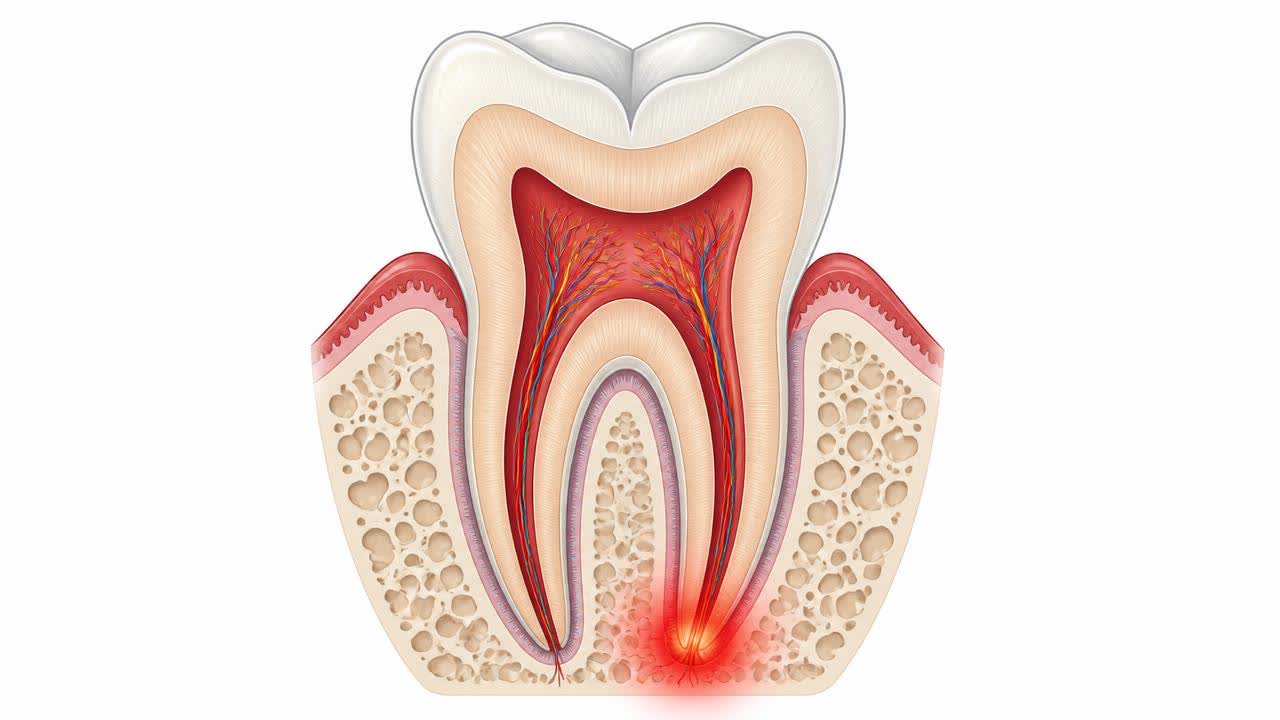
- Deep decay that has reached the nerve, a cracked tooth, an old filling that has failed underneath, or an abscess forming at the root tip are the usual reasons for pain that lingers or throbs.
- A dentist examines the tooth, tests its response to cold and to gentle tapping, and usually takes a small X-ray to see below the gum line, where much of the relevant detail is hidden from the naked eye.
- Use a soft-bristled brush and a sensitivity toothpaste, avoid very hot, cold, sweet or acidic foods on the affected side, and take a routine over-the-counter painkiller if needed, following the dosing instructions on the packet.
Sensitivity versus pain: two different signals
Tooth sensitivity is a brief, sharp reaction to hot, cold, sweet or acidic food that fades within a few seconds of the trigger being removed. It happens when the outer enamel has thinned or the gum has receded, exposing the underlying dentine, which is riddled with microscopic tubules that carry sensation straight to the nerve. This kind of discomfort is common, usually manageable, and does not always mean something is seriously wrong.
Tooth pain is different. It tends to linger after the trigger is gone, can throb on its own, may worsen when lying down or biting, and sometimes wakes a person at night. Lingering pain like this usually points to inflammation or infection inside the tooth rather than simple surface sensitivity, and it is the pattern that should prompt a dental visit rather than home management alone.
Both symptoms are worth taking seriously because they are the mouth's main way of reporting a problem before it becomes visible or urgent. Ignoring either one for weeks or months tends to let a small, easily treated issue turn into a larger one.
Common causes of sensitivity
Gum recession exposes the root surface, which has no protective enamel layer, so hot and cold reach the nerve much more easily than through a healthy crown of enamel. Recession can result from aggressive brushing with a hard-bristled brush, untreated gum disease, or simply the gum thinning gradually with age.
Enamel wear from acidic foods and drinks, teeth grinding, or over-vigorous brushing thins the protective layer over time. A cracked filling, a leaking old restoration, or a tooth that has recently been whitened can also cause temporary sensitivity that usually settles within days.
Sensitivity toothpaste containing potassium nitrate or stannous fluoride, used consistently for a few weeks, blocks the dentine tubules and calms many mild cases. A dentist can also apply a desensitising varnish or a bonded resin directly to an exposed root surface for faster relief when toothpaste alone is not enough.
Common causes of tooth pain
Deep decay that has reached the nerve, a cracked tooth, an old filling that has failed underneath, or an abscess forming at the root tip are the usual reasons for pain that lingers or throbs. Pain on biting specifically often points to a cracked cusp or a high filling rather than decay, while pain that is worse lying down and better sitting up is a classic sign of pressure building from infection.
A tooth that has darkened compared with its neighbours, gum swelling near a single tooth, or a small pimple-like bump on the gum are all signs that the nerve inside a tooth may already be dead or infected, even if pain itself comes and goes. These signs are usually followed up with an X-ray to see the extent of the problem before deciding on treatment.
Where the nerve is infected or irreversibly inflamed, root canal treatment removes the source of pain and preserves the natural tooth, followed by a crown to protect it once the internal structure has been hollowed out and refilled. Where a tooth is too badly broken down to save, extraction is considered, usually with a plan discussed for replacing the gap afterwards.
What happens at the appointment
A dentist examines the tooth, tests its response to cold and to gentle tapping, and usually takes a small X-ray to see below the gum line, where much of the relevant detail is hidden from the naked eye. This combination generally makes it possible to tell within one visit whether the problem is superficial sensitivity, a cavity, a cracked tooth, or an infection needing root canal treatment.
Pain relief is prioritised immediately if you arrive in discomfort, and definitive treatment is then explained clearly, with the reasoning behind the recommended option, before anything irreversible is carried out.
Simple steps while you wait for an appointment
Use a soft-bristled brush and a sensitivity toothpaste, avoid very hot, cold, sweet or acidic foods on the affected side, and take a routine over-the-counter painkiller if needed, following the dosing instructions on the packet. Rinsing gently with warm salt water can settle mild gum irritation around a tooth.
Avoid chewing directly on a painful tooth and do not apply heat to the face if there is any swelling, since this can make an underlying infection worse rather than better.
Questions patients ask us
- Why do my teeth hurt when I drink something cold?
- This is usually dentine sensitivity from exposed root surfaces or worn enamel. It is common and often improves with a sensitivity toothpaste, though persistent cases should be checked to rule out decay or a cracked tooth.
- Is tooth pain always a sign I need a root canal?
- No. Many causes of tooth pain, such as a small cavity, gum inflammation or a high filling, are treated without root canal therapy. An examination and X-ray usually clarify which type of problem you have.
- Can tooth pain go away on its own?
- Pain from infection or decay does not resolve permanently on its own, even if it becomes quieter for a while. The underlying cause remains and usually needs treatment to prevent it worsening.
- How quickly should I see a dentist for tooth pain?
- Mild, brief sensitivity can wait for a routine appointment. Pain that lingers, throbs, disturbs sleep, or comes with facial swelling should be assessed promptly, ideally the same day.
Sources and further reading
Guidance from professional and public health bodies. Clinical decisions here are made on your own examination and radiographs.
- 1.Endodontic diagnosis terminology and treatment guidance — American Association of Endodontists
- 2.Guidelines for the management of traumatic dental injuries — International Association of Dental Traumatology
- 3.Antimicrobial prescribing for dental infection — NICE (UK)
- 4.Oral health — fact sheet and global status report — World Health Organization
- 5.Policy statements and oral health definitions — FDI World Dental Federation
- 6.Dental health — conditions, treatments and patient guidance — NHS (UK)
- 7.Systematic reviews of oral and dental interventions — Cochrane Oral Health
- 8.Regulatory framework and dental education standards in India — Dental Council of India
When to see us
Get examined without waiting if any of the following applies to you:
- Facial or neck swelling, difficulty swallowing, opening the mouth or breathing — this is an emergency
- Pain with fever, or swelling that is spreading rather than settling
- A tooth knocked out or pushed out of position after an injury — time matters
- Pain that wakes you at night or does not respond to ordinary painkillers
Get a written plan and cost before you commit
If this is what you are dealing with, the next step is a consultation with radiographs — pain & emergencies cases are seen by the specialist who handles that field. You get a written plan and staged cost before anything begins.
reception@dramitsharmahospital.comThis article is general education and does not replace an in-person examination, radiographs or a diagnosis by a qualified dentist.
Clinical terms in this article
Related in Pain & Emergencies
Root Canal Treatment Explained
Why a tooth needs root canal therapy, what happens during single-sitting endodontics, and why crowns follow.
Tooth Pain and Dental Emergencies
How to identify a genuine dental emergency, what to do in the first hour, and when to call the hospital immediately.
Reversible vs Irreversible Pulpitis Symptoms and Treatment Options
Understanding reversible vs irreversible pulpitis is essential when managing dental pain. This guide explains their anatomical causes, diagnostic criteria, clinical symptoms, and evidence-based treatments ranging from conservative restorations to root canal therapy and emergency care.
Differences Between a Tooth Abscess and Gum Abscess
A dental abscess is a localised collection of pus caused by bacterial infection. Distinguishing between a tooth abscess (periapical) and a gum abscess (periodontal) is vital, as their anatomical origins, clinical presentations, diagnostic pathways, and definitive treatments differ fundamentally.
Why Tooth Pain Gets Worse When Lying Down
Experiencing toothache worse lying down typically indicates elevated pulpal or periapical pressure driven by increased cranial blood flow when supine. This guide explains pulpal anatomy, underlying causes, diagnostic pathways, evidence-based treatments, and critical red flags requiring emergency care.
Cracked Tooth Syndrome Symptoms Diagnosis and Repair Options
Cracked tooth syndrome presents with sharp, fleeting pain on chewing and temperature sensitivity caused by incomplete enamel and dentine fractures. Learn about anatomical factors, diagnostic challenges, repair options, recovery protocols, and when urgent dental intervention is necessary.