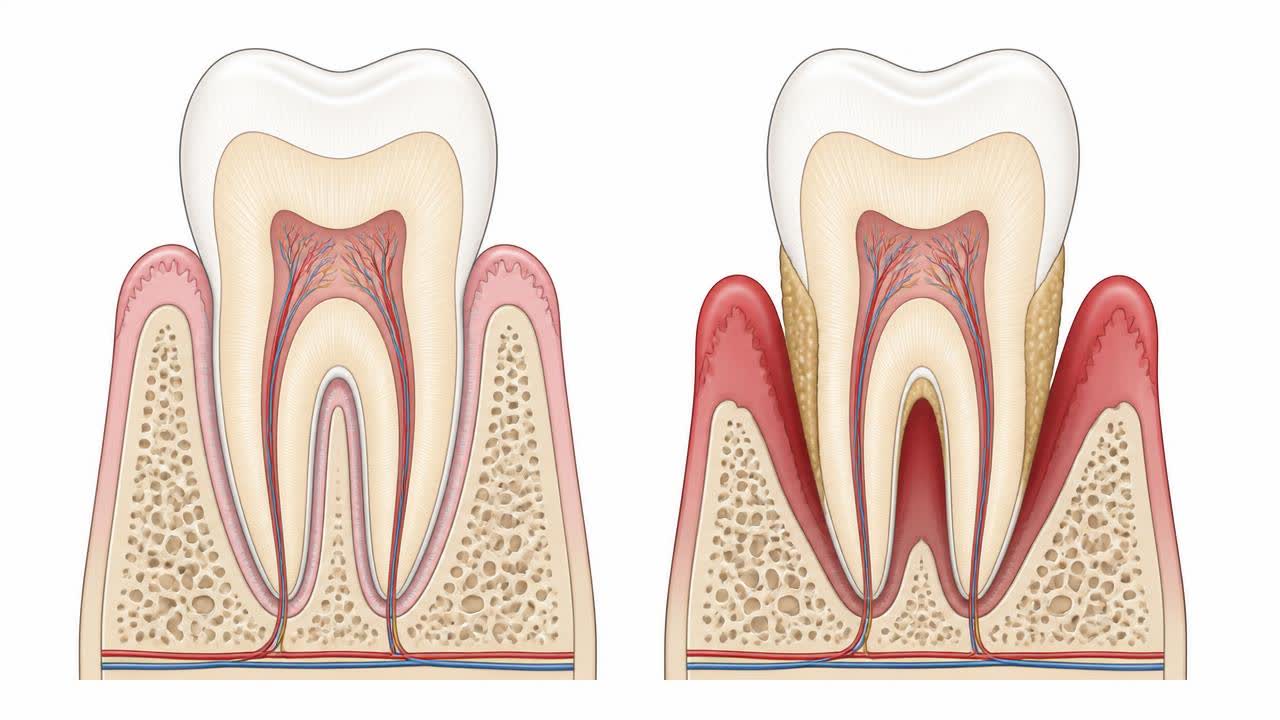
At a glance
- Full mouth disinfection is a systematic and thorough approach to treating periodontitis.
- The process involves professional scaling and root planning of all teeth, followed by the use of specialised antiseptic rinses to ensure comprehensive disinfection of the periodontal pockets.
- The primary benefit of full mouth disinfection is its efficiency in halting the disease process.
- Following your full mouth disinfection, your role is absolutely vital to the success of the treatment.
- Full mouth disinfection is most suitable for patients with moderate to severe periodontitis who are ready to commit to a structured and intensive course of treatment.
Understanding Full Mouth Disinfection
Full mouth disinfection is a systematic and thorough approach to treating periodontitis. Unlike traditional treatment, which might be spread over several weeks, this method aims to treat all affected areas of the mouth within a very short timeframe. By reducing the total bacterial load across the entire mouth simultaneously, we prevent bacteria from one area from migrating to and re-infecting areas that have already been cleaned.
At Dr. Amit Sharma Super Speciality Dental Hospital, we utilise this intensive strategy for patients who present with more advanced or aggressive gum disease. It is a highly effective, evidence-based protocol that helps to break the cycle of infection, allowing the soft tissues of the gums to begin the healing process immediately without the interference of lingering bacterial populations in other parts of the mouth.
The Treatment Process
The process involves professional scaling and root planning of all teeth, followed by the use of specialised antiseptic rinses to ensure comprehensive disinfection of the periodontal pockets. By targeting the entire oral environment at once, we disrupt the bacterial biofilm that drives periodontal disease. This intensive cleaning allows the inflammatory response in your gums to subside, which is crucial for reducing pockets and preventing bone loss.
Your comfort is a priority during these sessions. We use local anaesthesia to ensure the procedure is painless, and our expert clinicians perform the cleaning with precision. The goal is to remove all traces of plaque and calculus from both the crown and the root surfaces, creating a clean, biologically compatible surface that promotes the health and regeneration of the surrounding gum tissues.
Benefits of Intensive Treatment
The primary benefit of full mouth disinfection is its efficiency in halting the disease process. By addressing all affected teeth at once, patients often notice a significant reduction in gum inflammation, bleeding, and sensitivity in a much shorter period than traditional serial treatments. This rapid improvement is highly motivating for patients, encouraging them to maintain the improved level of oral hygiene necessary for long-term health.
Furthermore, this approach has been shown to reduce the risk of re-infection. When the entire mouth is disinfected, the total amount of disease-causing bacteria is drastically reduced, creating a more stable foundation for the gums to heal. Patients often report feeling a profound sense of cleanliness and freshness in their mouth following the procedure, which is a testament to the effectiveness of this rigorous, comprehensive treatment protocol.
Is This Treatment Right for You?
Full mouth disinfection is most suitable for patients with moderate to severe periodontitis who are ready to commit to a structured and intensive course of treatment. During your comprehensive periodontal assessment, our expert team will evaluate your specific condition and discuss whether this protocol is the best fit for your needs. We take the time to answer all your questions, ensuring you feel confident in your treatment plan.
If you have concerns about the state of your gums, the frequency of bleeding, or the presence of bad breath, we encourage you to schedule a consultation with our experienced periodontal care team. We offer expert diagnosis and a supportive environment, focusing on evidence-based treatments to save your teeth and restore your health. Contact us today on our helpline to begin your journey towards healthier gums.
Aftercare and Long-Term Results
Following your full mouth disinfection, your role is absolutely vital to the success of the treatment. We will provide you with a detailed, personalised home care plan, including the correct brushing and interdental cleaning techniques to keep your mouth free of plaque. Adhering to this routine ensures that the bacterial load remains low and prevents the re-colonisation of the treated pockets, allowing the tissues to heal.
Consistent follow-up appointments are also key. During these visits, we monitor your healing, reassess your periodontal pocket depths, and perform any necessary fine-tuning to ensure long-term stability. At our clinic, we are dedicated to helping you achieve and maintain gum health. If you are struggling with chronic gum disease, this approach might be the ideal solution to restore your mouth to health.
Questions patients ask us
- How does full mouth disinfection differ from traditional cleaning?
- Traditional cleaning is often completed in multiple visits over several weeks. Full mouth disinfection is a more intensive, comprehensive approach that treats all affected areas in a very short timeframe to minimise the risk of re-infection from untreated pockets to newly cleaned areas.
- Is the procedure painful?
- We use local anaesthesia to ensure that your mouth is numb during the procedure, so you should not feel any pain. Many patients find the intensive cleaning process very manageable, and we work closely with you to ensure your comfort throughout the entire appointment.
- How quickly will I see results?
- Most patients notice a significant improvement in symptoms, such as reduced gum bleeding and tenderness, shortly after the treatment. As the tissue heals and inflammation subsides, you will continue to see improvements in the health and appearance of your gums over the following weeks.
- Will I need to change my daily routine afterwards?
- Yes, you will need to follow a strict home hygiene routine as prescribed by our team. This will likely involve specific brushing and interdental cleaning techniques to ensure that plaque does not accumulate again and to provide your gums the best chance of long-term healing.
Sources and further reading
Guidance from professional and public health bodies. Clinical decisions here are made on your own examination and radiographs.
- 1.EFP clinical practice guidelines for periodontitis — European Federation of Periodontology
- 2.Classification of periodontal and peri-implant diseases — American Academy of Periodontology
- 3.Prevention and treatment of periodontal diseases in practice — Scottish Dental Clinical Effectiveness Programme
- 4.Oral health — fact sheet and global status report — World Health Organization
- 5.Policy statements and oral health definitions — FDI World Dental Federation
- 6.Dental health — conditions, treatments and patient guidance — NHS (UK)
- 7.Systematic reviews of oral and dental interventions — Cochrane Oral Health
- 8.Regulatory framework and dental education standards in India — Dental Council of India
When to see us
Get examined without waiting if any of the following applies to you:
- Gums that bleed without provocation, or bleeding that has become heavier
- Teeth that feel loose, are drifting, or gaps that are opening up
- Persistent bad breath or taste, gum abscesses, or pus on pressing the gum
Get a written plan and cost before you commit
If this is what you are dealing with, the next step is a consultation with radiographs — gums & prevention cases are seen by the specialist who handles that field. You get a written plan and staged cost before anything begins.
reception@dramitsharmahospital.comThis article is general education and does not replace an in-person examination, radiographs or a diagnosis by a qualified dentist.
Clinical terms in this article
Related in Gums & Prevention
Bleeding Gums and Gum Disease: A Complete Guide
What bleeding gums usually mean, how gingivitis progresses into periodontal disease, and the treatment path from scaling to gum surgery.
Gum Disease: Detection and Treatment
From reversible gingivitis to periodontitis, the warning signs, staged treatment and the link to overall health.
Preventive Dentistry and Home Care
The routine that prevents most dental disease: brushing technique, interdental cleaning, diet and recall visits.
Chronic Bad Breath Caused by Gum Infection
Chronic bad breath, or halitosis, is frequently driven by underlying gum disease. Subgingival bacteria produce volatile sulphur compounds within periodontal pockets. Effective resolution requires professional periodontal debridement, targeted biofilm disruption, and meticulous daily interdental hygiene rather than cosmetic masking.
Loose Permanent Teeth from Advanced Periodontal Disease
Loose teeth from advanced gum disease occur when severe chronic inflammation destroys the supporting alveolar bone and periodontal ligament. With timely periodontal therapy, splinting, and meticulous plaque control, many loose teeth can be stabilised and preserved without extraction.
Furcation Involvement and Bone Loss Between Roots
Furcation involvement describes bone loss between the roots of multi-rooted molars caused by advanced periodontal disease. This clinical guide explains its causes, diagnostic staging, surgical and non-surgical therapies, daily maintenance, and red flag symptoms requiring urgent care.