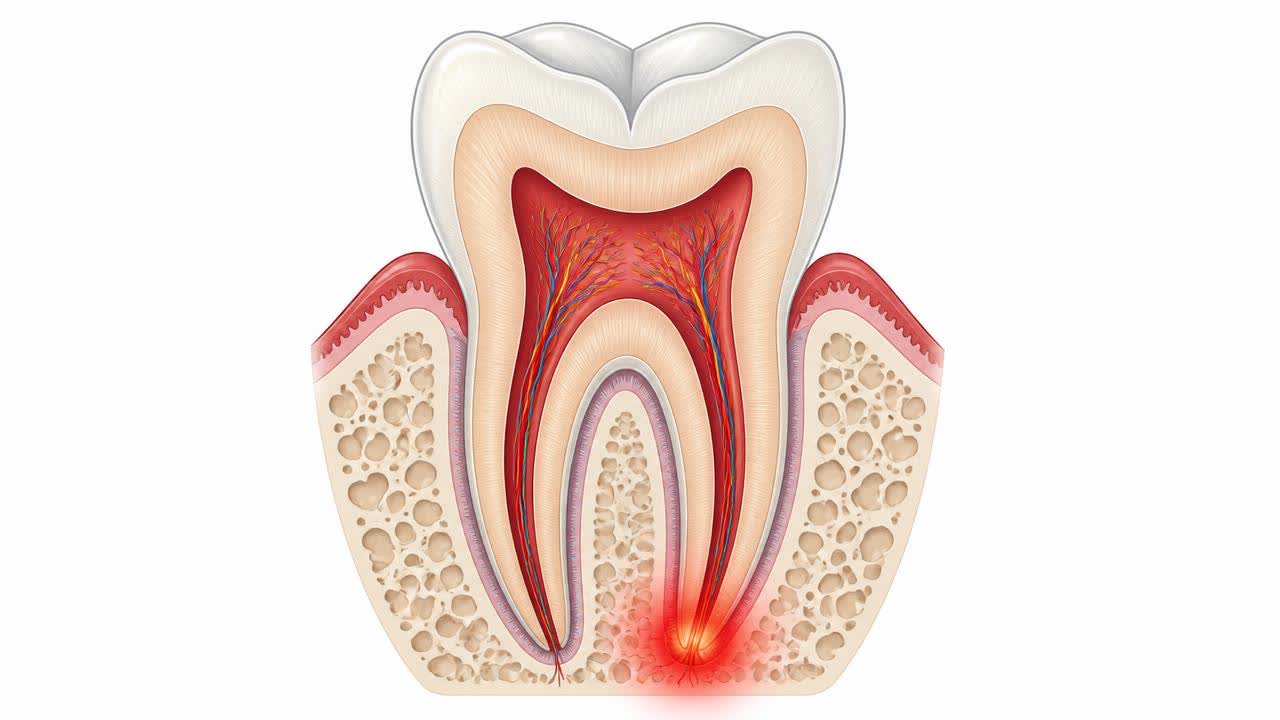
At a glance
- Wisdom teeth, or third molars, are the last teeth to develop and typically emerge between the late teenage years and mid-twenties.
- Common symptoms include pain and swelling at the back of the jaw, difficulty fully opening the mouth, a bad taste or smell from the affected area, and sometimes swelling extending to the cheek or jaw angle.
- Diagnosis involves a clinical examination alongside an X-ray, or in more complex cases a three-dimensional scan, to assess the exact position of the wisdom tooth relative to the jawbone, nerve canal, and adjacent teeth.
- For an acute flare-up of pericoronitis, initial treatment often involves cleaning the area, prescribing antibiotics if there are signs of spreading infection, and pain relief medication to manage discomfort while the acute…
Why Wisdom Teeth Often Cause Problems
Wisdom teeth, or third molars, are the last teeth to develop and typically emerge between the late teenage years and mid-twenties. Because they arrive after all other teeth are already in place, there is often insufficient space in the jaw for them to erupt fully and normally, leading to impaction, where the tooth is angled, partially emerged, or fully trapped beneath the gum or bone.
Impacted or partially erupted wisdom teeth can trap food and bacteria around the surrounding gum flap, leading to a condition called pericoronitis, which causes pain, swelling, and sometimes difficulty opening the mouth. This is one of the most common reasons patients seek emergency dental care for wisdom tooth pain.
Symptoms of Wisdom Tooth Problems
Common symptoms include pain and swelling at the back of the jaw, difficulty fully opening the mouth, a bad taste or smell from the affected area, and sometimes swelling extending to the cheek or jaw angle. Pain may flare up periodically, particularly during periods of stress or lowered immunity, and then settle temporarily before recurring.
In some cases, wisdom teeth can also contribute to crowding of adjacent teeth, decay in the neighbouring second molar due to difficulty cleaning the area properly, or the development of cysts around an unerupted tooth, which are typically identified through routine X-rays.
Diagnosis and Decision Making
Diagnosis involves a clinical examination alongside an X-ray, or in more complex cases a three-dimensional scan, to assess the exact position of the wisdom tooth relative to the jawbone, nerve canal, and adjacent teeth. This information helps determine whether extraction is straightforward or more surgically involved.
Not all wisdom teeth need to be removed. A fully erupted, properly positioned wisdom tooth that can be cleaned effectively and is not causing problems may simply be monitored with regular check-ups rather than extracted preventively.
Treatment Options
For an acute flare-up of pericoronitis, initial treatment often involves cleaning the area, prescribing antibiotics if there are signs of spreading infection, and pain relief medication to manage discomfort while the acute episode settles. Once the acute infection is controlled, extraction is usually recommended if the tooth is impacted and likely to cause recurring problems.
Surgical removal of impacted wisdom teeth is performed under local anaesthesia, sometimes with sedation for anxious patients or more complex cases, and involves careful removal of the tooth, occasionally in sections, followed by suturing of the gum. Most patients experience swelling and mild discomfort for several days post-operatively, which is managed with prescribed medication and following post-operative care instructions carefully.
Questions patients ask us
- Do all wisdom teeth need to be removed?
- No, wisdom teeth that are fully erupted, properly positioned, and easy to clean without causing pain or damage to neighbouring teeth can often be left in place and simply monitored with regular dental check-ups rather than extracted.
- Why does my wisdom tooth pain come and go?
- This pattern is typical of pericoronitis, where the gum flap over a partially erupted wisdom tooth becomes intermittently inflamed and infected, often flaring during periods of stress or reduced immunity before settling temporarily, only to recur later if the underlying cause is not addressed.
- Is wisdom tooth extraction painful?
- The procedure itself is performed under local anaesthesia and is not painful during removal. Some swelling and discomfort are expected for a few days afterwards, which is generally well controlled with the pain relief medication and care instructions provided by your dentist.
- How long does recovery take after wisdom tooth removal?
- Most patients notice significant improvement within three to five days, with full soft tissue healing over one to two weeks. Following post-operative instructions carefully, including diet modifications and oral hygiene practices, supports smoother and faster recovery.
Sources and further reading
Guidance from professional and public health bodies. Clinical decisions here are made on your own examination and radiographs.
- 1.Endodontic diagnosis terminology and treatment guidance — American Association of Endodontists
- 2.Guidelines for the management of traumatic dental injuries — International Association of Dental Traumatology
- 3.Antimicrobial prescribing for dental infection — NICE (UK)
- 4.Oral health — fact sheet and global status report — World Health Organization
- 5.Policy statements and oral health definitions — FDI World Dental Federation
- 6.Dental health — conditions, treatments and patient guidance — NHS (UK)
- 7.Systematic reviews of oral and dental interventions — Cochrane Oral Health
- 8.Regulatory framework and dental education standards in India — Dental Council of India
When to see us
Get examined without waiting if any of the following applies to you:
- Facial or neck swelling, difficulty swallowing, opening the mouth or breathing — this is an emergency
- Pain with fever, or swelling that is spreading rather than settling
- A tooth knocked out or pushed out of position after an injury — time matters
- Pain that wakes you at night or does not respond to ordinary painkillers
Get a written plan and cost before you commit
If this is what you are dealing with, the next step is a consultation with radiographs — pain & emergencies cases are seen by the specialist who handles that field. You get a written plan and staged cost before anything begins.
reception@dramitsharmahospital.comThis article is general education and does not replace an in-person examination, radiographs or a diagnosis by a qualified dentist.
Clinical terms in this article
Related in Pain & Emergencies
Tooth Pain and Sensitivity: Causes, Relief and When to See a Dentist
Why teeth hurt or react to hot and cold, the difference between everyday sensitivity and a warning sign, and what treatment usually follows.
Root Canal Treatment Explained
Why a tooth needs root canal therapy, what happens during single-sitting endodontics, and why crowns follow.
Tooth Pain and Dental Emergencies
How to identify a genuine dental emergency, what to do in the first hour, and when to call the hospital immediately.
Reversible vs Irreversible Pulpitis Symptoms and Treatment Options
Understanding reversible vs irreversible pulpitis is essential when managing dental pain. This guide explains their anatomical causes, diagnostic criteria, clinical symptoms, and evidence-based treatments ranging from conservative restorations to root canal therapy and emergency care.
Differences Between a Tooth Abscess and Gum Abscess
A dental abscess is a localised collection of pus caused by bacterial infection. Distinguishing between a tooth abscess (periapical) and a gum abscess (periodontal) is vital, as their anatomical origins, clinical presentations, diagnostic pathways, and definitive treatments differ fundamentally.
Why Tooth Pain Gets Worse When Lying Down
Experiencing toothache worse lying down typically indicates elevated pulpal or periapical pressure driven by increased cranial blood flow when supine. This guide explains pulpal anatomy, underlying causes, diagnostic pathways, evidence-based treatments, and critical red flags requiring emergency care.