At a glance
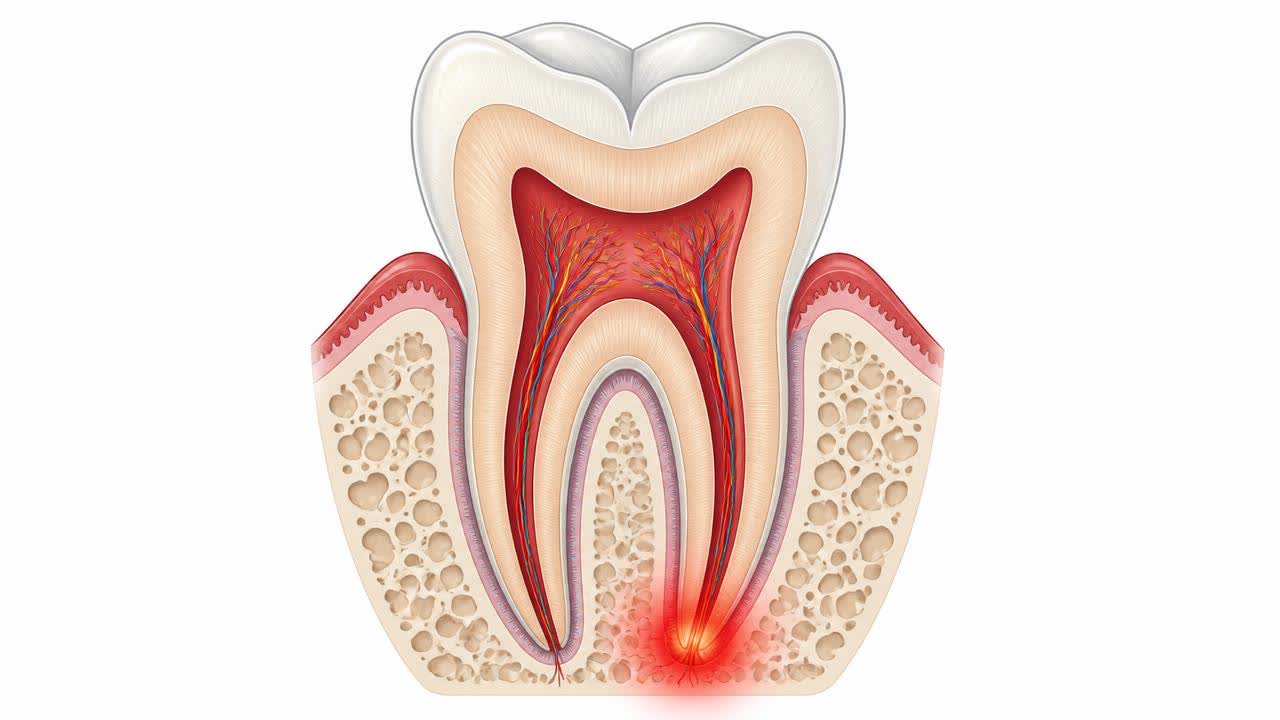
- A tooth consists of outer hard tissues—enamel and dentine—protecting a central soft tissue core known as the dental pulp.
- Many patients report that their tooth throbbing when lying down worsens significantly compared to when they are upright.
- The leading cause of severe positional throbbing is symptomatic irreversible pulpitis, where the neurovascular core of the tooth is irreversibly damaged by bacterial invasion from deep dental caries, defective restorations, or…
- Positional dental pain often presents with distinct clinical characteristics that help differentiate the stage of disease.
- Accurate identification of the offending tooth requires a systematic clinical examination.
Anatomy of Dental Pain: What Happens Inside the Tooth
A tooth consists of outer hard tissues—enamel and dentine—protecting a central soft tissue core known as the dental pulp. The dental pulp contains blood vessels, sensory nerve fibres, and connective tissue that enter through the microscopic apical foramen at the root tip. Dentine is traversed by thousands of microscopic fluid-filled channels termed dentinal tubules, which transmit thermal, mechanical, and chemical stimuli directly to the underlying nerve fibres (predominantly myelinated A-delta fibres and unmyelinated C-fibres).
Unlike soft tissues elsewhere in the body that can expand when inflamed, the dental pulp is enclosed within a rigid, non-compliant chamber of calcified dentine. When dental caries, structural trauma, or bacterial microleakage breaches the protective enamel barrier, bacteria invade the pulp tissue, instigating an acute inflammatory response. The resulting vascular dilatation and cellular extravasation generate high tissue pressure inside this unyielding space, compressing sensory nerve endings and causing intense, throbbing discomfort.
Why Pain Throbs When Lying Down: The Mechanism
Many patients report that their tooth throbbing when lying down worsens significantly compared to when they are upright. When an individual stands or sits upright, gravitational forces promote venous drainage away from the head, keeping cephalic vascular pressures relatively low. Upon assuming a horizontal or supine position, gravity no longer assists this drainage, resulting in an orthostatic redistribution of blood volume and an immediate rise in arterial and venous pressure within the head and oral cavity.
In healthy dental pulp, local autoregulatory microcirculation compensates for these postural pressure shifts. However, in an inflamed, hyperaemic pulp (pulpitis) or an established periapical abscess, the microvasculature is already maximally dilated and compromised. The positional surge in cranial blood pressure forces more fluid into the confined, rigid pulp chamber, sharply increasing interstitial fluid pressure. This mechanically stimulates the high-threshold polymodal C-fibres, transforming a low-grade ache into an unbearable, rhythmic, pulsating toothache.
Primary Causes of Positional Tooth Pain
The leading cause of severe positional throbbing is symptomatic irreversible pulpitis, where the neurovascular core of the tooth is irreversibly damaged by bacterial invasion from deep dental caries, defective restorations, or advanced cracked tooth syndrome. Once the pulp becomes necrotic, bacteria advance through the root canal system into the surrounding alveolar bone, causing symptomatic apical periodontitis or an acute periapical abscess, which exhibits exquisite tenderness to biting and throbbing at night.
Non-odontogenic conditions can also mimic these positional symptoms. Maxillary sinusitis, caused by viral or bacterial infection of the paranasal sinuses, creates mucosal swelling and fluid accumulation directly adjacent to the root apices of the upper premolars and molars. Because these upper teeth share sensory innervation via the superior alveolar nerves, lying down increases sinus hydrostatic pressure, resulting in bilateral or regional dental throbbing. In South Asian populations, heavy use of areca nut, paan, and gutka causes profound occlusal attrition and enamel wear, predisposing teeth to rapid pulpal exposure and subsequent positional pain.
Recognising Symptoms and Patterns of Presentation
Positional dental pain often presents with distinct clinical characteristics that help differentiate the stage of disease. In early pulpal inflammation, pain is provoked by hot or cold foodstuffs and lingers for several minutes after the stimulus is removed. As inflammation progresses to irreversible pulpitis, the pain becomes unprovoked, spontaneous, and intensely throbbing, frequently awakening the patient from sleep. Patients frequently report that sleeping propped up on several pillows provides partial, temporary relief.
When infection extends beyond the root apex into the periodontal ligament, the character of the pain shifts or broadens. The tooth feels elevated in its socket, making any light contact or chewing intolerable. Localised gingival erythema (redness), oedema (swelling), or a draining sinus tract (fistula) may develop. If accompanied by foul-tasting discharge, systemic malaise, or diffuse facial swelling, the condition has transitioned into an acute spreading infection requiring immediate clinical intervention.
Diagnostic Evaluation: How Clinicians Identify the Source
Accurate identification of the offending tooth requires a systematic clinical examination. The dental practitioner begins with visual inspection and soft tissue palpation to detect swelling or sinus tracts. Diagnostic sensibility testing is essential: thermal testing using an intense cold stimulus (such as endodontic refrigerant spray) or an electric pulp tester assesses pulpal nerve responsiveness. An exaggerated, prolonged response indicates pulpitis, whereas a complete lack of response suggests pulpal necrosis.
Mechanical tests, including axial and lateral percussion with a dental mirror handle and targeted tooth-slooth biting tests, isolate periapical inflammation and structural fractures. Radiographic imaging, typically intraoral periapical radiographs, reveals the depth of caries, proximity to the pulp, and periapical radiolucencies indicative of bone resorption. In complex multi-rooted teeth or suspected root fractures, cone-beam computed tomography (CBCT) provides high-resolution three-dimensional visualisation of root canal anatomy and subtle bony changes.
Classification of Pulpal and Periapical Diseases
The American Association of Endodontists provides standardised diagnostic terms to categorise pulpal status. Normal pulp is symptom-free and responds mildly to sensory stimuli. Reversible pulpitis involves mild inflammation where the pulp remains vital and capable of healing once the irritant (such as superficial caries) is removed. Symptomatic irreversible pulpitis denotes vital but severely inflamed pulp incapable of repair, characterised by spontaneous, radiating, and nocturnal pain.
When the pulp loses its blood supply entirely, the diagnosis is pulpal necrosis. Left untreated, necrotic contents leak into surrounding tissues, creating periapical diagnoses. Symptomatic apical periodontitis presents with acute pain on mastication and percussion. An acute apical abscess represents rapid-onset purulent inflammation at the root apex, featuring spontaneous throbbing pain, severe tenderness to pressure, pus formation, and potential systemic involvement such as pyrexia (fever) and regional lymphadenopathy.
Evidence-Based Treatment Pathways
Definitive management of positional throbbing pain requires physical debridement of the diseased tissue rather than reliance on systemic medications alone. For symptomatic irreversible pulpitis or pulpal necrosis, endodontic therapy (root canal treatment) is the gold standard conservative intervention. This entails complete mechanical cleaning, chemical disinfection with sodium hypochlorite irrigants, and three-dimensional hermetic obturation of the root canal system, allowing the tooth to be retained long-term.
If a tooth is deemed non-restorable due to extensive structural loss, advanced periodontal disease, or a vertical root fracture, dental extraction is indicated to eliminate the infectious reservoir. Systemic antibiotics are not recommended for localised pulpitis or localized apical periodontitis in healthy individuals; evidence demonstrates they do not alleviate pain within the enclosed tooth space. Antibiotics are strictly reserved for cases with spreading cellulitis, systemic compromise, or medically vulnerable patients alongside mechanical debridement.
What to Expect During the Emergency Appointment
During an emergency appointment for severe tooth throbbing, the primary objective is rapid pain relief and source control. The clinician administers profound local anaesthesia, often employing nerve blocks and infiltration techniques. A dental dam (rubber sheet) is universally placed around the target tooth to isolate it from saliva, prevent microbial contamination, and protect the airway from fine endodontic instruments and irrigating solutions.
The dentist prepares an access cavity through the biting surface into the pulp chamber to vent internal pressure, immediately mitigating throbbing pain. The inflamed or necrotic pulp tissue is extirpated (removed) from the root canals using fine nickel-titanium instruments. After copious antibacterial irrigation, an anti-inflammatory and antimicrobial intracanal medicament (such as calcium hydroxide) is placed, and the access cavity is sealed with a robust temporary restoration prior to definitive obturation in a subsequent visit.
Recovery, Aftercare, and Post-Treatment Expectations
Following initial pulpal debridement, patients typically experience substantial relief from the severe, spontaneous throbbing that troubled them while lying down. However, mild to moderate post-instrumentation discomfort on biting is normal for 48 to 72 hours as surrounding periapical tissues recover from pre-existing inflammation and mechanical instrumentation. This predictable inflammatory discomfort is effectively managed using over-the-counter non-steroidal anti-inflammatory drugs (such as ibuprofen) or paracetamol, taken according to clinical guidance.
Patients must avoid chewing hard or sticky foods on the treated tooth until definitive restoration is completed. Because endodontically treated posterior teeth are structurally weakened and susceptible to fracture, placement of a full-coverage coronal restoration, such as a porcelain or metal crown, is strongly recommended by clinical guidelines to ensure long-term structural integrity and prevent coronal microleakage.
Complications of Untreated Infections and Red Flags
Ignoring a throbbing tooth often leads to a deceptive cessation of pain as pulpal nerve fibres undergo complete ischaemic necrosis. However, the untreated bacterial colony continues to proliferate, eventually exiting the apical foramen into the surrounding fascial spaces of the head and neck. This can rapidly develop into life-threatening odontogenic deep-space infections, such as Ludwig’s angina (a bilateral submandibular, sublingual, and submental cellulitis) or cavernous sinus thrombosis.
Patients must seek immediate emergency medical evaluation if they develop red flag symptoms. These include progressive difficulty in swallowing (dysphagia), difficulty breathing (dyspnoea), restricted mouth opening (trismus), peri-orbital swelling, high fever with rigors, or rapidly expanding swelling extending down the neck or crossing the jawline. These systemic manifestations require urgent hospital admission, intravenous antibiotic therapy, and surgical airway protection alongside surgical drainage.
Evidence and further reading
The diagnostic classifications and therapeutic approaches for pulpal and periapical pathology are founded on international consensus guidelines published by the American Association of Endodontists (AAE) and the European Society of Endodontology (ESE). Systematic reviews published by the Cochrane Collaboration consistently confirm that emergency pulpotomy or pulpectomy provides rapid, definitive pain relief superior to systemic pharmacotherapy alone in cases of irreversible pulpitis.
Furthermore, guidance from the National Institute for Health and Care Excellence (NICE) and the American Dental Association (ADA) emphasises antimicrobial stewardship, advising against routine antibiotic prescriptions for localised pulpal disease. Clinicians and patients seeking deeper academic literature should refer to peer-reviewed studies in the Journal of Endodontics, the International Endodontic Journal, and clinical publications from the FDI World Dental Federation.
Questions patients ask us
- Why does my toothache get significantly worse at night?
- When you lie down, gravity no longer assists blood drainage from your head. This increases blood pressure in your head and jaw. Inside an inflamed tooth, this additional vascular pressure compresses hyper-sensitive nerve endings within the rigid dentine walls, triggering a severe, throbbing sensation.
- Can I take antibiotics to stop the throbbing pain when lying down?
- Antibiotics do not relieve pulpitis pain. Because blood circulation inside an inflamed or necrotic pulp chamber is severely compromised, oral antibiotics cannot reach therapeutic concentrations inside the tooth. Physical dental treatment, such as root canal therapy or extraction, is required to remove the infected tissue.
- How can I sleep comfortably while waiting for my dental appointment?
- Keep your head elevated using two or three pillows to reduce cranial blood pressure and minimise throbbing. Avoid consuming extremely hot, cold, or acidic foods and drinks before bedtime. Over-the-counter anti-inflammatory medications like ibuprofen, if medically appropriate for you, can help reduce tissue inflammation temporarily.
- Does throbbing pain always mean I need a root canal?
- Positional throbbing usually indicates irreversible pulpitis or a periapical abscess, both of which require root canal treatment or extraction. However, if the pain is caused by acute maxillary sinusitis or reversible pulpitis from a high filling, treating the sinus or adjusting the bite may resolve symptoms without root canal therapy.
- Why did my throbbing tooth pain suddenly stop completely?
- A sudden disappearance of intense throbbing usually means the sensory nerve fibres inside the dental pulp have died (pulpal necrosis). Although the pain temporarily resolves, the underlying bacterial infection remains active and will spread into the surrounding jawbone, eventually causing an acute periapical abscess if left untreated.
- Can sinus problems cause tooth throbbing when lying down?
- Yes. The roots of your upper molars and premolars lie directly beneath the maxillary sinus cavities. When sinuses become inflamed or filled with fluid due to sinusitis, lying down increases fluid pressure against these root apices, causing a dull, throbbing ache that mimics genuine dental pulpitis.
- Are home remedies like clove oil effective for nighttime tooth throbbing?
- Clove oil contains eugenol, which has mild local anaesthetic and anti-inflammatory properties that may provide brief surface relief. However, it cannot penetrate the enclosed pulp chamber to resolve severe internal inflammation or eliminate deep bacterial infections. Professional dental treatment remains essential to prevent complications.
- What are the danger signs that require an immediate visit to the emergency department?
- Seek urgent emergency medical care if your toothache is accompanied by swelling that impairs your breathing or swallowing, severe difficulty opening your mouth (trismus), swelling spreading toward your eyes or neck, a high fever, confusion, or rapid heart rate. These indicate a spreading, potentially life-threatening infection.
Sources and further reading
Guidance from professional and public health bodies. Clinical decisions here are made on your own examination and radiographs.
- 1.Endodontic diagnosis terminology and treatment guidance — American Association of Endodontists
- 2.Guidelines for the management of traumatic dental injuries — International Association of Dental Traumatology
- 3.Antimicrobial prescribing for dental infection — NICE (UK)
- 4.Oral health — fact sheet and global status report — World Health Organization
- 5.Policy statements and oral health definitions — FDI World Dental Federation
- 6.Dental health — conditions, treatments and patient guidance — NHS (UK)
- 7.Systematic reviews of oral and dental interventions — Cochrane Oral Health
- 8.Regulatory framework and dental education standards in India — Dental Council of India
When to see us
Get examined without waiting if any of the following applies to you:
- Facial or neck swelling, difficulty swallowing, opening the mouth or breathing — this is an emergency
- Pain with fever, or swelling that is spreading rather than settling
- A tooth knocked out or pushed out of position after an injury — time matters
- Pain that wakes you at night or does not respond to ordinary painkillers
Get a written plan and cost before you commit
If this is what you are dealing with, the next step is a consultation with radiographs — pain & emergencies cases are seen by the specialist who handles that field. You get a written plan and staged cost before anything begins.
reception@dramitsharmahospital.comThis article is general education and does not replace an in-person examination, radiographs or a diagnosis by a qualified dentist.
Clinical terms in this article
Related in Pain & Emergencies
Tooth Pain and Sensitivity: Causes, Relief and When to See a Dentist
Why teeth hurt or react to hot and cold, the difference between everyday sensitivity and a warning sign, and what treatment usually follows.
Root Canal Treatment Explained
Why a tooth needs root canal therapy, what happens during single-sitting endodontics, and why crowns follow.
Tooth Pain and Dental Emergencies
How to identify a genuine dental emergency, what to do in the first hour, and when to call the hospital immediately.
Reversible vs Irreversible Pulpitis Symptoms and Treatment Options
Understanding reversible vs irreversible pulpitis is essential when managing dental pain. This guide explains their anatomical causes, diagnostic criteria, clinical symptoms, and evidence-based treatments ranging from conservative restorations to root canal therapy and emergency care.
Differences Between a Tooth Abscess and Gum Abscess
A dental abscess is a localised collection of pus caused by bacterial infection. Distinguishing between a tooth abscess (periapical) and a gum abscess (periodontal) is vital, as their anatomical origins, clinical presentations, diagnostic pathways, and definitive treatments differ fundamentally.
Why Tooth Pain Gets Worse When Lying Down
Experiencing toothache worse lying down typically indicates elevated pulpal or periapical pressure driven by increased cranial blood flow when supine. This guide explains pulpal anatomy, underlying causes, diagnostic pathways, evidence-based treatments, and critical red flags requiring emergency care.