At a glance
- Tooth discolouration falls into two broad categories.
- Whitening gels use hydrogen peroxide or carbamide peroxide, which breaks down into oxygen molecules that penetrate the enamel and dissolve the pigmented compounds responsible for staining.
- Any active decay or gum disease should be treated first, since whitening gel can cause discomfort if it reaches an exposed area of decay or an inflamed gum through a leaking margin.
- Temporary sensitivity to cold during and shortly after whitening is common and generally mild, caused by the gel temporarily allowing more fluid movement within the dentine tubules.
- Whitened teeth are not permanently protected from future staining, so limiting the frequency and contact time of staining foods and drinks, rinsing with water afterwards, and maintaining regular brushing and professional cleaning…
Why teeth discolour
Tooth discolouration falls into two broad categories. Extrinsic stains sit on the outer surface of the enamel and come from pigmented foods, drinks such as tea, coffee and red wine, and tobacco use, along with a thin surface film that gradually darkens if not removed by regular brushing and professional cleaning. These stains generally respond well to whitening treatment.
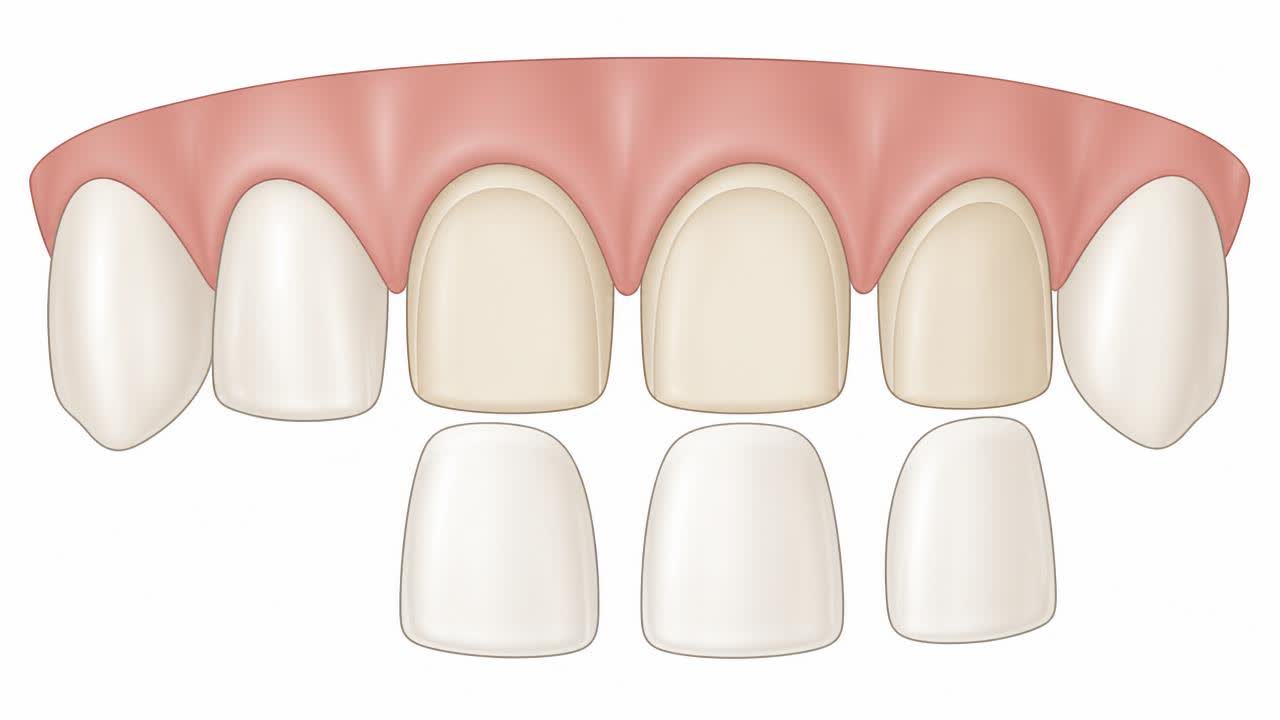
Intrinsic discolouration comes from within the tooth itself, caused by factors such as ageing, certain antibiotics taken during tooth development in childhood, excess fluoride exposure at a young age, a large old filling showing through thinning enamel, or a tooth that has darkened after trauma or a dead nerve. Intrinsic discolouration responds more slowly and less completely to whitening, and sometimes needs a different approach such as bonding or a veneer instead.
How professional whitening works
Whitening gels use hydrogen peroxide or carbamide peroxide, which breaks down into oxygen molecules that penetrate the enamel and dissolve the pigmented compounds responsible for staining. Professional in-office whitening uses a higher-strength gel applied under controlled conditions, with the gums protected by a barrier, and typically produces a noticeably lighter shade in a single session lasting around an hour.
Take-home whitening uses custom-fitted trays, made from an impression or digital scan of your teeth, filled with a lower-strength gel worn for a set period each day over one to two weeks. Many patients combine both approaches: an in-office session for an immediate result followed by take-home trays to maintain or gradually deepen the effect.
Before starting whitening
Any active decay or gum disease should be treated first, since whitening gel can cause discomfort if it reaches an exposed area of decay or an inflamed gum through a leaking margin. A professional scaling and cleaning beforehand also removes surface plaque and calculus, giving a more even and predictable result once the gel is applied.
It is worth knowing that existing crowns, veneers and white fillings do not change colour with whitening gel, so if any of these are visible in your smile, the shade of your natural teeth is often matched to them, or they are planned to be replaced afterwards once the new, lighter shade is established.
Managing sensitivity during treatment
Temporary sensitivity to cold during and shortly after whitening is common and generally mild, caused by the gel temporarily allowing more fluid movement within the dentine tubules. This settles within a day or two after treatment ends and can be reduced by using a desensitising toothpaste before and after the whitening course, or by using a lower concentration gel over a longer period instead of a stronger one over a shorter period.
People with already sensitive teeth, exposed roots, or numerous fillings are usually advised on a gentler protocol from the outset, and this is discussed during the initial assessment before any gel is applied.
Keeping results lasting longer
Whitened teeth are not permanently protected from future staining, so limiting the frequency and contact time of staining foods and drinks, rinsing with water afterwards, and maintaining regular brushing and professional cleaning all help the result last. Most people notice some gradual relapse of colour over one to two years and choose a brief top-up course using their original trays rather than repeating a full treatment.
For deeper or uneven discolouration that whitening cannot fully address, composite bonding or porcelain veneers offer a more controlled and permanent way to achieve an even shade, and these are usually discussed as the next step if whitening alone will not meet expectations.
Questions patients ask us
- Is teeth whitening safe for enamel?
- When carried out under professional supervision with an appropriate concentration and exposure time, whitening does not damage healthy enamel. Overuse of high-strength gel without supervision is what causes problems, which is why unsupervised, excessive use of home kits is discouraged.
- Why didn't whitening make my teeth as white as I expected?
- Whitening works well on surface staining but has a limited effect on intrinsic discolouration from causes such as old antibiotic exposure, a dead nerve, or a large filling showing through the enamel. These cases are usually better addressed with bonding or veneers instead.
- How long do whitening results last?
- Most people retain a noticeable improvement for one to two years before some gradual relapse occurs, depending on diet, smoking and oral hygiene. A short top-up course usually restores the shade quickly.
- Can I whiten teeth with crowns or veneers on them?
- Whitening gel does not change the shade of existing crowns, veneers or white fillings, so whitening is usually planned before any of these are placed, or the natural teeth are matched to the existing restorations instead.
Sources and further reading
Guidance from professional and public health bodies. Clinical decisions here are made on your own examination and radiographs.
- 1.Whitening, bonding and veneers — patient information — American Dental Association
- 2.Guidance on tooth whitening and cosmetic dental treatment — British Dental Association
- 3.Oral health — fact sheet and global status report — World Health Organization
- 4.Policy statements and oral health definitions — FDI World Dental Federation
- 5.Dental health — conditions, treatments and patient guidance — NHS (UK)
- 6.Systematic reviews of oral and dental interventions — Cochrane Oral Health
- 7.Regulatory framework and dental education standards in India — Dental Council of India
When to see us
Get examined without waiting if any of the following applies to you:
- Sensitivity or pain that continues for more than a few days after cosmetic work
- A veneer, crown or bonded restoration that has chipped, debonded or feels high in the bite
- Gum inflammation or dark margins developing at the edge of a restoration
Get a written plan and cost before you commit
If this is what you are dealing with, the next step is a consultation with radiographs — cosmetic & smile design cases are seen by the specialist who handles that field. You get a written plan and staged cost before anything begins.
reception@dramitsharmahospital.comThis article is general education and does not replace an in-person examination, radiographs or a diagnosis by a qualified dentist.
Clinical terms in this article
Related in Cosmetic & Smile Design
Dental Crowns and Bridges: What They Are and When You Need One
How crowns and bridges restore damaged or missing teeth, the materials used, and what the process and aftercare involve.
Smile Makeover and Digital Smile Design
How veneers, bonding, whitening and gum contouring are combined into one planned cosmetic outcome.
Teeth Whitening: What Actually Works
In-office versus home whitening, realistic expectations, sensitivity management and what whitening cannot fix.
Black Triangles Between Teeth Causes and Treatment
Open gingival embrasures, commonly called black triangles between teeth and gums, occur when the interdental papilla recedes. Explore the anatomical causes, clinical classifications, restorative and orthodontic treatments, and long-term periodontal maintenance strategies.
Internal Tooth Bleaching for Discolored Nonvital Teeth
Internal tooth bleaching after root canal treatment is a conservative endodontic procedure that lightens intrinsically discoloured, non-vital teeth from within the pulp chamber, restoring natural aesthetics without requiring extensive structural removal for crowns or veneers.
Sliding Genioplasty Chin Surgery for Facial Balance Improvement
Sliding genioplasty is an osseous surgical procedure that repositions the mandibular symphysis to improve facial balance and airway competence. This clinical guide outlines surgical techniques, the sliding genioplasty recovery timeline, risks, and evidence-based postoperative management.