At a glance
- A smile makeover is a planned combination of procedures, which may include porcelain veneers, composite bonding, whitening, gum contouring, orthodontics or crowns, designed around your facial proportions, lip line and skin tone…
- Photographs, video and an intraoral scan are used to design the proposed smile digitally before any tooth structure is touched.
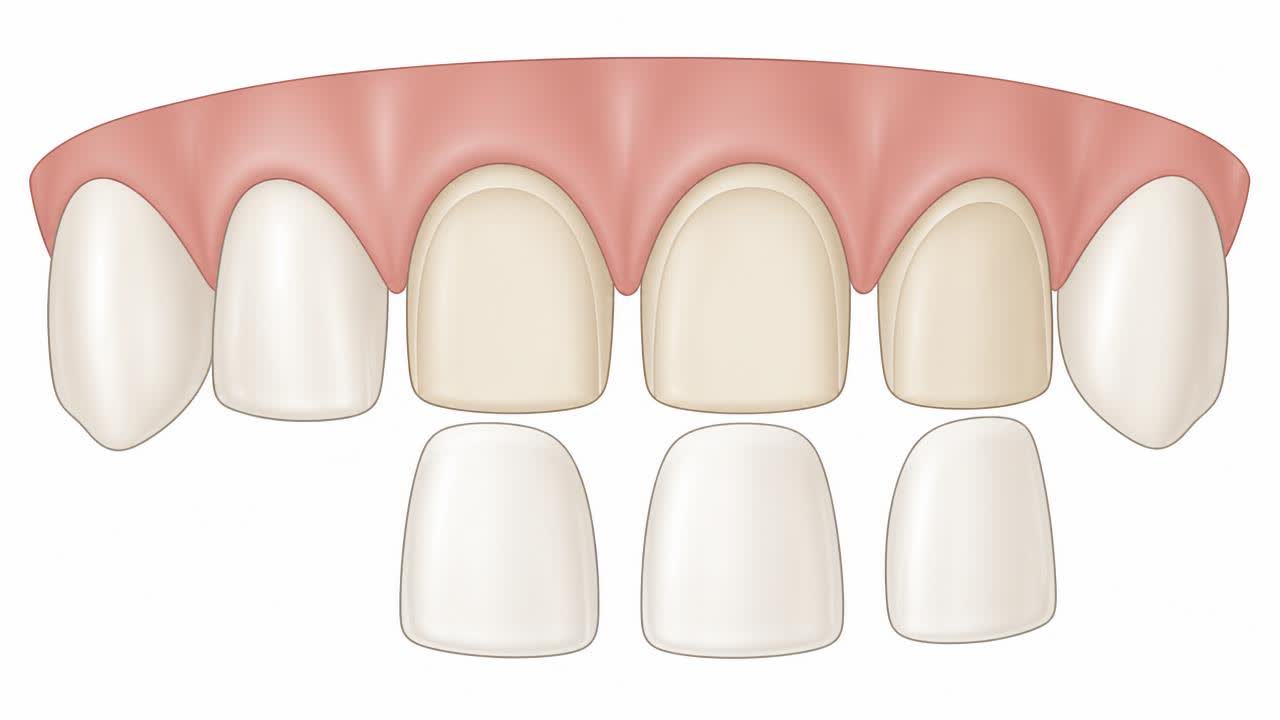
- Porcelain veneers are ultra-thin custom-made ceramic shells bonded to the front surface of the teeth.
- An uneven or overly high gum line, sometimes called a gummy smile, can be reshaped with laser or minor surgical contouring to reveal a more balanced tooth-to-gum ratio, often performed alongside or shortly before restorative work.
What a smile makeover involves
A smile makeover is a planned combination of procedures, which may include porcelain veneers, composite bonding, whitening, gum contouring, orthodontics or crowns, designed around your facial proportions, lip line and skin tone rather than treating a single tooth in isolation. The aim is a result that looks proportionate to your face rather than simply whiter or straighter.
Because several disciplines can be involved, treatment is sequenced deliberately. Gum health is addressed first, since inflamed gums bleed easily and distort colour matching. Any necessary orthodontic movement or bite correction typically comes next, followed by the restorative and cosmetic layer once the foundation is stable.
Digital Smile Design
Photographs, video and an intraoral scan are used to design the proposed smile digitally before any tooth structure is touched. Proportions, midline, tooth shape and gum line are all analysed against your facial features using specialised software.
A trial smile, or mock-up, can then be placed directly over your existing teeth using a temporary material, so you can see, feel and even speak with the proposed result in the mirror before any irreversible preparation begins. Adjustments to shape or length are made at this stage, which is far easier than changing a finished ceramic restoration later.
Veneers versus bonding
Porcelain veneers are ultra-thin custom-made ceramic shells bonded to the front surface of the teeth. They are highly resistant to staining, have a natural translucency that closely mimics enamel, and typically last ten to fifteen years with good care.
Composite bonding is sculpted directly onto the tooth chairside in a single visit, at a lower cost and with virtually no removal of tooth structure. It is an excellent option for minor chips, gaps or shape corrections, though it takes on stain more readily than porcelain and generally needs polishing or partial renewal every few years.
The choice between the two is not purely financial; it also depends on how much correction is needed, how the teeth are currently aligned, and how heavily a person's bite loads the front teeth.
Gum contouring and finishing touches
An uneven or overly high gum line, sometimes called a gummy smile, can be reshaped with laser or minor surgical contouring to reveal a more balanced tooth-to-gum ratio, often performed alongside or shortly before restorative work.
Whitening the natural teeth to a chosen shade before veneers or bonding are placed ensures the ceramic or composite colour is matched to the desired final result rather than to the pre-treatment shade.
Questions patients ask us
- Will my teeth be heavily filed?
- Modern minimal-prep veneers remove only a fraction of a millimetre of enamel, and in carefully selected cases with adequate space, no tooth reduction at all is needed.
- Do veneers look artificial?
- Not when the shade, translucency and shape are individually layered by an experienced ceramist. The reference point used throughout planning is always your own face and existing teeth, not a generic standard.
- How long does a full smile makeover take?
- Depending on the number of procedures involved, treatment can range from a few weeks for whitening and bonding alone to several months where orthodontics or gum surgery are part of the plan.
- Is a smile makeover reversible?
- Composite bonding is largely reversible since little or no tooth structure is removed. Porcelain veneers involve some enamel reduction and are considered a long-term, largely permanent commitment.
Sources and further reading
Guidance from professional and public health bodies. Clinical decisions here are made on your own examination and radiographs.
- 1.Whitening, bonding and veneers — patient information — American Dental Association
- 2.Guidance on tooth whitening and cosmetic dental treatment — British Dental Association
- 3.Oral health — fact sheet and global status report — World Health Organization
- 4.Policy statements and oral health definitions — FDI World Dental Federation
- 5.Dental health — conditions, treatments and patient guidance — NHS (UK)
- 6.Systematic reviews of oral and dental interventions — Cochrane Oral Health
- 7.Regulatory framework and dental education standards in India — Dental Council of India
When to see us
Get examined without waiting if any of the following applies to you:
- Sensitivity or pain that continues for more than a few days after cosmetic work
- A veneer, crown or bonded restoration that has chipped, debonded or feels high in the bite
- Gum inflammation or dark margins developing at the edge of a restoration
Get a written plan and cost before you commit
If this is what you are dealing with, the next step is a consultation with radiographs — cosmetic & smile design cases are seen by the specialist who handles that field. You get a written plan and staged cost before anything begins.
reception@dramitsharmahospital.comThis article is general education and does not replace an in-person examination, radiographs or a diagnosis by a qualified dentist.
Clinical terms in this article
Related in Cosmetic & Smile Design
Dental Crowns and Bridges: What They Are and When You Need One
How crowns and bridges restore damaged or missing teeth, the materials used, and what the process and aftercare involve.
Teeth Whitening and Tooth Stains: Causes and Treatment Options
Why teeth discolour over time, the difference between surface stains and deeper discolouration, and how professional whitening compares with home options.
Teeth Whitening: What Actually Works
In-office versus home whitening, realistic expectations, sensitivity management and what whitening cannot fix.
Black Triangles Between Teeth Causes and Treatment
Open gingival embrasures, commonly called black triangles between teeth and gums, occur when the interdental papilla recedes. Explore the anatomical causes, clinical classifications, restorative and orthodontic treatments, and long-term periodontal maintenance strategies.
Internal Tooth Bleaching for Discolored Nonvital Teeth
Internal tooth bleaching after root canal treatment is a conservative endodontic procedure that lightens intrinsically discoloured, non-vital teeth from within the pulp chamber, restoring natural aesthetics without requiring extensive structural removal for crowns or veneers.
Sliding Genioplasty Chin Surgery for Facial Balance Improvement
Sliding genioplasty is an osseous surgical procedure that repositions the mandibular symphysis to improve facial balance and airway competence. This clinical guide outlines surgical techniques, the sliding genioplasty recovery timeline, risks, and evidence-based postoperative management.