At a glance
- Paediatric sleep bruxism is defined as a repetitive masticatory muscle activity during sleep characterised by rhythmic (phasic) or non-rhythmic (tonic) sustained contractions of the jaw-closing muscles.
- The aetiology of a child grinding teeth in sleep is multifactorial, involving central neural mechanisms rather than purely anatomical occlusal interferences.
- The hallmark presentation of paediatric sleep bruxism is an audible, harsh scraping or clicking sound produced by the friction of opposing dental arches while the child is asleep.
- Diagnosing paediatric sleep bruxism relies primarily on a detailed parent-reported sleep history corroborated by a comprehensive clinical examination by a paediatric dentist.
- In clinical practice, bruxism is categorised based on its circadian manifestation and primary versus secondary aetiology.
Understanding Paediatric Sleep Bruxism and Jaw Anatomy
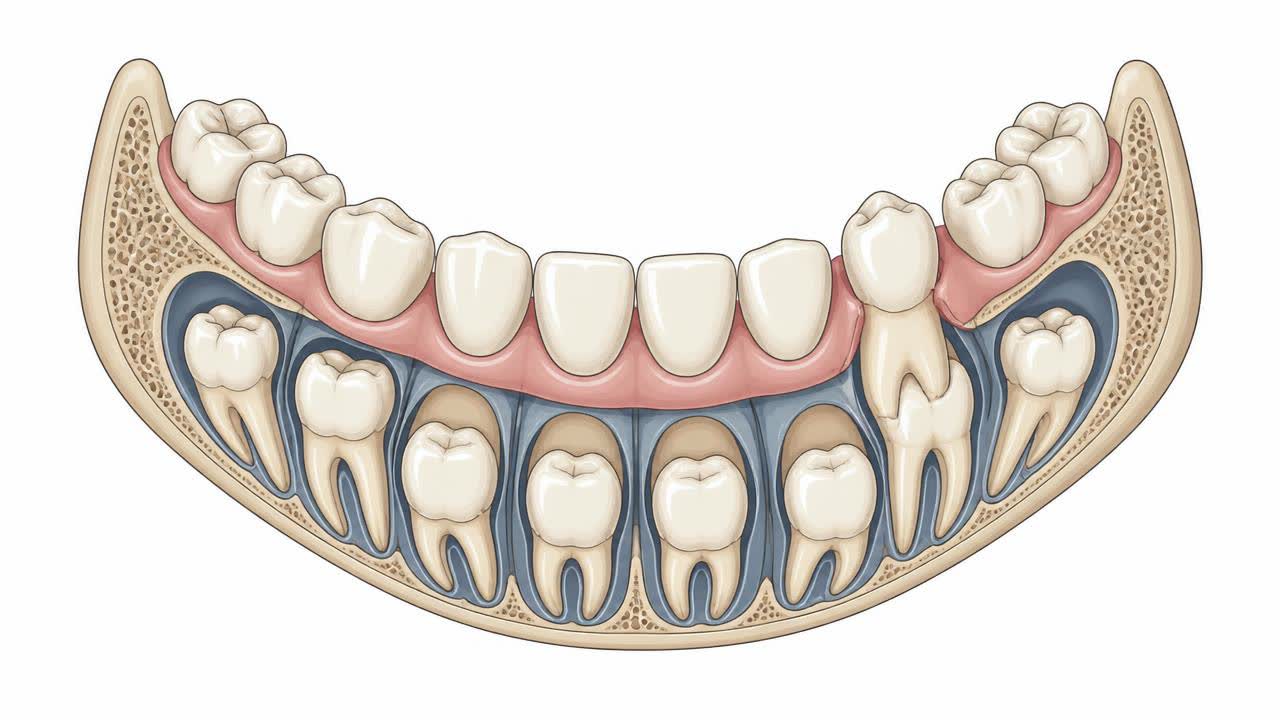
Paediatric sleep bruxism is defined as a repetitive masticatory muscle activity during sleep characterised by rhythmic (phasic) or non-rhythmic (tonic) sustained contractions of the jaw-closing muscles. When parents observe a child grinding teeth in sleep, the primary anatomical structures involved are the paired masseter and temporalis muscles, which elevate the mandible, alongside the lateral pterygoid muscles that govern lateral excursion. These forceful contractions compress the primary (milk) or mixed dentition, generating mechanical friction between opposing enamel and dentine surfaces within the oral cavity.
The biomechanics of grinding in children differ substantially from adults due to the physiological state of the paediatric craniofacial complex. In primary and mixed dentition stages, the temporomandibular joints (TMJs) feature shallow mandibular fossae and flattened articular eminences, which allow broader lateral jaw movements without immediate anatomical restriction. While this structural flexibility accommodates rapid facial growth, it also enables wide gliding motions during nocturnal micro-arousals. For most young children, occasional involuntary jaw movements represent a normal neuromuscular phenomenon as the central nervous system refines motor pathways governing occlusion.
Clinical Diagnostic Protocols and Differential Diagnosis
Diagnosing paediatric sleep bruxism relies primarily on a detailed parent-reported sleep history corroborated by a comprehensive clinical examination by a paediatric dentist. Diagnostic criteria established by the International Classification of Sleep Disorders (ICSD-3) require parental reports of frequent tooth-grinding sounds during sleep combined with clinical evidence of abnormal tooth wear, morning jaw discomfort, or masseter muscle hypertrophy. Objective polysomnography (overnight sleep study) with audio-video and masticatory electromyography (EMG) represents the definitive gold standard, though it is typically reserved for complex cases involving suspected obstructive sleep apnoea.
The clinical examination must rigorously evaluate the entire upper aerodigestive tract and stomatognathic system. Paediatric dentists systematically palpate the temporomandibular joints for tenderness, clicking, or crepitus, and assess the masseter and temporalis muscle tone for bilateral symmetry. Intraoral soft tissues are screened for cheek-biting impressions and tongue scalloping, while dental hard tissues are assessed for tooth mobility, chipped enamel, and atypical restoration failure. Direct inspection of the oropharynx allows assessment of Brodsky tonsil size and palate morphology.
Differential diagnosis requires distinguishing nocturnal bruxism from other paediatric sleep and neurological conditions. Dentists and paediatricians must differentiate bruxism from nocturnal epilepsy, benign sleep myoclonus, rhythmic movement disorders, and parasomnias such as sleepwalking or confusional arousals. Furthermore, acute ear infections (otitis media), tooth eruption discomfort in toddlers, and transient dental malocclusions must be systematically excluded before assigning a formal diagnosis of primary sleep bruxism.
Classification and Severity Grading of Bruxism
In clinical practice, bruxism is categorised based on its circadian manifestation and primary versus secondary aetiology. Circadian classification separates sleep bruxism (SB), which occurs exclusively during sleep, from awake bruxism (AB), which involves daytime semi-voluntary jaw clenching, bracing, or posturing often linked to emotional concentration or anxiety. Aetiologically, primary (idiopathic) bruxism occurs without an identifiable underlying medical condition, whereas secondary (iatrogenic or symptomatic) bruxism arises secondary to systemic medical disorders, sleep disorders, or pharmacological agents.
Severity grading in paediatric patients relies on clinical impact rather than noise volume alone. Mild bruxism presents with occasional grinding sounds, minimal enamel wear confined to primary teeth, and an absence of muscular or joint pain. Moderate bruxism involves regular nightly grinding with visible dentine exposure across multiple primary teeth and transient morning jaw fatigue. Severe paediatric bruxism exhibits extensive dental attrition approaching the pulp, marked masseter hypertrophy, persistent craniofacial pain, or co-existing moderate-to-severe obstructive sleep-disordered breathing.
Evidence-Based Management and Treatment Pathways
Management of a child grinding teeth in sleep prioritises non-invasive, conservative interventions due to ongoing facial growth and the high likelihood of natural resolution. In the majority of mild-to-moderate cases in primary dentition, active clinical intervention is unnecessary; clinical consensus supports watchful waiting alongside regular developmental monitoring. Parents are reassured that tooth wear in primary teeth rarely affects the long-term integrity of the underlying permanent succedaneous teeth.
When airway obstruction or sleep fragmentation is identified as the primary driver, treatment shifts toward medical or surgical airway optimisation. Referral to an ear, nose, and throat (ENT) specialist or paediatric sleep physician is indicated if the child presents with snoring, gasping, mouth breathing, or daytime neurobehavioural symptoms. Surgical intervention, such as adenotonsillectomy, frequently results in a substantial reduction or complete cessation of nocturnal grinding secondary to resolved airway resistance.
In contrast to adult management, rigid occlusal splints (nightguards) are generally contraindicated in young children with primary or early mixed dentition. Hard acrylic splints can mechanically restrict normal transverse and sagittal growth of the paediatric maxilla and mandible, potentially creating severe iatrogenic malocclusions. Custom soft or hybrid appliances are strictly reserved for older children in late mixed or permanent dentition who experience severe pain, accelerated tooth destruction, or persistent temporomandibular joint dysfunction under specialist supervision.
The Paediatric Dental Consultation: Step-by-Step
A dedicated paediatric dental assessment for nocturnal grinding begins with a comprehensive medical, behavioural, and sleep questionnaire completed by the parent or guardian. The clinician reviews sleep patterns, bedroom environment, snoring frequency, daytime energy levels, and potential school or social stressors. This discussion establishes whether the grinding is an isolated, benign habit or part of a wider behavioural or sleep-related complex requiring interdisciplinary collaboration.
The physical examination is conducted gently using child-friendly terminology to avoid instilling dental anxiety. The dentist inspects the head, neck, and facial symmetry, gently palpating the masticatory muscles and checking mandibular range of motion without causing discomfort. Intraoral photography and digital optical impressions may be captured to establish an objective baseline of tooth wear facets, enabling precise visual monitoring of progression over six-monthly recall appointments without the need for unnecessary dental radiographs.
If radiological imaging is clinically justified—such as to evaluate developing permanent tooth buds beneath heavily worn primary teeth or assess airway dimensions—low-dose dental radiographs are acquired. The visit concludes with tailored parental guidance, establishing whether active airway referral, behavioural sleep hygiene optimisation, or simple periodic observation is the most appropriate, evidence-based course of action.
Potential Complications and Restorative Management
Although severe complications are uncommon in paediatric bruxism, chronic heavy grinding can occasionally result in dental hard tissue loss that requires restorative care. Severe enamel and dentine attrition on primary molars can reduce vertical dimension of occlusion, increase thermal sensitivity, and in rare cases, lead to pulpal exposure or micro-fractures in heavily restored teeth. When dentine wear threatens pulpal vitality, paediatric dentists may place preformed metal (stainless steel) crowns on primary molars to preserve arch length and protect the tooth until natural exfoliation.
Secondary soft tissue and musculoskeletal complications involve the masticatory apparatus. Chronic clenching can induce bilateral masseter muscle hypertrophy, creating a broadened facial appearance, alongside localized muscular trigger points. Temporomandibular joint internal derangements, such as anterior disc displacement with reduction (audible joint clicking), may occasionally emerge in older children. These muscular and articular complications are managed conservatively using warm compresses, gentle jaw-stretching physiotherapy, and temporary dietary modification toward softer foods during acute flare-ups.
Evidence and further reading
Current clinical guidelines and international consensus statements from leading dental and sleep medicine authorities emphasise conservative management for paediatric sleep bruxism. Organisations including the American Academy of Pediatric Dentistry (AAPD), the European Academy of Paediatric Dentistry (EAPD), the British Society of Paediatric Dentistry (BSPD), and the American Academy of Sleep Medicine (AASM) broadly agree that isolated nocturnal grinding in young children is typically a transient developmental phase that does not routinely require invasive dental intervention.
The peer-reviewed literature published in journals such as the *Journal of Clinical Pediatric Dentistry*, *Sleep Medicine Reviews*, and the *International Journal of Paediatric Dentistry* highlights the critical clinical link between paediatric sleep-disordered breathing and secondary sleep bruxism. Clinicians and researchers advocate for comprehensive screening of upper airway patency and sleep quality before considering dental appliances. Continued longitudinal research focuses on elucidating the exact neurochemical pathways governing autonomic micro-arousals and developing validated, non-invasive screening tools for primary care settings.
Underlying Causes and Clinical Risk Factors
The aetiology of a child grinding teeth in sleep is multifactorial, involving central neural mechanisms rather than purely anatomical occlusal interferences. Emerging sleep medicine literature confirms that nocturnal bruxism is predominantly mediated by brief autonomic nervous system activations, known as micro-arousals, during non-rapid eye movement (NREM) sleep stages. During these sub-cortical awakenings, heart rate and sympathetic tone increase transiently, triggering a sequence of respiratory muscle activation followed closely by rhythmic masticatory muscle activity.
Upper airway resistance is one of the most clinically significant triggers for paediatric nocturnal grinding. Conditions such as adenotonsillar hypertrophy (enlarged tonsils and adenoids), allergic rhinitis, and chronic mouth breathing create partial pharyngeal collapse during sleep. In response, the body recruits the jaw-protruding and masticatory muscles to reflexively advance the mandible and tongue base, reopening the upper airway. Consequently, paediatric sleep-disordered breathing (SDB) frequently manifests alongside audible sleep grinding.
Psychosocial stressors and neurodevelopmental factors also correlate strongly with increased grinding frequency. Children experiencing academic pressure, family transitions, emotional anxiety, or sensory processing sensitivities often demonstrate elevated sympathetic tone during sleep. Additionally, neurodevelopmental conditions such as Attention Deficit Hyperactivity Disorder (ADHD), autism spectrum conditions, and gastro-oesophageal reflux disease (GORD)—where acid irritation triggers reflexive swallowing and jaw movement—represent documented clinical risk factors in paediatric cohorts.
Long-Term Prognosis, Growth, and Transition to Permanent Teeth
The long-term prognosis for paediatric sleep bruxism is exceptionally favourable, with most children naturally outgrowing the condition as their craniofacial architecture matures. Epidemiological research indicates that the prevalence of nocturnal grinding peaks in early childhood (between three and six years of age) and steadily declines through adolescence. This natural reduction coincides with the progressive maturation of the central nervous system, establishment of adult sleep architecture, and stabilisation of the permanent occlusion.
As the primary teeth exfoliate and permanent teeth erupt, the neuromuscular control of mastication undergoes significant physiological adaptation. The eruption of first permanent molars around age six and the transition to a stable intercuspal position provide enhanced proprioceptive feedback to the trigeminal nervous system. For the minority of children whose grinding persists into late adolescence, the condition may transition into chronic adult sleep bruxism, requiring adult-specific protective strategies such as stabilising occlusal splints once skeletal growth is complete.
Recognising Signs and Symptoms in Daily Life
The hallmark presentation of paediatric sleep bruxism is an audible, harsh scraping or clicking sound produced by the friction of opposing dental arches while the child is asleep. Parents frequently report hearing these sounds from adjacent rooms, often noting that the behaviour occurs in distinct episodes throughout the night, particularly during sleep cycle transitions. Despite the intensity of the noise, children rarely wake themselves during an episode and are typically oblivious to the habit upon waking.
Physical symptoms upon waking provide critical diagnostic clues regarding the severity of masticatory muscle strain. A child may complain of transient dull soreness around the temples, cheeks, or preauricular region over the temporomandibular joints. In older children, this muscle fatigue can present as tension-type morning headaches, difficulty chewing breakfast, or a sensation of jaw tightness. Persistent clenching may also induce hyperkeratinisation along the buccal mucosa, visible as a distinct white line (linea alba) corresponding to the occlusal plane.
Intraorally, dentists identify wear facets—localised, flat, polished patches on the incisal edges of anterior teeth and occlusal cusps of primary molars. In mild cases, wear is confined to the outer enamel layer; however, sustained vigorous grinding can expose the underlying yellowish dentine. Unlike adult bruxism, paediatric dentine exposure rarely causes intense hypersensitivity due to the rapid reactionary dentine formation by healthy primary dental pulps, though structural enamel loss remains evident on visual examination.
Red Flags and When to Seek Immediate Medical Advice
While nocturnal teeth grinding is frequently benign, certain accompanying clinical signs demand prompt professional evaluation by a paediatrician, ENT surgeon, or paediatric dentist. Parents should seek timely clinical assessment if tooth grinding is accompanied by loud snoring, observed pauses in breathing during sleep (apnoeas), frequent nocturnal gasping, or persistent daytime mouth breathing. These symptoms strongly suggest underlying obstructive sleep-disordered breathing, which can compromise systemic oxygenation, cardiovascular health, and cognitive development if left unaddressed.
Immediate dental evaluation is warranted if a child experiences acute, sharp dental pain, noticeable mobility of permanent teeth, visible cracking or fracturing of tooth structure, or spontaneous bleeding from the gums around worn teeth. Similarly, severe limitation of jaw opening (trismus), painful locking of the jaw joint, or persistent morning headaches that interfere with school attendance or eating represent red flags that require structured clinical assessment rather than passive observation.
Questions patients ask us
- Is it normal for my toddler to grind their teeth while asleep?
- Yes, tooth grinding is common in toddlers and young children. As primary teeth erupt and the jaw develops, the central nervous system continually refines chewing pathways. In the absence of pain, sleep disruption, or breathing difficulties, occasional grinding in toddlers is considered a normal, self-limiting developmental phase that requires observation rather than active dental intervention.
- Will grinding ruin my child's permanent adult teeth?
- In the vast majority of children, sleep bruxism resolves spontaneously before or during the eruption of permanent adult teeth. Because grinding typically peaks during the primary dentition stage (ages 3 to 6), wear is confined to baby teeth, which are eventually exfoliated naturally without compromising the development or structural integrity of underlying adult teeth.
- Can a mouthguard stop my child from grinding their teeth at night?
- Standard adult-style nightguards are rarely recommended for young children with growing jaws. Rigid appliances can restrict normal transverse jaw growth and cause bite misalignment. In severe cases affecting older children in late mixed dentition, paediatric dentists may consider specialised, custom-fitted soft appliances, but watchful waiting or addressing underlying triggers remains the preferred standard.
- Is teeth grinding linked to enlarged tonsils or adenoids?
- Yes, substantial clinical evidence connects paediatric sleep bruxism to enlarged tonsils and adenoids. When hypertrophic lymphoid tissue partially obstructs the airway during sleep, the body instinctively activates the jaw muscles to pull the tongue and lower jaw forward, opening the airway. This reflexive motor activity frequently manifests as audible nocturnal tooth grinding.
- Does emotional stress or anxiety trigger nocturnal bruxism in school-age children?
- Psychological stress and emotional anxiety are recognised risk factors for paediatric sleep bruxism. Children experiencing academic strain, social challenges, or routine changes may exhibit heightened sympathetic nervous system activity during sleep. Establishing a calming, predictable bedtime routine and addressing underlying daytime stressors can help reduce nocturnal muscle tension and grinding frequency.
- Can nutritional deficiencies or intestinal parasites cause paediatric teeth grinding?
- Historically, folklore suggested pinworms or nutritional deficiencies caused grinding. While chronic systemic illness or severe gastrointestinal discomfort can disrupt sleep architecture and trigger micro-arousals, modern clinical evidence shows no direct causal link between routine pinworm infections or vitamin deficiencies and primary sleep bruxism. Airway dynamics and neurological maturation remain the primary factors.
- How do I differentiate between normal teething and sleep bruxism?
- Teething involves localized gum inflammation, excessive drooling, irritability, and a desire to bite down on firm objects while awake to relieve gum pressure. In contrast, sleep bruxism occurs strictly during sleep, presents with audible scraping sounds from rhythmic jaw contractions, and typically involves fully erupted teeth sliding against each other.
- When will my child outgrow the habit of nocturnal grinding?
- Most children outgrow sleep bruxism between the ages of 6 and 12. This natural resolution coincides with the maturation of the brain's sleep-wake cycles, the widening of upper airway passages with facial growth, and the establishment of a stable permanent bite. Persistent grinding into the teenage years warrants re-evaluation by a dentist.
Sources and further reading
Guidance from professional and public health bodies. Clinical decisions here are made on your own examination and radiographs.
- 1.Best practice policies and clinical recommendations — American Academy of Pediatric Dentistry
- 2.Delivering better oral health — an evidence-based toolkit — Public Health England / OHID
- 3.Oral health — fact sheet and global status report — World Health Organization
- 4.Policy statements and oral health definitions — FDI World Dental Federation
- 5.Dental health — conditions, treatments and patient guidance — NHS (UK)
- 6.Systematic reviews of oral and dental interventions — Cochrane Oral Health
- 7.Regulatory framework and dental education standards in India — Dental Council of India
When to see us
Get examined without waiting if any of the following applies to you:
- Facial swelling, fever or refusal to eat or drink in a child — seek same-day care
- Dental injury to a child's tooth, especially if it is displaced or knocked out
- A dark or discoloured tooth, or a lump on the gum above a tooth
Get a written plan and cost before you commit
If this is what you are dealing with, the next step is a consultation with radiographs — children's dentistry cases are seen by the specialist who handles that field. You get a written plan and staged cost before anything begins.
reception@dramitsharmahospital.comThis article is general education and does not replace an in-person examination, radiographs or a diagnosis by a qualified dentist.
Clinical terms in this article
Related in Children's Dentistry
Children's Dental Care by Age
First visit timing, fluoride and sealants, why milk teeth matter, and managing dental anxiety in children.
Pulpotomy vs Pulpectomy in Baby Teeth Explained
This clinical guide clarifies the differences between a pulpotomy and a pulpectomy in primary teeth. Learn about deciduous pulp anatomy, diagnostic criteria, clinical steps, restorative crowns, post-operative care, and when emergency dental attention is necessary.
Regenerative Endodontics for Immature Teeth with Pulp Necrosis
A regenerative endodontic procedure restores vascularity and tissue vitality to immature permanent teeth affected by pulp necrosis. This evidence-based guide details diagnostic protocols, biologically based revascularisation steps, treatment comparisons, recovery expectations, and long-term tooth preservation strategies.
Apexification Procedure for Immature Permanent Teeth in Children
An apexification procedure is a specialised dental intervention designed to treat non-vital, immature permanent teeth in children. It creates a calcified apical barrier, enabling effective root canal obturation while preserving the natural tooth within the developing jaw.
Apexogenesis Procedure to Preserve Pulp Vitality in Children
Apexogenesis is a vital pulp therapy that preserves living pulp tissue in immature permanent teeth of children. By maintaining vascularity, it enables continued root lengthening, dentinal wall thickening, and natural apical closure following traumatic injury or deep decay.
Palatal Expanders for Children: How Rapid Palatal Expansion Works
A clinical guide to rapid palatal expansion in children. Learn how a palate expander for kids corrects transverse maxillary constriction, posterior crossbites, and severe crowding before midpalatal suture fusion during natural skeletal development.