At a glance
- The first dental visit should happen by the child's first birthday or within six months of the first tooth appearing, whichever comes first.
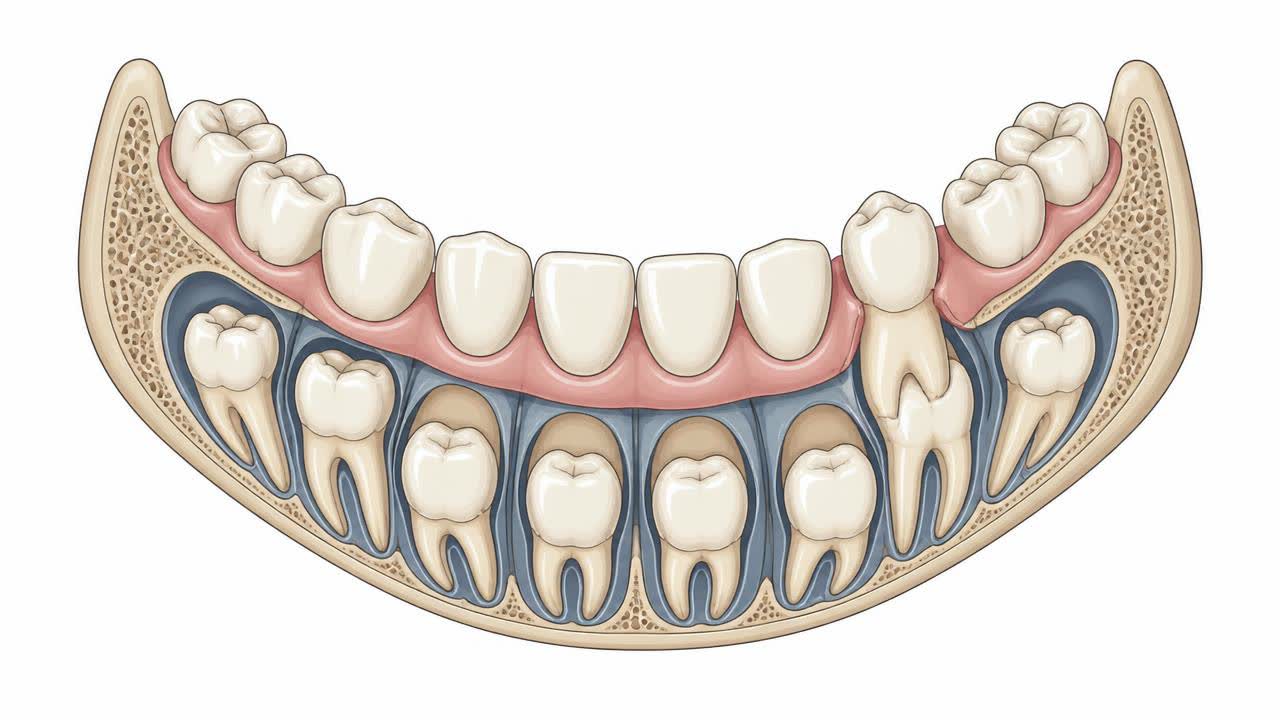
- Primary teeth guide the developing permanent teeth into their correct position within the jaw, support clear speech development, and allow proper chewing during the years when nutrition needs are highest for growth.
- Topical fluoride application during routine visits and pit-and-fissure sealants placed on the chewing surfaces of newly erupted permanent molars substantially reduce decay risk in the deep grooves where a toothbrush bristle…
- Limiting sugary snacks and drinks between meals, avoiding prolonged bottle feeding with sweetened liquids, and encouraging water as the default drink all meaningfully reduce a child's lifetime risk of decay.
- Tell-show-do techniques, where each instrument and step is explained and demonstrated in child-friendly language before use, short early-morning appointments when children are less tired, and consistently positive language work…
When to start
The first dental visit should happen by the child's first birthday or within six months of the first tooth appearing, whichever comes first. These early visits are primarily about prevention, guidance on diet and feeding habits, and helping the child become comfortable and familiar with the clinical environment before any treatment is ever needed.
Regular six-monthly visits from this point allow the dental team to track eruption patterns, spot early decay while it is still very small and easily managed, and build a trusting relationship with the child over successive appointments.
Why milk teeth matter
Primary teeth guide the developing permanent teeth into their correct position within the jaw, support clear speech development, and allow proper chewing during the years when nutrition needs are highest for growth. They are not simply placeholders that do not matter because they will eventually fall out.
Early loss of a primary molar from untreated decay allows neighbouring teeth to drift into the space, which can cause crowding of the permanent teeth later and often leads to a need for more extensive orthodontic correction than would otherwise have been necessary.
Protective measures
Topical fluoride application during routine visits and pit-and-fissure sealants placed on the chewing surfaces of newly erupted permanent molars substantially reduce decay risk in the deep grooves where a toothbrush bristle cannot easily reach.
Mouthguards are strongly advised for children participating in contact sports or activities with a risk of falls, since a single impact can fracture or knock out a front tooth that would otherwise have been protected.
Managing anxiety
Tell-show-do techniques, where each instrument and step is explained and demonstrated in child-friendly language before use, short early-morning appointments when children are less tired, and consistently positive language work well for the great majority of children.
For very young children or those who are particularly apprehensive, treatment under conscious sedation or general anaesthesia is available in a controlled hospital setting, allowing necessary treatment to be completed safely and without distressing the child.
Diet and habits in childhood
Limiting sugary snacks and drinks between meals, avoiding prolonged bottle feeding with sweetened liquids, and encouraging water as the default drink all meaningfully reduce a child's lifetime risk of decay. Habits established early tend to persist into adulthood.
Thumb sucking and prolonged pacifier use beyond the age of three or four can begin to affect the position of the front teeth and the shape of the palate, and is worth discussing with the dental team if it continues.
Questions patients ask us
- My child's tooth is loose after a fall, what now?
- See a dentist the same day. Displaced or loosened teeth often need repositioning and splinting, and prompt assessment also checks for any damage to the developing permanent tooth underneath.
- At what age should thumb sucking be stopped?
- Most children stop naturally by age three or four. If the habit continues strongly beyond this age, it is worth discussing management strategies with the dental team before it affects tooth position.
- Are dental X-rays safe for children?
- Yes. Modern digital X-rays use very low radiation doses, and a lead apron is used for additional protection. They are only taken when there is a clear diagnostic benefit.
Sources and further reading
Guidance from professional and public health bodies. Clinical decisions here are made on your own examination and radiographs.
- 1.Best practice policies and clinical recommendations — American Academy of Pediatric Dentistry
- 2.Delivering better oral health — an evidence-based toolkit — Public Health England / OHID
- 3.Oral health — fact sheet and global status report — World Health Organization
- 4.Policy statements and oral health definitions — FDI World Dental Federation
- 5.Dental health — conditions, treatments and patient guidance — NHS (UK)
- 6.Systematic reviews of oral and dental interventions — Cochrane Oral Health
- 7.Regulatory framework and dental education standards in India — Dental Council of India
When to see us
Get examined without waiting if any of the following applies to you:
- Facial swelling, fever or refusal to eat or drink in a child — seek same-day care
- Dental injury to a child's tooth, especially if it is displaced or knocked out
- A dark or discoloured tooth, or a lump on the gum above a tooth
Get a written plan and cost before you commit
If this is what you are dealing with, the next step is a consultation with radiographs — children's dentistry cases are seen by the specialist who handles that field. You get a written plan and staged cost before anything begins.
reception@dramitsharmahospital.comThis article is general education and does not replace an in-person examination, radiographs or a diagnosis by a qualified dentist.
Clinical terms in this article
Related in Children's Dentistry
Pulpotomy vs Pulpectomy in Baby Teeth Explained
This clinical guide clarifies the differences between a pulpotomy and a pulpectomy in primary teeth. Learn about deciduous pulp anatomy, diagnostic criteria, clinical steps, restorative crowns, post-operative care, and when emergency dental attention is necessary.
Regenerative Endodontics for Immature Teeth with Pulp Necrosis
A regenerative endodontic procedure restores vascularity and tissue vitality to immature permanent teeth affected by pulp necrosis. This evidence-based guide details diagnostic protocols, biologically based revascularisation steps, treatment comparisons, recovery expectations, and long-term tooth preservation strategies.
Apexification Procedure for Immature Permanent Teeth in Children
An apexification procedure is a specialised dental intervention designed to treat non-vital, immature permanent teeth in children. It creates a calcified apical barrier, enabling effective root canal obturation while preserving the natural tooth within the developing jaw.
Apexogenesis Procedure to Preserve Pulp Vitality in Children
Apexogenesis is a vital pulp therapy that preserves living pulp tissue in immature permanent teeth of children. By maintaining vascularity, it enables continued root lengthening, dentinal wall thickening, and natural apical closure following traumatic injury or deep decay.
Palatal Expanders for Children: How Rapid Palatal Expansion Works
A clinical guide to rapid palatal expansion in children. Learn how a palate expander for kids corrects transverse maxillary constriction, posterior crossbites, and severe crowding before midpalatal suture fusion during natural skeletal development.
Two-Phase Orthodontic Treatment: Why Early Intervention Matters
Two-phase orthodontic treatment uses early orthopaedic intervention during mixed dentition followed by comprehensive alignment in adolescence. This guide explains how phase 1 and phase 2 braces address skeletal disharmony, guide dental eruption, and reduce traumatic injury risks.