At a glance
- Primary tooth eruption, colloquially known as teething, is the physiological process whereby deciduous teeth migrate through the alveolar bone and overlying gingival mucosa into the oral cavity.
- Primary dentition follows a predictable chronological sequence, although individual variation is common.
- Clinical literature indicates that true teething symptoms are mild, transient, and strictly localised.
- When an infant presents with severe oral pain or systemic distress, a paediatric dental or medical examination is essential to rule out significant pathology.
- Non-pharmacological physical interventions represent the first-line standard of care for alleviating teething distress.
Understanding Primary Dentition: Anatomy and Eruption Physiology
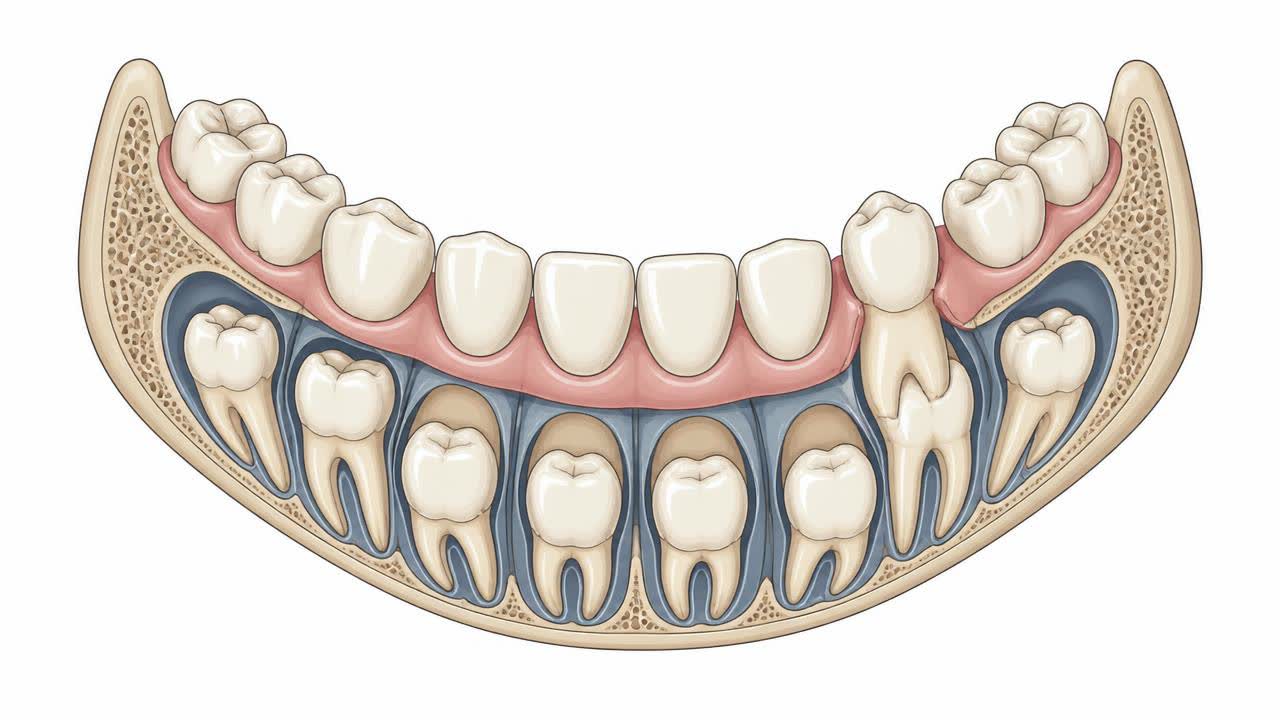
Primary tooth eruption, colloquially known as teething, is the physiological process whereby deciduous teeth migrate through the alveolar bone and overlying gingival mucosa into the oral cavity. This milestone typically commences around six months of age and continues until approximately thirty months, culminating in a complete set of twenty primary teeth. As the developing tooth crown advances, the dental follicle undergoes active cellular remodelling. Osteoclasts resorb the overlying alveolar bone, while localised enzymes breakdown connective tissue within the gingiva to facilitate an eruption pathway.
The discomfort associated with odontogenesis is primarily driven by localised tissue tension and acute inflammatory mediator release. As the tooth approaches the mucosal surface, prostaglandin E2, interleukin-1 beta, and histamine accumulate within the gingival tissues. This biochemical cascade induces localised hyperaemia, microvascular permeability, and oedema, sensitising peripheral nociceptors in the surrounding trigeminal nerve distribution. Understanding that this pain stems from localised soft-tissue tension rather than systemic illness is foundational when considering appropriate baby teething pain relief remedies.
Clinical Assessment and Paediatric Differential Diagnosis
When an infant presents with severe oral pain or systemic distress, a paediatric dental or medical examination is essential to rule out significant pathology. The clinician performs a thorough intraoral examination, assessing the gingival architecture, mucosal integrity, and the presence of dental follicles. In routine teething presentations, radiographic imaging or cone-beam computed tomography (CBCT) is unnecessary and clinically unjustified, adhering strictly to the ALADA (As Low as Diagnostically Acceptable) radiation safety principles.
Differential diagnosis requires careful exclusion of several paediatric conditions that mimic or coincide with difficult dentition. Primary herpetic gingivostomatitis presents with diffuse, painful vesicular lesions and ulcerations across the entire oral mucosa, accompanied by pronounced cervical lymphadenopathy. Hand, foot, and mouth disease (Coxsackievirus) presents with oral enanthem alongside vesicular exanthem on the extremities. Other conditions requiring exclusion include acute otitis media, which frequently causes referred jaw pain and ear-pulling, and oral candidiasis (thrush).
The Chronology and Stages of Primary Tooth Eruption
Primary dentition follows a predictable chronological sequence, although individual variation is common. The lower central incisors are typically the first to emerge between six and ten months of age, closely followed by the upper central incisors between eight and twelve months. Lateral incisors generally erupt between nine and sixteen months. This initial phase often presents with moderate discomfort as the infant experiences mucosal penetration for the first time, accompanied by noticeable hyper-salivation.
The second major phase involves the eruption of the primary first molars between thirteen and nineteen months, followed by the canines between sixteen and twenty-three months, and finally the broad second molars between twenty-three and thirty-three months. Due to their wider anatomical occlusal surfaces, molar eruptions frequently trigger the most pronounced localised discomfort. The overlying gingiva must stretch across a broader surface area, which can lead to heightened irritability, disrupted sleep architecture, and a strong instinctual urge to chew on firm objects.
Identifying Severe Teething Symptoms Versus Systemic Illness
Clinical literature indicates that true teething symptoms are mild, transient, and strictly localised. Normal signs include mild gingival redness and swelling, increased drooling (ptyalism), localised facial flushing on the affected side, low-grade temperature fluctuations (rarely exceeding 37.8°C), and an increased compulsion for biting or digital exploration of the mouth. These manifestations usually peak during the four days preceding and the three days following mucosal emergence.
A critical diagnostic challenge is the historical tendency to misattribute systemic paediatric illness to teething. High pyrexia (a core body temperature of 38.0°C or higher), profuse watery diarrhoea, persistent vomiting, system-wide maculopapular rashes, and severe lethargy are not physiological consequences of tooth eruption. At approximately six months of age, maternal passive antibody protection wanes, coinciding directly with increased exploratory hand-to-mouth behaviour. Consequently, systemic symptoms almost invariably reflect concurrent viral or bacterial infections that require independent medical evaluation.
Evidence-Based Non-Pharmacological Relief Measures
Non-pharmacological physical interventions represent the first-line standard of care for alleviating teething distress. Tactile counter-pressure directly stimulates large-diameter sensory nerve fibres in the periodontal ligament, effectively modulating pain signalling through gate-control mechanisms. Parents can apply gentle friction using a clean finger, a damp textured cotton flannel, or silicone finger brushes. This simple physical manoeuvre helps disperse accumulated interstitial fluid within the swollen gingival tissues.
Cryotherapy provides safe, localised vasoconstriction, which diminishes acute tissue oedema and exerts a mild, temporary numbing effect on superficial nociceptors. Solid silicone or natural rubber teething rings chilled in a domestic refrigerator are highly effective. Liquid-filled rings should be avoided due to the potential risk of puncture and leakage, and teething toys must never be placed in a freezer, as extreme cold can induce mucosal contact frostbite or tissue necrosis.
Safe Systemic Pharmacological Analgesia Protocols
When non-pharmacological methods prove insufficient for severe nocturnal distress, systemic analgesia may be judiciously employed. Paediatric paracetamol (acetaminophen) and ibuprofen are the primary evidence-supported options. Paracetamol is licenced from two months of age for infants born after 37 weeks gestation, while ibuprofen is indicated for infants aged three months and older weighing at least five kilograms. Ibuprofen offers distinct therapeutic benefit for severe teething due to its peripheral anti-inflammatory action.
Dosage calculations must strictly align with the infant's current body weight rather than chronological age to prevent under-dosing or hepatotoxic/nephrotoxic overdosing. Healthcare providers must educate caregivers on measuring oral suspensions using calibrated syringes rather than household spoons. Aspirin is strictly contraindicated in paediatric patients under sixteen years of age due to the definitive risk of Reye's syndrome, a rare but potentially fatal condition characterised by acute encephalopathy and fatty liver failure.
Critical Safety Warnings: Hazardous Products and Topical Gels
Regulatory health bodies worldwide, including the UK Medicines and Healthcare products Regulatory Agency (MHRA) and the US Food and Drug Administration (FDA), strongly advise against the use of topical anaesthetic gels containing lidocaine, benzocaine, or choline salicylate in infants. Topical benzocaine carries a rare but life-threatening risk of methaemoglobinaemia, a haematological disorder where oxygen delivery to vital tissues is critically compromised. Topical lidocaine carries risks of accidental systemic toxicity, swallowing difficulties, and subsequent aspiration.
Furthermore, alternative products such as homeopathic teething tablets, liquids, and amber teething necklaces present profound safety hazards. Certain unverified homeopathic remedies have been recalled due to erratic, toxic levels of belladonna alkaloids. Amber beads and teething jewellery pose severe, documented risks of mechanical strangulation and airway obstruction from choking on fragmented beads. Professional paediatric associations universally condemn their use in infant care.
What to Expect During a Paediatric Dental Consultation
A formal dental consultation for severe eruption distress is designed to be supportive, rapid, and minimally invasive. The consultation typically utilises a 'knee-to-knee' examination technique, where the parent and dentist sit facing one another with their knees touching. The infant rests their head in the clinician's lap while maintaining direct eye contact with the parent. This stable positioning permits clear, direct illumination and visualisation of the oral cavity while keeping the child comforted.
The dental surgeon methodically inspects the alveolar ridges, palatal vault, tongue, and buccal mucosa. They assess whether an emerging crown is obstructed, verify dental sequence progression, and evaluate the surrounding tissue for inflammatory changes or pathology. The clinician will also assess feeding dynamics, provide tailored advice on primary oral hygiene, and address parental questions regarding safe baby teething pain relief remedies, establishing a supportive dental home for the child.
Evidence and further reading
Consensus guidelines from the American Academy of Pediatrics, the British Society of Paediatric Dentistry, the European Academy of Paediatric Dentistry, and the National Institute for Health and Care Excellence (NICE) confirm that primary tooth eruption is a benign, self-limiting developmental stage. Systematic reviews published in leading paediatric and dental journals emphasise that mild, localised gingival inflammation and transient behavioural changes are the only symptoms conclusively associated with eruption.
Major international regulatory bodies, including the US Food and Drug Administration and the UK Medicines and Healthcare products Regulatory Agency, maintain definitive warnings regarding the hazards of pharmacological teething gels and mechanical devices like amber beads. High-quality Cochrane reviews underscore that safe physical interventions, such as refrigerated silicone rings and gentle pressure, remain the safest first-line approach, with short-term weight-based paracetamol or ibuprofen reserved solely for confirmed acute discomfort.
Oral Hygiene Maintenance and Eruption Complications
The emergence of primary teeth necessitates the immediate implementation of evidence-based oral hygiene routines. As soon as the first incisor penetrates the gingiva, cleaning should commence twice daily using a soft-bristled, age-appropriate paediatric toothbrush. The European Academy of Paediatric Dentistry and British Society of Paediatric Dentistry recommend a smear of fluoridated toothpaste containing at least 1,000 parts per million (ppm) fluoride to establish early enamel remineralisation and arrest cariogenic microbial colonisation.
Occasional benign complications may arise during tooth transit, notably eruption cysts and eruption haematomas. An eruption haematoma manifests as a bluish-purple, fluctuant swelling directly over an erupting crown, caused by bleeding into the follicular space following capillary rupture. While visually alarming to caregivers, these lesions are benign, self-limiting, and almost never require surgical intervention or incision; they spontaneously resolve when the incisal edge or cusp naturally perforates the mucosal roof.
Red Flag Symptoms Requiring Urgent Clinical Evaluation
Caregivers must maintain a clear understanding of clinical red flags that indicate systemic disease rather than routine teething pain. If an infant displays a persistent pyrexia exceeding 38.0°C, extreme lethargy, continuous unsoothable crying lasting several hours, or a refusal to intake fluids leading to dehydration (manifesting as fewer wet nappies, sunken fontanelles, and absence of tears), immediate medical evaluation by a paediatrician or general practitioner is mandatory.
Intraoral red flags include extensive mucosal sloughing, widespread ulcerations, petechiae, or firm, rapidly expanding gingival swellings that do not correspond to the normal anatomical shape of an underlying tooth. Respiratory distress, audible stridor, or difficulty swallowing secretions warrant emergency hospital admission. Clinicians and parents must never attribute systemic collapse or severe systemic malaise to the normal developmental process of dentition.
Questions patients ask us
- Is a high fever ever caused directly by teething?
- No. Clinical evidence demonstrates that teething does not cause high fevers. While localised gingival inflammation may cause a slight rise in body temperature (rarely exceeding 37.8°C), a core temperature of 38.0°C or higher indicates a concurrent systemic viral or bacterial infection that warrants formal medical assessment.
- Are teething gels containing local anaesthetics safe for my infant?
- Healthcare regulatory agencies explicitly advise against using teething gels containing benzocaine, lidocaine, or choline salicylate in infants. Benzocaine carries a risk of methaemoglobinaemia, a serious condition affecting oxygen transport, while lidocaine can cause accidental swallowing difficulties, choking, or systemic toxicity.
- How can I distinguish between teething pain and an ear infection?
- While teething may cause infants to rub their cheeks or pull their ears due to shared nerve pathways, an acute ear infection (otitis media) typically presents with a high fever, systemic lethargy, acute distress when lying flat, and significant sleep disruption, requiring prompt paediatric otoscopic evaluation.
- What are the safest baby teething pain relief remedies at home?
- The safest and most effective first-line remedies are chilled (not frozen) solid silicone teething rings, a clean textured cold damp flannel for chewing, and gentle gum massage with a clean finger. These non-pharmacological interventions provide mechanical counter-pressure and vasoconstriction without chemical side effects.
- Can teething cause severe diarrhoea or vomiting?
- No. Teething does not cause severe diarrhoea, vomiting, or systemic gastrointestinal illness. Increased drooling may occasionally cause loose stools or a mild perioral skin rash, but profuse watery stools or persistent vomiting reflect gastrointestinal infection and require medical evaluation to prevent infant dehydration.
- When should my baby have their first dental visit?
- Paediatric dental associations recommend that an infant should visit a dental professional upon the eruption of their first tooth or by their first birthday, whichever occurs first. This initial appointment establishes a dental home, evaluates oral development, and guides parents on safe teething management.
- What is an eruption haematoma, and does it require surgical treatment?
- An eruption haematoma is a benign, bluish-purple, fluid-filled swelling that forms over an erupting tooth when a small capillary bleeds into the tissue. They are harmless and almost never require surgical intervention, resolving naturally as the tooth breaks through the surface.
- How should I safely administer infant paracetamol or ibuprofen for teething?
- Always calculate doses based on your infant's precise current weight rather than their age, following product instructions carefully. Use the calibrated oral syringe provided with the medication. Paracetamol is licenced from two months for full-term infants, while ibuprofen is suitable from three months (minimum weight 5kg).
Sources and further reading
Guidance from professional and public health bodies. Clinical decisions here are made on your own examination and radiographs.
- 1.Best practice policies and clinical recommendations — American Academy of Pediatric Dentistry
- 2.Delivering better oral health — an evidence-based toolkit — Public Health England / OHID
- 3.Oral health — fact sheet and global status report — World Health Organization
- 4.Policy statements and oral health definitions — FDI World Dental Federation
- 5.Dental health — conditions, treatments and patient guidance — NHS (UK)
- 6.Systematic reviews of oral and dental interventions — Cochrane Oral Health
- 7.Regulatory framework and dental education standards in India — Dental Council of India
When to see us
Get examined without waiting if any of the following applies to you:
- Facial swelling, fever or refusal to eat or drink in a child — seek same-day care
- Dental injury to a child's tooth, especially if it is displaced or knocked out
- A dark or discoloured tooth, or a lump on the gum above a tooth
Get a written plan and cost before you commit
If this is what you are dealing with, the next step is a consultation with radiographs — children's dentistry cases are seen by the specialist who handles that field. You get a written plan and staged cost before anything begins.
reception@dramitsharmahospital.comThis article is general education and does not replace an in-person examination, radiographs or a diagnosis by a qualified dentist.
Clinical terms in this article
Related in Children's Dentistry
Children's Dental Care by Age
First visit timing, fluoride and sealants, why milk teeth matter, and managing dental anxiety in children.
Pulpotomy vs Pulpectomy in Baby Teeth Explained
This clinical guide clarifies the differences between a pulpotomy and a pulpectomy in primary teeth. Learn about deciduous pulp anatomy, diagnostic criteria, clinical steps, restorative crowns, post-operative care, and when emergency dental attention is necessary.
Regenerative Endodontics for Immature Teeth with Pulp Necrosis
A regenerative endodontic procedure restores vascularity and tissue vitality to immature permanent teeth affected by pulp necrosis. This evidence-based guide details diagnostic protocols, biologically based revascularisation steps, treatment comparisons, recovery expectations, and long-term tooth preservation strategies.
Apexification Procedure for Immature Permanent Teeth in Children
An apexification procedure is a specialised dental intervention designed to treat non-vital, immature permanent teeth in children. It creates a calcified apical barrier, enabling effective root canal obturation while preserving the natural tooth within the developing jaw.
Apexogenesis Procedure to Preserve Pulp Vitality in Children
Apexogenesis is a vital pulp therapy that preserves living pulp tissue in immature permanent teeth of children. By maintaining vascularity, it enables continued root lengthening, dentinal wall thickening, and natural apical closure following traumatic injury or deep decay.
Palatal Expanders for Children: How Rapid Palatal Expansion Works
A clinical guide to rapid palatal expansion in children. Learn how a palate expander for kids corrects transverse maxillary constriction, posterior crossbites, and severe crowding before midpalatal suture fusion during natural skeletal development.