At a glance
- Primary teeth, commonly referred to as baby teeth or deciduous teeth, serve critical developmental functions beyond mastication and speech.
- The premature loss of primary teeth most frequently results from advanced dental caries, particularly Early Childhood Caries (ECC).
- When a primary molar or canine is lost prematurely without intervention, the immediate clinical presentation is an edentulous space within the dental arch.
- Determining whether a child requires a space maintainer involves a thorough clinical and radiographic evaluation.
- Space maintainers are classified broadly into fixed appliances and removable appliances, and further categorised as unilateral or bilateral based on whether they span one or both sides of the dental arch.
What is a Space Maintainer and the Anatomy Involved?
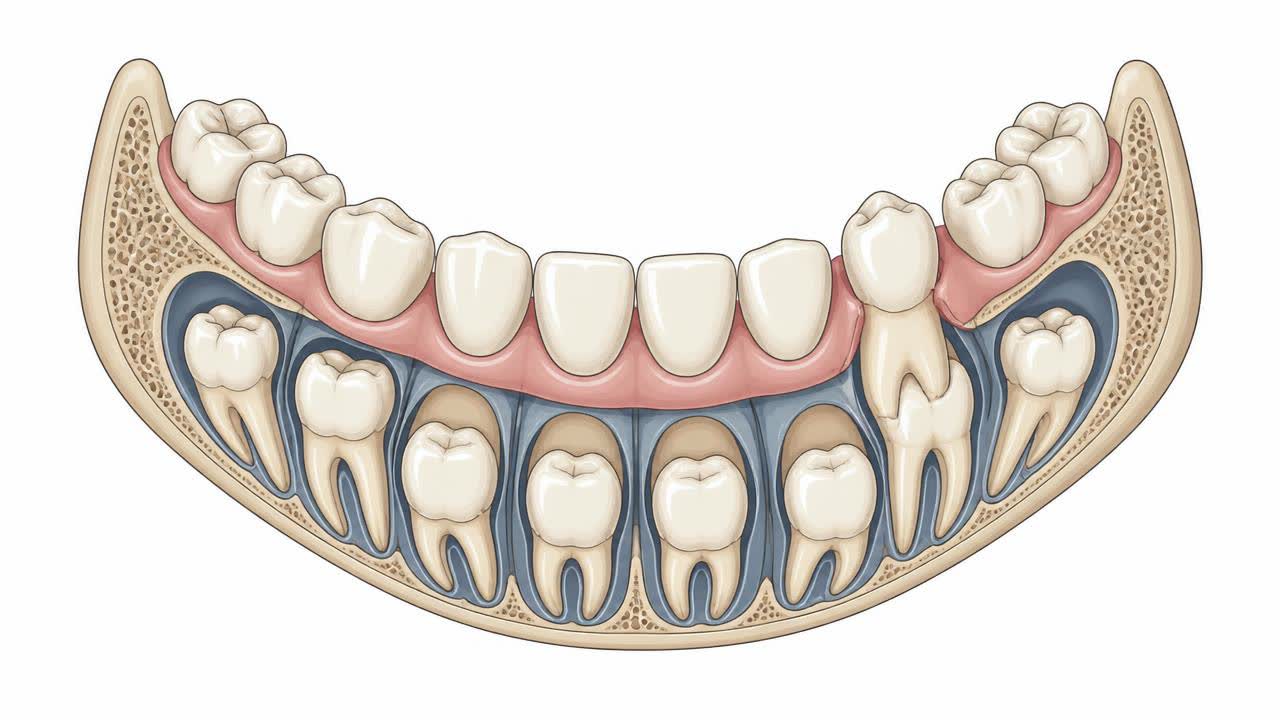
Primary teeth, commonly referred to as baby teeth or deciduous teeth, serve critical developmental functions beyond mastication and speech. Beneath each primary tooth lies the developing germ of a permanent successor, such as a premolar or permanent incisor. Deciduous molars maintain the integrity of the dental arch perimeter, providing a physiological guide that directs the eruption of permanent teeth into their correct anatomical positions. When a child experiences premature tooth loss before the natural exfoliation process begins, this physiological pathway is disrupted.
A dental space maintainer for child patients is a custom-fabricated orthodontic or paediatric appliance designed to preserve the mesiodistal dimension—the horizontal width of the vacant space—within the dental arch. Surrounding alveolar bone and neighbouring teeth are dynamic structures. Without an appliance acting as a mechanical barrier, adjacent teeth naturally migrate or tilt into the open gap due to physiological mesial drift. A space maintainer prevents this unwanted movement, preserving arch symmetry and ensuring adequate space for the unerupted permanent successor.
The anatomical structures directly involved include the alveolar ridge, the periodontal ligament supporting adjacent abutment teeth, and the underlying follicle of the developing permanent tooth. Preserving this spatial architecture protects against severe malocclusions, midline deviations, and the impaction of permanent teeth, which occur when bone or adjacent roots block their natural eruptive path through the oral mucosa.
Diagnostic Assessment and Radiographic Evaluation
Determining whether a child requires a space maintainer involves a thorough clinical and radiographic evaluation. Paediatric dentists and dental surgeons begin with a visual and manual examination of the dental arches, assessing the existing occlusion, arch symmetry, soft tissue health, and the child's developmental age. Clinical appraisal also evaluates the patient's cooperative ability, oral hygiene status, and caries susceptibility, which influence appliance selection.
Radiographic assessment is mandatory. Standard diagnostic views include intraoral periapical radiographs and panoramic radiographs (orthopantomograms). These images allow the clinician to confirm the presence, angulation, and developmental stage of the permanent successor. Radiographs also help identify whether a permanent tooth is congenitally missing (agenesis), which fundamentally changes treatment planning toward space closure or long-term prosthetic replacement rather than simple space maintenance.
A critical diagnostic parameter is the Nolla developmental stage of the underlying tooth germ. Clinical evidence indicates that permanent teeth generally erupt when approximately two-thirds to three-quarters of their root length is formed. Clinicians also measure the thickness of the overlying alveolar bone; typically, permanent premolars require four to five months to migrate through one millimetre of overlying bone. Formal mixed dentition space analyses (such as Moyer's or Tanaka-Johnston methods) are performed on dental casts or digital scans to accurately quantify arch discrepancy.
Clinical Presentation and Consequences of Premature Space Loss
When a primary molar or canine is lost prematurely without intervention, the immediate clinical presentation is an edentulous space within the dental arch. In the posterior segments, the tooth distal to the gap (frequently the newly erupting permanent first molar) exhibits a pronounced tendency to tilt and drift forward, a process known as mesial migration. Concurrently, the tooth mesial to the space may drift backward, rapidly reducing the available arch perimeter within weeks or months of the extraction.
Untreated space closure precipitates several progressive clinical consequences. The most significant is the partial or complete impaction of the underlying permanent successor, particularly the second premolar or permanent canine. When space is lost, the erupting tooth may become trapped entirely within alveolar bone or emerge outside the normal dental arch alignment, manifesting as severe crowding, ectopic eruption, or crossbite. Additionally, the opposing tooth in the opposite arch may undergo supra-eruption (over-eruption) into the vacant space, disrupting the functional occlusal plane.
These structural misalignments alter masticatory efficiency, complicate oral hygiene access, and skew the dental midline. Over time, unmanaged space loss converts a straightforward preventative situation into a complex orthodontic disorder that may require extensive comprehensive treatment, surgical exposure of impacted teeth, or extractions of permanent teeth in later adolescence.
Types and Classification of Space Maintainers
Space maintainers are classified broadly into fixed appliances and removable appliances, and further categorised as unilateral or bilateral based on whether they span one or both sides of the dental arch. Fixed unilateral space maintainers are cemented directly to an abutment tooth. The most common design is the band-and-loop maintainer, which utilises an orthodontic band contoured around a primary or permanent molar with a custom wire loop extending across the gap to rest against the adjacent anterior tooth.
For bilateral space loss in the lower arch, the Lingual Holding Arch is the standard choice, featuring an archwire contoured along the inner surfaces of the lower teeth, anchored by bands on the permanent molars. In the upper arch, bilateral options include the Nance Palatal Arch—which incorporates an acrylic button resting against the anterior palatal vault—and the Transpalatal Arch (TPA), which spans directly across the palate between upper molars without touching soft tissue. When a primary second molar is lost before the permanent first molar has erupted, a specialised appliance termed a distal shoe maintainer is indicated, featuring an intra-alveolar extension that guides the unerupted molar into position.
Removable space maintainers resemble minor acrylic retainer plates and can incorporate artificial acrylic teeth. While these restore aesthetics and partial mastication in anterior tooth loss, they rely entirely on consistent patient compliance and carry higher risks of appliance loss, breakage, and soft tissue irritation compared to cemented fixed alternatives.
Comparing Clinical Approaches and Appliance Selection
Appliance selection depends on specific anatomical locations, the number of missing teeth, and developmental milestones. The band-and-loop maintainer remains the gold standard for unilateral single-tooth loss in both arches due to its high clinical success rate, non-invasive nature, and minimal impact on surrounding soft tissues. Crown-and-loop variations are selected when the abutment tooth itself has extensive decay and requires restoration with a preformed stainless steel crown simultaneously.
In cases of bilateral premature loss in the mandibular arch, the Lingual Holding Arch is preferred over multiple unilateral appliances. However, it is strictly indicated only after the permanent lower incisors have erupted, preventing the wire from interfering with incisor eruption pathways. In the maxillary arch, the Nance appliance provides robust anchorage against mesial drift, though its acrylic palatal button can trap food debris and induce localized palatal mucosal hypertrophy if oral hygiene is substandard.
Observation without an active appliance may be indicated if comprehensive space analysis demonstrates ample arch space, if the permanent successor has already developed more than three-quarters of its root structure, or if the primary tooth is lost within a few weeks of expected physiological exfoliation. Removable designs are reserved almost exclusively for complex multi-tooth anterior loss where aesthetic rehabilitation is requested by parents and cooperative compliance is verified.
Step-by-Step Clinical Procedure for Appliance Fabrication and Placement
The fabrication and insertion of a fixed dental space maintainer for child patients typically requires two dedicated clinical appointments. During the first visit, the clinician selects and adapts an orthodontic band over the designated abutment tooth to ensure a precise anatomical fit around the cervical margin. In cases where adjacent contacts are extremely tight, temporary elastomeric orthodontic separators may be placed several days in advance to create slight clearance.
Once the band is accurately seated, an alginate or elastomeric impression of the entire dental arch is taken, capturing the band in position alongside the edentulous space and neighbouring teeth. The band is then gently removed, placed securely inside the impression, and sent to a specialised dental laboratory. A dental technician solders a custom stainless steel wire loop or transpalatal connector onto the band according to the clinician's exact prescription and cast model.
At the second appointment, the laboratory-fabricated appliance is tried in the child's mouth. The clinician checks the fit of the band, verifies that the wire loop rests passively against the adjacent tooth without exerting active orthodontic force, and ensures it does not impinge on gingival tissues or interfere with the opposing bite. The abutment tooth is cleaned, isolated with cotton rolls or moisture control barriers, and conditioned. The appliance is then securely cemented using a biocompatible dental cement, most commonly glass ionomer cement, which releases fluoride and safeguards against microleakage.
Potential Complications and How They Are Managed
The most frequent complication associated with space maintainers is cement debonding. If the cement seal breaks, the appliance becomes loose or partially dislodged. A loose band can allow saliva, plaque, and dietary sugars to pool beneath it, leading to rapid, painless enamel demineralisation and secondary dental caries on the underlying abutment tooth. If an appliance becomes loose, parents must contact the dental clinic promptly so it can be removed, cleaned, and recemented.
Soft tissue complications, including gingival inflammation, mucosal impingement, and hyperplastic tissue overgrowth, can develop if the wire loop is bent out of shape by masticatory forces or if hygiene is neglected. If the wire presses painfully into the alveolar ridge or palatal mucosa, the clinician must adjust the contour or temporarily remove the appliance to allow the soft tissues to heal completely.
Breakage of solder joints or distortion of the wire framework can occur from biting on hard objects. In such cases, the appliance must be removed and replaced. Another critical complication is appliance interference with the erupting permanent successor. If a space maintainer is left in place too long, the emerging tooth may become impacted against the appliance wire, underscoring the necessity of scheduled periodic reviews.
Monitoring, Timing of Removal, and Long-Term Prevention
Once a space maintainer is fitted, regular dental follow-up visits every three to six months are mandatory. During these review appointments, the clinician examines the physical stability of the appliance, evaluates periodontal health around the abutment teeth, checks for signs of demineralisation, and clinically monitors arch development.
Periodic follow-up radiographs are taken to track the vertical movement of the unerupted permanent tooth. The ideal timing for appliance removal is precisely when the cuspal tip or incisal edge of the underlying permanent successor begins to emerge through the alveolar bone and penetrate the gingiva. At this stage, the permanent tooth secures its own space, rendering the maintainer obsolete. Removal is straightforward: the clinician uses band-removing pliers to gently break the cement seal, cleans away residual cement, and polishes the enamel.
Long-term prevention of space loss fundamentally centres on preserving the natural primary dentition. Establishing an early dental home by the child's first birthday, implementing twice-daily brushing with age-appropriate fluoridated toothpaste, applying professional topical fluoride varnishes, placing pit and fissure sealants on vulnerable molars, and moderating dietary sugar frequency remain the bedrock of paediatric preventative oral healthcare.
Evidence and further reading
Clinical guidelines published by major paediatric dentistry authorities, including the American Academy of Pediatric Dentistry (AAPD) and the British Society of Paediatric Dentistry (BSPD), consistently establish space maintainers as the primary preventative intervention following premature loss of primary molars. Systematic reviews from the Cochrane Oral Health Group and articles indexed in the Journal of the American Dental Association (JADA) indicate that fixed space maintainers exhibit significantly higher success and lower failure rates compared to removable designs, primarily due to uninterrupted compliance.
Research in the International Journal of Paediatric Dentistry and Paediatric Dentistry highlights that the band-and-loop and lingual holding arch maintain high survival rates over twelve to twenty-four month periods, provided that patient oral hygiene is maintained and dietary recommendations are observed. The National Institute for Health and Care Excellence (NICE) and FDI World Dental Federation emphasize the preventive paradigm: while space maintenance successfully limits subsequent orthodontic severity, comprehensive primary prevention of childhood caries remains the gold standard in reducing premature tooth loss.
Causes and Risk Factors Leading to Early Primary Tooth Loss
The premature loss of primary teeth most frequently results from advanced dental caries, particularly Early Childhood Caries (ECC). Severe decay can rapidly destroy coronal tooth structure and penetrate deep into the pulp chamber, causing irreversible pulpitis or periapical abscesses. When conservative endodontic therapies, such as pulpotomy or pulpectomy, cannot predictably resolve the infection, extraction of the affected deciduous tooth becomes clinically unavoidable to protect underlying bone and systemic health.
Dentoalveolar trauma is another primary aetiological factor, particularly affecting the anterior maxillary arch during early childhood play, falls, or sporting activities. Severe luxation injuries, root fractures, or complete avulsion often necessitate the removal or management of primary teeth. Less common causes include ectopic eruption—where a permanent first molar erupts at an abnormal angulation and causes premature resorption of the adjacent second primary molar root—and specific systemic conditions or congenital anomalies affecting periodontal attachment.
Dietary habits, particularly the prolonged intake of refined carbohydrates and night-time bottle-feeding with sugary liquids, significantly heighten caries risk. In diverse populations, such as across parts of South Asia and underserved urban regions, early childhood oral health literacy, dietary exposure to cariogenic processed snacks, and delayed access to preventative dental services contribute heavily to high extraction rates in primary dentitions.
Recovery, Daily Aftercare, and Oral Hygiene Protocols
Following cementation, children generally adapt quickly within twenty-four to forty-eight hours. Mild transient discomfort, a sensation of fullness in the mouth, or minor changes in speech can occur initially, but these resolve as the tongue and oral musculature adjust. Analgesics such as paracetamol or ibuprofen are rarely required, but can be used as directed if mild soft tissue sensitivity arises.
Meticulous oral hygiene is vital to prevent complications around fixed appliances. Plaque naturally accumulates at the interface between the metal band and the tooth enamel, as well as beneath lingual or palatal wires. Children must be guided to brush thoroughly twice daily with fluoridated toothpaste, angling toothbrush bristles directly into the gingival margin and around appliance wires. Parents must actively supervise or assist brushing up to at least seven or eight years of age.
Dietary modifications are essential to safeguard the integrity of the appliance cement seal. Children must avoid sticky, chewy, or hard confectionery—such as toffees, chewing gum, hard sweets, and ice—which can loosen the cement or distort the stainless steel wire. Hard fruits and raw vegetables should be cut into small, manageable pieces rather than bitten into directly with the braced teeth.
Questions patients ask us
- Why put a space maintainer on a tooth that will fall out anyway?
- Primary teeth act as natural space placeholders for the permanent teeth developing beneath them. If a primary molar is lost too early, adjacent teeth drift into the empty space. A space maintainer prevents this shifting, ensuring the permanent tooth has sufficient room to erupt normally, avoiding complex orthodontic issues later.
- Does getting a space maintainer fitted hurt my child?
- Fitting a space maintainer is a non-invasive, pain-free procedure that does not require local anaesthetic injections or drilling. The dentist simply sizes a metal band, takes a gentle dental impression or digital scan, and cements the custom appliance onto the tooth at a subsequent visit with minor pressure.
- What should we do if the space maintainer becomes loose or falls out?
- If the appliance becomes loose or detaches completely, preserve it in a clean container and contact your dental clinic promptly for an appointment. Do not attempt to force, bend, or glue it back into position at home, as this can damage the teeth or risk accidental ingestion.
- What foods does my child need to avoid with a fixed appliance?
- Children with fixed maintainers must avoid sticky, chewy, or hard foods such as toffees, chewing gum, hard sweets, and ice cubes. These foods can break the cement seal or bend the wire. Hard fruits and raw vegetables should be cut into small pieces before eating.
- How long does a space maintainer need to stay in the mouth?
- The appliance remains in place until the underlying permanent tooth is ready to emerge through the gum, typically determined by clinical observation and periodic radiographs. This duration can range from several months to a few years depending on the child's age and developmental timeline.
- Can my child brush and floss normally with a space maintainer?
- Yes, maintaining excellent oral hygiene is vital. Children must brush thoroughly twice daily, ensuring bristles clean around the appliance band and beneath the wire. Flossing should be performed around normal teeth, taking care not to aggressively pull upward beneath the appliance wire loops.
- Do all missing baby teeth require a space maintainer?
- No. Front baby teeth (incisors) rarely require space maintainers because space closure is minimal in the anterior segment. Furthermore, if an underlying permanent tooth is already close to erupting with sufficient root formation, the dentist may recommend active monitoring rather than placing an appliance.
- What are the early warning signs of an appliance problem?
- Red flag symptoms include persistent gum pain, bleeding around the band, swollen mucosal tissue growing over the wire, a visible gap between the band and the tooth, or a feeling that the child cannot bite down comfortably. These signs warrant prompt clinical examination.
Sources and further reading
Guidance from professional and public health bodies. Clinical decisions here are made on your own examination and radiographs.
- 1.Best practice policies and clinical recommendations — American Academy of Pediatric Dentistry
- 2.Delivering better oral health — an evidence-based toolkit — Public Health England / OHID
- 3.Oral health — fact sheet and global status report — World Health Organization
- 4.Policy statements and oral health definitions — FDI World Dental Federation
- 5.Dental health — conditions, treatments and patient guidance — NHS (UK)
- 6.Systematic reviews of oral and dental interventions — Cochrane Oral Health
- 7.Regulatory framework and dental education standards in India — Dental Council of India
When to see us
Get examined without waiting if any of the following applies to you:
- Facial swelling, fever or refusal to eat or drink in a child — seek same-day care
- Dental injury to a child's tooth, especially if it is displaced or knocked out
- A dark or discoloured tooth, or a lump on the gum above a tooth
Get a written plan and cost before you commit
If this is what you are dealing with, the next step is a consultation with radiographs — children's dentistry cases are seen by the specialist who handles that field. You get a written plan and staged cost before anything begins.
reception@dramitsharmahospital.comThis article is general education and does not replace an in-person examination, radiographs or a diagnosis by a qualified dentist.
Clinical terms in this article
Related in Children's Dentistry
Children's Dental Care by Age
First visit timing, fluoride and sealants, why milk teeth matter, and managing dental anxiety in children.
Pulpotomy vs Pulpectomy in Baby Teeth Explained
This clinical guide clarifies the differences between a pulpotomy and a pulpectomy in primary teeth. Learn about deciduous pulp anatomy, diagnostic criteria, clinical steps, restorative crowns, post-operative care, and when emergency dental attention is necessary.
Regenerative Endodontics for Immature Teeth with Pulp Necrosis
A regenerative endodontic procedure restores vascularity and tissue vitality to immature permanent teeth affected by pulp necrosis. This evidence-based guide details diagnostic protocols, biologically based revascularisation steps, treatment comparisons, recovery expectations, and long-term tooth preservation strategies.
Apexification Procedure for Immature Permanent Teeth in Children
An apexification procedure is a specialised dental intervention designed to treat non-vital, immature permanent teeth in children. It creates a calcified apical barrier, enabling effective root canal obturation while preserving the natural tooth within the developing jaw.
Apexogenesis Procedure to Preserve Pulp Vitality in Children
Apexogenesis is a vital pulp therapy that preserves living pulp tissue in immature permanent teeth of children. By maintaining vascularity, it enables continued root lengthening, dentinal wall thickening, and natural apical closure following traumatic injury or deep decay.
Palatal Expanders for Children: How Rapid Palatal Expansion Works
A clinical guide to rapid palatal expansion in children. Learn how a palate expander for kids corrects transverse maxillary constriction, posterior crossbites, and severe crowding before midpalatal suture fusion during natural skeletal development.