At a glance
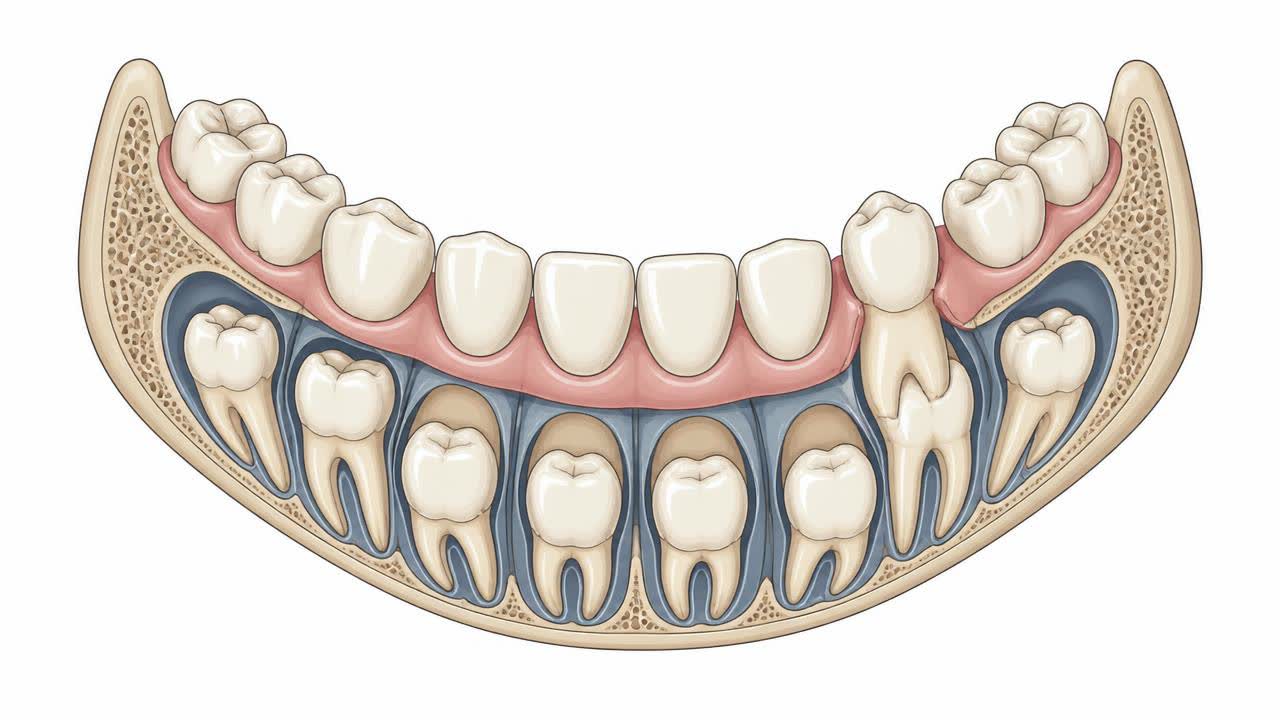
- When a baby tooth, particularly a molar, is lost significantly earlier than its natural exfoliation time due to decay, trauma, or infection, the surrounding teeth can begin to shift into the resulting gap.
- Space maintainers can be fixed or removable, and unilateral or bilateral, depending on the location and number of teeth lost.
- Good oral hygiene around a space maintainer is essential, as food particles can accumulate around the bands and wires, increasing the risk of decay in the surrounding teeth if not cleaned thoroughly.
- The appliance is removed once the permanent tooth begins to erupt into the maintained space, at which point it has served its purpose.
Why Space Maintainers Are Needed
When a baby tooth, particularly a molar, is lost significantly earlier than its natural exfoliation time due to decay, trauma, or infection, the surrounding teeth can begin to shift into the resulting gap. This drifting reduces the space available for the permanent tooth that is meant to erupt there, often leading to crowding, impaction, or misalignment that may require more complex orthodontic treatment later.
A space maintainer is a custom-made dental appliance designed to hold open the space left by the prematurely lost tooth, ensuring the permanent successor has adequate room to erupt into its correct position when the time comes.
Types of Space Maintainers
Space maintainers can be fixed or removable, and unilateral or bilateral, depending on the location and number of teeth lost. A band and loop maintainer is commonly used when a single tooth is lost on one side, consisting of a metal band cemented to the adjacent tooth with a wire loop extending to hold the space.
For cases involving multiple missing teeth or when both sides of the arch are affected, a lingual arch or a removable appliance with a false tooth may be used instead. The choice depends on factors such as the child's age, cooperation level, oral hygiene, and the specific teeth involved, which your paediatric dentist will assess individually.
Caring for a Space Maintainer
Good oral hygiene around a space maintainer is essential, as food particles can accumulate around the bands and wires, increasing the risk of decay in the surrounding teeth if not cleaned thoroughly. Parents should supervise brushing and encourage the use of any recommended interdental cleaning aids.
Children should be advised to avoid excessively sticky or hard foods that could dislodge or damage the appliance. Regular dental visits are necessary to check that the maintainer remains well-fitted and to monitor the eruption progress of the permanent tooth underneath.
When the Space Maintainer Is Removed
The appliance is removed once the permanent tooth begins to erupt into the maintained space, at which point it has served its purpose. Timely removal is important, as leaving it in place too long after the permanent tooth starts emerging can interfere with proper eruption.
Questions patients ask us
- Does my child need a space maintainer for every lost baby tooth?
- Not necessarily. The need depends on the child's age and which tooth was lost. Front teeth lost close to their natural exfoliation time often do not require a maintainer, while early loss of back molars, where the permanent successor is still years away, usually does.
- Are space maintainers uncomfortable for children?
- Most children adapt to a space maintainer within a few days, experiencing only mild initial awkwardness with speech or eating. The appliance is designed to be as unobtrusive as possible while still effectively preserving the necessary space.
- What happens if a space maintainer is not fitted after early tooth loss?
- Without a maintainer, neighbouring teeth can drift into the gap, reducing available space for the permanent tooth. This often results in impacted or crowded permanent teeth, which may later require more extensive and lengthy orthodontic treatment to correct.
- How long does a child typically need to wear a space maintainer?
- This varies depending on the age at which the tooth was lost and when the permanent successor is expected to erupt, ranging from several months to a few years. Your dentist will monitor progress with periodic reviews and X-rays as needed.
Sources and further reading
Guidance from professional and public health bodies. Clinical decisions here are made on your own examination and radiographs.
- 1.Best practice policies and clinical recommendations — American Academy of Pediatric Dentistry
- 2.Delivering better oral health — an evidence-based toolkit — Public Health England / OHID
- 3.Oral health — fact sheet and global status report — World Health Organization
- 4.Policy statements and oral health definitions — FDI World Dental Federation
- 5.Dental health — conditions, treatments and patient guidance — NHS (UK)
- 6.Systematic reviews of oral and dental interventions — Cochrane Oral Health
- 7.Regulatory framework and dental education standards in India — Dental Council of India
When to see us
Get examined without waiting if any of the following applies to you:
- Facial swelling, fever or refusal to eat or drink in a child — seek same-day care
- Dental injury to a child's tooth, especially if it is displaced or knocked out
- A dark or discoloured tooth, or a lump on the gum above a tooth
Get a written plan and cost before you commit
If this is what you are dealing with, the next step is a consultation with radiographs — children's dentistry cases are seen by the specialist who handles that field. You get a written plan and staged cost before anything begins.
reception@dramitsharmahospital.comThis article is general education and does not replace an in-person examination, radiographs or a diagnosis by a qualified dentist.
Clinical terms in this article
Related in Children's Dentistry
Children's Dental Care by Age
First visit timing, fluoride and sealants, why milk teeth matter, and managing dental anxiety in children.
Pulpotomy vs Pulpectomy in Baby Teeth Explained
This clinical guide clarifies the differences between a pulpotomy and a pulpectomy in primary teeth. Learn about deciduous pulp anatomy, diagnostic criteria, clinical steps, restorative crowns, post-operative care, and when emergency dental attention is necessary.
Regenerative Endodontics for Immature Teeth with Pulp Necrosis
A regenerative endodontic procedure restores vascularity and tissue vitality to immature permanent teeth affected by pulp necrosis. This evidence-based guide details diagnostic protocols, biologically based revascularisation steps, treatment comparisons, recovery expectations, and long-term tooth preservation strategies.
Apexification Procedure for Immature Permanent Teeth in Children
An apexification procedure is a specialised dental intervention designed to treat non-vital, immature permanent teeth in children. It creates a calcified apical barrier, enabling effective root canal obturation while preserving the natural tooth within the developing jaw.
Apexogenesis Procedure to Preserve Pulp Vitality in Children
Apexogenesis is a vital pulp therapy that preserves living pulp tissue in immature permanent teeth of children. By maintaining vascularity, it enables continued root lengthening, dentinal wall thickening, and natural apical closure following traumatic injury or deep decay.
Palatal Expanders for Children: How Rapid Palatal Expansion Works
A clinical guide to rapid palatal expansion in children. Learn how a palate expander for kids corrects transverse maxillary constriction, posterior crossbites, and severe crowding before midpalatal suture fusion during natural skeletal development.