At a glance
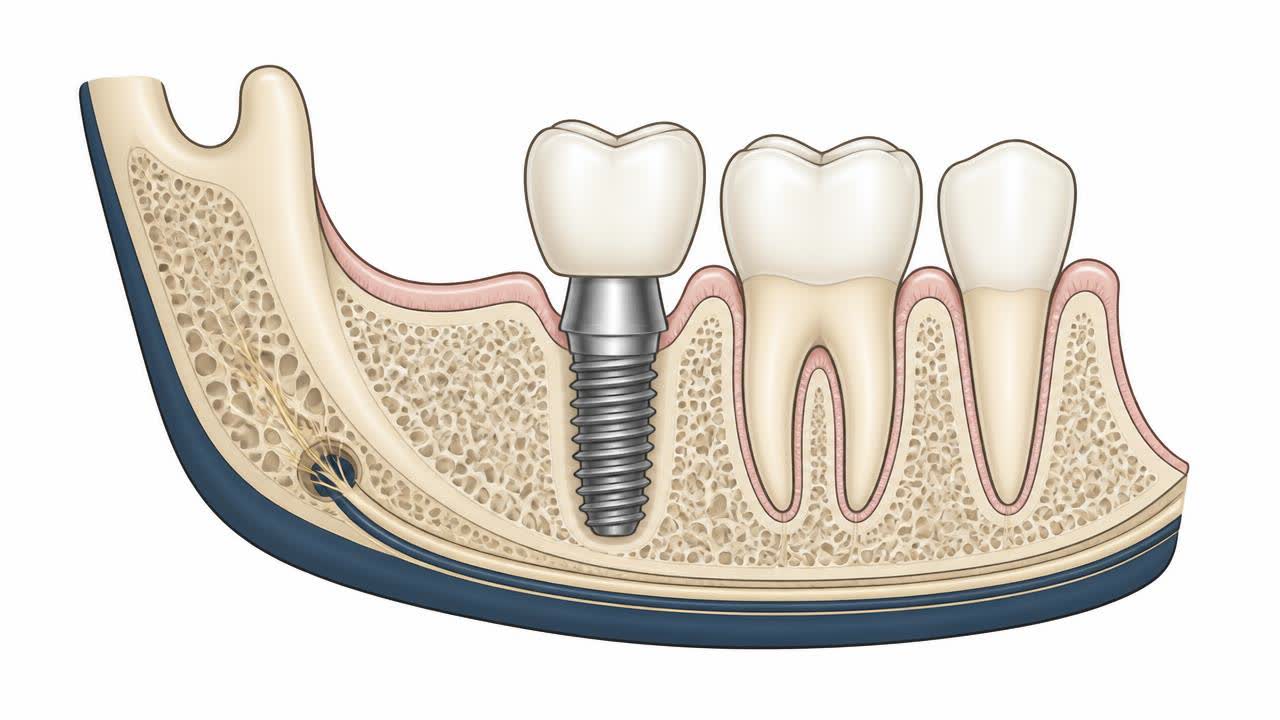
- A single dental implant is designed to replace a missing tooth by placing a titanium post directly into the jawbone.
- A traditional three-unit bridge replaces a missing tooth by anchoring a false tooth to crowns placed on the healthy teeth on either side of the gap.
- The primary difference between these options is their impact on surrounding teeth.
- Both implants and bridges can be crafted to match the colour and shape of your natural teeth, providing excellent aesthetic results.
- When choosing between these options, consider your long-term goals and oral health profile.
Understanding the Single Implant Solution
A single dental implant is designed to replace a missing tooth by placing a titanium post directly into the jawbone. This acts as an artificial root, supporting a custom-made ceramic crown. Because it is independent, it does not rely on the neighbouring teeth for support, which helps preserve the integrity and long-term health of your entire dental arch.
By replacing the root as well as the crown, an implant helps maintain bone density in the jaw, preventing the gradual bone loss that occurs after tooth extraction. This makes it an ideal, biologically sound solution for single tooth replacement. At Dr. Amit Sharma Super Speciality Dental Hospital, we favour this approach for its ability to function exactly like your original tooth, providing excellent durability and comfort.
The Three Unit Bridge Alternative
A traditional three-unit bridge replaces a missing tooth by anchoring a false tooth to crowns placed on the healthy teeth on either side of the gap. These adjacent teeth must be prepared, which involves removing a portion of their healthy enamel to fit the bridge crowns. This process permanently alters these otherwise healthy teeth to support the prosthetic tooth in the middle.
While bridges were once the standard, they create a reliance on adjacent teeth that can complicate future dental issues. If one of the supporting teeth develops decay or experiences root problems, the entire bridge may need to be replaced. For many patients in Jaipur, we carefully discuss the trade-offs of this reliance versus the independence offered by modern dental implant technology.
Comparing Long-term Preservation
The primary difference between these options is their impact on surrounding teeth. An implant stands alone and does not affect your other teeth, whereas a bridge requires the preparation of adjacent teeth, which can increase the risk of future sensitivity or decay in those teeth. Preserving your natural tooth structure is a core principle of modern restorative dentistry at our centre.
Long-term, implants often prove more cost-effective as they do not require support from nearby teeth. If you lose a tooth in the future, it does not jeopardise your existing implant. Our specialists recommend evaluating your overall dental health to see if you have sufficient bone and healthy adjacent teeth to make an informed decision between these two established treatment paths for your specific needs.
Clinical Advice for Your Choice
When choosing between these options, consider your long-term goals and oral health profile. If you have healthy adjacent teeth, an implant is often the superior choice to avoid unnecessary preparation. If you have adjacent teeth that already require crowns, a bridge may be a logical, combined solution. We always perform a thorough clinical assessment to guide your decision.
For further guidance or to schedule a consultation at our Jaipur hospital, contact us on 9314403502. We are here to provide clear, honest advice about the best path to restoring your smile. Our aim is to ensure you understand the clinical benefits of each option, helping you make a choice that supports your long-term comfort, function, and aesthetic satisfaction with your results.
Aesthetics and Oral Hygiene
Both implants and bridges can be crafted to match the colour and shape of your natural teeth, providing excellent aesthetic results. An implant crown emerges through the gum tissue, mimicking the look of a natural tooth root. Bridges, while beautiful, require special cleaning techniques such as super-floss or interdental brushes to ensure the area beneath the pontic—the fake tooth—remains free from plaque and debris.
Maintaining good oral hygiene is essential regardless of your choice. Implants generally allow for more straightforward flossing, as you can treat the area just like a natural tooth. Bridges require extra vigilance to prevent inflammation of the gums around the supporting teeth. Our hygienists will teach you the best methods to keep your new restoration clean and your gums healthy for many years to come.
Questions patients ask us
- Does a bridge hurt the neighbouring teeth?
- A bridge involves preparing the adjacent teeth by removing a small amount of enamel to allow for the crowns to sit securely. While this is a standard procedure, it permanently alters healthy tooth structure, which is why we often recommend implants as a more conservative alternative.
- Is it easier to clean an implant or a bridge?
- A single implant is generally easier to clean as it can be flossed just like a natural tooth. A bridge requires special cleaning tools, such as floss threaders or interdental brushes, to effectively clean the area under the bridge and maintain gum health.
- How long do these restorations typically last?
- With excellent oral hygiene and regular professional check-ups, both single implants and bridges can last for many years. However, implants are often considered more durable because they do not rely on neighbouring teeth, which can be vulnerable to decay or structural issues over time.
- Can anyone have a dental implant?
- Most healthy individuals are candidates for dental implants. We need to ensure you have sufficient bone density and healthy gum tissue. During your consultation at our Jaipur hospital, we will use advanced diagnostics to confirm your suitability and discuss your personalised treatment plan.
Sources and further reading
Guidance from professional and public health bodies. Clinical decisions here are made on your own examination and radiographs.
- 1.ITI Treatment Guide series and consensus statements — International Team for Implantology (ITI)
- 2.Consensus reports on implant dentistry — European Association for Osseointegration
- 3.Prosthodontic and edentulous-care patient guidance — American College of Prosthodontists
- 4.Oral health — fact sheet and global status report — World Health Organization
- 5.Policy statements and oral health definitions — FDI World Dental Federation
- 6.Dental health — conditions, treatments and patient guidance — NHS (UK)
- 7.Systematic reviews of oral and dental interventions — Cochrane Oral Health
- 8.Regulatory framework and dental education standards in India — Dental Council of India
When to see us
Get examined without waiting if any of the following applies to you:
- Pain, looseness or pus around an implant or a fixed bridge
- A crown, bridge or denture that has fractured or come away
- Gum swelling that keeps returning around the same restoration
Get a written plan and cost before you commit
If this is what you are dealing with, the next step is a consultation with radiographs — implants & missing teeth cases are seen by the specialist who handles that field. You get a written plan and staged cost before anything begins.
reception@dramitsharmahospital.comThis article is general education and does not replace an in-person examination, radiographs or a diagnosis by a qualified dentist.
Clinical terms in this article
Related in Implants & Missing Teeth
Missing Teeth: Comparing Dentures, Bridges and Implant Options
What happens if a missing tooth is left unreplaced, and how dentures, bridges and implants compare on comfort, longevity and bone health.
Dental Implants: A Complete Guide
How titanium implants replace missing teeth, who qualifies, the step-by-step timeline and how long they last.
Full Mouth Rehabilitation
Rebuilding a worn, collapsed or heavily damaged dentition with a sequenced, whole-mouth treatment plan.
Peri-Implant Mucositis Symptoms and Early Intervention
Peri-implant mucositis is a plaque-induced, reversible inflammatory lesion affecting the soft tissues surrounding a dental implant without bone loss. Prompt professional debridement, risk-factor modification, and meticulous biofilm control prevent progression to irreversible peri-implantitis.
Peri-Implantitis Symptoms Bone Loss and Implant Salvage
Peri-implantitis is an inflammatory condition causing progressive marginal bone loss around dental implants. Early detection, thorough decontamination, and advanced surgical salvage techniques can arrest bone destruction, resolve inflammation, and preserve implant stability.
Root Canal Retreatment vs Tooth Extraction and Implant
This clinical guide evaluates root canal retreatment versus tooth extraction and dental implant placement. Learn about biological tooth preservation, anatomical considerations, procedural steps, longevity, recovery expectations, and diagnostic criteria to make an informed oral healthcare decision.