At a glance
- Although root canal treatment has a high success rate, a small proportion of treated teeth can develop persistent or recurrent infection over time.
- Symptoms of a failing root canal can include recurring pain or tenderness in a previously treated tooth, swelling of the gum, a persistent bad taste, or a small sinus tract or bump on the gum indicating ongoing infection.
- Re-treatment, or retreatment endodontics, involves reopening the tooth, removing the old filling material from the canals, and thoroughly re-cleaning and disinfecting the canal system, including searching for any previously…
- In some cases, non-surgical re-treatment is not possible or has already been attempted without success, and a minor surgical procedure called apicoectomy may be recommended to clean and seal the root tip directly through the gum.
Why a Root Canal Can Fail
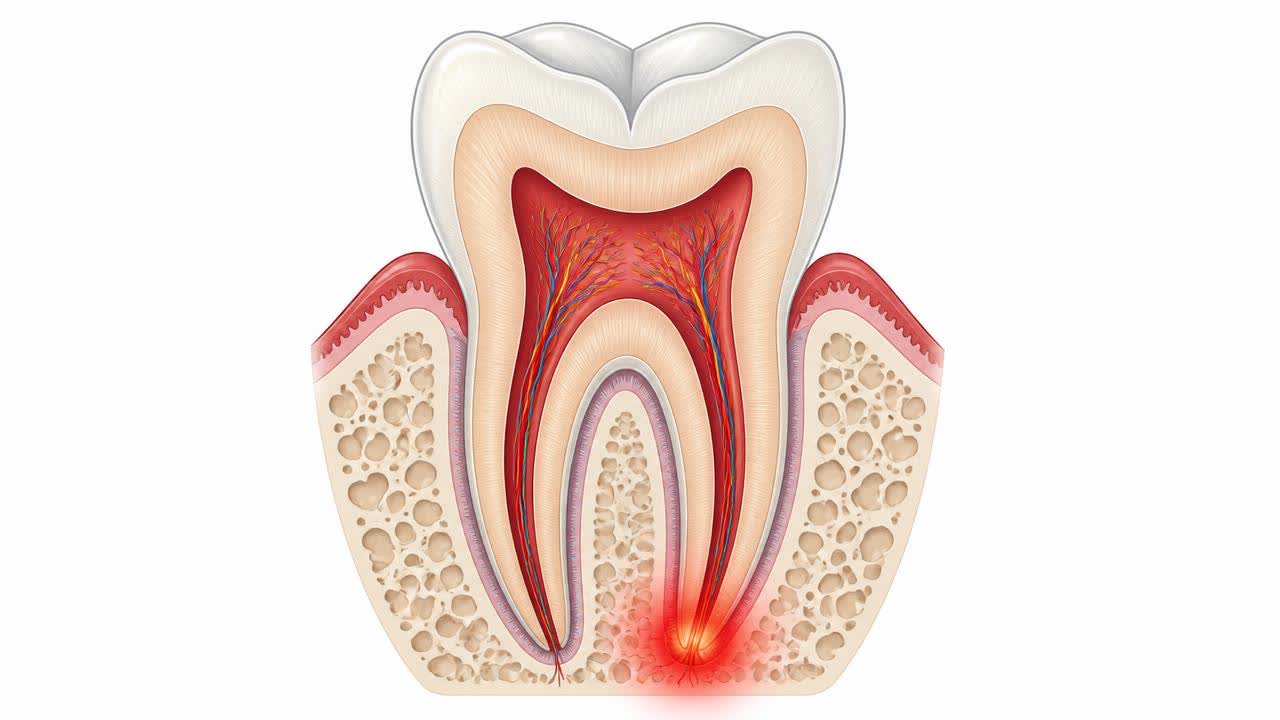
Although root canal treatment has a high success rate, a small proportion of treated teeth can develop persistent or recurrent infection over time. Common causes include missed or complex canals that were not fully cleaned during the original procedure, a delayed or poorly sealed final restoration allowing bacteria to re-enter, or a new crack or decay exposing the canal system again.
Some cases fail simply because bacteria present deep within microscopic canal branches were resistant to the initial disinfection process. This does not necessarily mean the original treatment was performed incorrectly, but rather reflects the complex and unpredictable anatomy of some root canal systems.
Recognising the Signs of Failure
Symptoms of a failing root canal can include recurring pain or tenderness in a previously treated tooth, swelling of the gum, a persistent bad taste, or a small sinus tract or bump on the gum indicating ongoing infection. Sometimes there are no symptoms at all, and the problem is only identified through a routine X-ray showing a dark shadow around the root tip.
If you experience any discomfort in a tooth that has previously had root canal treatment, it is important to have it assessed promptly, as untreated persistent infection can lead to further bone loss around the root.
The Re-Treatment Procedure
Re-treatment, or retreatment endodontics, involves reopening the tooth, removing the old filling material from the canals, and thoroughly re-cleaning and disinfecting the canal system, including searching for any previously missed canals. This is often performed with the aid of magnification to improve accuracy.
Once the canals are cleaned to a satisfactory standard, they are refilled and sealed, and the tooth is restored, usually with a new crown if the previous restoration has also failed. Re-treatment cases can be more technically demanding than a first-time root canal, so they are often best managed by a clinician with specific endodontic experience.
When Surgery or Extraction May Be Needed
In some cases, non-surgical re-treatment is not possible or has already been attempted without success, and a minor surgical procedure called apicoectomy may be recommended to clean and seal the root tip directly through the gum. This is considered when the source of infection is difficult to reach from inside the tooth.
If the tooth structure is too compromised, has a vertical fracture, or the surrounding bone support is severely reduced, extraction followed by an implant or bridge may be the more predictable long-term solution. Your dentist will discuss the most suitable option based on a thorough clinical and radiographic evaluation.
Questions patients ask us
- Why did my root canal treated tooth start hurting again years later?
- This can happen if bacteria re-enter through a cracked filling, missed canal, or delayed crown placement, or if a previously undetected canal branch remained infected. A dental examination with an X-ray can identify the cause and guide the appropriate next step.
- Is root canal re-treatment more painful than the first procedure?
- Re-treatment is performed under local anaesthesia just like the original procedure, so it should not be significantly more painful. Some cases may involve slightly more discomfort afterwards due to the presence of existing infection, but this is manageable with prescribed medication.
- Can a tooth be saved after a failed root canal?
- In many cases, yes. Non-surgical re-treatment or a minor surgical procedure such as apicoectomy can often resolve the infection and preserve the natural tooth, though the suitability depends on the extent of damage and remaining tooth structure.
- How do I know if I need re-treatment or extraction?
- Your dentist will evaluate the amount of remaining healthy tooth structure, the presence of fractures, and the extent of bone loss around the root using clinical examination and X-rays before recommending whether re-treatment or extraction and replacement is more predictable.
Sources and further reading
Guidance from professional and public health bodies. Clinical decisions here are made on your own examination and radiographs.
- 1.Endodontic diagnosis terminology and treatment guidance — American Association of Endodontists
- 2.Guidelines for the management of traumatic dental injuries — International Association of Dental Traumatology
- 3.Antimicrobial prescribing for dental infection — NICE (UK)
- 4.Oral health — fact sheet and global status report — World Health Organization
- 5.Policy statements and oral health definitions — FDI World Dental Federation
- 6.Dental health — conditions, treatments and patient guidance — NHS (UK)
- 7.Systematic reviews of oral and dental interventions — Cochrane Oral Health
- 8.Regulatory framework and dental education standards in India — Dental Council of India
When to see us
Get examined without waiting if any of the following applies to you:
- Facial or neck swelling, difficulty swallowing, opening the mouth or breathing — this is an emergency
- Pain with fever, or swelling that is spreading rather than settling
- A tooth knocked out or pushed out of position after an injury — time matters
- Pain that wakes you at night or does not respond to ordinary painkillers
Get a written plan and cost before you commit
If this is what you are dealing with, the next step is a consultation with radiographs — pain & emergencies cases are seen by the specialist who handles that field. You get a written plan and staged cost before anything begins.
reception@dramitsharmahospital.comThis article is general education and does not replace an in-person examination, radiographs or a diagnosis by a qualified dentist.
Clinical terms in this article
Related in Pain & Emergencies
Tooth Pain and Sensitivity: Causes, Relief and When to See a Dentist
Why teeth hurt or react to hot and cold, the difference between everyday sensitivity and a warning sign, and what treatment usually follows.
Root Canal Treatment Explained
Why a tooth needs root canal therapy, what happens during single-sitting endodontics, and why crowns follow.
Tooth Pain and Dental Emergencies
How to identify a genuine dental emergency, what to do in the first hour, and when to call the hospital immediately.
Reversible vs Irreversible Pulpitis Symptoms and Treatment Options
Understanding reversible vs irreversible pulpitis is essential when managing dental pain. This guide explains their anatomical causes, diagnostic criteria, clinical symptoms, and evidence-based treatments ranging from conservative restorations to root canal therapy and emergency care.
Differences Between a Tooth Abscess and Gum Abscess
A dental abscess is a localised collection of pus caused by bacterial infection. Distinguishing between a tooth abscess (periapical) and a gum abscess (periodontal) is vital, as their anatomical origins, clinical presentations, diagnostic pathways, and definitive treatments differ fundamentally.
Why Tooth Pain Gets Worse When Lying Down
Experiencing toothache worse lying down typically indicates elevated pulpal or periapical pressure driven by increased cranial blood flow when supine. This guide explains pulpal anatomy, underlying causes, diagnostic pathways, evidence-based treatments, and critical red flags requiring emergency care.