At a glance
- A dental bridge is a fixed prosthesis that spans a gap.
- To carry a conventional bridge, healthy enamel is cut away from the teeth on either side of the gap — often teeth that had nothing wrong with them.
- Bridges remain the right answer in specific situations: when the neighbouring teeth already need crowns for their own reasons, so no healthy tissue is sacrificed; when bone volume or a medical condition rules out surgery; when a…
- A well-made bridge on sound abutments in a well-maintained mouth commonly lasts ten to fifteen years, and often longer.
What a bridge is
A dental bridge is a fixed prosthesis that spans a gap. The teeth on either side, called abutments, are prepared and crowned, and a false tooth — the pontic — is joined between them, the whole unit cemented in place as one piece. It is not removable, it restores chewing and appearance quickly, and the entire process usually takes two to three appointments over a couple of weeks.
The design comes in several forms: a conventional bridge supported at both ends, a cantilever bridge supported at one end only, a resin-bonded or Maryland bridge that is glued to the back of the neighbouring teeth with minimal preparation, and an implant-supported bridge where implants rather than natural teeth carry the span.
The trade-off nobody explains at the quotation stage
To carry a conventional bridge, healthy enamel is cut away from the teeth on either side of the gap — often teeth that had nothing wrong with them. That preparation is irreversible, and a proportion of prepared teeth eventually need root canal treatment because of the pulpal insult. If one abutment later fails, the whole bridge comes off and the problem is now three teeth, not one.
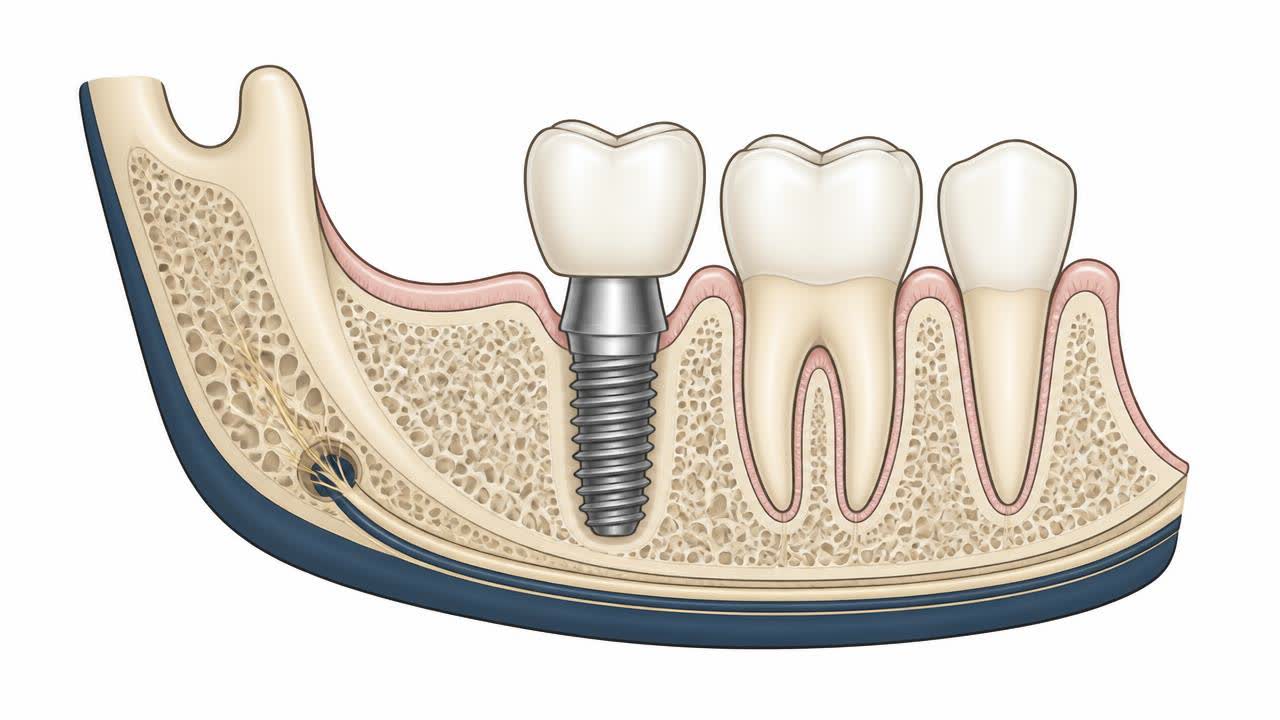
A bridge also does nothing for the bone under the gap. The ridge continues to resorb because nothing is transmitting load into it, so after some years a visible dip appears beneath the pontic and food packs under it. An implant, by contrast, loads the bone and preserves the ridge, and it leaves the neighbouring teeth untouched. That is why the default recommendation for a single missing tooth between two healthy neighbours is an implant.
When a bridge is the better choice
Bridges remain the right answer in specific situations: when the neighbouring teeth already need crowns for their own reasons, so no healthy tissue is sacrificed; when bone volume or a medical condition rules out surgery; when a patient cannot wait the months an implant needs to integrate; and when a resin-bonded bridge can replace a single front tooth in a young patient whose jaw growth is not yet complete and who cannot receive an implant for several more years.
The assessment that decides this is not cosmetic. It covers the health and root length of the potential abutments, the bite forces they will carry, the span length, the bone under the gap, gum health and how well the mouth is cleaned — because the surface that fails first is almost always underneath the pontic.
Lifespan and maintenance
A well-made bridge on sound abutments in a well-maintained mouth commonly lasts ten to fifteen years, and often longer. The common failure modes are decay at the crown margin of an abutment, loss of cement on one side while the other stays attached — which lets bacteria in unnoticed — and fracture of the ceramic. None of these are sudden; almost all are detected at review before they become emergencies.
Cleaning under the pontic is not optional and is not done by a normal brush. Superfloss or an interdental brush threaded beneath the span, used daily, is what determines whether the abutments survive. Regular reviews with radiographs check the margins and the bone, and any bridge that has been in place for a decade should be assessed rather than assumed.
Questions patients ask us
- Is a bridge better than an implant?
- Rarely, but sometimes. An implant is usually preferred because it preserves the neighbouring teeth and loads the bone. A bridge is the better option when the adjacent teeth already need crowns, when surgery is contraindicated, or when treatment must be completed quickly.
- How long does a dental bridge last?
- Ten to fifteen years is a realistic expectation for a well-made bridge that is cleaned properly, and many last considerably longer. Longevity depends far more on cleaning beneath the pontic and on the health of the supporting teeth than on the material used.
- Do the supporting teeth need to be cut down?
- For a conventional bridge, yes — enamel is removed from both neighbouring teeth so crowns can fit over them, and that is irreversible. A resin-bonded bridge requires minimal or no preparation, and an implant requires none at all.
- Can a bridge replace more than one tooth?
- Yes, but the longer the span the greater the leverage on the supporting teeth, and beyond two missing teeth the failure risk rises steeply. Longer spans are generally supported on implants instead of natural teeth.
Sources and further reading
Guidance from professional and public health bodies. Clinical decisions here are made on your own examination and radiographs.
- 1.ITI Treatment Guide series and consensus statements — International Team for Implantology (ITI)
- 2.Consensus reports on implant dentistry — European Association for Osseointegration
- 3.Prosthodontic and edentulous-care patient guidance — American College of Prosthodontists
- 4.Oral health — fact sheet and global status report — World Health Organization
- 5.Policy statements and oral health definitions — FDI World Dental Federation
- 6.Dental health — conditions, treatments and patient guidance — NHS (UK)
- 7.Systematic reviews of oral and dental interventions — Cochrane Oral Health
- 8.Regulatory framework and dental education standards in India — Dental Council of India
When to see us
Get examined without waiting if any of the following applies to you:
- Pain, looseness or pus around an implant or a fixed bridge
- A crown, bridge or denture that has fractured or come away
- Gum swelling that keeps returning around the same restoration
Get a written plan and cost before you commit
If this is what you are dealing with, the next step is a consultation with radiographs — implants & missing teeth cases are seen by the specialist who handles that field. You get a written plan and staged cost before anything begins.
reception@dramitsharmahospital.comThis article is general education and does not replace an in-person examination, radiographs or a diagnosis by a qualified dentist.
Clinical terms in this article
Related in Implants & Missing Teeth
Missing Teeth: Comparing Dentures, Bridges and Implant Options
What happens if a missing tooth is left unreplaced, and how dentures, bridges and implants compare on comfort, longevity and bone health.
Dental Implants: A Complete Guide
How titanium implants replace missing teeth, who qualifies, the step-by-step timeline and how long they last.
Full Mouth Rehabilitation
Rebuilding a worn, collapsed or heavily damaged dentition with a sequenced, whole-mouth treatment plan.
Peri-Implant Mucositis Symptoms and Early Intervention
Peri-implant mucositis is a plaque-induced, reversible inflammatory lesion affecting the soft tissues surrounding a dental implant without bone loss. Prompt professional debridement, risk-factor modification, and meticulous biofilm control prevent progression to irreversible peri-implantitis.
Peri-Implantitis Symptoms Bone Loss and Implant Salvage
Peri-implantitis is an inflammatory condition causing progressive marginal bone loss around dental implants. Early detection, thorough decontamination, and advanced surgical salvage techniques can arrest bone destruction, resolve inflammation, and preserve implant stability.
Root Canal Retreatment vs Tooth Extraction and Implant
This clinical guide evaluates root canal retreatment versus tooth extraction and dental implant placement. Learn about biological tooth preservation, anatomical considerations, procedural steps, longevity, recovery expectations, and diagnostic criteria to make an informed oral healthcare decision.