At a glance
- A severe toothache, known clinically as severe odontogenic pain, originates from the specialised anatomical structures within the tooth and its supporting apparatus.
- The primary cause of severe toothache is progressive dental caries, wherein acidogenic bacteria demineralise hard dental tissues until microbial toxins reach the pulp.
- Clinicians categorise pulpal disease into distinct stages that correlate directly with patient symptoms.
- When exploring how to stop severe toothache pain fast while waiting for an emergency dental consultation, pharmacological management is the most effective temporary measure.
- Widespread misconceptions regarding emergency dental relief frequently cause severe tissue damage.
Understanding Severe Dental Pain and Pulp Anatomy
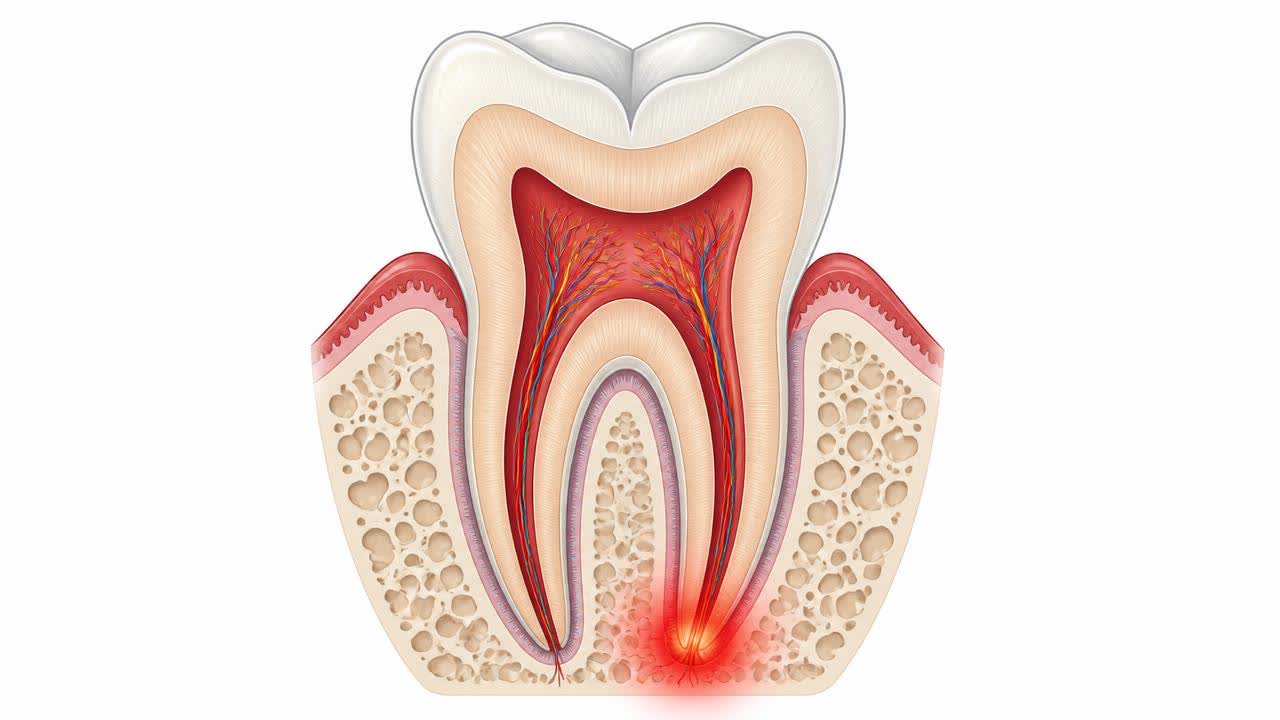
A severe toothache, known clinically as severe odontogenic pain, originates from the specialised anatomical structures within the tooth and its supporting apparatus. The outer mineralised barriers, enamel and dentine, encase a delicate core called the dental pulp. This pulp contains blood vessels, connective tissue, and a dense network of sensory nerve fibres, predominantly myelinated A-delta fibres and unmyelinated C fibres. When deep dental decay, trauma, or structural fracture penetrates the protective enamel and porous dentinal tubules, external bacteria and thermal stimuli irritate these pulpal nerves, initiating an inflammatory response termed pulpitis.
Unlike soft tissues elsewhere in the body, the dental pulp is enclosed within unyielding, rigid dentinal walls. When pulpal inflammation occurs, the resulting vascular permeability and hyperaemia generate significant internal hydrostatic pressure. This intra-pulpal pressure directly compresses nociceptive nerve endings, exciting C fibres that transmit dull, excruciating, throbbing pain to the brain. Because this low-compliance system cannot expand to accommodate inflammatory oedema, unmanaged inflammation rapidly compromises microcirculation, culminating in ischaemic pulp necrosis and the extension of infection into the periapical tissues surrounding the tooth root.
Classification and Clinical Presentation of Pulpitis
Clinicians categorise pulpal disease into distinct stages that correlate directly with patient symptoms. In reversible pulpitis, inflammation is mild; patients experience sharp, transient pain triggered by thermal stimuli—such as cold water or hot tea—that resolves immediately upon removal of the stimulus. If left untreated, this progresses to irreversible pulpitis, characterised by prolonged, lingering pain after thermal stimulation, spontaneous episodes of severe throbbing pain that wake the patient at night, and pain exacerbated by lying flat.
As the pulp tissue undergoes complete necrosis, thermal sensitivity may temporarily diminish, sometimes leading patients to mistakenly believe the condition has resolved. However, the necrotic tissue and proliferating anaerobic bacteria soon trigger apical periodontitis or an acute apical abscess. At this stage, the pain shifts from a diffuse throbbing to an intense, well-localised ache aggravated by biting, chewing, or touching the tooth. The tooth may feel noticeably elevated in its socket, and adjacent gingival tissues often become swollen, erythematous, and exquisitely tender to light palpation.
Safe At-Home Interventions for Immediate Pain Relief
When exploring how to stop severe toothache pain fast while waiting for an emergency dental consultation, pharmacological management is the most effective temporary measure. Clinical evidence supports the combined or staggered use of non-steroidal anti-inflammatory drugs (NSAIDs), such as ibuprofen, with paracetamol, provided there are no medical contraindications such as gastrointestinal ulcers, renal impairment, or pregnancy. NSAIDs target the underlying prostaglandin-mediated inflammatory cascade, whilst paracetamol acts centrally to alter pain perception, producing a well-documented synergistic analgesic effect.
Non-pharmacological adjuncts can also help reduce discomfort. Rinsing the mouth gently with warm salt water (half a teaspoon of table salt in a glass of warm water) aids in clearing dislodged food debris and provides mild mechanical lavage to irritated gingiva. Applying an external cold compress wrapped in a cloth to the corresponding cheek for 15 minutes reduces local blood flow and tissue oedema. Patients should also elevate their head using extra pillows when resting; maintaining an upright posture lowers cranial venous pressure, mitigating the painful throbbing sensation associated with elevated intra-pulpal pressure.
Dangerous Home Practices and Misconceptions to Avoid
Widespread misconceptions regarding emergency dental relief frequently cause severe tissue damage. One dangerous folk practice involves placing an aspirin tablet directly against the aching tooth or adjoining gum. Aspirin is acetylsalicylic acid; holding it against oral mucous membranes produces an extensive chemical burn (aspirin burn) and sloughing of the mucosa without providing localized pulpal analgesia. Similarly, placing concentrated, undiluted clove oil (eugenol) directly on oral soft tissues can cause severe mucosal chemical necrosis and contact stomatitis.
Patients must also avoid applying external heat packs or hot compresses to a swollen cheek, as local heat promotes vasodilation and accelerates the spread of bacterial infection into fascial spaces. Never attempt to louse, lance, or puncture gingival swellings with needles, toothpicks, or non-sterile domestic instruments, which introduces virulent pathogens and risks systemic bacteremia. Finally, taking leftover or unprescribed systemic antibiotics is clinically inappropriate; antibiotics cannot permeate a necrotic root canal system and do not substitute for mechanical debridement.
Clinical Diagnostic Protocols in the Dental Clinic
A dental practitioner begins the diagnostic assessment by recording a detailed history of the presenting pain, noting its onset, character, duration, and aggravating or relieving factors. The objective clinical examination involves visual inspection of the dentition, periodontal probing, and gentle percussion testing of the crown with the mirror handle to evaluate periapical ligament inflammation. Palpation of the buccal and lingual sulcus assesses cortical bone tenderness, while mobility testing determines the extent of periodontal support loss.
To evaluate pulpal vitality, clinicians utilise specialised thermal testing (such as cold testing with refrigerant spray) and electric pulp tests (EPT), which deliver a mild electrical current to stimulate intact sensory axons. Diagnostic imaging is essential: intraoral periapical and bitewing radiographs reveal interproximal caries, bone resorption patterns, and radiolucent periapical lesions. In complex diagnostic scenarios, such as suspected root fractures or intricate internal anatomy, limited field-of-view Cone Beam Computed Tomography (CBCT) provides three-dimensional imaging to distinguish odontogenic pain from non-odontogenic differentials like maxillary sinusitis or trigeminal neuralgia.
Definitive Dental Interventions and What to Expect
Definitive resolution of severe odontogenic pain necessitates physical intervention by a dental professional to eliminate the microbial source. For teeth diagnosed with irreversible pulpitis or necrosis, root canal treatment (endodontic therapy) is the gold standard for tooth preservation. Under profound local anaesthesia and dental dam isolation, the clinician creates an access cavity in the crown, extirpates the diseased or necrotic pulpal tissue, mechanically shapes and chemically disinfects the root canal system with antimicrobial irrigants, and seals the space with biocompatible gutta-percha.
If an acute periapical abscess has produced fluctuant intraoral swelling, the dentist may perform an incision and drainage procedure under local anaesthesia to release accumulated purulent exudate, providing rapid relief from severe hydrostatic tension. In instances where the tooth exhibits catastrophic structural loss, unrestorable vertical root fractures, or extensive periodontal destruction, therapeutic tooth extraction (exodontia) is performed. The socket is curetted, irrigated with sterile saline, and haemostasis achieved with direct pressure, effectively removing the reservoir of infection.
Post-Treatment Recovery and Complication Management
Following definitive treatment, mild to moderate post-operative tenderness is common for 48 to 72 hours as the periapical tissues recover from mechanical instrumentation and preexisting inflammation. Patients are advised to adhere to a soft-food diet, avoid chewing directly on the treated tooth, and manage expected discomfort with standard over-the-counter analgesics. Good oral hygiene should be maintained by gentle brushing and warm saline rinses, taking care not to dislodge temporary coronal seals or extraction site blood clots.
Patients must be vigilant for abnormal post-operative complications. A sudden escalation of pain, persistent throbbing refractory to prescribed analgesics, new facial swelling, or dislodgement of the provisional restoration requires prompt clinical re-evaluation. Following an extraction, severe pain developing two to four days post-procedure often signals alveolar osteitis (dry socket), where the initial blood clot dissolves prematurely; this is managed in the clinic by gentle irrigation and the placement of a soothing, medicated antiseptic dressing.
Critical Red Flags Requiring Immediate Hospital Care
Certain clinical signs indicate that an odontogenic infection has breached the local alveolar bone and is spreading into deep fascial spaces of the head and neck. Rapidly advancing facial or submandibular swelling, floor-of-mouth elevation, severe difficulty opening the jaw (trismus with mouth opening under 20 mm), and difficulty or pain when swallowing (dysphagia or odynophagia) represent critical emergencies. These symptoms indicate potential airway compromise and require emergency department admission.
Systemic indicators of worsening sepsis include a high fever, rigors, tachycardia, lethargy, confusion, or changes in vision such as periorbital swelling and double vision (diplopia), which can herald cavernous sinus thrombosis. In South Asian and other resource-limited settings, delayed presentation of lower third molar infections frequently progresses to Ludwig's angina—a rapidly spreading, bilateral cellulitis of the sublingual, submaxillary, and submandibular spaces. Patients exhibiting any of these red flags must bypass domestic remedies and immediately seek emergency hospital care.
Evidence and further reading
Systematic reviews from the Cochrane Collaboration and guidelines published by the American Dental Association (ADA) and the British National Institute for Health and Care Excellence (NICE) consistently affirm that oral analgesics, specifically NSAID-paracetamol combinations, represent the first-line temporary medical intervention for acute dental pain, outperforming opioid alternatives in efficacy and safety profiles. The European Federation of Periodontology and the American Association of Endodontists emphasise that definitive mechanical debridement—via pulpectomy, root canal therapy, or extraction—is the only definitive method to resolve pulpal infection.
Major public health authorities, including the FDI World Dental Federation and the World Health Organization (WHO), strongly discourage the routine use of systemic antibiotics for localised irreversible pulpitis or apical periodontitis without systemic spread, highlighting the risks of antimicrobial resistance. For further reading, patients and clinicians are referred to the clinical quality guidelines of the American Association of Endodontists (AAE), guidance notes from NICE on dental recall intervals and antibiotic stewardship, and peer-reviewed consensus statements published in the Journal of Endodontics and the International Journal of Oral and Maxillofacial Surgery.
Aetiology and Risk Factors of Odontogenic Pain
The primary cause of severe toothache is progressive dental caries, wherein acidogenic bacteria demineralise hard dental tissues until microbial toxins reach the pulp. Other prevalent causes include cracked tooth syndrome, traumatic dental injuries, failing restorations with secondary microleakage, and severe periodontal disease leading to combined endodontic-periodontal lesions. In addition, aggressive bruxism (nocturnal tooth grinding) and severe attrition can wear down enamel surfaces, exposing sensitive dentinal tubules to environmental stressors and bacterial penetration.
Specific lifestyle and cultural habits significantly influence individual risk profiles. In South Asian communities, the habitual chewing of betel quid, paan, and gutka causes marked chemical and mechanical wear, predisposing teeth to microcracks, atypical cervical abrasion, and rapid pulpal exposure. Concurrently, diets high in fermentable carbohydrates, inadequate access to fluoride dentifrice, xerostomia (dry mouth induced by medications or systemic disease), and inconsistent access to routine dental care further accelerate tooth degradation and increase the likelihood of acute, severe dental emergencies.
Questions patients ask us
- How can I stop severe toothache pain fast at home?
- To reduce severe pain rapidly, take an evidence-based combination of an anti-inflammatory medication (like ibuprofen) and paracetamol, provided you have no medical contraindications. Complement this by keeping your head elevated, applying a cold pack wrapped in a towel to your cheek for 15 minutes, and rinsing gently with warm salt water. Remember that these measures only provide temporary relief; you must schedule an urgent dental appointment to address the underlying cause.
- Can antibiotics alone cure my severe toothache?
- No, antibiotics cannot cure a severe toothache originating from an inflamed or necrotic dental pulp. Once the pulp loses its blood supply, systemic antibiotics cannot physically circulate into the interior of the tooth to eradicate the bacteria. While antibiotics may be prescribed to control spreading facial cellulitis or systemic infection, mechanical treatment—such as root canal therapy or extraction—is required to remove the infection permanently.
- Why is my toothache much worse when I lie down at night?
- When you lie flat, blood redistributes across the upper body, increasing intracranial and facial venous hydrostatic pressure. In an inflamed tooth where the pulp is already subjected to elevated internal pressure, this increased vascular flow compounds tissue tension against rigid dentinal walls, intensifying the throbbing pain. Elevating your head with multiple pillows helps lower this pressure and alleviate nocturnal throbbing.
- Is it safe to put an aspirin directly on the aching tooth?
- No, you must never place an aspirin tablet directly against your tooth or gums. Aspirin contains acetylsalicylic acid, which causes severe chemical burns and ulceration of the oral mucosa, worsening your pain without delivering any pain relief to the inner pulp. Aspirin and other pain relievers must always be swallowed with water according to package instructions.
- Does clove oil really work for severe dental pain?
- Clove oil contains eugenol, an aromatic compound with mild local anaesthetic and antimicrobial properties. While placing a tiny drop on a cotton pellet directly into an open, visible cavity can offer short-term soothing, applying raw, undiluted clove oil onto adjacent gums causes chemical irritation and tissue sloughing. It does not treat the underlying nerve pathology and should be used with extreme caution.
- What is the difference between reversible and irreversible pulpitis?
- Reversible pulpitis is mild inflammation where the tooth feels a brief, sharp pain to hot or cold triggers that disappears within seconds of removing the stimulus; the pulp can heal if the decay is removed. Irreversible pulpitis is severe, irreversible inflammation where pain lingers for minutes or hours after thermal contact, throbs spontaneously, and often disturbs sleep, requiring a root canal or extraction.
- What should I do if my cheek begins to swell from a toothache?
- Facial swelling indicates that bacterial infection has extended beyond the tooth apex into surrounding soft tissues. You must arrange an emergency dental evaluation immediately. If the swelling rapidly expands, reaches your eye or neck, makes it difficult to open your mouth, swallow, or breathe, or is accompanied by fever, proceed immediately to the nearest hospital emergency department.
- Can habitual tobacco, paan, or gutka use cause sudden severe toothache?
- Yes. Habitual use of paan, gutka, and chewing tobacco causes severe tooth wear, chemical erosion, and loss of enamel. The coarse ingredients also cause micro-fractures in the teeth. Over time, this exposes the underlying dentine and pulp to rapid bacterial invasion, frequently causing acute pulpitis, deep infections, and sudden severe tooth pain.
Sources and further reading
Guidance from professional and public health bodies. Clinical decisions here are made on your own examination and radiographs.
- 1.Endodontic diagnosis terminology and treatment guidance — American Association of Endodontists
- 2.Guidelines for the management of traumatic dental injuries — International Association of Dental Traumatology
- 3.Antimicrobial prescribing for dental infection — NICE (UK)
- 4.Oral health — fact sheet and global status report — World Health Organization
- 5.Policy statements and oral health definitions — FDI World Dental Federation
- 6.Dental health — conditions, treatments and patient guidance — NHS (UK)
- 7.Systematic reviews of oral and dental interventions — Cochrane Oral Health
- 8.Regulatory framework and dental education standards in India — Dental Council of India
When to see us
Get examined without waiting if any of the following applies to you:
- Facial or neck swelling, difficulty swallowing, opening the mouth or breathing — this is an emergency
- Pain with fever, or swelling that is spreading rather than settling
- A tooth knocked out or pushed out of position after an injury — time matters
- Pain that wakes you at night or does not respond to ordinary painkillers
Get a written plan and cost before you commit
If this is what you are dealing with, the next step is a consultation with radiographs — pain & emergencies cases are seen by the specialist who handles that field. You get a written plan and staged cost before anything begins.
reception@dramitsharmahospital.comThis article is general education and does not replace an in-person examination, radiographs or a diagnosis by a qualified dentist.
Clinical terms in this article
Related in Pain & Emergencies
Tooth Pain and Sensitivity: Causes, Relief and When to See a Dentist
Why teeth hurt or react to hot and cold, the difference between everyday sensitivity and a warning sign, and what treatment usually follows.
Root Canal Treatment Explained
Why a tooth needs root canal therapy, what happens during single-sitting endodontics, and why crowns follow.
Tooth Pain and Dental Emergencies
How to identify a genuine dental emergency, what to do in the first hour, and when to call the hospital immediately.
Reversible vs Irreversible Pulpitis Symptoms and Treatment Options
Understanding reversible vs irreversible pulpitis is essential when managing dental pain. This guide explains their anatomical causes, diagnostic criteria, clinical symptoms, and evidence-based treatments ranging from conservative restorations to root canal therapy and emergency care.
Differences Between a Tooth Abscess and Gum Abscess
A dental abscess is a localised collection of pus caused by bacterial infection. Distinguishing between a tooth abscess (periapical) and a gum abscess (periodontal) is vital, as their anatomical origins, clinical presentations, diagnostic pathways, and definitive treatments differ fundamentally.
Why Tooth Pain Gets Worse When Lying Down
Experiencing toothache worse lying down typically indicates elevated pulpal or periapical pressure driven by increased cranial blood flow when supine. This guide explains pulpal anatomy, underlying causes, diagnostic pathways, evidence-based treatments, and critical red flags requiring emergency care.