At a glance
- A rubber dam is a thin sheet of latex or non-latex material stretched over a small frame and clamped around the tooth being treated, isolating it from the rest of the mouth.
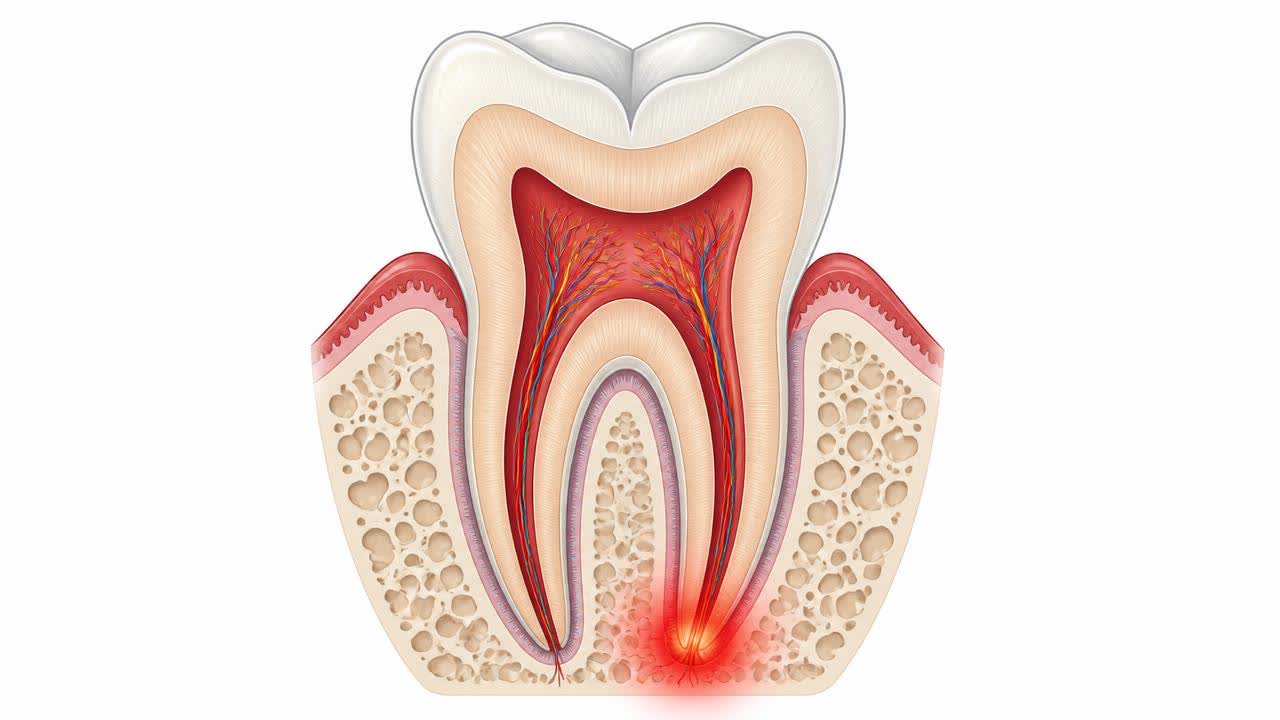
- Root canal treatment succeeds by removing bacteria from the canal system and then sealing it.
- The dam physically prevents small instruments, fragments and irrigating solutions from being swallowed or inhaled.
- Most patients find it more comfortable than treatment without one.
What it is
A rubber dam is a thin sheet of latex or non-latex material stretched over a small frame and clamped around the tooth being treated, isolating it from the rest of the mouth. Only the tooth protrudes through the sheet. It takes a couple of minutes to place, and patients breathe normally through the nose and mouth around it.
It has been standard in endodontics for well over a century, and its use is mandated by professional guidelines for root canal treatment in most countries. Its use in adhesive restorative dentistry — bonded fillings, veneers, bonded crowns — is less universal but strongly evidence-supported.
Why it changes the outcome
Root canal treatment succeeds by removing bacteria from the canal system and then sealing it. Saliva is loaded with bacteria, so a canal that is repeatedly re-contaminated by leaking saliva during treatment cannot be predictably disinfected. Studies consistently associate rubber dam use with higher long-term success rates in endodontics.
Adhesive dentistry has the same dependence on a dry field. Composite and ceramic bonding chemistry fails in the presence of moisture — the bond strength falls, the margin leaks, the restoration stains at the edge and eventually debonds or decays underneath. A veneer or a bonded restoration placed in a contaminated field can look perfect on the day and fail within a few years.
Safety
The dam physically prevents small instruments, fragments and irrigating solutions from being swallowed or inhaled. Endodontic files are fine and slippery; sodium hypochlorite, the standard canal irrigant, is caustic to soft tissue. Both risks are essentially eliminated by isolation, which is the reason it is treated as a safety standard rather than a preference.
It also retracts the cheek, lip and tongue away from the field. That protects the soft tissues from rotary instruments and gives the operator an unobstructed view — better visibility means less removal of healthy tooth structure.
What it is like for the patient
Most patients find it more comfortable than treatment without one. The tongue and cheek stop being in the way, water spray and debris no longer reach the throat, and there is far less need to rinse and spit, so appointments run faster and with fewer interruptions. Anyone who finds the clamp uncomfortable is anaesthetised for that tooth in any case.
If you are having root canal treatment and no dam is being used, it is entirely reasonable to ask why. Occasionally there is a genuine reason — a tooth broken down below the gum needing build-up first, or a patient who cannot tolerate it. Routine omission is not a good sign.
Questions patients ask us
- Is a rubber dam necessary for a root canal?
- It is the accepted standard of care. Isolation from saliva is what allows the canal system to be disinfected and sealed predictably, and success rates are measurably better when it is used. Omitting it should be the rare exception, with a clinical reason.
- Can I breathe with a rubber dam in place?
- Yes, entirely normally. The sheet covers only one tooth region and leaves the airway completely clear; you breathe through the nose and around the dam. Patients with severe nasal blockage should mention it so the isolation can be adapted.
- Does placing it hurt?
- No. The clamp sits on the tooth, and the tooth is already anaesthetised for the procedure. Some pressure on the gum around the clamp is normal and settles immediately once it is removed.
- Is it used for fillings too?
- It should be for bonded restorations, veneers and bonded crowns, because the adhesive chemistry fails if the surface is contaminated with saliva. Simple procedures on easily isolated teeth may use alternative isolation, but adhesive work benefits substantially.
Sources and further reading
Guidance from professional and public health bodies. Clinical decisions here are made on your own examination and radiographs.
- 1.Endodontic diagnosis terminology and treatment guidance — American Association of Endodontists
- 2.Guidelines for the management of traumatic dental injuries — International Association of Dental Traumatology
- 3.Antimicrobial prescribing for dental infection — NICE (UK)
- 4.Oral health — fact sheet and global status report — World Health Organization
- 5.Policy statements and oral health definitions — FDI World Dental Federation
- 6.Dental health — conditions, treatments and patient guidance — NHS (UK)
- 7.Systematic reviews of oral and dental interventions — Cochrane Oral Health
- 8.Regulatory framework and dental education standards in India — Dental Council of India
When to see us
Get examined without waiting if any of the following applies to you:
- Facial or neck swelling, difficulty swallowing, opening the mouth or breathing — this is an emergency
- Pain with fever, or swelling that is spreading rather than settling
- A tooth knocked out or pushed out of position after an injury — time matters
- Pain that wakes you at night or does not respond to ordinary painkillers
Get a written plan and cost before you commit
If this is what you are dealing with, the next step is a consultation with radiographs — pain & emergencies cases are seen by the specialist who handles that field. You get a written plan and staged cost before anything begins.
reception@dramitsharmahospital.comThis article is general education and does not replace an in-person examination, radiographs or a diagnosis by a qualified dentist.
Clinical terms in this article
Related in Pain & Emergencies
Tooth Pain and Sensitivity: Causes, Relief and When to See a Dentist
Why teeth hurt or react to hot and cold, the difference between everyday sensitivity and a warning sign, and what treatment usually follows.
Root Canal Treatment Explained
Why a tooth needs root canal therapy, what happens during single-sitting endodontics, and why crowns follow.
Tooth Pain and Dental Emergencies
How to identify a genuine dental emergency, what to do in the first hour, and when to call the hospital immediately.
Reversible vs Irreversible Pulpitis Symptoms and Treatment Options
Understanding reversible vs irreversible pulpitis is essential when managing dental pain. This guide explains their anatomical causes, diagnostic criteria, clinical symptoms, and evidence-based treatments ranging from conservative restorations to root canal therapy and emergency care.
Differences Between a Tooth Abscess and Gum Abscess
A dental abscess is a localised collection of pus caused by bacterial infection. Distinguishing between a tooth abscess (periapical) and a gum abscess (periodontal) is vital, as their anatomical origins, clinical presentations, diagnostic pathways, and definitive treatments differ fundamentally.
Why Tooth Pain Gets Worse When Lying Down
Experiencing toothache worse lying down typically indicates elevated pulpal or periapical pressure driven by increased cranial blood flow when supine. This guide explains pulpal anatomy, underlying causes, diagnostic pathways, evidence-based treatments, and critical red flags requiring emergency care.