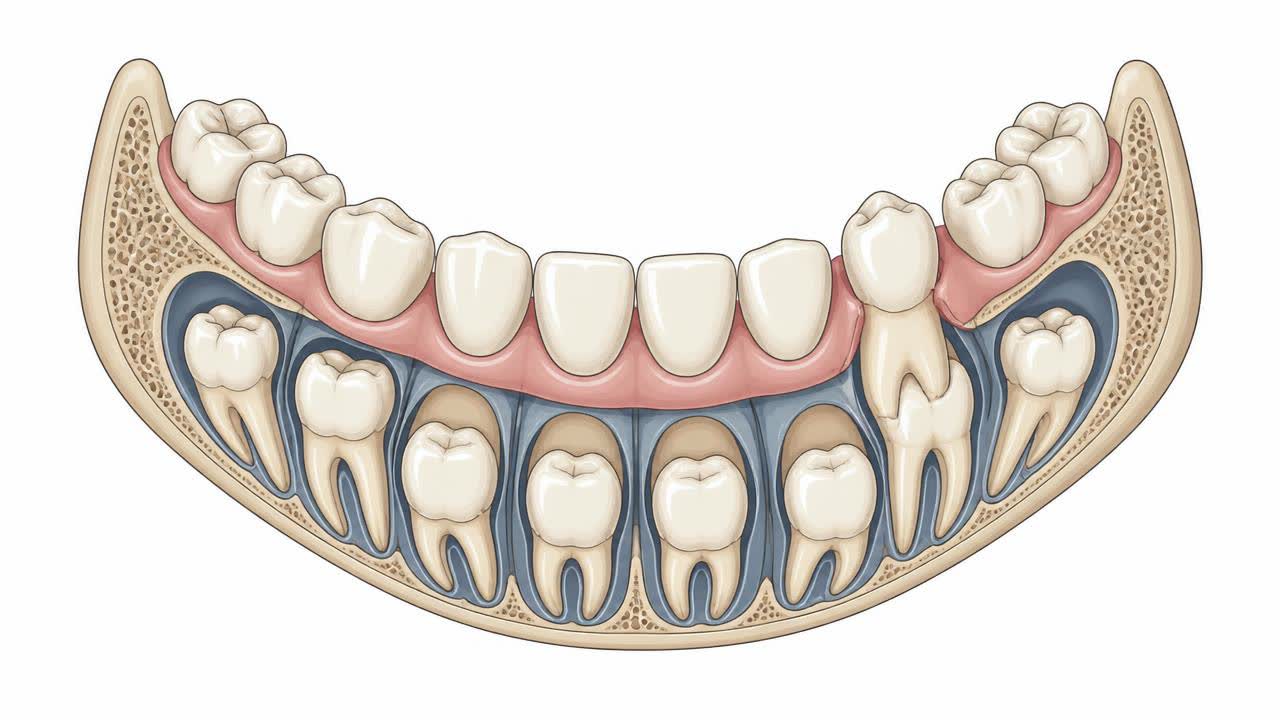
At a glance
- A retained milk tooth occurs when a primary (baby) tooth remains in the mouth long past the age when it should have naturally fallen out.
- Parents can often spot a potential issue if the corresponding permanent tooth is starting to appear in the mouth while the baby tooth remains firmly in place.
- If it is determined that a retained milk tooth needs to be removed, the procedure is generally straightforward and managed with care.
- Early detection and treatment of retained milk teeth significantly reduce the likelihood of needing complex orthodontic treatment later in life.
- We understand that the thought of a dental extraction can be worrying for both children and parents.
What are Retained Milk Teeth?
A retained milk tooth occurs when a primary (baby) tooth remains in the mouth long past the age when it should have naturally fallen out. This usually happens because the permanent tooth underneath is either missing, positioned incorrectly, or the root of the baby tooth has not resorbed as expected. If left untreated, these retained teeth can cause crowding or misalignment of the incoming adult permanent teeth.
At Dr. Amit Sharma Super Speciality Dental Hospital, we monitor your child’s dental development through regular examinations. Identifying a retained tooth early is key to ensuring that the permanent dentition aligns correctly. We will assess the position of the permanent tooth using clinical examination and, if necessary, dental X-rays to determine the best course of action to maintain your child's future dental health.
Signs Your Child May Have One
Parents can often spot a potential issue if the corresponding permanent tooth is starting to appear in the mouth while the baby tooth remains firmly in place. You might notice the permanent tooth erupting behind or beside the baby tooth, which is a clear indicator that the baby tooth is not moving as it should. Any persistent blockage should be reviewed by a professional.
Additionally, if your child is approaching the age where certain teeth should have been replaced and you see no signs of loose baby teeth, it is worth a consultation. Some children naturally have a delayed eruption pattern, but a professional assessment ensures that there are no underlying developmental issues that require intervention. We are here to provide clarity and peace of mind for parents.
The Extraction Process
If it is determined that a retained milk tooth needs to be removed, the procedure is generally straightforward and managed with care. Our dental team ensures that your child is comfortable throughout the process, using effective local anaesthesia to numb the area. We focus on creating a relaxed atmosphere so your child feels safe and knows what to expect during their visit at our hospital.
After the extraction, we provide detailed aftercare instructions to ensure a quick and comfortable recovery. This typically includes advice on managing minor discomfort and tips for keeping the area clean as it heals. Our primary goal is to facilitate the healthy eruption of the permanent tooth, ensuring that your child’s smile remains well-aligned and free from complications associated with retained primary teeth.
Preventing Long-term Issues
Early detection and treatment of retained milk teeth significantly reduce the likelihood of needing complex orthodontic treatment later in life. By creating the necessary space at the right time, we allow the permanent teeth to erupt into their optimal positions naturally. This proactive approach saves your child from unnecessary dental crowding and potential bite problems as they continue to grow into their teenage years.
Regular check-ups are the most effective way to prevent these issues from becoming more complicated. During your child's routine visits to Dr. Amit Sharma Super Speciality Dental Hospital, we track the progress of their tooth eruption carefully. If we notice any concerns, we will discuss them with you immediately, ensuring you are fully informed and involved in every step of your child’s dental care journey.
Supportive Care at Our Hospital
We understand that the thought of a dental extraction can be worrying for both children and parents. That is why our team at Dr. Amit Sharma Super Speciality Dental Hospital is trained in child-friendly techniques designed to minimise anxiety. We take the time to explain the process in simple, reassuring terms, ensuring that your child feels supported and empowered throughout their dental treatment experience.
If your child has specific needs or significant dental anxiety, we offer various management strategies to ensure their comfort. Our priority is to make every visit as positive as possible, focusing on gentle care and high-quality outcomes. If you suspect your child has a retained milk tooth, please do not hesitate to contact our helpline at 9314403502 to schedule a professional consultation.
Questions patients ask us
- What causes a milk tooth to be retained?
- A milk tooth is often retained because the permanent tooth beneath it has not successfully caused the baby tooth's root to resorb, or because the permanent tooth is missing or misaligned. Sometimes, it is simply a delay in natural development that our dental team can monitor during regular check-ups.
- Is it always necessary to extract a retained baby tooth?
- Not always. Sometimes the tooth may eventually fall out on its own. However, if the retained tooth is causing the permanent tooth to erupt in the wrong position or causing crowding, extraction is often recommended to ensure the long-term health and proper alignment of your child's permanent adult smile.
- Will my child feel pain during the extraction?
- Our priority is your child's comfort. We use effective local anaesthetic to numb the area thoroughly, so they should not feel any pain during the procedure. We focus on a gentle, calm approach to help your child feel relaxed and safe throughout their entire experience at our hospital.
- How can I check if my child has a retained tooth?
- Keep an eye on their tooth eruption; if you see a permanent tooth starting to appear but the corresponding baby tooth is still firm, this could be a sign. The best way to know for sure is to schedule a check-up at Dr. Amit Sharma Super Speciality Dental Hospital for a professional evaluation.
Sources and further reading
Guidance from professional and public health bodies. Clinical decisions here are made on your own examination and radiographs.
- 1.Best practice policies and clinical recommendations — American Academy of Pediatric Dentistry
- 2.Delivering better oral health — an evidence-based toolkit — Public Health England / OHID
- 3.Oral health — fact sheet and global status report — World Health Organization
- 4.Policy statements and oral health definitions — FDI World Dental Federation
- 5.Dental health — conditions, treatments and patient guidance — NHS (UK)
- 6.Systematic reviews of oral and dental interventions — Cochrane Oral Health
- 7.Regulatory framework and dental education standards in India — Dental Council of India
When to see us
Get examined without waiting if any of the following applies to you:
- Facial swelling, fever or refusal to eat or drink in a child — seek same-day care
- Dental injury to a child's tooth, especially if it is displaced or knocked out
- A dark or discoloured tooth, or a lump on the gum above a tooth
Get a written plan and cost before you commit
If this is what you are dealing with, the next step is a consultation with radiographs — children's dentistry cases are seen by the specialist who handles that field. You get a written plan and staged cost before anything begins.
reception@dramitsharmahospital.comThis article is general education and does not replace an in-person examination, radiographs or a diagnosis by a qualified dentist.
Clinical terms in this article
Related in Children's Dentistry
Children's Dental Care by Age
First visit timing, fluoride and sealants, why milk teeth matter, and managing dental anxiety in children.
Pulpotomy vs Pulpectomy in Baby Teeth Explained
This clinical guide clarifies the differences between a pulpotomy and a pulpectomy in primary teeth. Learn about deciduous pulp anatomy, diagnostic criteria, clinical steps, restorative crowns, post-operative care, and when emergency dental attention is necessary.
Regenerative Endodontics for Immature Teeth with Pulp Necrosis
A regenerative endodontic procedure restores vascularity and tissue vitality to immature permanent teeth affected by pulp necrosis. This evidence-based guide details diagnostic protocols, biologically based revascularisation steps, treatment comparisons, recovery expectations, and long-term tooth preservation strategies.
Apexification Procedure for Immature Permanent Teeth in Children
An apexification procedure is a specialised dental intervention designed to treat non-vital, immature permanent teeth in children. It creates a calcified apical barrier, enabling effective root canal obturation while preserving the natural tooth within the developing jaw.
Apexogenesis Procedure to Preserve Pulp Vitality in Children
Apexogenesis is a vital pulp therapy that preserves living pulp tissue in immature permanent teeth of children. By maintaining vascularity, it enables continued root lengthening, dentinal wall thickening, and natural apical closure following traumatic injury or deep decay.
Palatal Expanders for Children: How Rapid Palatal Expansion Works
A clinical guide to rapid palatal expansion in children. Learn how a palate expander for kids corrects transverse maxillary constriction, posterior crossbites, and severe crowding before midpalatal suture fusion during natural skeletal development.