At a glance
- Back molars are the workhorses of your mouth, essential for chewing food efficiently and distributing the significant forces of your bite.
- When a molar is lost, the surrounding teeth often start to shift, tilt, or drift into the empty space.
- Your jawbone relies on the stimulation provided by your tooth roots to remain healthy and dense.
- We offer several reliable ways to replace your missing molars, including dental implants and, in some cases, implant-supported bridges.
- If you have a missing molar, it is important to have it evaluated by our team.
Professional Assessment in Jaipur
If you have a missing molar, it is important to have it evaluated by our team. We can explain exactly how it is affecting your bite and your oral health, and help you decide on the best path forward. At Dr. Amit Sharma Super Speciality Dental Hospital, we are dedicated to providing ethical, long-term restorative care that ensures you can eat comfortably and maintain a healthy, stable bite for many years.
To schedule an evaluation or to speak with our experts, please call our helpline on 9314403502. We are here to answer your questions and provide professional guidance to help you protect your smile. Our commitment is to ensure you understand the importance of restoring your missing back molars and to help you maintain your health and function every single day in Jaipur.
The Role of Back Molars
Back molars are the workhorses of your mouth, essential for chewing food efficiently and distributing the significant forces of your bite. When one or more are missing, your remaining teeth often have to work harder, which can lead to premature wear or even damage to your other teeth. Furthermore, the absence of these teeth can have a direct impact on your jawbone health and your ability to enjoy a full, varied diet.
At Dr. Amit Sharma Super Speciality Dental Hospital, we frequently see patients who feel that because a missing molar isn't visible, it doesn't need to be replaced. However, clinically, we know that replacing these teeth is vital for the long-term balance of your bite and the overall health of your mouth, preventing issues that can become more complex and expensive to solve later on.
Preventing Further Dental Problems
When a molar is lost, the surrounding teeth often start to shift, tilt, or drift into the empty space. This shifting can change your bite, cause food to get trapped more easily, and lead to gum inflammation or decay. In addition, the opposing tooth—the one that used to meet the missing molar—may slowly start to erupt out of its socket, which can eventually destabilise that tooth and cause bite problems.
By replacing your missing molars, we stop this chain reaction. It restores the proper balance of your bite, protects your remaining teeth from excess strain, and ensures that your entire mouth continues to function as it should. We believe in proactive, preventative care that stops these problems before they happen, saving you from future discomfort and more extensive dental treatments as you age.
Maintaining Bone Health
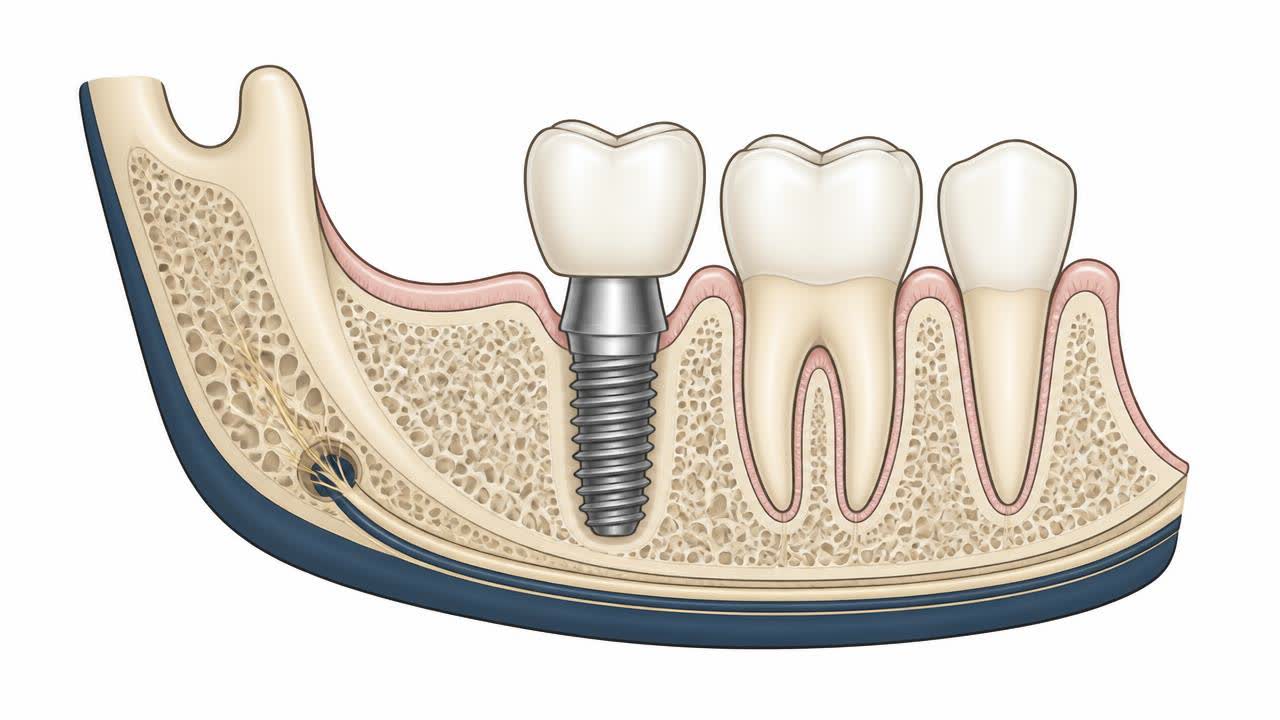
Your jawbone relies on the stimulation provided by your tooth roots to remain healthy and dense. When you lose a molar, the bone in that area begins to resorb or fade away. This bone loss can eventually impact the stability of the teeth next to the gap and even change the contour of your face over time. Implants are the only solution that replaces the root, providing the stimulation necessary to preserve your bone density.
Restoring your back molars with dental implants is a long-term investment in your facial structure and your bone health. We assess your bone volume using modern diagnostics to ensure that we can provide a stable, long-lasting replacement that prevents further bone loss. This is an essential part of our comprehensive approach to oral care at our Jaipur clinic, ensuring your foundation remains strong and healthy.
Options for Molar Replacement
We offer several reliable ways to replace your missing molars, including dental implants and, in some cases, implant-supported bridges. Dental implants are usually the superior choice as they are independent and offer the highest level of stability for the high biting forces that back teeth must endure. We will assess your specific oral anatomy and bite to help you choose the best solution for your needs.
Whether you need one molar replaced or several, we provide professional, evidence-based care to ensure the result is functional, comfortable, and durable. We discuss your options clearly, explaining the benefits of each, and help you find a plan that restores your chewing efficiency and protects your dental health. Our team is committed to your comfort and your long-term success.
Questions patients ask us
- Do I really need to replace my back teeth?
- Yes, it is highly recommended. While they aren't visible when you smile, your back molars are essential for chewing and bite stability. Replacing them prevents surrounding teeth from shifting, protects your bite from imbalance, and preserves your jawbone, ensuring long-term oral health and function for your future.
- What happens if I don't replace them?
- If you don't replace missing molars, your remaining teeth can shift into the empty space, causing bite misalignment, gum disease, and tooth decay. The opposing tooth may also drift, potentially leading to further tooth loss. Additionally, your jawbone will naturally resorb over time in the area where the tooth root is missing.
- Are implants good for back teeth?
- Yes, dental implants are excellent for replacing missing molars. They are strong, stable, and can handle the significant chewing forces required by back teeth. They are the closest functional replacement to a natural molar, providing long-term reliability and ensuring your bite stays balanced and healthy.
- Is it painful to have a molar replaced?
- We ensure you are completely comfortable during every stage of your treatment. We use modern, effective anaesthesia and sedation options if necessary. While some mild discomfort is normal after any surgical procedure, we provide detailed aftercare instructions to help you manage your recovery quickly and comfortably at home.
Sources and further reading
Guidance from professional and public health bodies. Clinical decisions here are made on your own examination and radiographs.
- 1.ITI Treatment Guide series and consensus statements — International Team for Implantology (ITI)
- 2.Consensus reports on implant dentistry — European Association for Osseointegration
- 3.Prosthodontic and edentulous-care patient guidance — American College of Prosthodontists
- 4.Oral health — fact sheet and global status report — World Health Organization
- 5.Policy statements and oral health definitions — FDI World Dental Federation
- 6.Dental health — conditions, treatments and patient guidance — NHS (UK)
- 7.Systematic reviews of oral and dental interventions — Cochrane Oral Health
- 8.Regulatory framework and dental education standards in India — Dental Council of India
When to see us
Get examined without waiting if any of the following applies to you:
- Pain, looseness or pus around an implant or a fixed bridge
- A crown, bridge or denture that has fractured or come away
- Gum swelling that keeps returning around the same restoration
Get a written plan and cost before you commit
If this is what you are dealing with, the next step is a consultation with radiographs — implants & missing teeth cases are seen by the specialist who handles that field. You get a written plan and staged cost before anything begins.
reception@dramitsharmahospital.comThis article is general education and does not replace an in-person examination, radiographs or a diagnosis by a qualified dentist.
Clinical terms in this article
Related in Implants & Missing Teeth
Missing Teeth: Comparing Dentures, Bridges and Implant Options
What happens if a missing tooth is left unreplaced, and how dentures, bridges and implants compare on comfort, longevity and bone health.
Dental Implants: A Complete Guide
How titanium implants replace missing teeth, who qualifies, the step-by-step timeline and how long they last.
Full Mouth Rehabilitation
Rebuilding a worn, collapsed or heavily damaged dentition with a sequenced, whole-mouth treatment plan.
Peri-Implant Mucositis Symptoms and Early Intervention
Peri-implant mucositis is a plaque-induced, reversible inflammatory lesion affecting the soft tissues surrounding a dental implant without bone loss. Prompt professional debridement, risk-factor modification, and meticulous biofilm control prevent progression to irreversible peri-implantitis.
Peri-Implantitis Symptoms Bone Loss and Implant Salvage
Peri-implantitis is an inflammatory condition causing progressive marginal bone loss around dental implants. Early detection, thorough decontamination, and advanced surgical salvage techniques can arrest bone destruction, resolve inflammation, and preserve implant stability.
Root Canal Retreatment vs Tooth Extraction and Implant
This clinical guide evaluates root canal retreatment versus tooth extraction and dental implant placement. Learn about biological tooth preservation, anatomical considerations, procedural steps, longevity, recovery expectations, and diagnostic criteria to make an informed oral healthcare decision.