At a glance
- After root canal treatment, a tooth that has lost a significant amount of its original structure due to extensive decay or previous large fillings may not have enough remaining tooth tissue to securely hold a crown.
- Once root canal treatment is complete, the dentist removes a small portion of the gutta-percha filling material from the upper part of the canal to create space for the post, while preserving an adequate seal further down the…
- Fibre posts have become widely preferred in modern dentistry due to their flexibility, which is closer to that of natural dentine, reducing the risk of root fracture compared with rigid metal posts.
- Teeth restored with a post, core, and crown function well for many years when properly maintained, though they should ideally be protected from excessive biting forces such as chewing ice or hard objects, as the underlying tooth…
Why Some Teeth Need a Post and Core
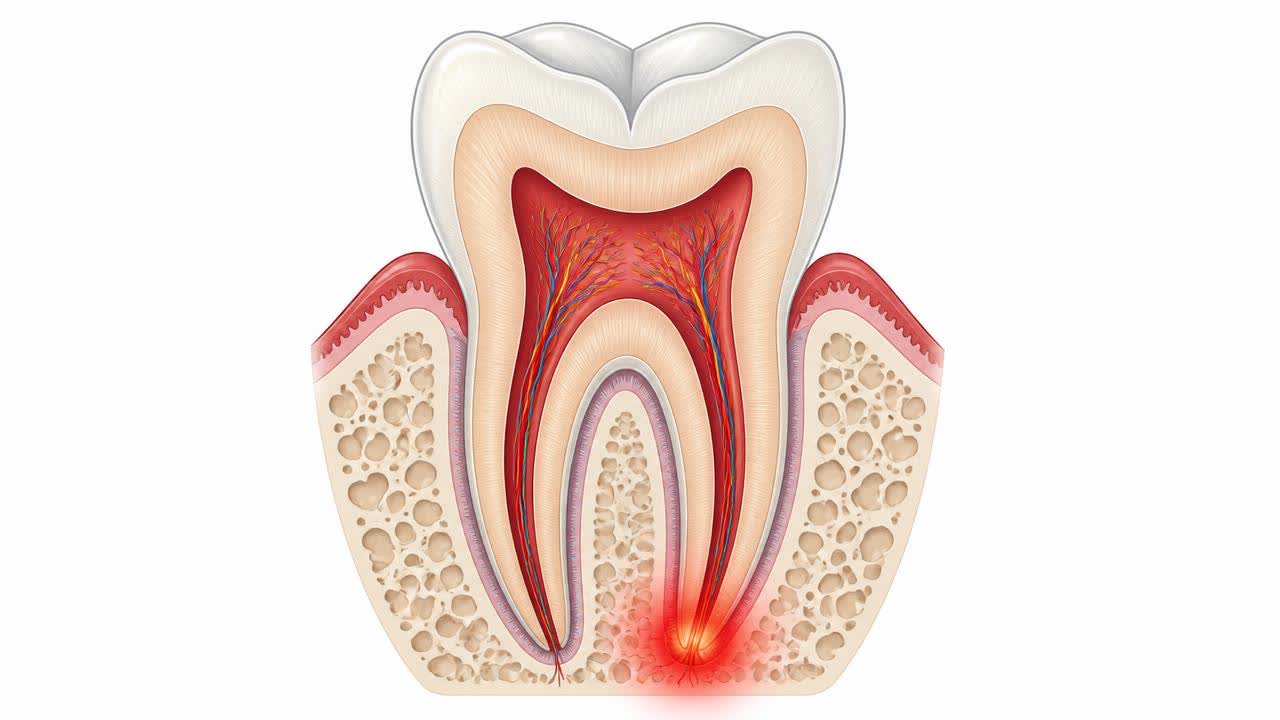
After root canal treatment, a tooth that has lost a significant amount of its original structure due to extensive decay or previous large fillings may not have enough remaining tooth tissue to securely hold a crown. In such cases, a post and core build-up is used to provide a stable foundation before the final crown is placed.
A post is a small rod, typically made of fibre-reinforced composite or metal, that is cemented into the cleaned root canal space to anchor a core material, usually a composite or amalgam filling, which is then shaped to resemble the remaining tooth structure ready to support the crown above it.
The Procedure Explained
Once root canal treatment is complete, the dentist removes a small portion of the gutta-percha filling material from the upper part of the canal to create space for the post, while preserving an adequate seal further down the canal to protect against reinfection. The post is then cemented securely into this space.
A core material is built up around the post to recreate the shape of a prepared tooth, effectively reconstructing lost structure. This built-up tooth is then prepared and shaped in the same way as any other tooth receiving a crown, with an impression or digital scan taken to fabricate the final crown restoration.
Choosing Between Fibre Posts and Metal Posts
Fibre posts have become widely preferred in modern dentistry due to their flexibility, which is closer to that of natural dentine, reducing the risk of root fracture compared with rigid metal posts. They also allow for a more aesthetic result under all-ceramic crowns, as they do not create a dark shadow through translucent restorations.
Metal posts, including cast post and core systems, may still be used in specific situations where additional strength is required, particularly in very short or heavily damaged roots. Your dentist will assess the individual case, including the amount of remaining tooth structure and the forces the tooth will bear, before recommending the most suitable option.
Long-Term Care of a Post, Core and Crown Restoration
Teeth restored with a post, core, and crown function well for many years when properly maintained, though they should ideally be protected from excessive biting forces such as chewing ice or hard objects, as the underlying tooth structure, though reinforced, remains more brittle than a natural, unrestored tooth.
Routine dental check-ups are important to monitor the condition of the crown margin, the underlying root, and the surrounding gum, as early detection of any issues such as recurrent decay at the crown edge can help preserve the restoration for the long term.
Questions patients ask us
- Is a post always needed after root canal treatment?
- No, a post is only needed when a significant amount of tooth structure has been lost, leaving insufficient support for a crown. Teeth with adequate remaining structure can often be restored with a filling and crown alone, without needing a post.
- Does placing a post weaken the root further?
- When placed correctly, particularly with a flexible fibre post, the procedure is designed to provide support without significantly increasing the risk of root fracture. Careful case selection and proper technique are important to minimise any additional stress on the root.
- How long does a post and core restoration last?
- With good oral hygiene, a well-fitted crown, and avoidance of excessive biting forces, a post and core restoration combined with a crown can last many years, though its longevity depends on individual factors such as bite forces and maintenance.
- Can a post and core be redone if it fails?
- In many cases, yes, particularly if the underlying root remains healthy and there is sufficient remaining structure. Your dentist will evaluate the condition of the root and remaining tooth before determining whether re-treatment with a new post and core is feasible.
Sources and further reading
Guidance from professional and public health bodies. Clinical decisions here are made on your own examination and radiographs.
- 1.Endodontic diagnosis terminology and treatment guidance — American Association of Endodontists
- 2.Guidelines for the management of traumatic dental injuries — International Association of Dental Traumatology
- 3.Antimicrobial prescribing for dental infection — NICE (UK)
- 4.Oral health — fact sheet and global status report — World Health Organization
- 5.Policy statements and oral health definitions — FDI World Dental Federation
- 6.Dental health — conditions, treatments and patient guidance — NHS (UK)
- 7.Systematic reviews of oral and dental interventions — Cochrane Oral Health
- 8.Regulatory framework and dental education standards in India — Dental Council of India
When to see us
Get examined without waiting if any of the following applies to you:
- Facial or neck swelling, difficulty swallowing, opening the mouth or breathing — this is an emergency
- Pain with fever, or swelling that is spreading rather than settling
- A tooth knocked out or pushed out of position after an injury — time matters
- Pain that wakes you at night or does not respond to ordinary painkillers
Get a written plan and cost before you commit
If this is what you are dealing with, the next step is a consultation with radiographs — pain & emergencies cases are seen by the specialist who handles that field. You get a written plan and staged cost before anything begins.
reception@dramitsharmahospital.comThis article is general education and does not replace an in-person examination, radiographs or a diagnosis by a qualified dentist.
Clinical terms in this article
Related in Pain & Emergencies
Tooth Pain and Sensitivity: Causes, Relief and When to See a Dentist
Why teeth hurt or react to hot and cold, the difference between everyday sensitivity and a warning sign, and what treatment usually follows.
Root Canal Treatment Explained
Why a tooth needs root canal therapy, what happens during single-sitting endodontics, and why crowns follow.
Tooth Pain and Dental Emergencies
How to identify a genuine dental emergency, what to do in the first hour, and when to call the hospital immediately.
Reversible vs Irreversible Pulpitis Symptoms and Treatment Options
Understanding reversible vs irreversible pulpitis is essential when managing dental pain. This guide explains their anatomical causes, diagnostic criteria, clinical symptoms, and evidence-based treatments ranging from conservative restorations to root canal therapy and emergency care.
Differences Between a Tooth Abscess and Gum Abscess
A dental abscess is a localised collection of pus caused by bacterial infection. Distinguishing between a tooth abscess (periapical) and a gum abscess (periodontal) is vital, as their anatomical origins, clinical presentations, diagnostic pathways, and definitive treatments differ fundamentally.
Why Tooth Pain Gets Worse When Lying Down
Experiencing toothache worse lying down typically indicates elevated pulpal or periapical pressure driven by increased cranial blood flow when supine. This guide explains pulpal anatomy, underlying causes, diagnostic pathways, evidence-based treatments, and critical red flags requiring emergency care.