At a glance
- Crowded or misaligned teeth are often difficult to clean, as they create overlapping surfaces where plaque and bacteria easily accumulate.
- While orthodontics ultimately improves your ability to keep your teeth clean, the treatment phase itself requires extra diligence.
- We monitor your gum health closely at every single adjustment appointment.
- If you have a history of gum disease, you can still consider orthodontic treatment, but it requires a careful, staged approach.
- Whether you are currently in treatment or just considering it, remember that your gum health is the foundation of your smile.
The Connection Between Alignment and Gums
Crowded or misaligned teeth are often difficult to clean, as they create overlapping surfaces where plaque and bacteria easily accumulate. Over time, this chronic buildup leads to inflammation of the gums, known as gingivitis, which can progress to more serious periodontal disease if left unaddressed. By straightening your teeth, orthodontics simplifies your daily oral hygiene routine, making it significantly easier to remove plaque and maintain healthy, vibrant gum tissue for the long term.
At Dr. Amit Sharma Super Speciality Dental Hospital, we believe that a healthy smile starts with healthy gums. Orthodontic treatment not only improves the appearance of your teeth but also plays a vital role in protecting your periodontal health. When your teeth are properly aligned, they are less prone to the chronic gum issues that often plague misaligned teeth, providing a solid foundation for your overall oral wellness and comfort.
Hygiene During Treatment
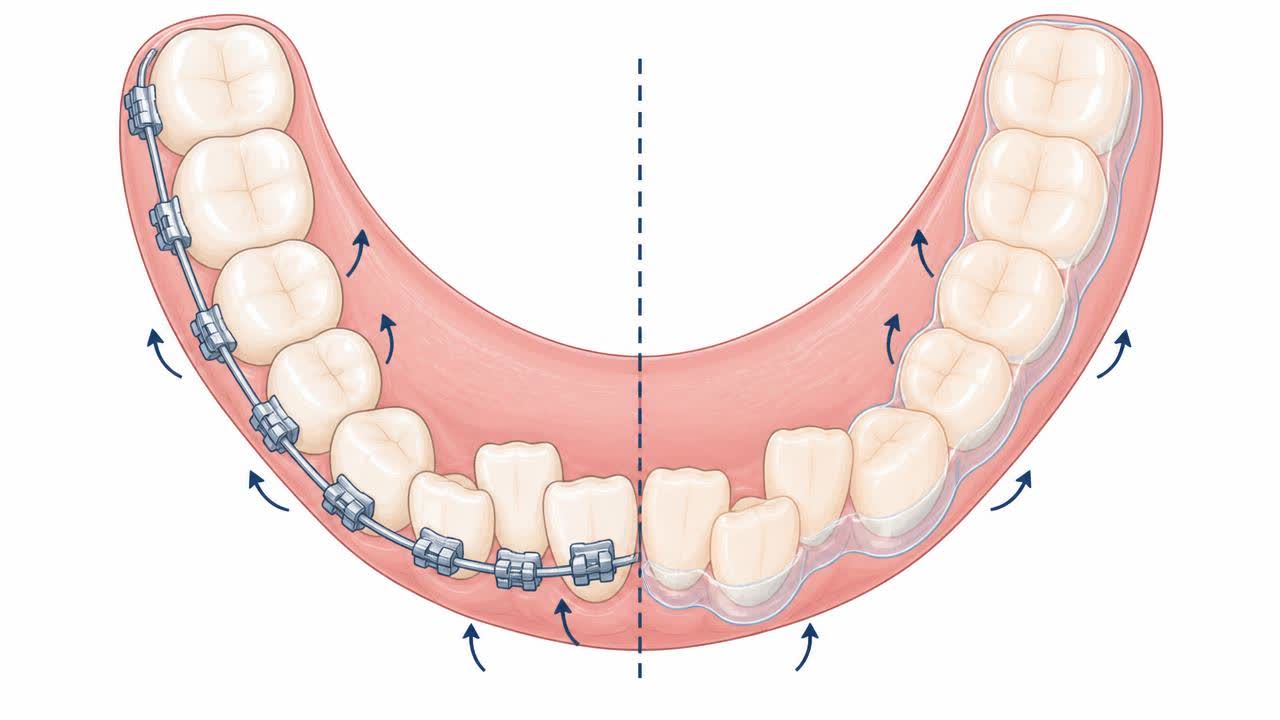
While orthodontics ultimately improves your ability to keep your teeth clean, the treatment phase itself requires extra diligence. Brackets, wires, and even clear aligners create new surfaces where food and plaque can get trapped. This is why we place such a strong emphasis on meticulous cleaning habits throughout your entire treatment journey. Using interdental brushes, floss threaders, and other recommended tools is essential for preventing inflammation and decay while your teeth are in motion.
Our team provides detailed training on how to effectively clean your teeth and appliances during every visit. We work closely with you to ensure you have the skills and the right tools to maintain excellent hygiene. Consistent, thorough cleaning is not just about keeping your breath fresh; it is vital for ensuring that your treatment stays on track and that your gum health remains optimal throughout the process.
Monitoring Gum Health Throughout
We monitor your gum health closely at every single adjustment appointment. Our specialists are trained to spot the earliest signs of inflammation or gum recession, allowing us to intervene quickly if needed. If we notice any concerns, we will provide specific advice or refer you to our periodontal team for further support, ensuring that your gums stay healthy while your teeth are moving toward their new positions.
This proactive, integrated care is a core part of our philosophy at our clinic in Jaipur. We understand that your orthodontic results should be as healthy as they are beautiful. By maintaining the health of your supporting tissues, we ensure that your teeth are stable and secure, not just for the duration of your treatment, but for the rest of your life after your braces are finally removed.
Treatment for Patients with Gum Disease
If you have a history of gum disease, you can still consider orthodontic treatment, but it requires a careful, staged approach. We must first ensure that any periodontal issues are stabilised and controlled before starting orthodontic movement. Our experts coordinate with our periodontal specialists to prepare your mouth, ensuring that the bone and gum tissue are healthy enough to support the safe, controlled movement of your teeth throughout the treatment period.
Your safety is our priority. We never rush the process; we ensure that your periodontal health is fully supported and resilient before proceeding with any orthodontic intervention. This collaborative, multi-disciplinary approach allows us to successfully treat even patients with complex dental histories, helping them achieve a functional, aesthetic smile while simultaneously improving the health and stability of their gums and supporting bone for the future.
Taking Care of Your Smile
Whether you are currently in treatment or just considering it, remember that your gum health is the foundation of your smile. We invite you to visit our facility to discuss how orthodontic treatment can support your periodontal health and overall wellness. Our team is dedicated to providing you with the expert guidance and support you need to ensure your journey is safe, healthy, and successful.
Contact Dr. Amit Sharma Super Speciality Dental Hospital at 9314403502 to schedule your consultation. We are here to help you achieve a beautiful, healthy smile that you can be proud of, with the peace of mind that comes from being under the care of a team that deeply values your long-term gum and dental health. Let us start your healthy, beautiful smile journey together today.
Questions patients ask us
- Why is it easier to clean straight teeth?
- Straight teeth have fewer overlapping areas and hidden nooks where plaque, bacteria, and food particles can accumulate. When your teeth are properly aligned, your toothbrush and floss can reach every surface easily, which significantly reduces your risk of developing gum disease, cavities, and chronic bad breath over time.
- Can braces cause gum disease?
- Braces themselves do not cause gum disease, but they make it easier for plaque to build up if you are not diligent with your hygiene. If you do not clean around your brackets and wires properly every single day, the plaque can quickly lead to gum inflammation, which is why hygiene is our top priority.
- What if I have bleeding gums during treatment?
- Bleeding gums are a sign of inflammation, which is common if you are having trouble keeping the area clean. It is important to contact us if you notice this, so we can check your hygiene technique, review your cleaning tools, and ensure there is nothing else affecting your gum health.
- Is orthodontics safe if I have had gum disease?
- Yes, provided the gum disease is fully treated and stable. We work in a team with our periodontists to ensure your gums are healthy and strong enough for orthodontic treatment. We will monitor you very closely throughout the entire process to protect your long-term dental health and stability.
Sources and further reading
Guidance from professional and public health bodies. Clinical decisions here are made on your own examination and radiographs.
- 1.Orthodontic treatment and retention — patient resources — American Association of Orthodontists
- 2.Patient information leaflets on appliances and retention — British Orthodontic Society
- 3.Oral health — fact sheet and global status report — World Health Organization
- 4.Policy statements and oral health definitions — FDI World Dental Federation
- 5.Dental health — conditions, treatments and patient guidance — NHS (UK)
- 6.Systematic reviews of oral and dental interventions — Cochrane Oral Health
- 7.Regulatory framework and dental education standards in India — Dental Council of India
When to see us
Get examined without waiting if any of the following applies to you:
- A broken bracket, poking wire or appliance causing ulceration
- A tooth that becomes painful, loose or discoloured during treatment
- Jaw joint pain, locking or a bite that has changed suddenly
Get a written plan and cost before you commit
If this is what you are dealing with, the next step is a consultation with radiographs — orthodontics cases are seen by the specialist who handles that field. You get a written plan and staged cost before anything begins.
reception@dramitsharmahospital.comThis article is general education and does not replace an in-person examination, radiographs or a diagnosis by a qualified dentist.
Clinical terms in this article
Related in Orthodontics
Aligners and Braces: Choosing the Right Option
Metal, ceramic and clear aligner treatment compared, duration, visibility, cost and suitability.
Tooth Extraction for Braces or Severe Crowding Issues
Orthodontic extractions involve the planned removal of select teeth to resolve severe crowding, correct bimaxillary protrusion, and balance dentoalveolar proportions. This clinical guide details diagnostic indications, extraction patterns, procedural steps, recovery, risks, and evidence-based non-extraction alternatives.
Maxillary Osteotomy for Open Bite Alignment and Correction
Maxillary osteotomy for open bite corrects severe vertical skeletal discrepancies through surgical repositioning of the upper jaw. Combined with orthodontics, this procedure restores chewing function, improves speech articulation, and ensures long-term occlusal and facial stability.
Surgically Assisted Rapid Palatal Expansion for Adult Palate Widening
Surgically assisted rapid palatal expansion (SARPE) is a combined orthodontic and surgical treatment designed to correct severe transverse maxillary deficiency in skeletally mature adults, widening the narrow upper jaw to restore functional occlusion, stability, and airway volume.
Surgical Exposure and Bracket Bonding for Impacted Canine Teeth
This clinical guide details impacted canine exposure surgery and bracket bonding. It explains anatomical causes, CBCT diagnostic pathways, open versus closed surgical techniques, orthodontic traction mechanisms, recovery protocols, and evidence-based strategies to manage complications.
Overbite vs Overjet: Key Differences and Correction Methods
This clinical guide clarifies the distinction between overbite (vertical overlap) and overjet (horizontal protrusion). It examines their aetiology, diagnostic pathways, classification, and evidence-based orthodontic and surgical correction methods across paediatric and adult populations.