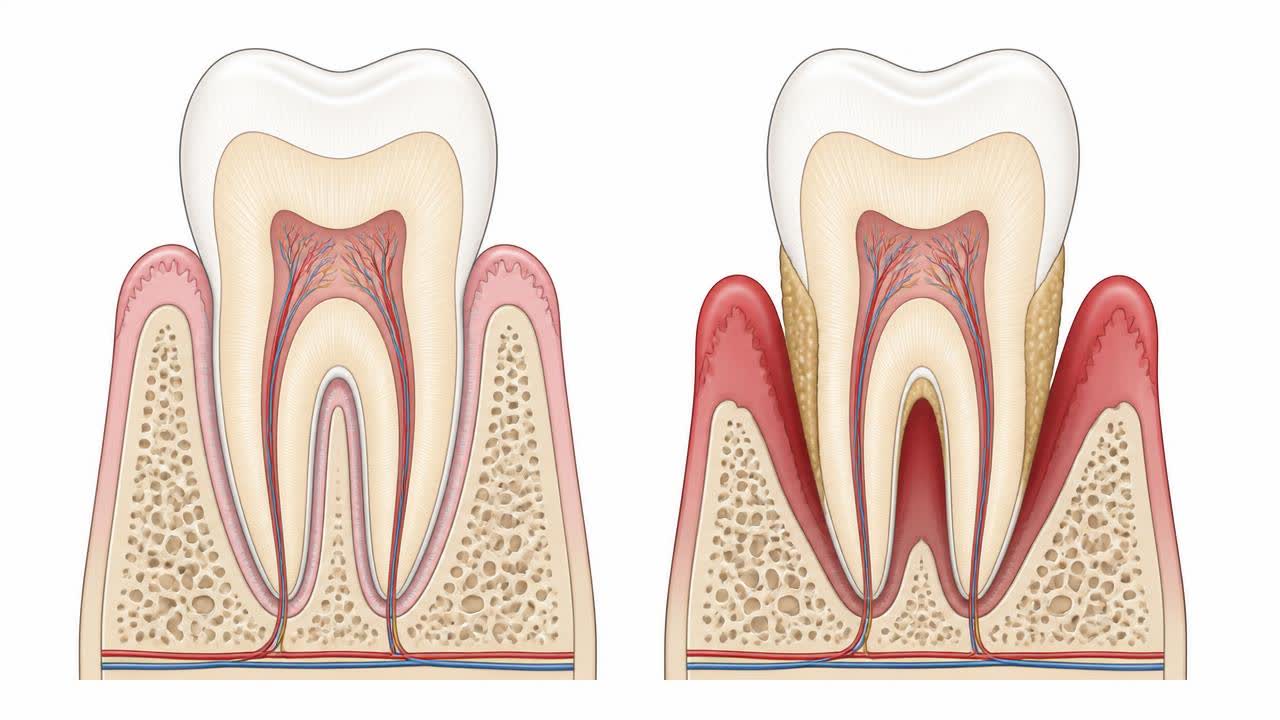
At a glance
- Medication-induced gum overgrowth is a condition where the gum tissue becomes swollen, thickened, and begins to grow over the surface of the teeth.
- Signs often appear as firm, pink, and enlarged gum tissue that begins to creep up the tooth crowns, particularly between the teeth.
- Management focuses on removing the plaque and tartar that accumulate within the overgrowth, which would otherwise worsen the inflammation.
- Because this condition is a side effect of medication, it is important for us to work in partnership with your doctor.
- Living with medication-induced overgrowth requires long-term commitment and proactive care.
What is Medication-Induced Overgrowth?
Medication-induced gum overgrowth is a condition where the gum tissue becomes swollen, thickened, and begins to grow over the surface of the teeth. This is a known side effect of certain prescription drugs, including some used for blood pressure, immunosuppression, and epilepsy. It is important to know that this condition is manageable, and you should never stop or change your medication without consulting your doctor first.
At Dr. Amit Sharma Super Speciality Dental Hospital, we work closely with you and your prescribing physician to monitor your gum health. We provide professional care to control the swelling and ensure that the overgrowth does not lead to other issues, such as deep pockets or chronic infection. Our goal is to help you maintain your dental health while you continue to manage your overall health needs.
Recognising the Signs
Signs often appear as firm, pink, and enlarged gum tissue that begins to creep up the tooth crowns, particularly between the teeth. This overgrowth can be quite resistant to your daily brushing and flossing, and it can create deep spaces where bacteria easily become trapped, leading to secondary inflammation and bleeding. The tissue can also feel uncomfortable, particularly when biting or chewing.
If you are taking any regular medication and notice changes in your gums, please book an appointment with us. We will conduct a thorough examination and assess the extent of the overgrowth. Early detection is important to manage the condition and prevent further complications. We are here to support you with expert advice and the care you need to stay comfortable and healthy.
Professional Management Approaches
Management focuses on removing the plaque and tartar that accumulate within the overgrowth, which would otherwise worsen the inflammation. We provide frequent, deep professional cleanings to keep the area as clean as possible. In some cases, if the overgrowth becomes significant and interferes with your health or comfort, we might discuss minor surgical options to gently remove the excess tissue and restore a healthier gum architecture.
Your role is crucial, as meticulous home care is the best way to minimise the accumulation of plaque in these areas. We will show you specialised cleaning techniques and recommend appropriate tools, such as interdental brushes, that you can use to clean effectively around the enlarged tissue. By working together, we can ensure that your gum health is managed effectively and that your oral comfort is maintained.
Collaborating with Your Physician
Because this condition is a side effect of medication, it is important for us to work in partnership with your doctor. In some instances, your physician might be able to suggest an alternative medication that does not cause this side effect, which can lead to a significant improvement. We provide the information needed for this conversation, ensuring you have the best possible care across all aspects of your health.
We are dedicated to providing clear, professional, and compassionate care. If you have questions about your medication and your gums, do not hesitate to ask. We are here to guide you, answer your questions, and ensure you receive the best care to keep your smile healthy and your oral comfort for the long term. Let us help you manage your health with confidence and expert support.
Long-Term Oral Health Goals
Living with medication-induced overgrowth requires long-term commitment and proactive care. By maintaining your professional maintenance schedule and staying diligent with your daily hygiene, you can keep the condition under control and prevent long-term damage to your supporting gum and bone structure. We are your partners in this process, ensuring you have the support you need for the long run.
At Dr. Amit Sharma Super Speciality Dental Hospital, we provide the expert care you need to manage all aspects of your oral health. If you are ready for a comprehensive assessment or have any concerns about your gums, please contact our helpline today. We are here to listen, to provide expert advice, and to help you maintain your health and your beautiful smile.
Questions patients ask us
- What medications are most likely to cause this?
- Several classes of drugs, including certain calcium channel blockers (often used for blood pressure), anticonvulsants (like phenytoin), and immunosuppressants (like cyclosporine), are known to cause gum overgrowth. Please inform us of all your current medications during your consultation so we can monitor your gum health.
- Should I stop my medication?
- No, you must never stop or change your prescribed medication without first consulting with your doctor. We will communicate with your physician to discuss your gum condition, and together they may explore whether an alternative medication is suitable for you.
- Can this be reversed?
- The gum overgrowth is often reversible if the underlying cause—the medication—is addressed or if you can maintain immaculate oral hygiene. If it is significant, we can discuss professional options to gently remove the excess tissue and restore the health and comfort of your gum line.
- Is it hard to keep my teeth clean with this?
- Yes, the overgrowth can make it more difficult to clean your teeth thoroughly, which can lead to further inflammation. We will teach you special techniques and provide you with recommended tools, like interdental brushes, to help you navigate around the enlarged tissue and keep it clean.
Sources and further reading
Guidance from professional and public health bodies. Clinical decisions here are made on your own examination and radiographs.
- 1.EFP clinical practice guidelines for periodontitis — European Federation of Periodontology
- 2.Classification of periodontal and peri-implant diseases — American Academy of Periodontology
- 3.Prevention and treatment of periodontal diseases in practice — Scottish Dental Clinical Effectiveness Programme
- 4.Oral health — fact sheet and global status report — World Health Organization
- 5.Policy statements and oral health definitions — FDI World Dental Federation
- 6.Dental health — conditions, treatments and patient guidance — NHS (UK)
- 7.Systematic reviews of oral and dental interventions — Cochrane Oral Health
- 8.Regulatory framework and dental education standards in India — Dental Council of India
When to see us
Get examined without waiting if any of the following applies to you:
- Gums that bleed without provocation, or bleeding that has become heavier
- Teeth that feel loose, are drifting, or gaps that are opening up
- Persistent bad breath or taste, gum abscesses, or pus on pressing the gum
Get a written plan and cost before you commit
If this is what you are dealing with, the next step is a consultation with radiographs — gums & prevention cases are seen by the specialist who handles that field. You get a written plan and staged cost before anything begins.
reception@dramitsharmahospital.comThis article is general education and does not replace an in-person examination, radiographs or a diagnosis by a qualified dentist.
Clinical terms in this article
Related in Gums & Prevention
Bleeding Gums and Gum Disease: A Complete Guide
What bleeding gums usually mean, how gingivitis progresses into periodontal disease, and the treatment path from scaling to gum surgery.
Gum Disease: Detection and Treatment
From reversible gingivitis to periodontitis, the warning signs, staged treatment and the link to overall health.
Preventive Dentistry and Home Care
The routine that prevents most dental disease: brushing technique, interdental cleaning, diet and recall visits.
Chronic Bad Breath Caused by Gum Infection
Chronic bad breath, or halitosis, is frequently driven by underlying gum disease. Subgingival bacteria produce volatile sulphur compounds within periodontal pockets. Effective resolution requires professional periodontal debridement, targeted biofilm disruption, and meticulous daily interdental hygiene rather than cosmetic masking.
Loose Permanent Teeth from Advanced Periodontal Disease
Loose teeth from advanced gum disease occur when severe chronic inflammation destroys the supporting alveolar bone and periodontal ligament. With timely periodontal therapy, splinting, and meticulous plaque control, many loose teeth can be stabilised and preserved without extraction.
Furcation Involvement and Bone Loss Between Roots
Furcation involvement describes bone loss between the roots of multi-rooted molars caused by advanced periodontal disease. This clinical guide explains its causes, diagnostic staging, surgical and non-surgical therapies, daily maintenance, and red flag symptoms requiring urgent care.