At a glance
- Biocompatibility refers to a material's ability to be placed within the human body without causing an adverse, harmful immune response.
- Titanium has been the gold standard for dental implants for several decades, supported by extensive clinical evidence proving its long-term safety and effectiveness.
- Zirconia is a high-performance, white-coloured ceramic that is an excellent, metal-free alternative to titanium.
- Your health history is our starting point.
- Your peace of mind is as important to us as the clinical outcome of your procedure.
What Does Biocompatibility Mean?
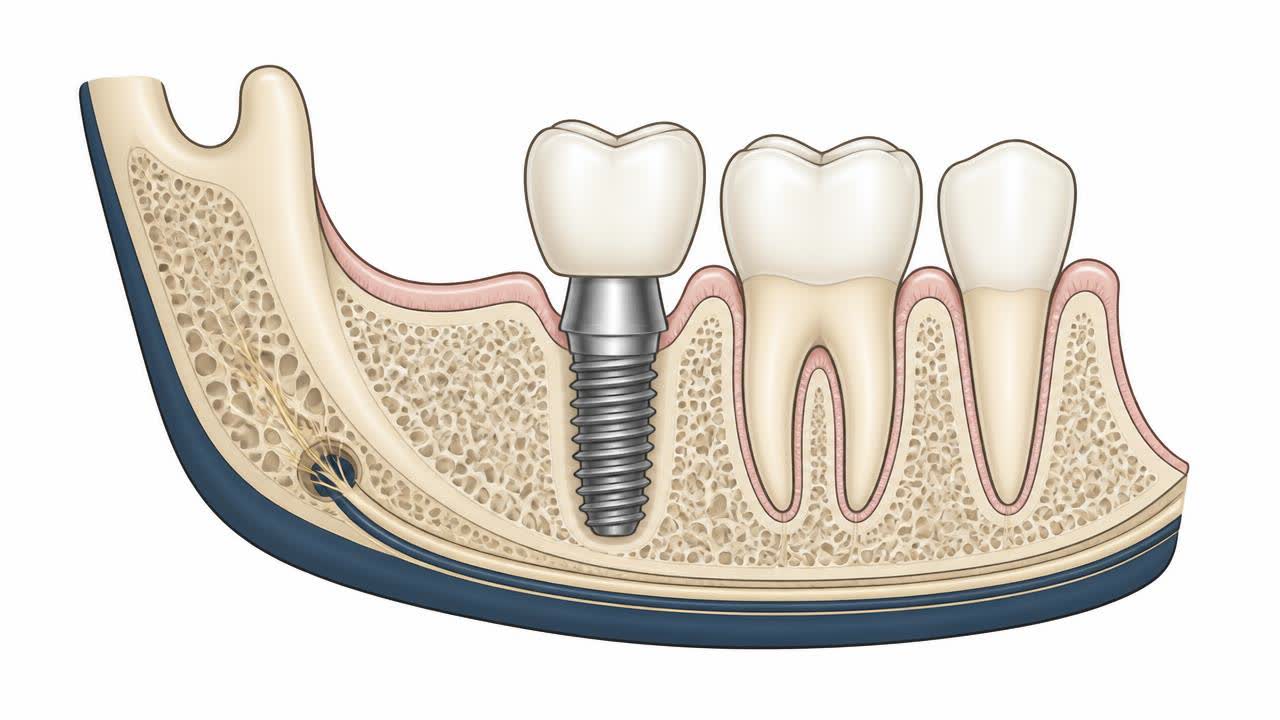
Biocompatibility refers to a material's ability to be placed within the human body without causing an adverse, harmful immune response. When it comes to dental implants, this is a fundamental requirement. The materials used, primarily high-grade titanium and zirconia, have been chosen specifically because they are exceptionally well-tolerated by the human body and readily integrate with bone, a process called osseointegration.
Most patients tolerate these materials without any issues at all. However, we understand that for some patients with a history of metal sensitivities or autoimmune conditions, the idea of having an implant can raise concerns. We take these concerns very seriously and will work with you to ensure that the chosen material is perfectly compatible with your unique health needs and sensitivities.
Titanium and its Proven Record
Titanium has been the gold standard for dental implants for several decades, supported by extensive clinical evidence proving its long-term safety and effectiveness. It is a highly biocompatible metal that naturally forms a thin, protective oxide layer on its surface, which prevents it from reacting with the surrounding tissues. This allows your bone to grow directly onto the implant surface without any negative immune reaction.
While it is extremely rare, some individuals have reported sensitivities to certain metal components. If you have a known history of severe metal allergies, it is essential that you share this information with us during your initial consultation. We can review your health history and, in some cases, discuss alternative materials that can achieve the same functional goals while avoiding any potential for adverse responses.
Zirconia: A Metal-Free Alternative
Zirconia is a high-performance, white-coloured ceramic that is an excellent, metal-free alternative to titanium. Because it is non-metallic, it is naturally inert and highly biocompatible. It does not contain any metal components, which makes it a preferred choice for patients who are concerned about potential sensitivities or who simply prefer to have metal-free materials in their mouth.
Zirconia is also well-known for being extremely gentle on the soft tissues of the gums. Its smooth, non-porous surface is resistant to bacterial accumulation, which helps in promoting a healthy gum environment around the implant. If you have concerns about titanium, we can discuss whether zirconia is a suitable alternative that will help you achieve the stability and aesthetics you are looking for.
Assessing Your Personal Needs
Your health history is our starting point. We conduct a thorough review of your medical status, including any known allergies or sensitivities to materials like metals or plastics. By having an open conversation, we can ensure that every aspect of your treatment plan, including the material used for your implant and abutment, is perfectly matched to your body's requirements.
We take a personalised approach, ensuring that your treatment is safe and effective. If you have specific concerns, we can provide you with more detailed information or, if necessary, coordinate with specialists to assess your sensitivity. Our priority is your comfort, health, and peace of mind, and we will work with you to make sure your treatment is a success.
Prioritising Your Comfort and Health
Your peace of mind is as important to us as the clinical outcome of your procedure. We believe that you should feel fully informed and confident in the materials used for your dental restoration. By choosing high-quality, biocompatible materials and taking the time to understand your individual sensitivities, we can ensure your experience is comfortable, positive, and healthy.
We invite you to discuss any questions you have about implant materials with our team during your consultation. We are dedicated to providing you with the very best care and helping you achieve the healthy, beautiful, and functional smile you deserve. Your health and your long-term wellness are at the heart of everything we do.
Questions patients ask us
- Are dental implants made of biocompatible materials?
- Yes, they are. Titanium and zirconia, the most common materials used, are both widely recognised for their exceptional biocompatibility. They are designed to integrate seamlessly with your body and bone tissue, without causing adverse reactions for the vast majority of patients.
- Can I have an allergic reaction to a titanium implant?
- Allergic reactions to titanium are extremely rare. The material is very well-tolerated by the human body. If you have a known history of severe metal sensitivities, we can review your medical records and discuss alternatives like zirconia, which is completely metal-free.
- Why choose zirconia over titanium?
- Zirconia is a ceramic that is naturally metal-free, making it an excellent choice for patients with concerns about metal sensitivities. It is also highly aesthetic and offers a great, stable foundation for your dental restoration, providing a natural look that mimics your own tooth structure.
- How do you ensure my implant is safe for me?
- We start with a thorough review of your health history, including any known allergies or sensitivities. This allows us to select materials that are best suited to your individual needs. We prioritise your safety and work closely with you to ensure your treatment plan gives you confidence and comfort.
Sources and further reading
Guidance from professional and public health bodies. Clinical decisions here are made on your own examination and radiographs.
- 1.ITI Treatment Guide series and consensus statements — International Team for Implantology (ITI)
- 2.Consensus reports on implant dentistry — European Association for Osseointegration
- 3.Prosthodontic and edentulous-care patient guidance — American College of Prosthodontists
- 4.Oral health — fact sheet and global status report — World Health Organization
- 5.Policy statements and oral health definitions — FDI World Dental Federation
- 6.Dental health — conditions, treatments and patient guidance — NHS (UK)
- 7.Systematic reviews of oral and dental interventions — Cochrane Oral Health
- 8.Regulatory framework and dental education standards in India — Dental Council of India
When to see us
Get examined without waiting if any of the following applies to you:
- Pain, looseness or pus around an implant or a fixed bridge
- A crown, bridge or denture that has fractured or come away
- Gum swelling that keeps returning around the same restoration
Get a written plan and cost before you commit
If this is what you are dealing with, the next step is a consultation with radiographs — implants & missing teeth cases are seen by the specialist who handles that field. You get a written plan and staged cost before anything begins.
reception@dramitsharmahospital.comThis article is general education and does not replace an in-person examination, radiographs or a diagnosis by a qualified dentist.
Clinical terms in this article
Related in Implants & Missing Teeth
Missing Teeth: Comparing Dentures, Bridges and Implant Options
What happens if a missing tooth is left unreplaced, and how dentures, bridges and implants compare on comfort, longevity and bone health.
Dental Implants: A Complete Guide
How titanium implants replace missing teeth, who qualifies, the step-by-step timeline and how long they last.
Full Mouth Rehabilitation
Rebuilding a worn, collapsed or heavily damaged dentition with a sequenced, whole-mouth treatment plan.
Peri-Implant Mucositis Symptoms and Early Intervention
Peri-implant mucositis is a plaque-induced, reversible inflammatory lesion affecting the soft tissues surrounding a dental implant without bone loss. Prompt professional debridement, risk-factor modification, and meticulous biofilm control prevent progression to irreversible peri-implantitis.
Peri-Implantitis Symptoms Bone Loss and Implant Salvage
Peri-implantitis is an inflammatory condition causing progressive marginal bone loss around dental implants. Early detection, thorough decontamination, and advanced surgical salvage techniques can arrest bone destruction, resolve inflammation, and preserve implant stability.
Root Canal Retreatment vs Tooth Extraction and Implant
This clinical guide evaluates root canal retreatment versus tooth extraction and dental implant placement. Learn about biological tooth preservation, anatomical considerations, procedural steps, longevity, recovery expectations, and diagnostic criteria to make an informed oral healthcare decision.