At a glance
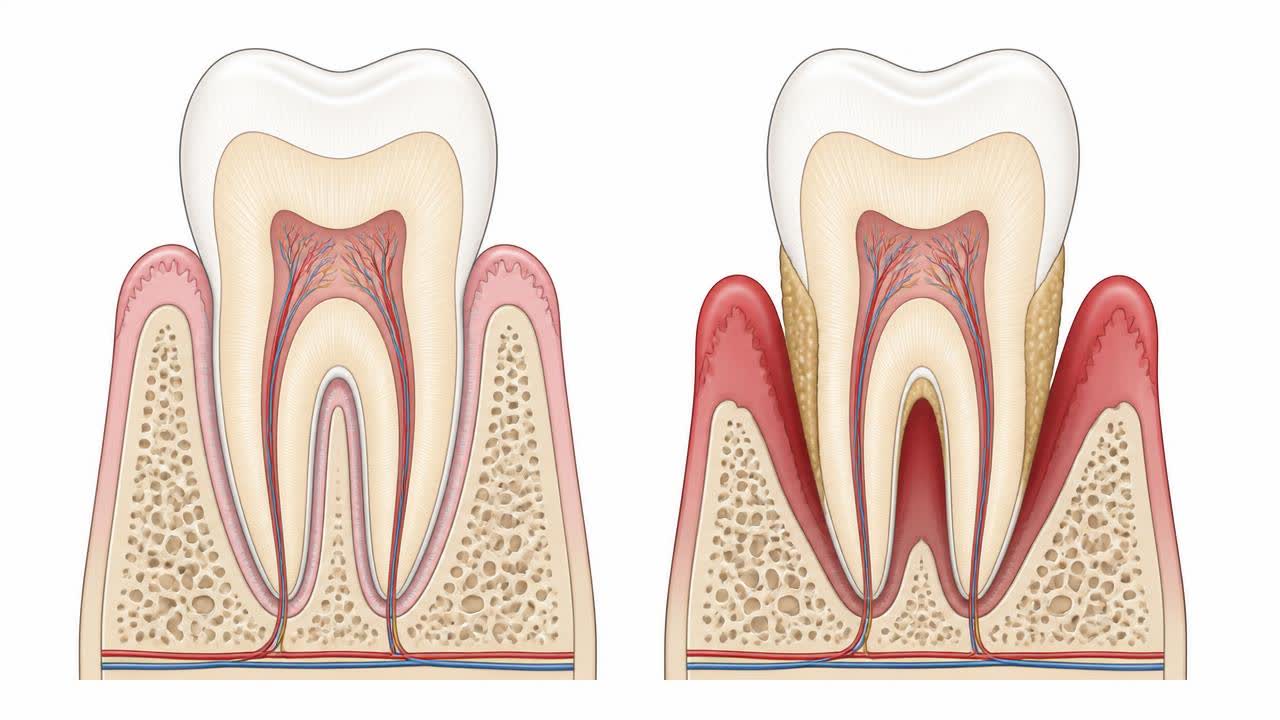
- Gum pockets are spaces that develop between your teeth and the surrounding gum tissue due to periodontal disease.
- To measure these pockets, we use a small, calibrated instrument called a periodontal probe.
- Understanding your numbers is an important part of your dental care.
- The primary goal of treating deep gum pockets is to reduce them and restore health to the tissue.
- Once pocket depths have been improved through professional care, maintenance is vital to prevent them from deepening again.
What Are Gum Pockets?
Gum pockets are spaces that develop between your teeth and the surrounding gum tissue due to periodontal disease. When plaque bacteria colonise these areas, they trigger an inflammatory response that causes the gums to detach from the teeth. Over time, these gaps deepen, creating an ideal environment for more bacteria to thrive, which further destroys the supporting bone and soft tissue.
Healthy gums typically have a shallow pocket depth, usually between one to three millimetres. Pockets deeper than this are clinical signs of periodontal disease that require professional attention. At Dr. Amit Sharma Super Speciality Dental Hospital, we monitor these depths during every routine check-up, as they provide us with critical information regarding the stability of your gums and the effectiveness of your home hygiene routine.
How We Measure Probing Depths
To measure these pockets, we use a small, calibrated instrument called a periodontal probe. This tool is gently inserted into the space between your tooth and gum at several points around each tooth. The depth is recorded in millimetres. The process is quick, virtually painless, and highly informative, serving as the gold standard for assessing the health of the periodontal support structure of your teeth.
Tracking these measurements over time allows us to see whether your gum health is improving, remaining stable, or worsening. It is a critical diagnostic step that helps us customise your care. If you notice persistent bleeding or feel like your gums are becoming sensitive, a full periodontal probing may be recommended to give us a clear picture of what is happening beneath the surface.
Treating Deep Pockets
The primary goal of treating deep gum pockets is to reduce them and restore health to the tissue. For many patients, a professional deep cleaning, known as scaling and root planning, is the first step. This procedure involves removing plaque and tartar from within the pocket and smoothing the root surface to encourage the gum tissue to reattach securely to the tooth.
In some cases, especially with very deep pockets, additional therapies or minor surgical interventions may be required to provide you with the best long-term results. We assess each case individually, choosing the most appropriate method to clear the infection and reduce the depth of your pockets. Our focus is always on your comfort and the preservation of your natural teeth through minimally invasive, highly effective techniques.
Maintaining Healthy Pockets
Once pocket depths have been improved through professional care, maintenance is vital to prevent them from deepening again. Consistent daily oral hygiene is the most important factor in keeping your gums healthy at home. This includes careful, daily flossing and brushing, which prevents the build-up of bacteria that leads to inflammation and further detachment of your gum tissue over time.
We also schedule periodic maintenance appointments to clean your teeth and reassess your pocket depths. This proactive approach helps us catch any recurrence of disease early and ensure that your gums remain in the best possible condition. If you are concerned about your gum health or have not had a professional check-up in a while, please contact our team today for an expert consultation.
Interpreting Your Results
Understanding your numbers is an important part of your dental care. A reading of one to three millimetres is generally considered healthy. Once readings reach four millimetres or more, it often indicates the presence of periodontal disease. These deeper pockets are harder to clean with a standard toothbrush or floss, meaning the bacteria within them continue to cause damage unless professional cleaning is performed.
If you have deep pockets, our team will talk you through the results, explaining exactly what they mean for your long-term oral health. We believe in transparency and patient education. By understanding your specific pocket depths, you can take an active role in your treatment, better appreciating why professional cleaning and dedicated home care are essential to halting the progression of gum disease.
Questions patients ask us
- What is a healthy pocket depth reading?
- A healthy pocket depth is typically between one and three millimetres. At this level, you can effectively clean the area with a standard toothbrush and floss. Depths of four millimetres or more are considered signs of periodontal disease that require professional intervention.
- Does periodontal probing hurt?
- The process is generally not painful, though you may feel some slight pressure as the dentist gently inserts the probe to measure the depth of the pocket. If your gums are particularly inflamed, there might be slight tenderness, but the information provided is invaluable for your care.
- Can deep pockets be reversed?
- Yes, in many cases, deep pockets can be successfully reduced through professional deep cleaning and improved oral hygiene. The goal is to allow the gum tissue to reattach to the tooth root and create a healthier, more easily cleanable environment for your daily routine.
- How often should I have my pocket depths measured?
- For healthy patients, we check your gum health during regular exams. If you have been diagnosed with periodontal disease, we recommend more frequent monitoring—often every three to four months—to track your progress and ensure the disease remains under control.
Sources and further reading
Guidance from professional and public health bodies. Clinical decisions here are made on your own examination and radiographs.
- 1.EFP clinical practice guidelines for periodontitis — European Federation of Periodontology
- 2.Classification of periodontal and peri-implant diseases — American Academy of Periodontology
- 3.Prevention and treatment of periodontal diseases in practice — Scottish Dental Clinical Effectiveness Programme
- 4.Oral health — fact sheet and global status report — World Health Organization
- 5.Policy statements and oral health definitions — FDI World Dental Federation
- 6.Dental health — conditions, treatments and patient guidance — NHS (UK)
- 7.Systematic reviews of oral and dental interventions — Cochrane Oral Health
- 8.Regulatory framework and dental education standards in India — Dental Council of India
When to see us
Get examined without waiting if any of the following applies to you:
- Gums that bleed without provocation, or bleeding that has become heavier
- Teeth that feel loose, are drifting, or gaps that are opening up
- Persistent bad breath or taste, gum abscesses, or pus on pressing the gum
Get a written plan and cost before you commit
If this is what you are dealing with, the next step is a consultation with radiographs — gums & prevention cases are seen by the specialist who handles that field. You get a written plan and staged cost before anything begins.
reception@dramitsharmahospital.comThis article is general education and does not replace an in-person examination, radiographs or a diagnosis by a qualified dentist.
Clinical terms in this article
Related in Gums & Prevention
Bleeding Gums and Gum Disease: A Complete Guide
What bleeding gums usually mean, how gingivitis progresses into periodontal disease, and the treatment path from scaling to gum surgery.
Gum Disease: Detection and Treatment
From reversible gingivitis to periodontitis, the warning signs, staged treatment and the link to overall health.
Preventive Dentistry and Home Care
The routine that prevents most dental disease: brushing technique, interdental cleaning, diet and recall visits.
Chronic Bad Breath Caused by Gum Infection
Chronic bad breath, or halitosis, is frequently driven by underlying gum disease. Subgingival bacteria produce volatile sulphur compounds within periodontal pockets. Effective resolution requires professional periodontal debridement, targeted biofilm disruption, and meticulous daily interdental hygiene rather than cosmetic masking.
Loose Permanent Teeth from Advanced Periodontal Disease
Loose teeth from advanced gum disease occur when severe chronic inflammation destroys the supporting alveolar bone and periodontal ligament. With timely periodontal therapy, splinting, and meticulous plaque control, many loose teeth can be stabilised and preserved without extraction.
Furcation Involvement and Bone Loss Between Roots
Furcation involvement describes bone loss between the roots of multi-rooted molars caused by advanced periodontal disease. This clinical guide explains its causes, diagnostic staging, surgical and non-surgical therapies, daily maintenance, and red flag symptoms requiring urgent care.