At a glance
- Guided Tissue Regeneration (GTR) is an advanced periodontal procedure designed to encourage the body to regrow lost bone and soft tissue around your teeth.
- During the procedure, the area is gently accessed under local anaesthesia.
- GTR is typically recommended when there is localised, significant bone loss around a tooth, but the tooth itself is still stable enough to be saved.
- The primary benefit of GTR is the potential to restore lost support and avoid the need for tooth extraction.
- Your dedication is crucial for the success of GTR.
Understanding Guided Tissue Regeneration
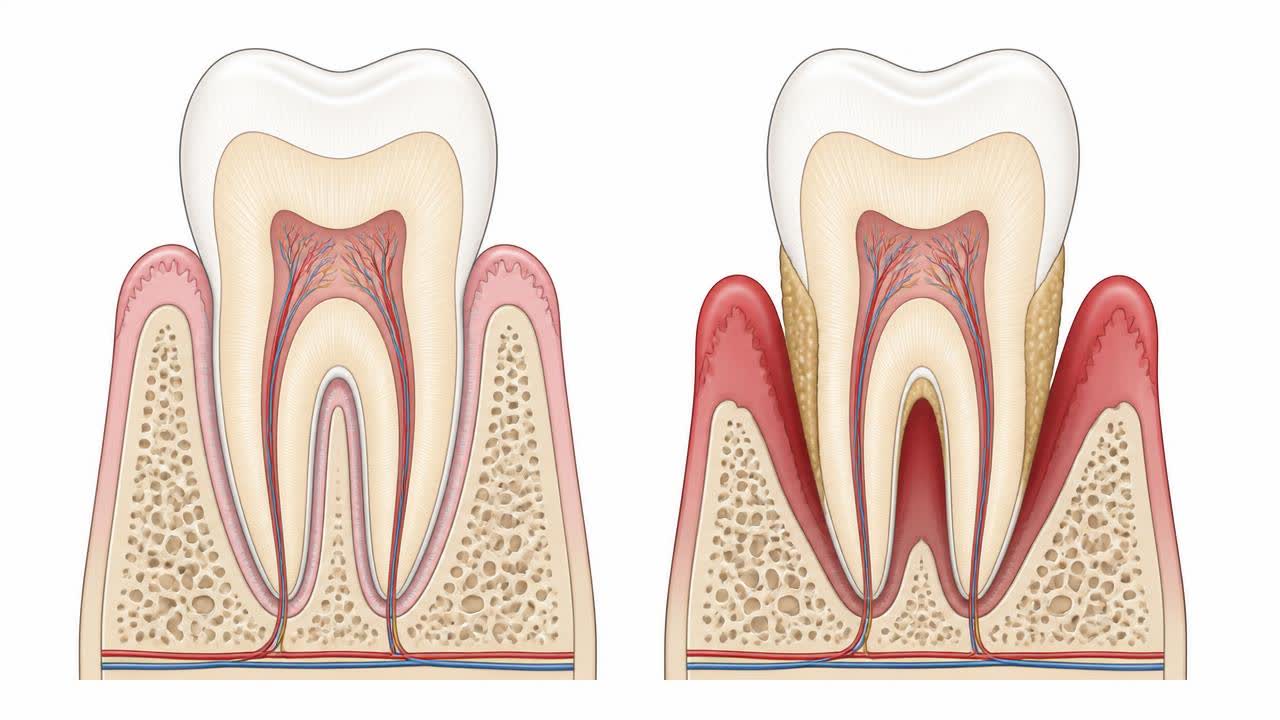
Guided Tissue Regeneration (GTR) is an advanced periodontal procedure designed to encourage the body to regrow lost bone and soft tissue around your teeth. When gum disease causes significant destruction, simple cleaning is not enough to reverse the damage. GTR uses specialised materials to create a space that allows new, healthy tissue to regenerate, preventing the faster-growing gum tissue from filling the area instead.
At Dr. Amit Sharma Super Speciality Dental Hospital, we offer this sophisticated treatment for patients who have lost critical support for their teeth. By stimulating regeneration, we not only save teeth that might otherwise be lost but also improve the long-term structural integrity of your entire mouth. It is a powerful example of how we combine modern science with expert clinical skill.
The Procedure and Materials
During the procedure, the area is gently accessed under local anaesthesia. We then place a biocompatible membrane over the area where the bone has been lost. This membrane acts as a scaffold and a barrier, preventing soft tissue from growing too quickly into the site and creating the necessary space for the bone and supporting fibres to regenerate naturally over several months.
In some cases, we may also add bone grafting material to provide further support for the regeneration process. The membrane may be temporary and removed later, or it may be a resorbable material that the body naturally breaks down. We ensure that you are comfortable throughout the treatment and provide you with clear guidance for the post-operative period to ensure optimal success.
When GTR is Recommended
GTR is typically recommended when there is localised, significant bone loss around a tooth, but the tooth itself is still stable enough to be saved. It is most effective for specific types of bone defects where the remaining tissue can support the regeneration process. We assess your condition thoroughly using digital X-rays and clinical measurements to determine if you are a candidate for this specialised treatment.
Because this procedure focuses on restoring lost architecture, it is a key part of our approach to saving natural teeth. We believe in providing the most conservative and long-lasting solutions possible. If you are facing advanced periodontitis and are concerned about the future of your teeth, GTR might be the life-changing solution that allows you to keep your natural smile intact.
Benefits and Success Rates
The primary benefit of GTR is the potential to restore lost support and avoid the need for tooth extraction. By regaining bone and ligament attachment, your teeth become more stable and your overall periodontal health is significantly improved. Success depends on the size and type of the defect, as well as your commitment to meticulous post-operative home care and regular follow-up visits.
Patients who undergo GTR often see a major improvement in their dental health and comfort. We monitor the healing progress over several months to ensure that the regeneration is occurring as planned. At our clinic, we take pride in our high success rates and our dedicated focus on providing life-changing dental outcomes for our patients, always prioritising your long-term success.
Your Role in Long-Term Recovery
Your dedication is crucial for the success of GTR. Following the procedure, you will need to follow strict oral hygiene instructions and attend regular, frequent maintenance sessions with our hygiene team. These visits ensure that the healing area remains free from infection, providing the best environment for the newly regenerated tissue to mature and strengthen over time.
At Dr. Amit Sharma Super Speciality Dental Hospital, we are committed to being your partners in health. We provide the expertise, the technology, and the supportive environment you need to achieve your goals. If you have any questions about GTR or are concerned about the state of your gums and the loss of supporting bone, reach out to us today. We are here to help.
Questions patients ask us
- What does the membrane do during GTR?
- The membrane serves as a barrier, preventing the faster-growing gum tissue from filling the void where bone is needed. By keeping the gum tissue out, it creates space for the underlying bone and supporting ligaments to slowly regenerate and re-establish themselves around the tooth root.
- Is GTR surgery painful?
- We use local anaesthesia to ensure you are fully comfortable during the procedure. While you may experience some minor swelling or discomfort during the first few days of recovery, it is usually very manageable, and we provide detailed care instructions to help you through the healing phase.
- How long does it take for bone to grow back?
- Regeneration is a gradual process that occurs over several months. We will monitor your progress during your regular maintenance appointments, checking the health of your gums and the stability of your teeth to ensure the healing and regeneration are proceeding as expected.
- Am I a candidate for Guided Tissue Regeneration?
- Candidates for GTR are typically those who have significant localised bone loss due to periodontitis but still have a good chance of saving the affected tooth. We conduct a comprehensive examination, including X-rays, to assess your suitability for this specific treatment.
Sources and further reading
Guidance from professional and public health bodies. Clinical decisions here are made on your own examination and radiographs.
- 1.EFP clinical practice guidelines for periodontitis — European Federation of Periodontology
- 2.Classification of periodontal and peri-implant diseases — American Academy of Periodontology
- 3.Prevention and treatment of periodontal diseases in practice — Scottish Dental Clinical Effectiveness Programme
- 4.Oral health — fact sheet and global status report — World Health Organization
- 5.Policy statements and oral health definitions — FDI World Dental Federation
- 6.Dental health — conditions, treatments and patient guidance — NHS (UK)
- 7.Systematic reviews of oral and dental interventions — Cochrane Oral Health
- 8.Regulatory framework and dental education standards in India — Dental Council of India
When to see us
Get examined without waiting if any of the following applies to you:
- Gums that bleed without provocation, or bleeding that has become heavier
- Teeth that feel loose, are drifting, or gaps that are opening up
- Persistent bad breath or taste, gum abscesses, or pus on pressing the gum
Get a written plan and cost before you commit
If this is what you are dealing with, the next step is a consultation with radiographs — gums & prevention cases are seen by the specialist who handles that field. You get a written plan and staged cost before anything begins.
reception@dramitsharmahospital.comThis article is general education and does not replace an in-person examination, radiographs or a diagnosis by a qualified dentist.
Clinical terms in this article
Related in Gums & Prevention
Bleeding Gums and Gum Disease: A Complete Guide
What bleeding gums usually mean, how gingivitis progresses into periodontal disease, and the treatment path from scaling to gum surgery.
Gum Disease: Detection and Treatment
From reversible gingivitis to periodontitis, the warning signs, staged treatment and the link to overall health.
Preventive Dentistry and Home Care
The routine that prevents most dental disease: brushing technique, interdental cleaning, diet and recall visits.
Chronic Bad Breath Caused by Gum Infection
Chronic bad breath, or halitosis, is frequently driven by underlying gum disease. Subgingival bacteria produce volatile sulphur compounds within periodontal pockets. Effective resolution requires professional periodontal debridement, targeted biofilm disruption, and meticulous daily interdental hygiene rather than cosmetic masking.
Loose Permanent Teeth from Advanced Periodontal Disease
Loose teeth from advanced gum disease occur when severe chronic inflammation destroys the supporting alveolar bone and periodontal ligament. With timely periodontal therapy, splinting, and meticulous plaque control, many loose teeth can be stabilised and preserved without extraction.
Furcation Involvement and Bone Loss Between Roots
Furcation involvement describes bone loss between the roots of multi-rooted molars caused by advanced periodontal disease. This clinical guide explains its causes, diagnostic staging, surgical and non-surgical therapies, daily maintenance, and red flag symptoms requiring urgent care.