At a glance
- The Golden Proportion is an ancient mathematical ratio, often found in nature and art, that is considered the gold standard for beauty and harmony.
- Symmetry is a key element of an attractive smile.
- To apply these principles, we use high-precision tools such as digital callipers and 3D imaging software.
- Your teeth play a major role in framing your face and supporting your lips.
- At Dr.
What is the Golden Proportion?
The Golden Proportion is an ancient mathematical ratio, often found in nature and art, that is considered the gold standard for beauty and harmony. In dentistry, it is used to determine the ideal width and size of your front teeth relative to one another. By applying this mathematical principle, we can create smiles that appear naturally balanced and aesthetically pleasing to the human eye.
When designing a new smile, we consider the width of the central incisor, lateral incisor, and canine. The Golden Proportion suggests a specific ratio between these teeth, which ensures that each tooth appears to be of the correct size in relation to its neighbour. This helps us avoid a smile that looks too wide, too narrow, or unevenly spaced.
Achieving Symmetry and Balance
Symmetry is a key element of an attractive smile. We use the Golden Proportion as a guide, not a rigid rule, to bring symmetry to your smile design. By adjusting the proportions of your teeth, we can correct the appearance of teeth that seem too large or too small, creating a seamless and proportional look that frames your face perfectly.
Our goal at Dr. Amit Sharma Super Speciality Dental Hospital is to make your smile look naturally beautiful. The Golden Proportion helps us establish a baseline for your unique dental anatomy. We then blend this mathematical precision with our artistic experience to ensure your teeth look like they belong to you, reflecting your personality while maintaining an ideal aesthetic balance.
Applying Math to Dentistry
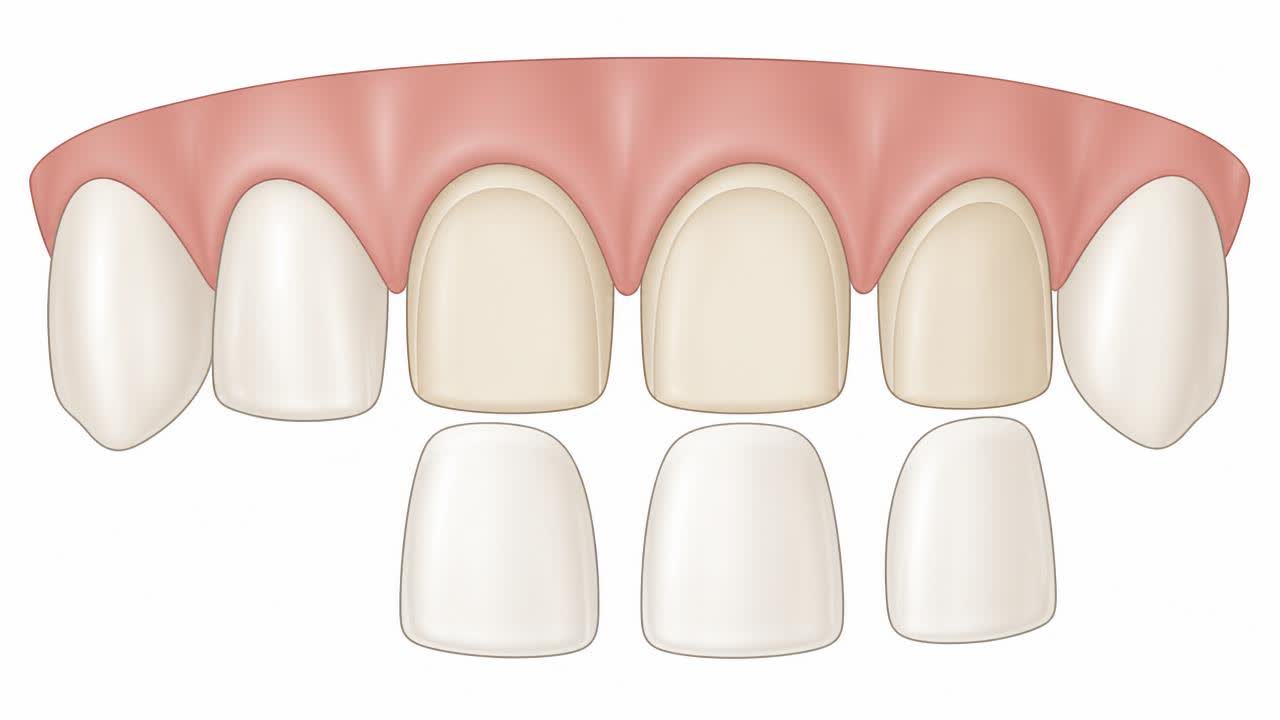
To apply these principles, we use high-precision tools such as digital callipers and 3D imaging software. We measure your teeth in relation to your facial midline and your lip line. This allows us to calculate exactly how much material needs to be removed or added, ensuring that your veneers or crowns are fabricated to these precise, aesthetically desirable specifications.
While mathematics provides the foundation, individual variation is essential for a natural look. No two people have the exact same facial structure, and therefore, no two smiles should be identical. We adapt the Golden Proportion to suit your specific features, ensuring your new smile complements your unique facial contours, skin tone, and overall appearance, resulting in a look that feels both balanced and authentic.
The Role of Teeth in Facial Aesthetics
Your teeth play a major role in framing your face and supporting your lips. When the proportions are off, it can sometimes make your face look unbalanced. Using the Golden Proportion, we can design teeth that provide proper support for your upper lip, potentially smoothing out fine lines and helping you achieve a more youthful and vibrant appearance.
Well-proportioned teeth can also influence the way your smile is perceived by others. Research consistently shows that smiles following these ratios are viewed as more attractive and healthy. By carefully planning your smile with these concepts in mind, our dentists ensure that your final results enhance your confidence, allowing you to share your smile with the world more freely and often.
A Personalised Approach to Beauty
At Dr. Amit Sharma Super Speciality Dental Hospital, we combine the science of the Golden Proportion with a deep understanding of facial aesthetics. We don't just create teeth; we design smiles. We take the time to understand your unique goals, combining mathematical harmony with your personal vision to deliver a smile that looks both perfectly balanced and distinctly yours.
If you are concerned about the proportions of your teeth or feel that your smile is lacking balance, we invite you to consult with our dental experts. We will guide you through the possibilities, showing you how we can use these principles to create a smile that highlights your best features and gives you the radiant look you deserve.
Questions patients ask us
- Is the Golden Proportion always used?
- It serves as a powerful aesthetic guide in our design process. However, we tailor it to your individual facial features and personal preferences. We use it to ensure balance and harmony while respecting the unique natural characteristics of your own smile, avoiding a generic or artificial look.
- Can this help with uneven tooth sizes?
- Yes, absolutely. If your teeth appear uneven, we can use the principles of the Golden Proportion to design restorative treatments—such as veneers or crowns—that create a more symmetrical, balanced, and aesthetically pleasing appearance by correcting the relative widths and lengths of your teeth.
- Will my new smile look natural?
- Our focus is always on natural beauty. By blending the mathematical precision of the Golden Proportion with our artistic skill, we ensure that your smile appears organic and fitting for your specific face shape, rather than appearing like a 'one-size-fits-all' dental procedure.
- How can I see if it will work for me?
- We invite you to our clinic for a consultation, where we can use digital imaging to show you exactly how the Golden Proportion would be applied to your own teeth. This allows you to visualise the potential for a more balanced and attractive smile before committing to any treatment.
Sources and further reading
Guidance from professional and public health bodies. Clinical decisions here are made on your own examination and radiographs.
- 1.Whitening, bonding and veneers — patient information — American Dental Association
- 2.Guidance on tooth whitening and cosmetic dental treatment — British Dental Association
- 3.Oral health — fact sheet and global status report — World Health Organization
- 4.Policy statements and oral health definitions — FDI World Dental Federation
- 5.Dental health — conditions, treatments and patient guidance — NHS (UK)
- 6.Systematic reviews of oral and dental interventions — Cochrane Oral Health
- 7.Regulatory framework and dental education standards in India — Dental Council of India
When to see us
Get examined without waiting if any of the following applies to you:
- Sensitivity or pain that continues for more than a few days after cosmetic work
- A veneer, crown or bonded restoration that has chipped, debonded or feels high in the bite
- Gum inflammation or dark margins developing at the edge of a restoration
Get a written plan and cost before you commit
If this is what you are dealing with, the next step is a consultation with radiographs — cosmetic & smile design cases are seen by the specialist who handles that field. You get a written plan and staged cost before anything begins.
reception@dramitsharmahospital.comThis article is general education and does not replace an in-person examination, radiographs or a diagnosis by a qualified dentist.
Clinical terms in this article
Related in Cosmetic & Smile Design
Dental Crowns and Bridges: What They Are and When You Need One
How crowns and bridges restore damaged or missing teeth, the materials used, and what the process and aftercare involve.
Teeth Whitening and Tooth Stains: Causes and Treatment Options
Why teeth discolour over time, the difference between surface stains and deeper discolouration, and how professional whitening compares with home options.
Smile Makeover and Digital Smile Design
How veneers, bonding, whitening and gum contouring are combined into one planned cosmetic outcome.
Teeth Whitening: What Actually Works
In-office versus home whitening, realistic expectations, sensitivity management and what whitening cannot fix.
Black Triangles Between Teeth Causes and Treatment
Open gingival embrasures, commonly called black triangles between teeth and gums, occur when the interdental papilla recedes. Explore the anatomical causes, clinical classifications, restorative and orthodontic treatments, and long-term periodontal maintenance strategies.
Internal Tooth Bleaching for Discolored Nonvital Teeth
Internal tooth bleaching after root canal treatment is a conservative endodontic procedure that lightens intrinsically discoloured, non-vital teeth from within the pulp chamber, restoring natural aesthetics without requiring extensive structural removal for crowns or veneers.