At a glance
- Cracked tooth syndrome refers to a tooth with an incomplete crack that has not yet separated into two pieces, causing pain, particularly when biting or releasing pressure on the tooth.
- The classic symptom is a sharp, brief pain when biting down on certain foods, followed immediately by relief once the pressure is released, often described as a lightning-like pain rather than a constant ache.
- Diagnosis typically involves a combination of clinical tests, including having the patient bite on a special stick or instrument to reproduce the pain on individual cusps, staining dyes to highlight surface cracks, and…
- Treatment depends on how deep the crack extends.
What Is Cracked Tooth Syndrome
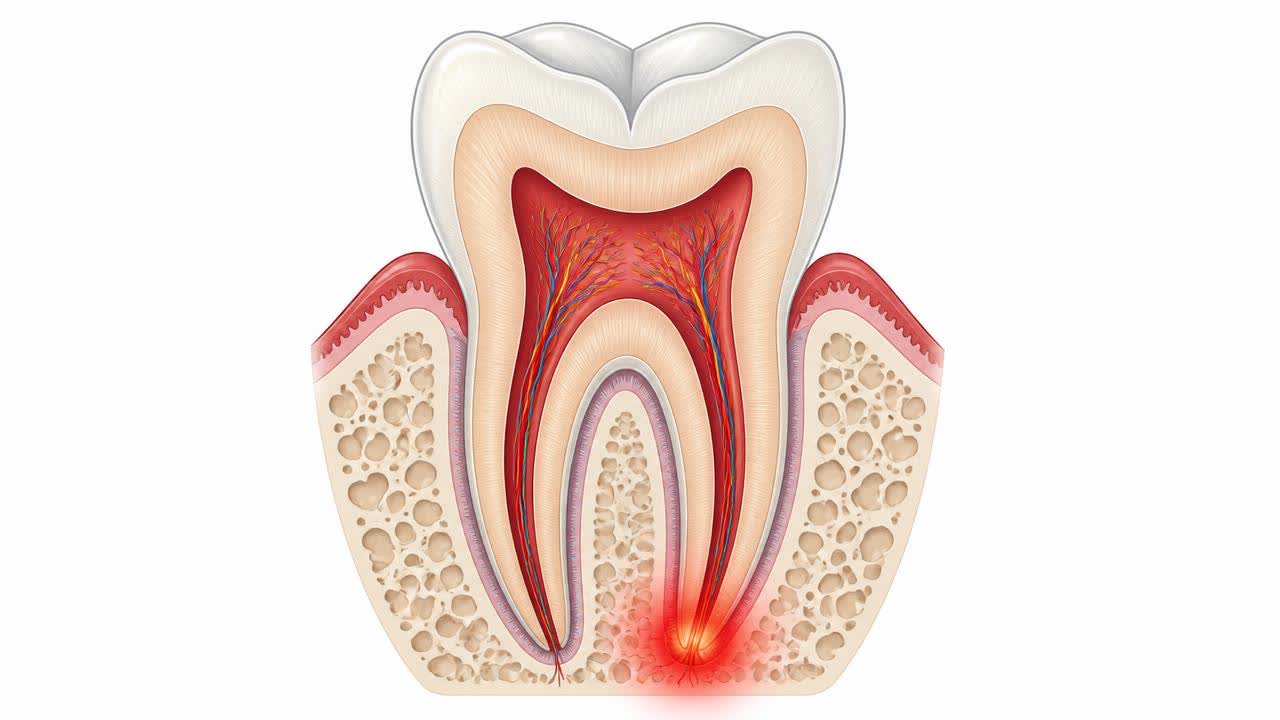
Cracked tooth syndrome refers to a tooth with an incomplete crack that has not yet separated into two pieces, causing pain, particularly when biting or releasing pressure on the tooth. These cracks are often too fine to be seen easily on X-ray or even direct examination, making the condition one of the more challenging dental diagnoses.
It commonly affects back teeth used for grinding food and can result from habits such as chewing ice, hard sweets, or bones, as well as from teeth that have large old fillings, have undergone root canal treatment without a protective crown, or are subjected to significant grinding forces.
Recognising the Symptoms
The classic symptom is a sharp, brief pain when biting down on certain foods, followed immediately by relief once the pressure is released, often described as a lightning-like pain rather than a constant ache. Sensitivity to cold may also be present, while sensitivity to heat is less typical unless the crack has progressed to affect the pulp.
Because the pain is often intermittent and difficult to localise to a specific tooth, patients may struggle to identify exactly which tooth is affected, and the condition can be mistaken for sinus problems or referred pain from a neighbouring tooth.
How It Is Diagnosed
Diagnosis typically involves a combination of clinical tests, including having the patient bite on a special stick or instrument to reproduce the pain on individual cusps, staining dyes to highlight surface cracks, and examination under magnification. X-rays are useful mainly to rule out other causes, as fine cracks often do not show up clearly on radiographs.
A careful history of the type of pain, its triggers, and its duration helps guide the dentist toward the affected tooth, though sometimes several visits or additional tests are needed to confirm the diagnosis with certainty.
Treatment Depending on Crack Severity
Treatment depends on how deep the crack extends. A minor crack confined to the enamel may only require a filling or a bonded restoration and monitoring. A crack extending closer to or into the pulp typically requires root canal treatment followed by a crown to hold the tooth together and prevent the crack from propagating further.
If the crack extends below the gum line into the root, the prognosis is more guarded and extraction may ultimately be necessary, as such teeth are difficult to stabilise long term. Early diagnosis and prompt placement of a crown significantly improve the chances of saving a cracked tooth.
Questions patients ask us
- Why does my tooth hurt only when I bite down and then stop?
- This pattern of sharp pain on biting followed by relief is characteristic of cracked tooth syndrome, where pressure on a crack irritates the pulp momentarily. A dental examination with specific biting tests can help confirm this diagnosis.
- Can a cracked tooth heal on its own?
- No, unlike bone, a cracked tooth cannot heal itself since enamel and dentine are not living, regenerating tissues in the same way. Without treatment, the crack can gradually worsen and eventually may cause the tooth to fracture completely.
- Will I definitely need a root canal for a cracked tooth?
- Not necessarily. If the crack is shallow and has not reached the pulp, a filling or crown alone may be sufficient. Root canal treatment becomes necessary if the crack has progressed close to or into the nerve tissue.
- How can I avoid cracking a tooth?
- Avoiding habits such as chewing ice, hard sweets, or bones, using a night guard if you grind your teeth, and having large fillings or root-treated teeth protected with crowns can significantly reduce your risk of developing cracked tooth syndrome.
Sources and further reading
Guidance from professional and public health bodies. Clinical decisions here are made on your own examination and radiographs.
- 1.Endodontic diagnosis terminology and treatment guidance — American Association of Endodontists
- 2.Guidelines for the management of traumatic dental injuries — International Association of Dental Traumatology
- 3.Antimicrobial prescribing for dental infection — NICE (UK)
- 4.Oral health — fact sheet and global status report — World Health Organization
- 5.Policy statements and oral health definitions — FDI World Dental Federation
- 6.Dental health — conditions, treatments and patient guidance — NHS (UK)
- 7.Systematic reviews of oral and dental interventions — Cochrane Oral Health
- 8.Regulatory framework and dental education standards in India — Dental Council of India
When to see us
Get examined without waiting if any of the following applies to you:
- Facial or neck swelling, difficulty swallowing, opening the mouth or breathing — this is an emergency
- Pain with fever, or swelling that is spreading rather than settling
- A tooth knocked out or pushed out of position after an injury — time matters
- Pain that wakes you at night or does not respond to ordinary painkillers
Get a written plan and cost before you commit
If this is what you are dealing with, the next step is a consultation with radiographs — pain & emergencies cases are seen by the specialist who handles that field. You get a written plan and staged cost before anything begins.
reception@dramitsharmahospital.comThis article is general education and does not replace an in-person examination, radiographs or a diagnosis by a qualified dentist.
Clinical terms in this article
Related in Pain & Emergencies
Tooth Pain and Sensitivity: Causes, Relief and When to See a Dentist
Why teeth hurt or react to hot and cold, the difference between everyday sensitivity and a warning sign, and what treatment usually follows.
Root Canal Treatment Explained
Why a tooth needs root canal therapy, what happens during single-sitting endodontics, and why crowns follow.
Tooth Pain and Dental Emergencies
How to identify a genuine dental emergency, what to do in the first hour, and when to call the hospital immediately.
Reversible vs Irreversible Pulpitis Symptoms and Treatment Options
Understanding reversible vs irreversible pulpitis is essential when managing dental pain. This guide explains their anatomical causes, diagnostic criteria, clinical symptoms, and evidence-based treatments ranging from conservative restorations to root canal therapy and emergency care.
Differences Between a Tooth Abscess and Gum Abscess
A dental abscess is a localised collection of pus caused by bacterial infection. Distinguishing between a tooth abscess (periapical) and a gum abscess (periodontal) is vital, as their anatomical origins, clinical presentations, diagnostic pathways, and definitive treatments differ fundamentally.
Why Tooth Pain Gets Worse When Lying Down
Experiencing toothache worse lying down typically indicates elevated pulpal or periapical pressure driven by increased cranial blood flow when supine. This guide explains pulpal anatomy, underlying causes, diagnostic pathways, evidence-based treatments, and critical red flags requiring emergency care.