At a glance
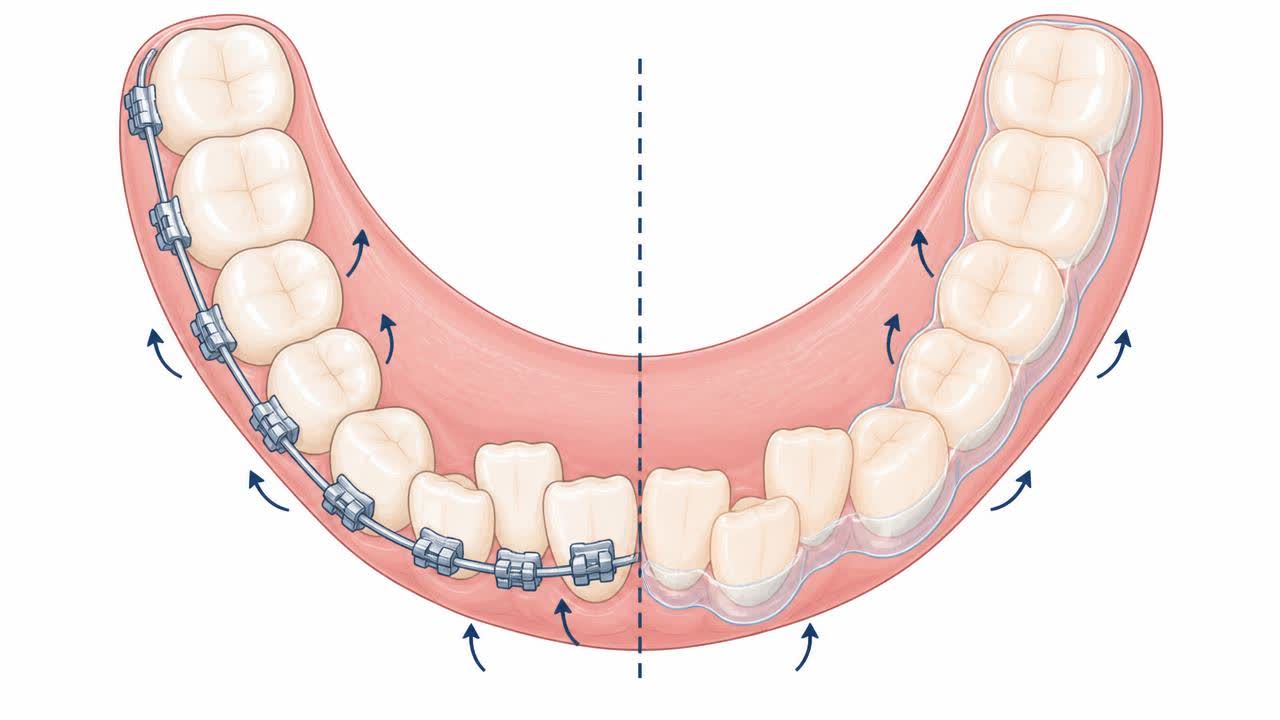
- Clear aligners are a series of custom-made, transparent plastic trays that gradually move teeth into their correct position without the metal wires and brackets used in traditional braces.
- Treatment begins with a thorough clinical examination, X-rays, and a digital or physical impression of your teeth.
- Clear aligners work well for mild to moderate crowding, spacing, and certain bite discrepancies.
- One of the most appreciated aspects of aligner treatment is the ability to remove the trays for eating, which means there are no dietary restrictions of the kind associated with fixed braces.
- Aligners should be cleaned daily using a soft toothbrush and lukewarm water, or a dedicated aligner cleaning solution, to prevent bacterial buildup and staining.
What Are Clear Aligners
Clear aligners are a series of custom-made, transparent plastic trays that gradually move teeth into their correct position without the metal wires and brackets used in traditional braces. Each tray is worn for one to two weeks before being replaced with the next in the sequence, with each new tray applying gentle, calculated pressure to specific teeth. The trays are designed using digital scans and computer modelling, allowing our orthodontic team to plan the entire journey of tooth movement before treatment even begins.
In India, clear aligners have become increasingly popular among working professionals and college students who want straighter teeth without the visible appearance of metal braces. Many of our patients in Jaipur travel from nearby cities for consultations, then manage most of the treatment remotely with periodic check-in visits, since aligners require less frequent chairside adjustment than fixed braces.
How the Treatment Process Works
Treatment begins with a thorough clinical examination, X-rays, and a digital or physical impression of your teeth. This data is used to create a 3D treatment plan that shows the predicted movement of each tooth from start to finish. Once you approve the plan, a series of aligner sets is manufactured specifically for your mouth, often numbering between fifteen and forty trays depending on the complexity of your case.
You will typically switch to a new set of aligners every one to two weeks, wearing each tray for twenty to twenty-two hours a day, removing them only to eat, drink anything other than water, and brush your teeth. Regular review appointments, usually every six to eight weeks, allow us to monitor progress, take new scans if needed, and ensure the treatment is tracking as planned.
Attachments, which are small tooth-coloured bumps of composite resin bonded to certain teeth, are often used to give the aligners extra grip for more complex movements such as rotations or extrusions. These are barely noticeable and are removed once treatment is complete, leaving no permanent mark on the tooth surface.
Who Is a Good Candidate
Clear aligners work well for mild to moderate crowding, spacing, and certain bite discrepancies. Adults and teenagers with good oral hygiene habits and the discipline to wear trays for the required hours each day tend to see the best results. Because compliance is central to success, patients who cannot commit to near-constant wear may find traditional braces more predictable.
More complex cases, including severe crowding, significant jaw discrepancies, or certain rotations of canine teeth, may still be treatable with aligners but often require a longer treatment time or a combination approach with limited fixed appliances. During your consultation, we will assess your specific bite and recommend whether aligners alone will achieve the result you want.
Comfort and Lifestyle Considerations
One of the most appreciated aspects of aligner treatment is the ability to remove the trays for eating, which means there are no dietary restrictions of the kind associated with fixed braces. This is particularly convenient in India, where social eating and frequent festive gatherings are part of daily life, since you can remove your aligners for a meal and pop them back in afterwards.
Some mild pressure or tightness is normal for the first day or two after switching to a new tray, similar to the sensation felt after tightening braces, though generally milder. This discomfort typically settles within forty-eight hours as your teeth adjust to the new position being encouraged by the tray.
Caring for Your Aligners
Aligners should be cleaned daily using a soft toothbrush and lukewarm water, or a dedicated aligner cleaning solution, to prevent bacterial buildup and staining. Avoid using hot water, as this can warp the plastic and affect the fit and accuracy of tooth movement.
Store your aligners in their case whenever they are not in your mouth to avoid loss or damage, particularly when eating out, since aligners wrapped in tissue are easily thrown away by mistake. Bringing a travel case and interdental brush with you when out and about makes it much easier to maintain the twenty-two hour daily wear time that successful treatment depends on.
Questions patients ask us
- How long does clear aligner treatment usually take?
- Treatment length depends on the complexity of the case, but most mild to moderate corrections take between six and eighteen months. Simple cosmetic adjustments may be completed in as little as four to six months, while more complex bite corrections can take longer. Your orthodontist will give you a personalised estimate after reviewing your scans and X-rays.
- Can I eat and drink with aligners in place?
- You should remove your aligners before eating any food and before drinking anything other than plain water, as hot liquids can warp the plastic and food particles can become trapped, increasing decay risk. Always brush or rinse before reinserting the trays to keep them clean and free of trapped debris.
- Will clear aligners affect my speech?
- A minor lisp or change in speech is common during the first few days of wearing a new set of aligners, as your tongue adapts to the presence of the plastic trays. Most patients find their speech returns to normal within a week as they become accustomed to the aligners.
- Are clear aligners as effective as metal braces?
- For mild to moderate alignment issues, clear aligners can achieve comparable results to traditional braces. For severe crowding, significant jaw discrepancies, or complex bite corrections, fixed braces may still be recommended as the more predictable option. A detailed clinical assessment will determine the best choice for your specific case.
- What happens if I lose or damage an aligner?
- Contact our clinic immediately so we can advise you on the best next step, which may involve moving temporarily to the next tray in the sequence or having a replacement made. Delaying too long without any aligner in place can allow teeth to shift back, so prompt reporting helps keep your treatment on schedule.
Sources and further reading
Guidance from professional and public health bodies. Clinical decisions here are made on your own examination and radiographs.
- 1.Orthodontic treatment and retention — patient resources — American Association of Orthodontists
- 2.Patient information leaflets on appliances and retention — British Orthodontic Society
- 3.Oral health — fact sheet and global status report — World Health Organization
- 4.Policy statements and oral health definitions — FDI World Dental Federation
- 5.Dental health — conditions, treatments and patient guidance — NHS (UK)
- 6.Systematic reviews of oral and dental interventions — Cochrane Oral Health
- 7.Regulatory framework and dental education standards in India — Dental Council of India
When to see us
Get examined without waiting if any of the following applies to you:
- A broken bracket, poking wire or appliance causing ulceration
- A tooth that becomes painful, loose or discoloured during treatment
- Jaw joint pain, locking or a bite that has changed suddenly
Get a written plan and cost before you commit
If this is what you are dealing with, the next step is a consultation with radiographs — orthodontics cases are seen by the specialist who handles that field. You get a written plan and staged cost before anything begins.
reception@dramitsharmahospital.comThis article is general education and does not replace an in-person examination, radiographs or a diagnosis by a qualified dentist.
Clinical terms in this article
Related in Orthodontics
Aligners and Braces: Choosing the Right Option
Metal, ceramic and clear aligner treatment compared, duration, visibility, cost and suitability.
Tooth Extraction for Braces or Severe Crowding Issues
Orthodontic extractions involve the planned removal of select teeth to resolve severe crowding, correct bimaxillary protrusion, and balance dentoalveolar proportions. This clinical guide details diagnostic indications, extraction patterns, procedural steps, recovery, risks, and evidence-based non-extraction alternatives.
Maxillary Osteotomy for Open Bite Alignment and Correction
Maxillary osteotomy for open bite corrects severe vertical skeletal discrepancies through surgical repositioning of the upper jaw. Combined with orthodontics, this procedure restores chewing function, improves speech articulation, and ensures long-term occlusal and facial stability.
Surgically Assisted Rapid Palatal Expansion for Adult Palate Widening
Surgically assisted rapid palatal expansion (SARPE) is a combined orthodontic and surgical treatment designed to correct severe transverse maxillary deficiency in skeletally mature adults, widening the narrow upper jaw to restore functional occlusion, stability, and airway volume.
Surgical Exposure and Bracket Bonding for Impacted Canine Teeth
This clinical guide details impacted canine exposure surgery and bracket bonding. It explains anatomical causes, CBCT diagnostic pathways, open versus closed surgical techniques, orthodontic traction mechanisms, recovery protocols, and evidence-based strategies to manage complications.
Overbite vs Overjet: Key Differences and Correction Methods
This clinical guide clarifies the distinction between overbite (vertical overlap) and overjet (horizontal protrusion). It examines their aetiology, diagnostic pathways, classification, and evidence-based orthodontic and surgical correction methods across paediatric and adult populations.