At a glance
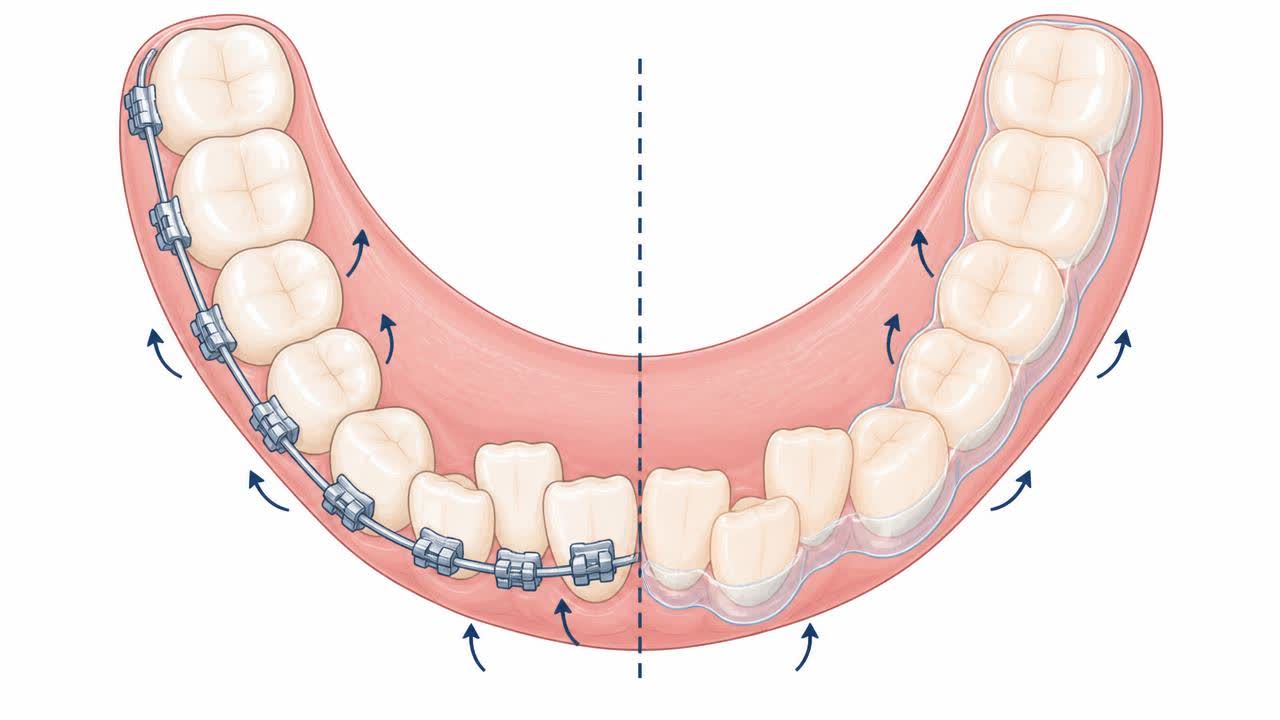
- Metal braces consist of small stainless steel brackets bonded to the front surface of each tooth, connected by a thin archwire that is tightened over time to guide teeth into alignment.
- Metal braces offer a level of control over tooth movement that is difficult to match with removable appliances, since the fixed nature of the brackets and wire means treatment does not rely on patient compliance in the same way…
- After an initial assessment involving X-rays, photographs, and impressions, brackets are bonded to your teeth in a single appointment that typically takes around one to two hours.
- Certain foods, particularly hard, sticky, or very chewy items such as toffees, hard nuts, and crusty bread, should be avoided or eaten with caution, as they can bend wires or dislodge brackets.
How Metal Braces Work
Metal braces consist of small stainless steel brackets bonded to the front surface of each tooth, connected by a thin archwire that is tightened over time to guide teeth into alignment. Elastic or metal ligatures hold the wire in place against each bracket, and adjustments made at regular visits gradually apply the controlled forces needed to move teeth, close gaps, and correct bite discrepancies.
This system has been refined over many decades and remains one of the most predictable and versatile orthodontic treatments available, capable of correcting even severe crowding, rotations, and complex bite problems that other appliances may struggle to address fully. For many patients across Jaipur and Rajasthan, metal braces continue to be the most cost-effective route to a well-aligned, functional bite.
Why Dentists Still Recommend Them
Metal braces offer a level of control over tooth movement that is difficult to match with removable appliances, since the fixed nature of the brackets and wire means treatment does not rely on patient compliance in the same way aligners do. This makes them particularly suitable for children, teenagers, and adults with demanding schedules who may find it hard to maintain the strict wear times aligners require.
They are also generally the most affordable orthodontic option, which is an important consideration for many families. Their durability and long clinical track record mean orthodontists can predict outcomes with a high degree of confidence, even in complex cases involving significant crowding or jaw discrepancies.
The Treatment Journey
After an initial assessment involving X-rays, photographs, and impressions, brackets are bonded to your teeth in a single appointment that typically takes around one to two hours. You will then return every four to six weeks so we can adjust the archwire and, if needed, add small elastics or springs to fine-tune specific tooth movements.
Total treatment time typically ranges from twelve to twenty-four months, depending on the severity of misalignment and how well you follow care instructions in between visits. Towards the end of treatment, we may switch to finishing wires designed to make small, precise final adjustments before the braces are removed and a retainer is fitted.
Living with Braces Day to Day
Certain foods, particularly hard, sticky, or very chewy items such as toffees, hard nuts, and crusty bread, should be avoided or eaten with caution, as they can bend wires or dislodge brackets. Cutting fruits like apples and guavas into smaller pieces rather than biting directly into them helps protect the appliance from damage.
Mild soreness for a few days after each adjustment appointment is normal and can usually be managed with over-the-counter pain relief and softer foods for a day or two. Wearing an orthodontic wax over any bracket that irritates the inside of the cheek or lip can also make the adjustment period considerably more comfortable.
Questions patients ask us
- Do metal braces hurt?
- Some soreness or pressure is common for two to three days after braces are first fitted or adjusted, as teeth respond to the new forces applied. This discomfort is generally mild and manageable with pain relief and softer foods, and it typically fades quickly as your mouth adapts to each adjustment.
- How often will I need to visit the clinic?
- Most patients are seen every four to six weeks throughout treatment so the archwire can be adjusted and progress monitored. Occasionally shorter intervals are needed if a bracket comes loose or a specific tooth needs closer attention, but the routine schedule is generally predictable and easy to plan around.
- Can adults get metal braces too?
- Yes, metal braces are suitable for adults as well as children and teenagers, provided the gums and supporting bone are healthy enough to withstand tooth movement. Many adults choose metal braces for their affordability and reliability, particularly when correcting more complex bite issues.
- Will braces affect how I speak or eat initially?
- A short adjustment period of a few days to a week is common, during which speech may feel slightly different and eating may require some care. Most patients adapt quickly and return to their normal speech and eating patterns as they become accustomed to the appliance in their mouth.
Sources and further reading
Guidance from professional and public health bodies. Clinical decisions here are made on your own examination and radiographs.
- 1.Orthodontic treatment and retention — patient resources — American Association of Orthodontists
- 2.Patient information leaflets on appliances and retention — British Orthodontic Society
- 3.Oral health — fact sheet and global status report — World Health Organization
- 4.Policy statements and oral health definitions — FDI World Dental Federation
- 5.Dental health — conditions, treatments and patient guidance — NHS (UK)
- 6.Systematic reviews of oral and dental interventions — Cochrane Oral Health
- 7.Regulatory framework and dental education standards in India — Dental Council of India
When to see us
Get examined without waiting if any of the following applies to you:
- A broken bracket, poking wire or appliance causing ulceration
- A tooth that becomes painful, loose or discoloured during treatment
- Jaw joint pain, locking or a bite that has changed suddenly
Get a written plan and cost before you commit
If this is what you are dealing with, the next step is a consultation with radiographs — orthodontics cases are seen by the specialist who handles that field. You get a written plan and staged cost before anything begins.
reception@dramitsharmahospital.comThis article is general education and does not replace an in-person examination, radiographs or a diagnosis by a qualified dentist.
Clinical terms in this article
Related in Orthodontics
Aligners and Braces: Choosing the Right Option
Metal, ceramic and clear aligner treatment compared, duration, visibility, cost and suitability.
Tooth Extraction for Braces or Severe Crowding Issues
Orthodontic extractions involve the planned removal of select teeth to resolve severe crowding, correct bimaxillary protrusion, and balance dentoalveolar proportions. This clinical guide details diagnostic indications, extraction patterns, procedural steps, recovery, risks, and evidence-based non-extraction alternatives.
Maxillary Osteotomy for Open Bite Alignment and Correction
Maxillary osteotomy for open bite corrects severe vertical skeletal discrepancies through surgical repositioning of the upper jaw. Combined with orthodontics, this procedure restores chewing function, improves speech articulation, and ensures long-term occlusal and facial stability.
Surgically Assisted Rapid Palatal Expansion for Adult Palate Widening
Surgically assisted rapid palatal expansion (SARPE) is a combined orthodontic and surgical treatment designed to correct severe transverse maxillary deficiency in skeletally mature adults, widening the narrow upper jaw to restore functional occlusion, stability, and airway volume.
Surgical Exposure and Bracket Bonding for Impacted Canine Teeth
This clinical guide details impacted canine exposure surgery and bracket bonding. It explains anatomical causes, CBCT diagnostic pathways, open versus closed surgical techniques, orthodontic traction mechanisms, recovery protocols, and evidence-based strategies to manage complications.
Overbite vs Overjet: Key Differences and Correction Methods
This clinical guide clarifies the distinction between overbite (vertical overlap) and overjet (horizontal protrusion). It examines their aetiology, diagnostic pathways, classification, and evidence-based orthodontic and surgical correction methods across paediatric and adult populations.