At a glance
- Brushing twice daily with a soft-bristled brush and non-abrasive toothpaste, along with daily flossing, remains the foundation of caring for any cosmetic dental work, since plaque build-up at the margins of veneers, crowns or…
- Avoid using your front teeth to open packets, bite fingernails, or chew on hard objects such as ice, pen caps or hard sweets, since these habits are a common cause of chipped veneers, crowns and bonding.
- While porcelain and zirconia resist staining well, composite bonding and the natural teeth surrounding any cosmetic work remain susceptible to staining from tea, coffee, turmeric, red gravies and tobacco.
- Routine check-ups, typically every six months, allow us to assess the margins of your restorations, polish away any surface staining, and catch small issues such as a minor chip or early gum recession before they progress into…
Protecting Restorations from Physical Damage
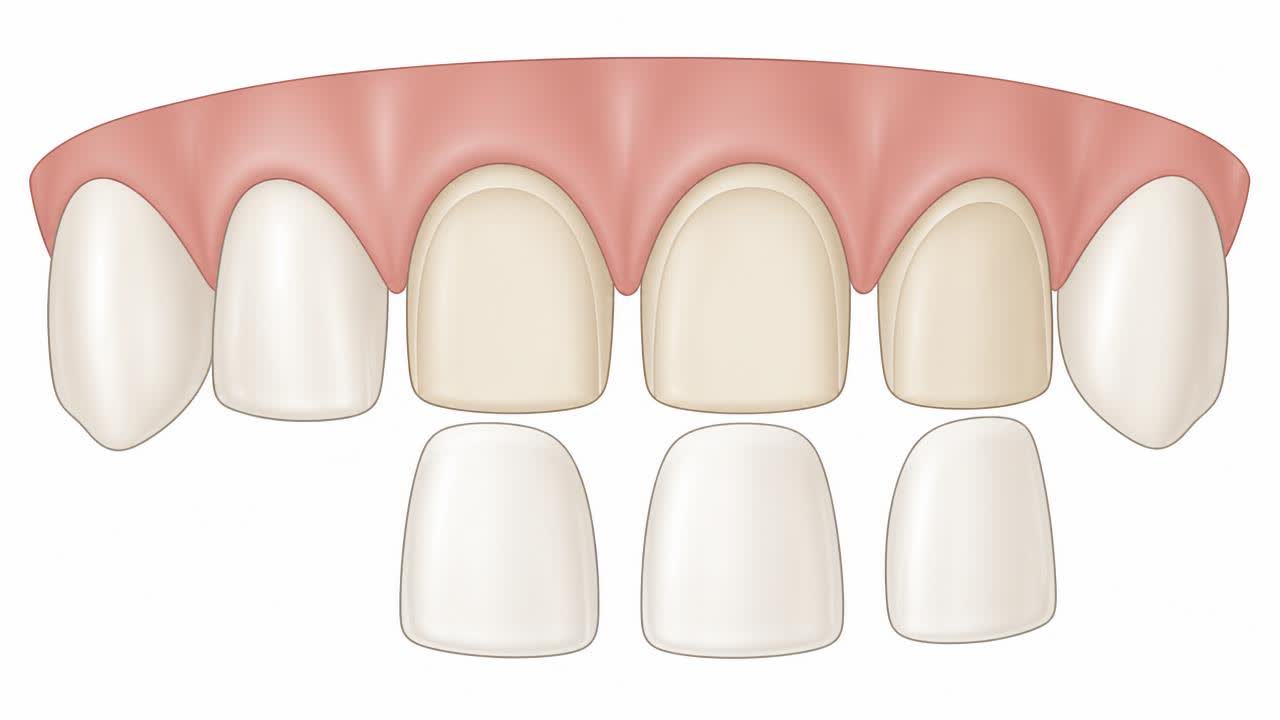
Avoid using your front teeth to open packets, bite fingernails, or chew on hard objects such as ice, pen caps or hard sweets, since these habits are a common cause of chipped veneers, crowns and bonding. If you play contact sports, a properly fitted mouthguard is strongly recommended to protect cosmetic work from impact.
If you grind or clench your teeth, particularly during sleep, a custom night guard is one of the most effective ways to protect veneers, crowns and bonded restorations from cracking or excessive wear, and we can assess whether this applies to you during a routine check-up.
The Role of Regular Professional Review
Routine check-ups, typically every six months, allow us to assess the margins of your restorations, polish away any surface staining, and catch small issues such as a minor chip or early gum recession before they progress into larger problems requiring more extensive repair.
We also use these visits to review your bite and confirm that restorations are wearing evenly, since uneven forces over time can occasionally shift how teeth meet and place extra stress on specific restorations, something that is far easier to correct when identified early.
Daily Habits That Protect Your Investment
Brushing twice daily with a soft-bristled brush and non-abrasive toothpaste, along with daily flossing, remains the foundation of caring for any cosmetic dental work, since plaque build-up at the margins of veneers, crowns or bonded restorations can lead to staining or gum irritation over time, even though the restoration material itself cannot decay.
We generally recommend avoiding whitening toothpaste with harsh abrasives on veneers and crowns, since these can dull the polished surface over time without providing any real whitening benefit to ceramic or composite materials, which do not respond to whitening agents the way natural enamel does.
Managing Diet to Preserve Colour
While porcelain and zirconia resist staining well, composite bonding and the natural teeth surrounding any cosmetic work remain susceptible to staining from tea, coffee, turmeric, red gravies and tobacco. Rinsing with water after consuming these, and using a straw where practical, helps maintain a consistent, even smile colour over time.
For patients who have had teeth whitened alongside cosmetic restorations, periodic top-up whitening on the natural teeth helps keep the overall smile shade consistent with any porcelain or zirconia restorations, which do not change colour themselves but can appear mismatched if surrounding natural teeth gradually darken.
Questions patients ask us
- How often should I visit for check-ups after cosmetic dental work?
- We recommend a check-up every six months as a general rule, though your dentist may suggest more frequent reviews initially after extensive treatment such as a full smile makeover, to ensure everything is settling and functioning as expected.
- Can I use an electric toothbrush on veneers and crowns?
- Yes, electric toothbrushes are generally safe and effective for cleaning around veneers and crowns, provided you use a soft brush head and avoid excessive pressure, which can be gentler on both restorations and gum tissue than aggressive manual brushing.
- What should I do if a veneer or crown feels loose?
- Contact us promptly if you notice any looseness, movement or a change in how a restoration feels, since this can sometimes be resolved simply by re-cementing if caught early, whereas delaying can risk further damage or loss of the restoration.
- Do I still need to floss around veneers and crowns?
- Yes, flossing remains essential around cosmetic restorations, since plaque can still build up at the gum margin and on the underlying natural tooth structure, potentially leading to gum disease or decay even though the restoration surface itself is protected.
Sources and further reading
Guidance from professional and public health bodies. Clinical decisions here are made on your own examination and radiographs.
- 1.Whitening, bonding and veneers — patient information — American Dental Association
- 2.Guidance on tooth whitening and cosmetic dental treatment — British Dental Association
- 3.Oral health — fact sheet and global status report — World Health Organization
- 4.Policy statements and oral health definitions — FDI World Dental Federation
- 5.Dental health — conditions, treatments and patient guidance — NHS (UK)
- 6.Systematic reviews of oral and dental interventions — Cochrane Oral Health
- 7.Regulatory framework and dental education standards in India — Dental Council of India
When to see us
Get examined without waiting if any of the following applies to you:
- Sensitivity or pain that continues for more than a few days after cosmetic work
- A veneer, crown or bonded restoration that has chipped, debonded or feels high in the bite
- Gum inflammation or dark margins developing at the edge of a restoration
Get a written plan and cost before you commit
If this is what you are dealing with, the next step is a consultation with radiographs — cosmetic & smile design cases are seen by the specialist who handles that field. You get a written plan and staged cost before anything begins.
reception@dramitsharmahospital.comThis article is general education and does not replace an in-person examination, radiographs or a diagnosis by a qualified dentist.
Clinical terms in this article
Related in Cosmetic & Smile Design
Dental Crowns and Bridges: What They Are and When You Need One
How crowns and bridges restore damaged or missing teeth, the materials used, and what the process and aftercare involve.
Teeth Whitening and Tooth Stains: Causes and Treatment Options
Why teeth discolour over time, the difference between surface stains and deeper discolouration, and how professional whitening compares with home options.
Smile Makeover and Digital Smile Design
How veneers, bonding, whitening and gum contouring are combined into one planned cosmetic outcome.
Teeth Whitening: What Actually Works
In-office versus home whitening, realistic expectations, sensitivity management and what whitening cannot fix.
Black Triangles Between Teeth Causes and Treatment
Open gingival embrasures, commonly called black triangles between teeth and gums, occur when the interdental papilla recedes. Explore the anatomical causes, clinical classifications, restorative and orthodontic treatments, and long-term periodontal maintenance strategies.
Internal Tooth Bleaching for Discolored Nonvital Teeth
Internal tooth bleaching after root canal treatment is a conservative endodontic procedure that lightens intrinsically discoloured, non-vital teeth from within the pulp chamber, restoring natural aesthetics without requiring extensive structural removal for crowns or veneers.