At a glance
- The commonest dental source of a persistent bitter or foul taste is infection.
- Gastro-oesophageal reflux brings acid into the mouth, often at night, producing a sour or bitter taste on waking together with a characteristic pattern of enamel erosion on the inner surfaces of the upper teeth.
- Examination starts with periodontal probing at six points per tooth, checking for pus, pocket depth and bleeding, and testing suspicious teeth for vitality.
- Clean the back of the tongue gently with a scraper or brush, which removes the bacterial coating most people never touch.
How the cause is found
Examination starts with periodontal probing at six points per tooth, checking for pus, pocket depth and bleeding, and testing suspicious teeth for vitality. Radiographs show decay under existing restorations and bone loss at the root apex of a non-vital tooth. The tongue, palate and denture-bearing surfaces are examined for candidal infection, which produces both a bad taste and burning.
Where the mouth is genuinely healthy, the history is what directs the next step — a medication review, a check for reflux, blood tests for diabetes or deficiency, or a referral to an ear, nose and throat specialist where sinus disease or post-nasal drip is likely. A taste disturbance that persists after all dental causes are excluded should not simply be lived with.
Dental causes worth ruling out first
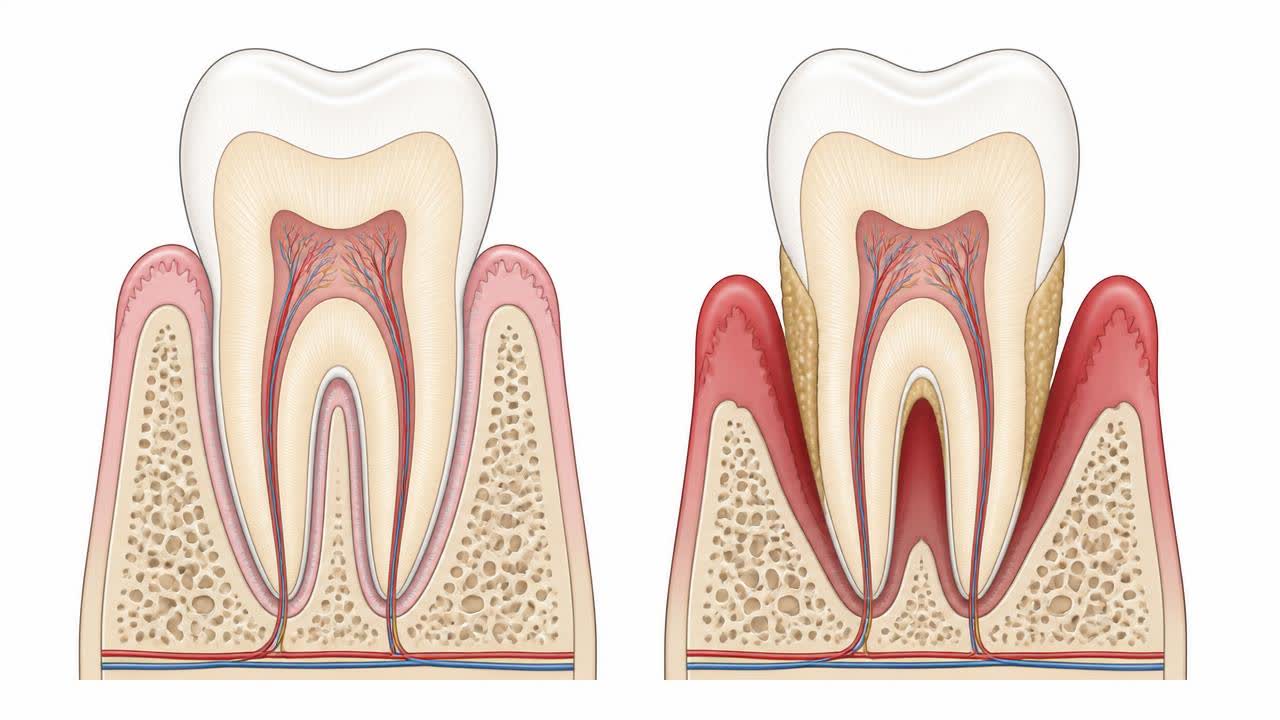
The commonest dental source of a persistent bitter or foul taste is infection. A chronic periodontal pocket or a sinus tract draining from a dead tooth discharges small amounts of pus continuously, and patients frequently describe the taste long before they notice any swelling or pain. Pericoronitis around a partly erupted wisdom tooth does the same thing in the back of the mouth.
Other mechanical causes include decay under an old filling or crown, food packing between teeth where a contact point has opened, an ill-fitting or poorly cleaned denture, and coating on the back of the tongue harbouring anaerobic bacteria. Each of these is treatable and each is identified by examination rather than by trial and error with rinses.
Reflux, dry mouth and medication
Gastro-oesophageal reflux brings acid into the mouth, often at night, producing a sour or bitter taste on waking together with a characteristic pattern of enamel erosion on the inner surfaces of the upper teeth. That erosion pattern is frequently the first objective sign, and a dentist may be the first clinician to suspect the diagnosis.
Reduced saliva flow concentrates everything in the mouth and alters taste perception directly. It is caused by many common drugs — antihypertensives, antidepressants, antihistamines, diuretics — as well as by dehydration, diabetes and Sjögren's syndrome. Some medications, notably metronidazole, certain antibiotics, metformin and chemotherapy agents, produce a metallic taste directly, as do zinc or B12 deficiency and pregnancy.
What helps in the meantime
Clean the back of the tongue gently with a scraper or brush, which removes the bacterial coating most people never touch. Clean interdentally every day, because food packing is the easiest cause to fix and the most commonly ignored. Keep hydrated, use sugar-free chewing gum to stimulate saliva, and remove and clean dentures overnight rather than sleeping in them.
Do not mask a persistent taste with prolonged use of strong mouthwash. Chlorhexidine used continuously for weeks stains teeth and alters taste itself, and any rinse that makes an infection tolerable is postponing the treatment that would resolve it.
Questions patients ask us
- Can a tooth infection cause a bad taste?
- Yes, and it is one of the most common causes. A chronically infected tooth or a deep gum pocket can drain small amounts of pus into the mouth continuously, producing a persistent bitter or salty taste with little or no pain.
- Why do I taste metal in the morning?
- Overnight reflux, mouth breathing with a dry mouth, and bacterial activity on an uncleaned tongue are the usual explanations. If it is accompanied by erosion on the inner surfaces of the upper front teeth, reflux is the likely cause and worth investigating medically.
- Do medicines cause a metallic taste?
- Several do, including metronidazole, some other antibiotics, metformin and chemotherapy drugs, and many more cause it indirectly by reducing saliva flow. Never stop a prescribed medication on this basis — ask the prescriber whether an alternative is appropriate.
- When should I see a dentist about it?
- If the taste has lasted more than a couple of weeks, or is accompanied by bleeding gums, swelling, a broken tooth or an old crown, get it examined. The dental causes are common, easily identified and treatable, and ruling them out is the sensible first step.
Sources and further reading
Guidance from professional and public health bodies. Clinical decisions here are made on your own examination and radiographs.
- 1.EFP clinical practice guidelines for periodontitis — European Federation of Periodontology
- 2.Classification of periodontal and peri-implant diseases — American Academy of Periodontology
- 3.Prevention and treatment of periodontal diseases in practice — Scottish Dental Clinical Effectiveness Programme
- 4.Oral health — fact sheet and global status report — World Health Organization
- 5.Policy statements and oral health definitions — FDI World Dental Federation
- 6.Dental health — conditions, treatments and patient guidance — NHS (UK)
- 7.Systematic reviews of oral and dental interventions — Cochrane Oral Health
- 8.Regulatory framework and dental education standards in India — Dental Council of India
When to see us
Get examined without waiting if any of the following applies to you:
- Gums that bleed without provocation, or bleeding that has become heavier
- Teeth that feel loose, are drifting, or gaps that are opening up
- Persistent bad breath or taste, gum abscesses, or pus on pressing the gum
Get a written plan and cost before you commit
If this is what you are dealing with, the next step is a consultation with radiographs — gums & prevention cases are seen by the specialist who handles that field. You get a written plan and staged cost before anything begins.
reception@dramitsharmahospital.comThis article is general education and does not replace an in-person examination, radiographs or a diagnosis by a qualified dentist.
Clinical terms in this article
Related in Gums & Prevention
Bleeding Gums and Gum Disease: A Complete Guide
What bleeding gums usually mean, how gingivitis progresses into periodontal disease, and the treatment path from scaling to gum surgery.
Gum Disease: Detection and Treatment
From reversible gingivitis to periodontitis, the warning signs, staged treatment and the link to overall health.
Preventive Dentistry and Home Care
The routine that prevents most dental disease: brushing technique, interdental cleaning, diet and recall visits.
Chronic Bad Breath Caused by Gum Infection
Chronic bad breath, or halitosis, is frequently driven by underlying gum disease. Subgingival bacteria produce volatile sulphur compounds within periodontal pockets. Effective resolution requires professional periodontal debridement, targeted biofilm disruption, and meticulous daily interdental hygiene rather than cosmetic masking.
Loose Permanent Teeth from Advanced Periodontal Disease
Loose teeth from advanced gum disease occur when severe chronic inflammation destroys the supporting alveolar bone and periodontal ligament. With timely periodontal therapy, splinting, and meticulous plaque control, many loose teeth can be stabilised and preserved without extraction.
Furcation Involvement and Bone Loss Between Roots
Furcation involvement describes bone loss between the roots of multi-rooted molars caused by advanced periodontal disease. This clinical guide explains its causes, diagnostic staging, surgical and non-surgical therapies, daily maintenance, and red flag symptoms requiring urgent care.