At a glance
- An apicoectomy, also called root-end surgery, is a minor surgical procedure in which the very tip of a tooth root, along with any surrounding infected tissue, is removed through a small opening in the gum.
- Apicoectomy is typically recommended when a tooth continues to show signs of infection on X-ray or ongoing symptoms after conventional root canal treatment has already been attempted, sometimes more than once.
- The procedure is performed under local anaesthesia and generally takes between thirty minutes to an hour.
- Healing of the gum typically occurs within one to two weeks, while the underlying bone continues to regenerate gradually over several months.
What Is an Apicoectomy
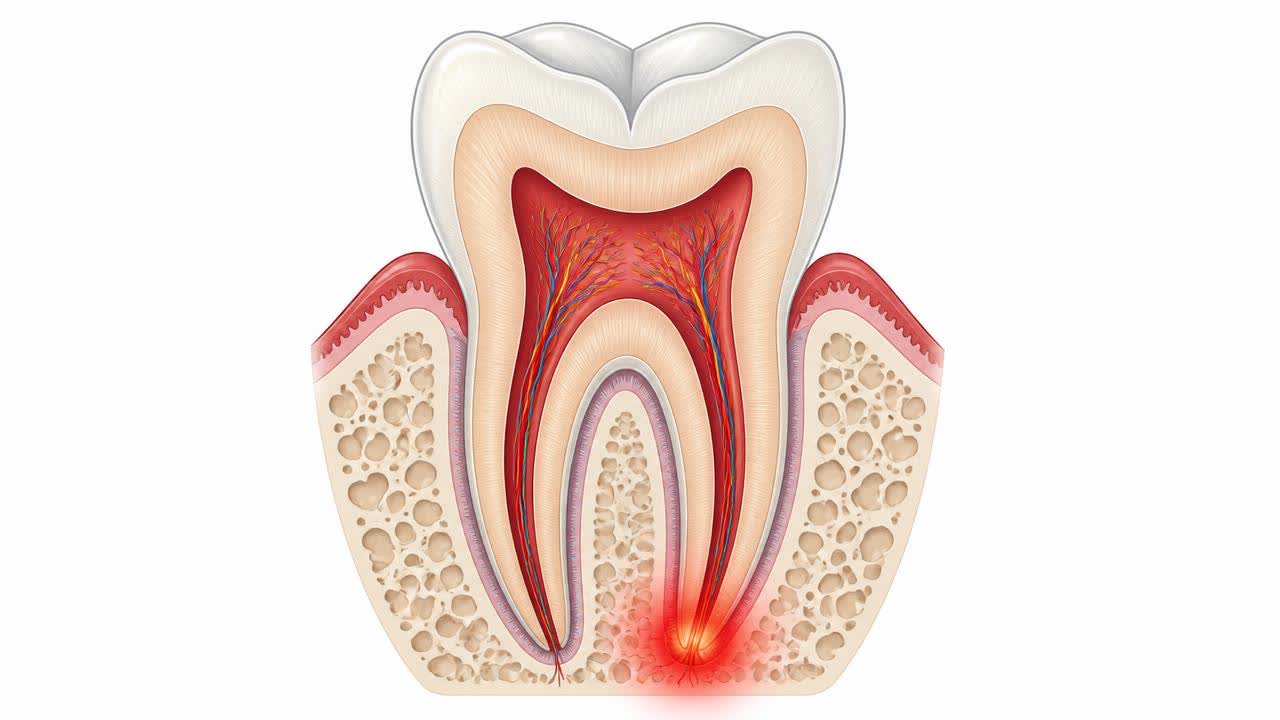
An apicoectomy, also called root-end surgery, is a minor surgical procedure in which the very tip of a tooth root, along with any surrounding infected tissue, is removed through a small opening in the gum. It is generally considered when a tooth has persistent infection despite having already undergone root canal treatment or re-treatment.
This procedure allows the dentist to access and clean the area directly, and to seal the very end of the root with a special filling material, addressing infection that cannot be reached from inside the tooth through the crown.
When Apicoectomy Is Recommended
Apicoectomy is typically recommended when a tooth continues to show signs of infection on X-ray or ongoing symptoms after conventional root canal treatment has already been attempted, sometimes more than once. It may also be considered when the canal cannot be safely reopened from above due to a crown, post, or calcified canal.
Your dentist will usually take a detailed X-ray or, in some cases, a three-dimensional scan to precisely locate the area of infection and plan the surgical approach before recommending this option.
The Surgical Procedure
The procedure is performed under local anaesthesia and generally takes between thirty minutes to an hour. A small incision is made in the gum near the affected tooth to expose the root tip, the infected tissue is removed, and a few millimetres of the root end are trimmed away.
The canal is then sealed from this end with a biocompatible filling material to prevent bacteria from re-entering, and the gum is closed with a few fine sutures. Most patients experience mild swelling and discomfort for a few days afterwards, which settles with prescribed pain relief and cold compresses.
Recovery and Success Expectations
Healing of the gum typically occurs within one to two weeks, while the underlying bone continues to regenerate gradually over several months. Follow-up X-rays are usually taken at intervals to confirm that healing is progressing as expected.
Apicoectomy has a favourable success rate when performed on a well-selected case with adequate remaining tooth structure, offering a valuable option to save a natural tooth that might otherwise require extraction.
Questions patients ask us
- Is apicoectomy a painful procedure?
- The procedure is performed under local anaesthesia, so it is not painful during surgery. Mild swelling and soreness afterwards are common for a few days and are effectively managed with the prescribed pain relief medication and cold compresses.
- How long does it take to recover from an apicoectomy?
- The gum tissue generally heals within one to two weeks, while complete bone healing underneath can take several months. Most patients resume normal activities and eating within a few days, avoiding hard chewing on the treated side initially.
- Is apicoectomy an alternative to extraction?
- Yes, apicoectomy is often considered as a tooth-saving alternative when conventional root canal re-treatment is not possible or has not resolved the infection, allowing the natural tooth to be retained rather than extracted and replaced.
- Will I need a new crown after apicoectomy?
- Usually not, since the procedure is performed through the gum rather than through the crown of the tooth. If your existing crown or filling is intact and in good condition, it typically does not need to be replaced after this surgery.
Sources and further reading
Guidance from professional and public health bodies. Clinical decisions here are made on your own examination and radiographs.
- 1.Endodontic diagnosis terminology and treatment guidance — American Association of Endodontists
- 2.Guidelines for the management of traumatic dental injuries — International Association of Dental Traumatology
- 3.Antimicrobial prescribing for dental infection — NICE (UK)
- 4.Oral health — fact sheet and global status report — World Health Organization
- 5.Policy statements and oral health definitions — FDI World Dental Federation
- 6.Dental health — conditions, treatments and patient guidance — NHS (UK)
- 7.Systematic reviews of oral and dental interventions — Cochrane Oral Health
- 8.Regulatory framework and dental education standards in India — Dental Council of India
When to see us
Get examined without waiting if any of the following applies to you:
- Facial or neck swelling, difficulty swallowing, opening the mouth or breathing — this is an emergency
- Pain with fever, or swelling that is spreading rather than settling
- A tooth knocked out or pushed out of position after an injury — time matters
- Pain that wakes you at night or does not respond to ordinary painkillers
Get a written plan and cost before you commit
If this is what you are dealing with, the next step is a consultation with radiographs — pain & emergencies cases are seen by the specialist who handles that field. You get a written plan and staged cost before anything begins.
reception@dramitsharmahospital.comThis article is general education and does not replace an in-person examination, radiographs or a diagnosis by a qualified dentist.
Clinical terms in this article
Related in Pain & Emergencies
Tooth Pain and Sensitivity: Causes, Relief and When to See a Dentist
Why teeth hurt or react to hot and cold, the difference between everyday sensitivity and a warning sign, and what treatment usually follows.
Root Canal Treatment Explained
Why a tooth needs root canal therapy, what happens during single-sitting endodontics, and why crowns follow.
Tooth Pain and Dental Emergencies
How to identify a genuine dental emergency, what to do in the first hour, and when to call the hospital immediately.
Reversible vs Irreversible Pulpitis Symptoms and Treatment Options
Understanding reversible vs irreversible pulpitis is essential when managing dental pain. This guide explains their anatomical causes, diagnostic criteria, clinical symptoms, and evidence-based treatments ranging from conservative restorations to root canal therapy and emergency care.
Differences Between a Tooth Abscess and Gum Abscess
A dental abscess is a localised collection of pus caused by bacterial infection. Distinguishing between a tooth abscess (periapical) and a gum abscess (periodontal) is vital, as their anatomical origins, clinical presentations, diagnostic pathways, and definitive treatments differ fundamentally.
Why Tooth Pain Gets Worse When Lying Down
Experiencing toothache worse lying down typically indicates elevated pulpal or periapical pressure driven by increased cranial blood flow when supine. This guide explains pulpal anatomy, underlying causes, diagnostic pathways, evidence-based treatments, and critical red flags requiring emergency care.